01 · Best overall
BYD Seal
Best for: Drivers who want a dynamic, well-built, and highly rigid alternative to the Tesla Model 3.
The BYD Seal isn't just a good Chinese EV; it's an exceptional electric saloon by any global standard. Built on BYD's e-Platform 3.0, it utilizes a cell-to-body architecture where the lithium-iron-phosphate (LFP) 'Blade' battery forms a structural part of the chassis. This yields remarkable torsional rigidity, translating into a deeply satisfying, planted ride that outclasses the Hyundai Ioniq 6. While the infotainment UI still feels a bit labyrinthine compared to Tesla's minimalist approach, the physical cabin quality is superb, featuring stitched materials and solid switchgear that embarrasses equivalent European models. It lacks the ultra-fast 800V charging of the newest Korean EVs, but its sustained charging curve and bulletproof LFP chemistry make it the most well-rounded buy in the segment.
- Range (WLTP)
- Up to ~350 miles
- Architecture
- 400V LFP Cell-to-Body
- Drivetrain
- RWD or AWD
- Body Style
- Saloon
Pros
- + Incredible chassis rigidity
- + High-quality interior materials
- + Durable LFP battery chemistry
Cons
- − Overly complex infotainment menus
- − Boot opening is relatively narrow
- − Charging peaks are lower than 800V rivals
Typical price: £45k - £50k / €45k - €55k
02 · Best luxury GT
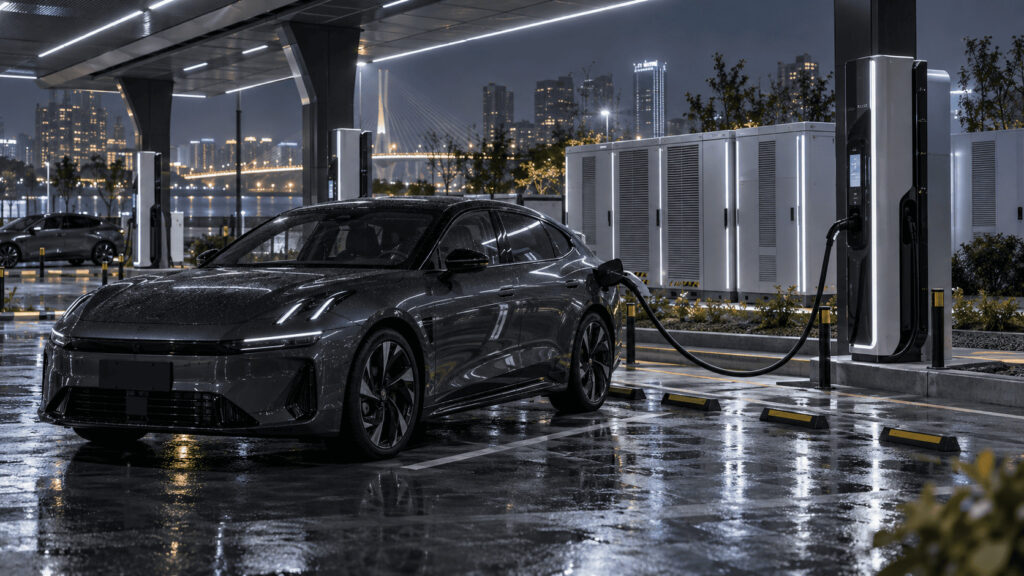
Zeekr 001
Best for: Long-distance commuters who prioritize ride quality and interior space over nimble handling.
Zeekr is Geely's premium weapon, and the 001 shooting brake is an astonishing statement of intent. It blends the footprint of a Porsche Taycan Cross Turismo with a price tag closer to a mid-spec BMW i4. Ride comfort is the standout feature, courtesy of a well-calibrated air suspension setup that isolates cabin occupants from harsh tarmac better than nearly anything at this price point. The dual-motor version delivers devastating straight-line pace, though it feels its substantial weight in tighter corners, leaning more toward grand touring than outright canyon carving. Software integration has rapidly improved since launch, though the ADAS (advanced driver assistance systems) can still be hypersensitive. Step past the polarizing front-end styling, and you get massive rear legroom and genuine cross-country cruising capability.
- Range (WLTP)
- Up to ~380 miles
- Architecture
- 400V (transitioning to 800V)
- Drivetrain
- RWD or AWD
- Body Style
- Shooting Brake
Pros
- + Exceptional ride comfort via air suspension
- + Cavernous rear legroom and cargo space
- + Devastating passing power in AWD trim
Cons
- − Noticeably heavy in tight corners
- − Overactive driver monitoring chimes
- − Divisive front-end styling
Typical price: £60k - £65k / €60k - €70k
03 · Best value hatchback
MG4 EV
Best for: Budget-conscious buyers who still care about steering feel and chassis balance.
SAIC-owned MG fundamentally disrupted the European EV market with the MG4. It achieved what Volkswagen’s ID.3 promised but struggled to deliver: a genuinely affordable, rear-wheel-drive electric hatchback with inherent chassis balance. The standard car is light on its feet, communicative, and refreshingly simple to drive. The interior plastics reflect the budget price, and the infotainment screen suffers from occasional lag, but the fundamental mechanicals are remarkably sound. Upgrading to the dual-motor XPOWER version yields hypercar-worrying acceleration figures, though the chassis struggles to cleanly deploy that much output, resulting in a somewhat unruly experience. Stick to the Long Range single-motor variant for the sweet spot of range, engaging handling, and unbeatable value.
- Range (WLTP)
- Up to ~320 miles
- Architecture
- 400V
- Drivetrain
- RWD (AWD optional)
- Body Style
- Hatchback
Pros
- + Class-leading chassis balance
- + Highly aggressive pricing
- + Excellent packaging for its footprint
Cons
- − Cheaper interior plastics
- − Sluggish native infotainment
- − XPOWER variant is overpowered for its brakes
Typical price: £27k - £36k / €30k - €40k
04 · Best midsize SUV
Xpeng G6
Best for: Family buyers seeking ultra-fast charging and compliant suspension in a midsize footprint.
The Xpeng G6 is a surgical strike aimed directly at the Tesla Model Y. Built on a cutting-edge 800-volt platform, it charges blisteringly fast, adding hundreds of miles of range in the time it takes to grab a coffee—provided you can find a suitable ultra-rapid charger. Xpeng’s strength lies in its software; the voice assistant is highly functional, and the interface is responsive. On the road, it offers a more compliant, forgiving ride than the rather stiff Model Y, making it a superior daily family hauler. However, the styling is decidedly generic, blending seamlessly into the background of modern crossover traffic. Furthermore, while the technology is impressive, the brand's long-term dealer and service network footprint outside of China is still developing, requiring a leap of faith from buyers.
- Range (WLTP)
- Up to ~350 miles
- Architecture
- 800V
- Drivetrain
- RWD or AWD
- Body Style
- Coupe-SUV
Pros
- + Blistering 800V charging speeds
- + Highly compliant ride quality
- + Intuitive, fast software interface
Cons
- − Anonymous exterior design
- − Unproven long-term service network
- − Steering lacks any physical feedback
Typical price: £40k - £48k / €45k - €50k
05 · Best for alternative charging
Nio ET5 Touring
Best for: Apartment dwellers or heavy-mileage drivers who live near a battery swap station.
The ET5 Touring brings the handsome estate body style into the EV era, but its real party piece is Nio’s battery-swapping infrastructure. Instead of waiting at a plug, you can pull into a Nio Power Swap Station and leave with a fully charged battery in under five minutes. This essentially removes battery degradation from the ownership equation, as you continuously cycle through fresh packs. The cabin is an exercise in minimalist luxury, utilizing sustainable materials that feel authentically premium. Dynamically, it is heavy and lacks the sharp turn-in of a BMW i5 Touring, acting more as a relaxed, rapid cruiser. The primary caveat is geographic: if you don't live or commute near one of Nio’s swap stations, the car’s unique selling proposition vanishes, leaving you with a very expensive, albeit beautiful, electric wagon.
- Range (WLTP)
- Varies by swapped pack
- Architecture
- 400V / Swappable
- Drivetrain
- AWD
- Body Style
- Estate
Pros
- + Five-minute battery swapping
- + Gorgeous estate proportions
- + High-end, sustainable cabin materials
Cons
- − Swap stations are geographically limited
- − Heavy curb weight blunts handling
- − High purchase price requires battery subscription
Typical price: £50k+ (plus battery subscription)
06 · Best premium crossover
Polestar 4
Best for: Design-conscious buyers who want sports saloon handling in a crossover silhouette.
While Polestar operates out of Sweden, the 4 is built in China on Geely’s SEA platform, making it a prime example of Sino-European synergy. The headline feature is the complete deletion of the rear window, replaced by a high-definition roof-mounted camera. In practice, this gives rear passengers a cocoon-like, spacious environment while allowing the designers to lower the roofline for aerodynamic efficiency. It handles exceptionally well for a high-riding vehicle, offering nicely weighted steering and a tied-down chassis that feels distinctly European in its tuning. The lack of a rear window requires serious mental recalibration, and the camera feed can wash out in direct sunlight or heavy rain. It is a bold, highly competent machine, but one that demands compromise in rearward visibility.
- Range (WLTP)
- Up to ~370 miles
- Architecture
- 400V
- Drivetrain
- RWD or AWD
- Body Style
- Coupe-SUV
Pros
- + Excellent European-tuned chassis
- + Striking, aerodynamic design
- + Spacious rear cabin environment
Cons
- − No physical rear window takes getting used to
- − Camera mirror struggles in heavy weather
- − Expensive compared to pure Chinese rivals
Typical price: £60k - £65k / €65k - €75k