The Megawatt Shock: Inside Geely’s 2,250 kW Incursion on Charging Physics
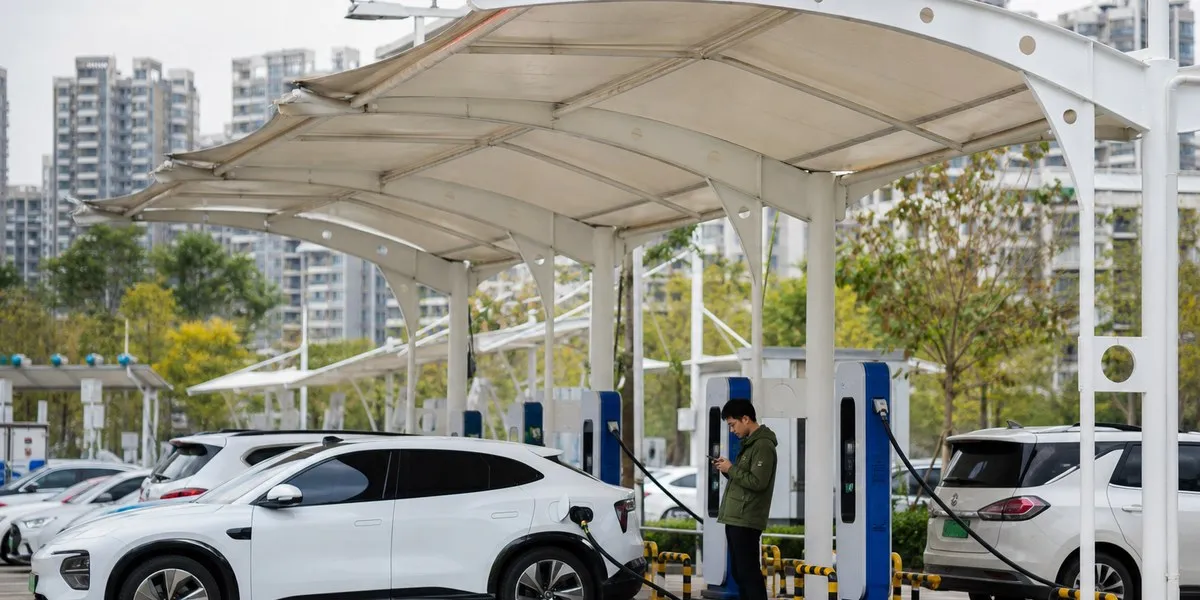
In Ningbo, Geely unveiled a 2.25-megawatt charging station capable of juicing a Zeekr 001 to 70 percent in four and a half minutes, redefining the speed of electron transfer.
The ongoing arms race across China’s electric vehicle landscape has long moved past range figures and horsepower metrics. The real battlefield is now measured in pure, uncompromising electrical throughput. In Ningbo on Wednesday, Geely threw down an astonishing gauntlet by pulling the silk off its fifth-generation Smart Charging Station—a colossal hardware installation rated at an unprecedented 2,250 kilowatts. To put 2.25 megawatts in perspective, it is enough simultaneous juice to power small municipal districts, all concentrated into a single dispensing tether.The ongoing arms race across China’s electric vehicle landscape has long moved past range figures and horsepower metrics. The real battlefield is now measured in pure, uncompromising electrical throughput. In Ningbo on Wednesday, Geely threw down an astonishing gauntlet by pulling the silk off its fifth-generation Smart Charging Station—a colossal hardware installation rated at an unprecedented 2,250 kilowatts. To put 2.25 megawatts in perspective, it is enough simultaneous juice to power small municipal districts, all concentrated into a single dispensing tether.
The numbers Geely brought to the presentation floor were engineered to induce vertigo across boardrooms in Stuttgart and Detroit. Demonstrating the system’s raw appetite on test-bed hardware, Geely showed a Zeekr 001 and a Lynk & Co 10 surging from a 10 percent state of charge to 70 percent in a blistering 4 minutes and 30 seconds. Taking the pack all the way to 97 percent required just 8 minutes and 40 seconds. For drivers accustomed to lingering over lukewarm station coffee while waiting for a 400-volt pack to trickle-feed, the prospect of sub-five-minute replenishment effectively erases the final convenience deficit separating liquid fuel from the grid.
Naturally, pulling off such feats requires extreme thermal choreography. Geely disclosed that these benchmark figures were logged at room temperature on test vehicles rated for an eye-watering peak charging multiplier of 12C. While current production vehicles cannot yet sustain a direct 2.25 MW draw across their entire charging curves—Geely’s fastest certified production battery tops out around half that maximum rate—the installation represents an aggressive infrastructure play aimed at decoupling vehicle capability from station bottlenecks. Current flagship models will still require proprietary group-backed chargers to hit their maximum theoretical speeds, keeping customers tightly tethered to Geely's ecosystem.Naturally, pulling off such feats requires extreme thermal choreography. Geely disclosed that these benchmark figures were logged at room temperature on test vehicles rated for an eye-watering peak charging multiplier of 12C. While current production vehicles cannot yet sustain a direct 2.25 MW draw across their entire charging curves—Geely’s fastest certified production battery tops out around half that maximum rate—the installation represents an aggressive infrastructure play aimed at decoupling vehicle capability from station bottlenecks. Current flagship models will still require proprietary group-backed chargers to hit their maximum theoretical speeds, keeping customers tightly tethered to Geely's ecosystem.
The hardware reveal in Ningbo was not an isolated dispatch. Geely framed the 2.25 MW tower within a broader ecosystem overhaul, debuting an accompanying AI energy management model designed to balance massive grid spikes, alongside a cheaper battery architecture and an updated variant of its mainstream Galaxy E5 sport-utility. The Galaxy E5, while excluded from the hyper-exclusive 12C charging tier, highlights Geely’s twin-track strategy: commoditizing volume segments while deploying halo megawatt technology at the sharp end.The hardware reveal in Ningbo was not an isolated dispatch. Geely framed the 2.25 MW tower within a broader ecosystem overhaul, debuting an accompanying AI energy management model designed to balance massive grid spikes, alongside a cheaper battery architecture and an updated variant of its mainstream Galaxy E5 sport-utility. The Galaxy E5, while excluded from the hyper-exclusive 12C charging tier, highlights Geely’s twin-track strategy: commoditizing volume segments while deploying halo megawatt technology at the sharp end.
What Geely demonstrated in Ningbo is a clear escalation against domestic rivals like BYD and XPeng, both of whom have made blistering high-voltage architecture their primary technological moat. As China solidifies its manufacturing grip—already accounting for roughly 70 percent of global EV output—the domestic focus has shifted toward solving the logistical reality of fleet-scale high-speed turnaround. By breaking through the two-megawatt threshold, Geely has signaled that the future of EV dominance will not just be won inside the vehicle's cabin, but at the copper line.
Gallery
"A Zeekr 001 surged from 10 to 70 percent in 4 minutes and 30 seconds."
Why it matters
Geely’s 2.25 MW charging infrastructure leapfrogs existing ultra-fast networks, proving Chinese automakers are engineering grid solutions far ahead of Western counterparts. By demonstrating 12C charging rates, Geely is effectively reducing EV turnaround times to match traditional petrol station stops.
Sources
- 1.
- 2.
- 3.Geely Unveils 2.25 MW Charger, Raising the Stakes With BYD and ...eletric-vehicles.com
- 4.
Reported by the Downforce & Divots desk from the sources above.
The clubhouse.
- No replies yet. Be the first.