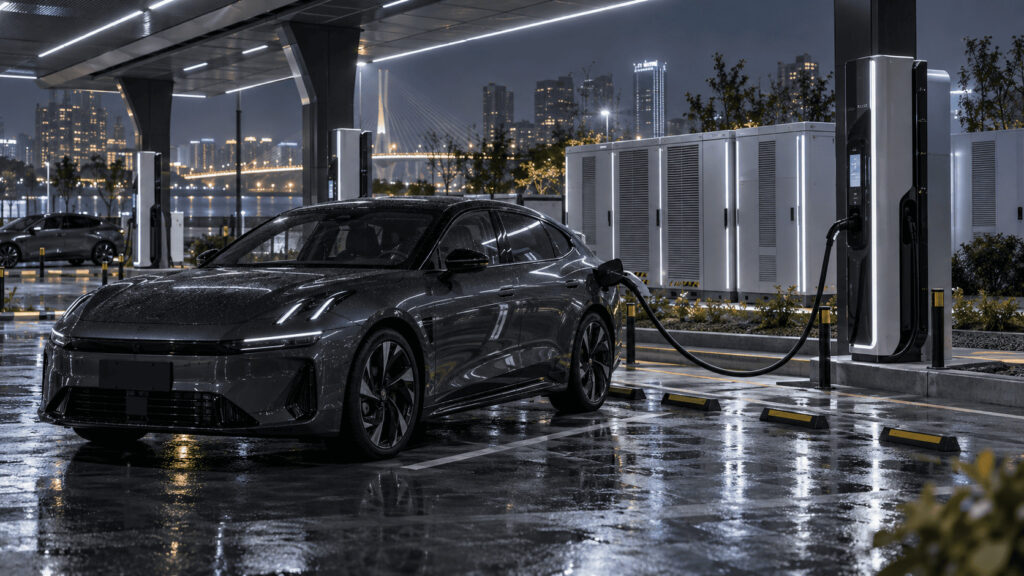
The Megawatt Blitz: How Geely’s 2,250 kW Charger Cracks the Refuelling Equation
A 4.5-minute blast from 10 to 70 percent turns EV charging into a genuine pit-lane turnaround, throwing the gauntlet down to BYD.
For years, the high-voltage arms race among electric vehicle manufacturers was fought across decimal places. Shaving five minutes off a 20-to-80 percent DC fast charge was treated as a generational triumph, celebrated with sleek press releases and incremental hardware updates. That era of polite, step-by-step progress has effectively ended.For years, the high-voltage arms race among electric vehicle manufacturers was fought across decimal places. Shaving five minutes off a 20-to-80 percent DC fast charge was treated as a generational triumph, celebrated with sleek press releases and incremental hardware updates. That era of polite, step-by-step progress has effectively ended.
Geely has bypassed the conventional roadmap entirely by unleashing an eye-watering 2,250 kW (2.25 MW) Smart Charge system. Engineered to directly challenge domestic arch-rival BYD, the architecture harnesses extreme 12C battery chemistry guided by predictive AI power distribution. The headline figure is arresting: taking an EV pack from 10 to 70 percent state of charge in roughly 4.5 minutes.
To put Geely's 2.25-megawatt throughput into perspective, Western premium stalwarts are still preparing to cross the 400 kW Rubicon. BMW's upcoming Neue Klasse architecture promises 400 kW fast-charging alongside its targeted 400-mile range. While that represents a significant leap for European luxury sedans, Geely’s new charging hardware operates in another solar system, delivering five times that peak power to eliminate range anxiety by sheer electrical brute force.To put Geely's 2.25-megawatt throughput into perspective, Western premium stalwarts are still preparing to cross the 400 kW Rubicon. BMW's upcoming Neue Klasse architecture promises 400 kW fast-charging alongside its targeted 400-mile range. While that represents a significant leap for European luxury sedans, Geely’s new charging hardware operates in another solar system, delivering five times that peak power to eliminate range anxiety by sheer electrical brute force.
This megawatt salvo comes precisely as the electric vehicle landscape splits into two distinct engineering philosophies. On one side stands the hyper-aerodynamic endurance school, epitomised by the Audi A6 Sportback e-tron, which recently established a Guinness World Record by covering 1,338 km on a single charge while sipping an extraordinarily efficient 7.09 kWh per 100 km. Audi proved how far a single charge can stretch if physics is massaged into submission.This megawatt salvo comes precisely as the electric vehicle landscape splits into two distinct engineering philosophies. On one side stands the hyper-aerodynamic endurance school, epitomised by the Audi A6 Sportback e-tron, which recently established a Guinness World Record by covering 1,338 km on a single charge while sipping an extraordinarily efficient 7.09 kWh per 100 km. Audi proved how far a single charge can stretch if physics is massaged into submission.
Geely, conversely, is arguing that massive battery buffers and painstaking hypermiling become largely redundant when replenishment takes no longer than queuing for an espresso. If a driver can recoup hundreds of kilometres of usable energy in the time it takes to clean a windscreen, the imperative to lug heavy, hyper-extended battery cells across highway asphalt begins to evaporate.Geely, conversely, is arguing that massive battery buffers and painstaking hypermiling become largely redundant when replenishment takes no longer than queuing for an espresso. If a driver can recoup hundreds of kilometres of usable energy in the time it takes to clean a windscreen, the imperative to lug heavy, hyper-extended battery cells across highway asphalt begins to evaporate.
The logistical challenge now shifts from electrochemical capability to utility-scale distribution. Dispensing 2,250 kW without melting connectors or collapsing local substations demands relentless thermal management and grid buffering. Yet in the escalating technical duel between Geely and BYD, the benchmark has definitively moved from kilowatt-hours stored to megawatts deployed.The logistical challenge now shifts from electrochemical capability to utility-scale distribution. Dispensing 2,250 kW without melting connectors or collapsing local substations demands relentless thermal management and grid buffering. Yet in the escalating technical duel between Geely and BYD, the benchmark has definitively moved from kilowatt-hours stored to megawatts deployed.
Gallery
"Geely's new 2,250 kW Smart Charge system pairs AI and 12C batteries to charge EVs from 10% to 70% in about 4.5 minutes."
Why it matters
Geely's 2.25-megawatt charging breakthrough resets the technological ceiling for the global EV industry. By matching the turnaround time of internal combustion pumps, extreme charging speeds will reshape battery pack sizing, grid infrastructure, and competitive pressure on legacy automakers.
Sources
- 1.
- 2.
- 3.
- 4.Electric Cars Report - Electric car news with reviewselectriccarsreport.com
Reported by the Downforce & Divots desk from the sources above.
The clubhouse.
- No replies yet. Be the first.