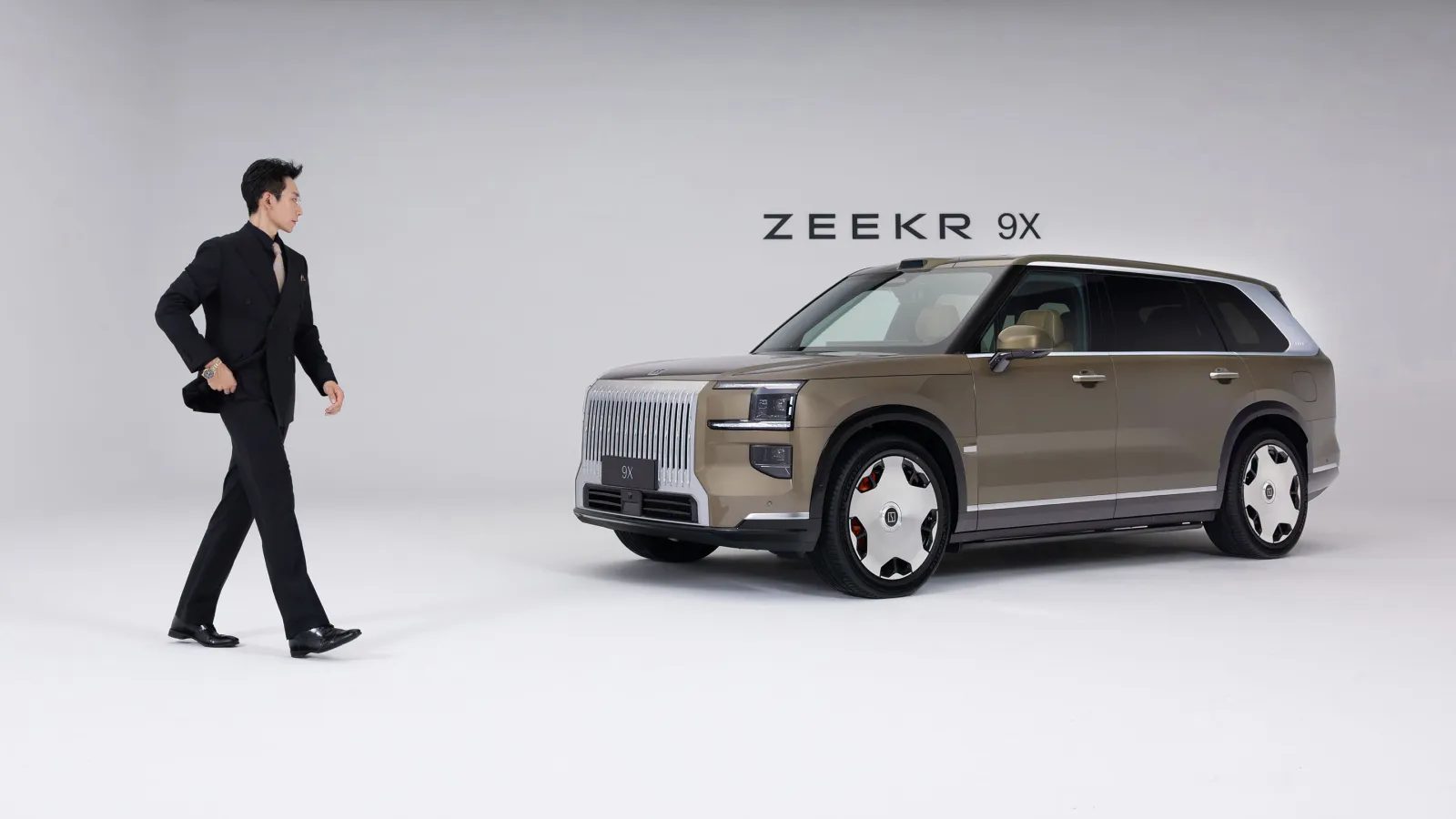
The Four-Minute Civil War: Why Zeekr Just Torched Geely’s 16-Billion-Yuan Nio Gamble
Just two days after Geely Holding bought a massive stake in Nio’s battery-swapping network, its own premium marque publicly rejected the technology. The standoff exposes a widening philosophical schism in the race to cure EV range anxiety.
Two days. That is exactly how long it took for the internal strategic fault lines at Geely Holding Group to violently rupture into public view. On a Monday in late September 2026, Geely announced a massive infrastructure alignment, taking a 30 percent stake in Nio’s battery-swapping unit—a blockbuster deal valuing the enterprise at 16 billion yuan. The mandate seemed clear: Geely’s sprawling automotive empire would begin standardizing around Nio’s physical battery-swap architecture. But by Wednesday, Zeekr, Geely’s own premium electric marque, seized the microphone via its 'Zeekr Zero Distance' public Q&A post to explicitly rule out building swap-compatible cars. It was a swift, brutal rejection that exposed a widening engineering schism in the EV world: the capital-intensive gamble of modular swappable batteries versus the raw, brute-force physics of ultra-high-voltage fast charging.
The Geely-Nio pact was initially designed to be a monumental shift in how global range anxiety is solved, driven from the absolute top of the corporate ladder. In an interview broadcast on the Wu Xiaobo Channel, Nio Founder and CEO William Li revealed that Geely Chairman Li Shufu was the primary accelerant behind the deal's international ambitions. The Geely patriarch, according to Li, is intensely anxious about pushing the swap network beyond domestic borders, repeatedly pressing Nio executives on when they will initiate a joint European network plan. Yet this aggressive boardroom posture directly contradicts the cautious reality on the ground in export markets; Nio’s own Norwegian division simultaneously issued a terse release via the newswire NTB clarifying that the partnership was strictly 'Limited to China for now.'The Geely-Nio pact was initially designed to be a monumental shift in how global range anxiety is solved, driven from the absolute top of the corporate ladder. In an interview broadcast on the Wu Xiaobo Channel, Nio Founder and CEO William Li revealed that Geely Chairman Li Shufu was the primary accelerant behind the deal's international ambitions. The Geely patriarch, according to Li, is intensely anxious about pushing the swap network beyond domestic borders, repeatedly pressing Nio executives on when they will initiate a joint European network plan. Yet this aggressive boardroom posture directly contradicts the cautious reality on the ground in export markets; Nio’s own Norwegian division simultaneously issued a terse release via the newswire NTB clarifying that the partnership was strictly 'Limited to China for now.'
Zeekr’s flat refusal to adopt the swap standard is rooted in both direct market rivalry and a fundamental, unshakeable belief in alternative chemistry. Zeekr competes for the exact same premium Chinese buyer as Nio, and ceding its proprietary powertrain design to a rival’s infrastructure standard is a bitter strategic pill. Instead, Zeekr’s corporate defense hinges on its 800-volt electrical architecture. According to recent technical showcases, this ultra-fast charging platform allows vehicles like the Zeekr 001 and the Geely-backed Lynk & Co 01 to rocket from a 10 to 70 percent state of charge in just four minutes. When Nio’s highly touted subscription battery swap takes three minutes, Zeekr’s engineers clearly view the vast, expensive real estate required for physical swap stations as an infrastructural dinosaur. Zeekr’s future, the brand announced, will remain aggressively focused on ultra-fast charging and their proprietary 'Haohan' super electric hybrid models.
The stakes of this powertrain civil war are astronomical, playing out against a domestic market that is consolidating with terrifying speed. By August 2026, Chinese passenger-car brands had captured a staggering 63 percent of their home market. The volume is completely dominated by BYD, a juggernaut that shifted from 201,493 monthly units in January 2024 to transcending the 400,000-unit barrier by the summer of 2026—moving 403,472 NEVs in June and pushing to 440,293 by August. Back in early 2024, BYD was already installing 6.00 GWh of batteries monthly to claim an 18.58 percent market share; today, their scale is almost unfathomable. This relentless volume is built on deep vertical integration, from its proprietary Blade Batteries to its DM hybrid technology, establishing an ironclad template for profitability. Underneath BYD’s sheer tonnage, the premium tier—Nio, Zeekr, XPeng, and Chery—is engaged in a brutal knife fight for the remaining high-margin consumers.
That turf war is actively spilling into export markets, where consumer trust is fragile and infrastructural footprints are critical. Take Australia, for example, where Zeekr's recent expansion is actively being debated by early adopters. Potential buyers acknowledge the aesthetic and on-paper appeal of models like the Zeekr X7, but widely flag the marque as a high-risk proposition for sales, service, and warranty support compared to BYD, which benefits from a longer, more entrenched local presence. This is the exact consumer skepticism that Li Shufu wants to bypass in Europe by piggybacking on Nio's established physical swap stations, effectively buying immediate consumer confidence. Yet, by locking Zeekr out of that very ecosystem, Geely is forcing its premium brand to build its fast-charging network from scratch in hostile, unfamiliar territories.That turf war is actively spilling into export markets, where consumer trust is fragile and infrastructural footprints are critical. Take Australia, for example, where Zeekr's recent expansion is actively being debated by early adopters. Potential buyers acknowledge the aesthetic and on-paper appeal of models like the Zeekr X7, but widely flag the marque as a high-risk proposition for sales, service, and warranty support compared to BYD, which benefits from a longer, more entrenched local presence. This is the exact consumer skepticism that Li Shufu wants to bypass in Europe by piggybacking on Nio's established physical swap stations, effectively buying immediate consumer confidence. Yet, by locking Zeekr out of that very ecosystem, Geely is forcing its premium brand to build its fast-charging network from scratch in hostile, unfamiliar territories.
Ultimately, Wall Street seems to side with Zeekr's skepticism regarding the long-term viability of the swap-station model. Despite the massive influx of Geely capital and the promise of shared hardware standards, Nio’s US-listed shares plummeted in the immediate aftermath of the announcement, hitting a 14-month low of $3.38 before closing the session at $3.40. Investors remain deeply allergic to the massive capital expenditure required to maintain physical battery inventory and the heavy robotics necessary to swap them. The engineering realities of battery lifecycle management also pose a massive hurdle to shared infrastructure. Battery degradation in extreme climates requires hyper-vigilant thermal management; as automotive diagnostic technicians note, subjecting cells to prolonged summer heat without active HVAC cooling can bake the units, trigger rapid internal resistance increases, and cause permanent, cascading damage.Ultimately, Wall Street seems to side with Zeekr's skepticism regarding the long-term viability of the swap-station model. Despite the massive influx of Geely capital and the promise of shared hardware standards, Nio’s US-listed shares plummeted in the immediate aftermath of the announcement, hitting a 14-month low of $3.38 before closing the session at $3.40. Investors remain deeply allergic to the massive capital expenditure required to maintain physical battery inventory and the heavy robotics necessary to swap them. The engineering realities of battery lifecycle management also pose a massive hurdle to shared infrastructure. Battery degradation in extreme climates requires hyper-vigilant thermal management; as automotive diagnostic technicians note, subjecting cells to prolonged summer heat without active HVAC cooling can bake the units, trigger rapid internal resistance increases, and cause permanent, cascading damage.
Furthermore, hardware standardization demands unacceptable compromises in vehicle packaging. Adding physical swap hardware often requires increasing chassis thickness, which directly compromises aerodynamic weight—a trade-off engineers are loath to make when a mere 50 percent increase in battery housing thickness can result in a proportional weight penalty that ruins driving dynamics. Maintaining a global, rotating fleet of perfect-condition cells under these physical constraints is a logistical high-wire act that Zeekr clearly wants no part of.Furthermore, hardware standardization demands unacceptable compromises in vehicle packaging. Adding physical swap hardware often requires increasing chassis thickness, which directly compromises aerodynamic weight—a trade-off engineers are loath to make when a mere 50 percent increase in battery housing thickness can result in a proportional weight penalty that ruins driving dynamics. Maintaining a global, rotating fleet of perfect-condition cells under these physical constraints is a logistical high-wire act that Zeekr clearly wants no part of.
We are witnessing a colossal, multi-billion-yuan hedging of bets by one of the world's largest automotive conglomerates. Geely Holding is willing to sink immense capital into Nio to ensure it has a seat at the table if battery swapping somehow becomes the mandated global standard, effectively outsourcing the risk of station construction. Simultaneously, it is allowing its crown jewel, Zeekr, to operate as a completely autonomous insurgent, fighting for a future where a four-minute blast from an 800-volt hyper-charger renders the mechanical complexity of a swap station entirely obsolete. It is a dual-track strategy born of necessity, highlighting that even the giants of the Chinese auto industry do not yet know how the world will choose to refuel.We are witnessing a colossal, multi-billion-yuan hedging of bets by one of the world's largest automotive conglomerates. Geely Holding is willing to sink immense capital into Nio to ensure it has a seat at the table if battery swapping somehow becomes the mandated global standard, effectively outsourcing the risk of station construction. Simultaneously, it is allowing its crown jewel, Zeekr, to operate as a completely autonomous insurgent, fighting for a future where a four-minute blast from an 800-volt hyper-charger renders the mechanical complexity of a swap station entirely obsolete. It is a dual-track strategy born of necessity, highlighting that even the giants of the Chinese auto industry do not yet know how the world will choose to refuel.
Gallery
"I find Shufu is even more anxious than I am about how to get into global markets, how this swap network gets into global markets. Every time he sees me, he asks about it."
Why it matters
Zeekr’s refusal to adopt Nio’s battery-swapping technology exposes a lack of consensus even within single automotive conglomerates on the future of EV infrastructure. As charging speeds close in on the sub-five-minute mark, the immense capital expenditure required to build and maintain physical battery swap stations looks increasingly precarious to both engineers and investors.
Sources
- 1.Geely's Zeekr Rules Out Battery-Swap Models Days After ...eletric-vehicles.com
- 2.BYD News, Sales, & New Models - CnEVPostcnevpost.com
- 3.
- 4.Nio CEO Says Geely Presses for Europe Swap Push Missing From ...eletric-vehicles.com
- 5.
- 6.
- 7.
- 8.
- 9.
- 10.
Reported by the Downforce & Divots desk from the sources above.
The clubhouse.
- No replies yet. Be the first.