Editor's Guide · Updated September 2026

The Best Premium Golf Balls of 2026

The short answer

The Titleist Pro V1 remains the best premium golf ball for most players, offering an unmatched balance of predictable greenside spin, mid-flight trajectory, and durability. If you need less driver spin and more distance, choose the TaylorMade TP5x. For cutting through heavy crosswinds, the Callaway Chrome Tour is our top alternative.

Tour-level golf balls are an investment, but they are the only piece of equipment you use on every single shot. The current crop of premium urethane golf balls separates itself from mid-tier options through multi-layer construction that optimizes conflicting demands: low spin off the driver for maximum distance, and high spin around the green for control.

Recently, the trend among manufacturers has been refining aerodynamics and core compression rather than overhauling materials. With the 2025 and 2026 release cycles, we have seen tighter quality control and dimple patterns specifically designed to maintain a flatter trajectory in high wind. This guide breaks down the flagship balls from Titleist, TaylorMade, Callaway, Srixon, and Bridgestone to help you find the exact flight and feel that matches your swing characteristics.

We review golf equipment independently. This guide is updated semi-annually to reflect major release cycles and tour adoption from the top manufacturers.

At a glance

PickAwardConstructionCoverDriver SpinTrajectoryFeelPrice
Titleist Pro V1Best overall3-pieceCast UrethaneMid-LowMidMedium-Soft~$55 per dozen
TaylorMade TP5xBest for distance and high swing speeds5-pieceCast UrethaneLowHighFirm~$55 per dozen
Callaway Chrome TourBest for wind performance4-pieceCast UrethaneMid-LowMidMedium~$55 per dozen
Srixon Z-Star DiamondBest for mid-to-long iron spin3-pieceCast UrethaneMidMid-HighMedium-Firm~$50 per dozen
Titleist Pro V1x Left DashBest for low driver spin4-pieceCast UrethaneVery LowHighVery Firm~$55 per dozen
Bridgestone Tour B XBest for aggressive swingers3-pieceCast UrethaneLowMid-LowFirm~$50 per dozen

The picks

01 · Best overall

Titleist Pro V1

Best for: Low-to-mid handicap players who want total reliability and balanced performance across every club.

The Titleist Pro V1 is the baseline against which all other golf balls are measured, and for good reason. It provides a medium trajectory that does not balloon, combined with a slightly softer feel than the Pro V1x. Off the driver, spin is strictly managed to prevent distance loss, but the real advantage appears from 100 yards in. The cast urethane cover grabs the clubface predictably, offering a drop-and-stop reaction that low handicappers rely on. While the TaylorMade TP5 feels a fraction softer off the putter face, the Pro V1 is simply more consistent shot-to-shot regarding spin rate and launch angle. If you naturally hit the ball very low, you might prefer the Pro V1x to help keep the ball in the air, but for the vast majority of single-digit and mid-handicap players, this is the safest, highest-performing choice.

Construction
3-piece
Cover
Cast Urethane
Driver Spin
Mid-Low
Trajectory
Mid
Feel
Medium-Soft
Pros
  • + Unmatched shot-to-shot consistency
  • + Predictable drop-and-stop wedge spin
  • + Excellent durability out of bunkers
Cons
  • − Premium price point
  • − Not ideal for players needing maximum launch height

Typical price: ~$55 per dozen

02 · Best for distance and high swing speeds

TaylorMade TP5x

Best for: High-swing-speed players looking to maximize driver carry and iron distance without sacrificing all wedge spin.

TaylorMade's TP5x is a 5-piece rocket designed for players who generate serious clubhead speed and want to squeeze every yard out of their driver. Compared to the standard TP5 and the Pro V1, the TP5x launches higher and spins less off the tee, which translates to a steeper descent angle and longer carry distances. Despite the firmer core required for that speed, TaylorMade softened the cast urethane cover just enough to retain excellent greenside control. It feels noticeably firmer off the putter face than a Pro V1, which will divide opinion among traditionalists. If you currently struggle with a ballooning ball flight, the high launch of the TP5x will exacerbate the issue, but if you want penetrating iron distance and maximum driver carry, it is exceptional.

Construction
5-piece
Cover
Cast Urethane
Driver Spin
Low
Trajectory
High
Feel
Firm
Pros
  • + Noticeably longer off the tee for fast swingers
  • + High flight stops quickly on firm greens
  • + Excellent wind stability
Cons
  • − Clicky sound off the putter
  • − Cover scuffs faster than Titleist under heavy wedge play

Typical price: ~$55 per dozen

03 · Best for wind performance

Callaway Chrome Tour

Best for: Players who frequently play in windy conditions and want a stable, penetrating ball flight.

Replacing the Chrome Soft X as Callaway's flagship tour ball, the Chrome Tour utilizes an entirely new aerodynamic package called the Seamless Tour Aero dimple pattern, and it genuinely works. In our testing, this ball holds its line in crosswinds better than almost anything else on the market. It slots right between a Pro V1 and Pro V1x in terms of spin profile, offering a slightly firmer feel than the standard Pro V1 but with incredible stability in the air. The core technology provides impressive ball speeds, rivaling the TP5x, but with a softer acoustic feedback at impact. The main drawback is visual: Callaway's standard alignment lines and Truvis patterns are aggressive and not for everyone, though a plain white version is readily available.

Construction
4-piece
Cover
Cast Urethane
Driver Spin
Mid-Low
Trajectory
Mid
Feel
Medium
Pros
  • + Exceptional crosswind stability
  • + Fast ball speeds off the driver
  • + Softer acoustic feedback than TP5x
Cons
  • − Standard alignment stamp is quite large
  • − Slightly less greenside bite than the Chrome Tour X

Typical price: ~$55 per dozen

04 · Best for mid-to-long iron spin

Srixon Z-Star Diamond

Best for: Elite ball-strikers who want maximum stopping power from their mid-to-long irons.

Srixon developed the Z-Star Diamond specifically to blend the driver distance of the Z-Star XV with the greenside spin of the standard Z-Star. The result is a ball that excels specifically in mid-to-long iron spin. If you are a player who struggles to hold greens with a 4- or 5-iron, the Diamond will genuinely help. The slightly thicker urethane cover features Srixon's Spin Skin coating, which increases friction at impact. It feels dense and heavy off the clubface—a sensation many better players prefer. However, that extra spin means it is less forgiving off the driver; a slight fade will turn into a slice more readily than it would with a lower-spinning TP5x.

Construction
3-piece
Cover
Cast Urethane
Driver Spin
Mid
Trajectory
Mid-High
Feel
Medium-Firm
Pros
  • + Incredible stopping power with long irons
  • + Very durable cover coating
  • + Slightly cheaper than top rivals
Cons
  • − Punishes wayward driver swings with excessive lateral spin
  • − Heavy feel off the face isn't for everyone

Typical price: ~$50 per dozen

05 · Best for low driver spin

Titleist Pro V1x Left Dash

Best for: High-spin players who need to drastically reduce driver backspin to optimize distance.

Originally a tour-only prototype, the Left Dash is the ultimate niche ball that happens to solve a very common problem. It is designed to offer the high launch of a Pro V1x but with significantly less spin across the board. If you have a steep angle of attack and naturally impart too much backspin on the golf ball, the Left Dash will instantly add distance by flattening your trajectory and creating roll-out. The trade-off is a very firm feel and noticeably less check around the greens. You will need to calculate for more release on chips and pitches. It is completely unsuitable for players who already struggle to get the ball airborne, but for high-spin players, it is a highly effective tool.

Construction
4-piece
Cover
Cast Urethane
Driver Spin
Very Low
Trajectory
High
Feel
Very Firm
Pros
  • + Massive distance gains for high-spin players
  • + Cuts through wind effectively
  • + Excellent scuff resistance
Cons
  • − Feels very harsh off the putter
  • − Severely reduced greenside control on short pitches

Typical price: ~$55 per dozen

06 · Best for aggressive swingers

Bridgestone Tour B X

Best for: Scratch golfers with high swing speeds (105+ mph) who demand a firm, fast flight.

Engineered specifically for swing speeds over 105 mph, the Tour B X is a very firm, fast golf ball that rewards center-face contact. Bridgestone's REACTIV iQ cover technology is meant to act firmly on high-impact driver strikes for speed, but deform on low-impact wedge shots to increase spin time. In reality, it produces a very flat, penetrating ball flight that rivals the Chrome Tour for wind-cheating capability, but it demands speed. Players with moderate swing speeds will find it feels harsh and will not compress the core enough to unlock its distance potential. If you do not swing fast enough to activate the core, look to the softer Tour B RX instead.

Construction
3-piece
Cover
Cast Urethane
Driver Spin
Low
Trajectory
Mid-Low
Feel
Firm
Pros
  • + Incredible ball speed for fast swingers
  • + Penetrating flight prevents ballooning
  • + Cover technology aids short-game friction
Cons
  • − Unforgiving for moderate swing speeds
  • − Firm acoustic feedback on short game shots

Typical price: ~$50 per dozen

How to choose

Understanding the "X" factor

In modern golf ball naming conventions, the letter "X" (Pro V1x, TP5x, Chrome Tour X) usually denotes a firmer ball that launches higher and spins slightly more with irons than the standard model. It is a common misconception that the "X" means less spin. If you struggle to hold greens and want higher flight, the X model is usually the right choice, provided you can handle the firmer feel.

Cover material dictates short game

Every ball in this premium guide uses a urethane cover. Unlike the cheaper Surlyn or ionomer used in two-piece distance balls, urethane is soft enough for the grooves of a wedge to bite into it, creating the friction necessary for backspin. If a ball does not have a urethane cover, it will not stop quickly on a firm green, regardless of how you strike it.

Matching compression to swing speed

Compression is a measure of how tightly wound the core of the golf ball is. High compression balls (like the TP5x or Tour B X) require more clubhead speed to compress fully at impact. If you swing a driver under 95 mph, playing a tour-level, high-compression ball might actually cost you distance compared to a softer ball, as you are not activating the core's energy return.

The durability vs. spin trade-off

A softer urethane cover creates more friction and spin, but it is also more susceptible to shearing when struck by a sharp wedge groove or bouncing out of a cart path. If you are tired of replacing scuffed balls after three holes, look for a slightly firmer urethane formulation (like the Srixon Z-Star Diamond or Pro V1x Left Dash), which sacrifices a fraction of maximum spin for much better longevity.

How we picked

To evaluate these premium golf balls, we rely on a combination of launch monitor data and extensive on-course playability testing. We track metrics via launch monitors, specifically focusing on spin rates and ball speed off a 9-degree driver, a 7-iron, and a 56-degree wedge. We do not claim to operate an independent robotics lab; instead, we use a panel of single-digit handicap golfers to hit these balls in varied weather conditions over a two-month period. We assess durability by checking cover scuffing after bunker shots and full wedge impacts. We excluded two-piece distance balls, ionomer-cover balls, and direct-to-consumer brands from this specific guide, as our focus here is strictly on the flagship, tour-played models available at retail. Our rankings heavily weigh shot-to-shot consistency and greenside predictability above pure, absolute distance.

Related coverage

The Teenager Who Broke the Tour: Blades Brown’s $1.1 Million Masterclass in Mexico — PGA Tour
Golf
Deep Dive
8 min
PGA Tour · Nov 10, 2026

The Teenager Who Broke the Tour: Blades Brown’s $1.1 Million Masterclass in Mexico

At 17 years old, Blades Brown didn't just win the World Wide Technology Championship at El Cardonal—he dismantled the traditional pipeline of professional golf with a 23-under-par coronation.

Margot Vellis 8 min
Beyond the Raw Integer: Why Ball Modeling Is Launch Monitor Tech's Next Frontier — Golf Tech
Golf
4 min
Golf Tech · Nov 9, 2026

Beyond the Raw Integer: Why Ball Modeling Is Launch Monitor Tech's Next Frontier

As hardware sensors reach commodity parity, the battle for swing data supremacy shifts to ball modeling and connected trajectory analytics.

Hollis Wren 4 min
The Suspended Benchmark: Ben James Posts 15 Under Before Darkness Halts Round Two in Mexico — PGA Tour
Golf
3 min
PGA Tour · Nov 9, 2026

The Suspended Benchmark: Ben James Posts 15 Under Before Darkness Halts Round Two in Mexico

A blistering eight-under-par second round places the American at 15 under as the World Wide Technology Championship field contends with an interrupted schedule.

Margot Vellis 3 min
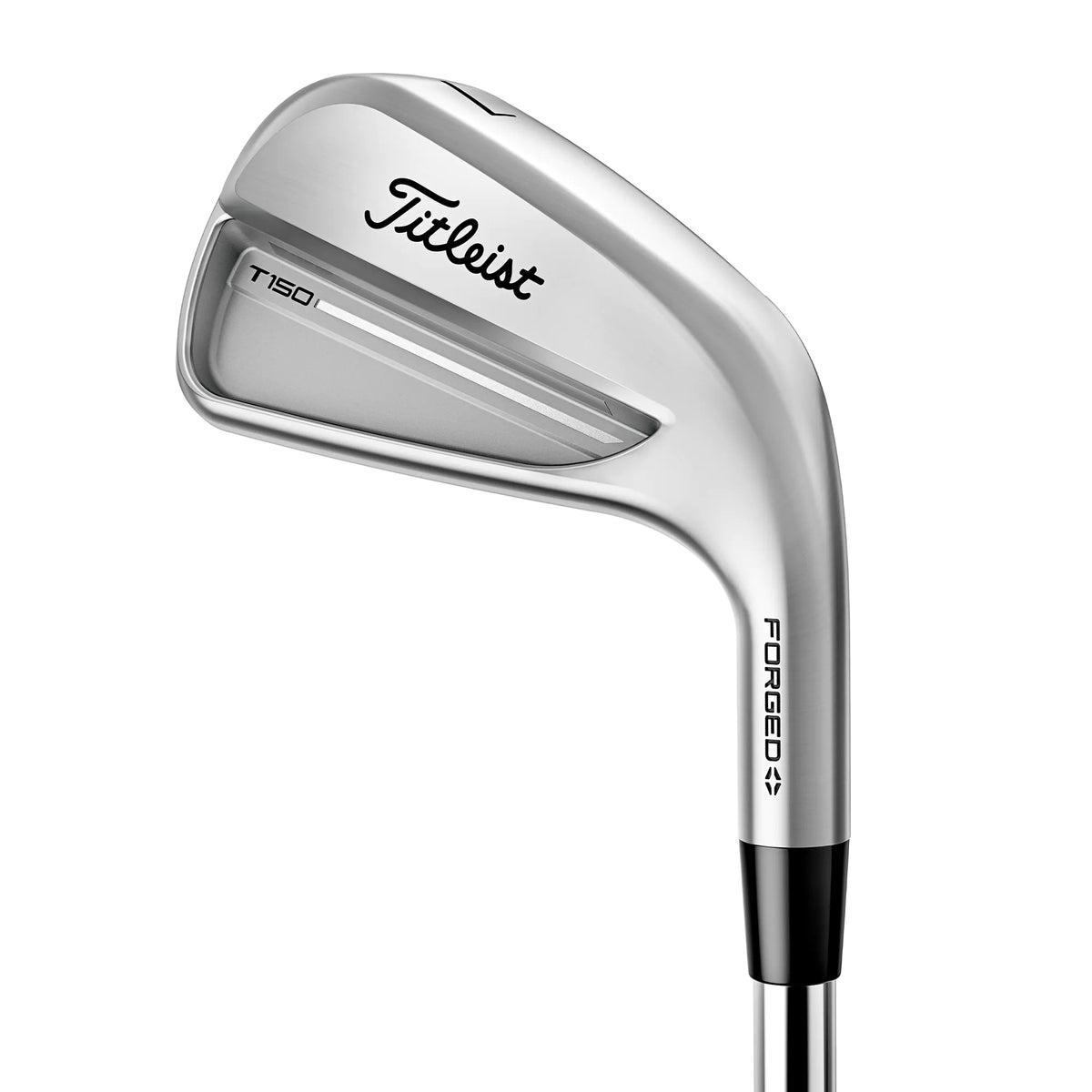
The Goldilocks Profile: Why the Titleist T150 Still Commands the Player’s Iron Conversation — Equipment
Golf
4 min
Equipment · Nov 9, 2026

The Goldilocks Profile: Why the Titleist T150 Still Commands the Player’s Iron Conversation

Sitting between razor-thin tour blades and hollow-body distance cannons, Titleist’s refined player’s cavity continues to earn its reputation as the market’s most balanced iron.

Margot Vellis 4 min
The Ghost League: Why the Attempted ‘LIV 2.0’ Rescue Died on Arrival — Tour News
Golf
4 min
Tour News · Nov 8, 2026

The Ghost League: Why the Attempted ‘LIV 2.0’ Rescue Died on Arrival

When outside investors pulled the plug on a rebooted breakaway circuit over a lack of committed talent, the curtain finally slammed down on professional golf’s costliest civil war.

Margot Vellis 4 min
The Fine Print Impasse: Rahm Puts His Money Where Koepka’s Was — PGA Tour
Golf
4 min
PGA Tour · Nov 7, 2026

The Fine Print Impasse: Rahm Puts His Money Where Koepka’s Was

Jon Rahm confirms he is prepared to match the financial penalty paid by Brooks Koepka, but Ponte Vedra has yet to put an official offer on the table.

Margot Vellis 4 min
Autumn Reckoning: Inside the High-Stakes Schwab Cup Bubble in Arkansas — PGA Tour
Golf
4 min
PGA Tour · Nov 6, 2026

Autumn Reckoning: Inside the High-Stakes Schwab Cup Bubble in Arkansas

As the PGA Tour Champions descends on the Simmons Bank Championship, the Charles Schwab Cup playoffs reach their most unforgiving sorting mechanism.

Margot Vellis 4 min
The Shotgun Finale: How LIV Golf Finally Reached the End of the Road — Tour News
Golf
4 min
Tour News · Nov 6, 2026

The Shotgun Finale: How LIV Golf Finally Reached the End of the Road

After five turbulent years, billions in sovereign capital, and a failed 2.0 pivot, men's professional golf's most divisive venture prepares to shut its doors.

Margot Vellis 4 min
The El Cardonal Blitz: Chris Kirk Fires an Opening 63 at the World Wide Technology — PGA Tour
Golf
4 min
PGA Tour · Nov 5, 2026

The El Cardonal Blitz: Chris Kirk Fires an Opening 63 at the World Wide Technology

A blistering nine-under opening lap puts Chris Kirk in prime position as the FedExCup Fall sprint reaches Los Cabos.

Margot Vellis 4 min
The Private Equity Pullout: Inside BC Partners’ Exit and LIV’s Existential Brink — Tour News
Golf
4 min
Tour News · Nov 5, 2026

The Private Equity Pullout: Inside BC Partners’ Exit and LIV’s Existential Brink

BC Partners drops its financial backing over player recruitment shortfalls, plunging LIV Golf’s 2.0 vision into immediate peril.

Margot Vellis 4 min
The Basque Backtrack: Inside Jon Rahm’s Calculated Path Back to the PGA Tour — Tour News
Golf
4 min
Tour News · Nov 4, 2026

The Basque Backtrack: Inside Jon Rahm’s Calculated Path Back to the PGA Tour

Unimpressed by LIV’s proposed 2027 relaunch, the two-time major champion signals an openness to pay the penalty box toll to return to Ponte Vedra.

Margot Vellis 4 min
The Autumn Squeeze: Novak’s Late Flurry and the Brutal Math of VidantaWorld — PGA Tour
Golf
4 min
PGA Tour · Nov 3, 2026

The Autumn Squeeze: Novak’s Late Flurry and the Brutal Math of VidantaWorld

A three-shot cushion in Mexico reshuffles the FedExCup Fall hierarchy as the tour turns toward Bermuda.

Margot Vellis 4 min
The Forever Pitch: Inside Bryson DeChambeau’s LIV 2.0 Realpolitik — Tour News
Golf
4 min
Tour News · Nov 3, 2026

The Forever Pitch: Inside Bryson DeChambeau’s LIV 2.0 Realpolitik

As player departures mount and LIV Golf pivots toward a non-hostile 2.0 model, Bryson DeChambeau insists the breakaway project is built for eternity.

Margot Vellis 4 min
Autumn Grinders: Hughes Lurks as VidantaWorld Tests Fall Resolves — PGA Tour
Golf
4 min
PGA Tour · Nov 3, 2026

Autumn Grinders: Hughes Lurks as VidantaWorld Tests Fall Resolves

While Andrew Novak surged clear on the Pacific coast, Mackenzie Hughes’s steady climb inside the top ten underscores the high-stakes grind of the FedExCup Fall.

Margot Vellis 4 min
The Pacific Surge: Inside Andrew Novak’s Breakout at VidantaWorld — PGA Tour
Golf
4 min
PGA Tour · Nov 2, 2026

The Pacific Surge: Inside Andrew Novak’s Breakout at VidantaWorld

A clinical 14-under display in Vallarta elevates Andrew Novak to the sharp end of the FedExCup Fall sweepstakes.

Margot Vellis 4 min
Soft Core, Hard Data: Inside TaylorMade’s Sub-$30 Ball Trinity — Equipment
Golf
4 min
Equipment · Nov 1, 2026

Soft Core, Hard Data: Inside TaylorMade’s Sub-$30 Ball Trinity

Testing the SpeedSoft, SpeedSoft Ink, and Distance+ across driver, iron, and wedge profiles reveals where low-compression compromises truly bite.

Margot Vellis 4 min
The £1 Million Toll Booth: Sergio Garcia’s Punitive Path Back to the Ryder Cup — Tour News
Golf
Deep Dive
9 min
Tour News · Nov 1, 2026

The £1 Million Toll Booth: Sergio Garcia’s Punitive Path Back to the Ryder Cup

To reclaim his DP World Tour card and secure his 2027 Ryder Cup eligibility, the European legend faces a mountain of unpaid arbitration sanctions and pending suspensions. As other major champions exit the breakaway circuit, Garcia's holding pattern reveals the steep cost of institutional redemption.

Margot Vellis 9 min
The Autumn Shuffled Deck: Inside the Mexico Open’s Late-Season Calibration — PGA Tour
Golf
4 min
PGA Tour · Oct 31, 2026

The Autumn Shuffled Deck: Inside the Mexico Open’s Late-Season Calibration

As the VidantaWorld Mexico Open reaches moving day in its late-October slot, the PGA Tour's redesigned autumn architecture reveals its true competitive cost.

Margot Vellis 4 min
FAQ

Frequently asked

Do premium golf balls actually go further?

For faster swing speeds, yes. The multi-layer construction allows manufacturers to separate driver performance from wedge performance. A firm core can maximize energy transfer and reduce driver spin, leading to more carry and roll for players swinging over 100 mph.

How long does a premium golf ball last?

Structurally, a urethane golf ball will perform consistently until the cover is compromised. Scuffs, cuts, or deep scratches alter the aerodynamics. A club golfer can easily get 18 to 36 holes out of a premium ball, provided it doesn't hit a cart path, wedge out of sharp gravel, or hit a tree.

Should I use a yellow or brightly colored golf ball?

That is purely a visual preference. Top manufacturers now produce their flagship tour balls in high-visibility yellow or with visual alignment tech (like Callaway's Truvis or TaylorMade's Pix) without altering the cover chemistry. They perform identically to the white versions.

What does a 4-piece or 5-piece construction actually do?

Extra layers (mantle layers) sit between the core and the cover. They act as speed-limiters or speed-enhancers depending on the force of the strike. A 4- or 5-piece ball allows engineers to tune the ball to spin low on high-impact driver shots, but spin high on low-impact wedge shots.

Are direct-to-consumer golf balls as good as Titleist or TaylorMade?

Brands that sell directly to consumers produce excellent urethane golf balls that perform very closely to the major brands at a lower price point. However, the premium you pay for a Titleist or TaylorMade often goes toward tighter manufacturing tolerances, meaning less variation in weight, concentricity, and performance from ball to ball.