Beyond the Raw Integer: Why Ball Modeling Is Launch Monitor Tech's Next Frontier
As hardware sensors reach commodity parity, the battle for swing data supremacy shifts to ball modeling and connected trajectory analytics.
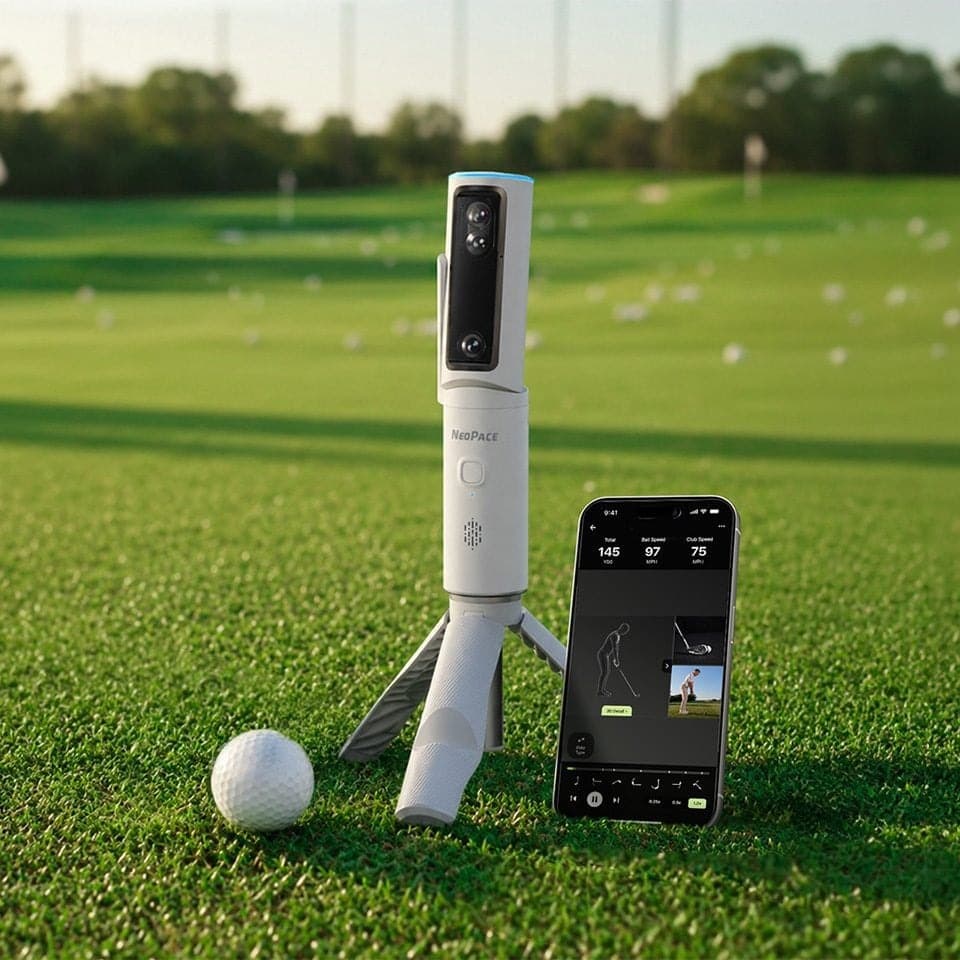
For the better part of a decade, the launch monitor arms race was fought strictly on optical sensor counts and radar refresh rates. Every manufacturer promised higher frames per second and cleaner photometric capture at impact. But as the 2026 testing cycle gathers pace across the industry—headlined by units like the NeoPace G10 Pro making waves on testing channels like Alex Etches Golf and extensive multi-tier roundups from Breaking Eighty—a fundamental shift has arrived. Hardware measurement is no longer the final frontier; the real differentiator is what the software does after impact.For the better part of a decade, the launch monitor arms race was fought strictly on optical sensor counts and radar refresh rates. Every manufacturer promised higher frames per second and cleaner photometric capture at impact. But as the 2026 testing cycle gathers pace across the industry—headlined by units like the NeoPace G10 Pro making waves on testing channels like Alex Etches Golf and extensive multi-tier roundups from Breaking Eighty—a fundamental shift has arrived. Hardware measurement is no longer the final frontier; the real differentiator is what the software does after impact.
The core limitation of traditional tracking has always been contextual. A launch monitor's hardware simply records what the clubhead and ball execute at the exact moment of collision: face angle, path, ball speed, launch angle, and spin axis. However, as emerging analytical platforms and ball-modeling applications point out, direct measurement only captures what occurred with that specific strike—it cannot natively explain why a flight behaved the way it did under differing atmospheric conditions or how that same impact profile would translate if you swapped out a firm tour urethane ball for a softer multi-layer alternative.The core limitation of traditional tracking has always been contextual. A launch monitor's hardware simply records what the clubhead and ball execute at the exact moment of collision: face angle, path, ball speed, launch angle, and spin axis. However, as emerging analytical platforms and ball-modeling applications point out, direct measurement only captures what occurred with that specific strike—it cannot natively explain why a flight behaved the way it did under differing atmospheric conditions or how that same impact profile would translate if you swapped out a firm tour urethane ball for a softer multi-layer alternative.
This analytical divide is reshaping how instruction and fitting platforms structure their telemetry. Technical guides from hardware and software developers like GolfJoy emphasize that raw numbers on a screen are essentially useless in isolation. The industry is pivoting toward a structured, three-step data hierarchy: first, defining the exact direction, distance, and speed metrics; second, auditing model-specific data availability across varying hardware tiers; and third, reading club, ball, and trajectory metrics as a single interconnected equation.This analytical divide is reshaping how instruction and fitting platforms structure their telemetry. Technical guides from hardware and software developers like GolfJoy emphasize that raw numbers on a screen are essentially useless in isolation. The industry is pivoting toward a structured, three-step data hierarchy: first, defining the exact direction, distance, and speed metrics; second, auditing model-specific data availability across varying hardware tiers; and third, reading club, ball, and trajectory metrics as a single interconnected equation.
Reading those metrics together solves the long-standing trap of chasing isolated numbers. An amateur might see 2,200 RPM of spin on a driver and assume optimal launch conditions, yet fail to recognize that a dynamic loft mismatch and negative angle of attack are bleeding descent angle and roll-out efficiency downrange. Ball modeling software bridges that gap by running aerodynamic simulations over the raw photometric or radar inputs, translating basic delivery numbers into actionable performance projections.Reading those metrics together solves the long-standing trap of chasing isolated numbers. An amateur might see 2,200 RPM of spin on a driver and assume optimal launch conditions, yet fail to recognize that a dynamic loft mismatch and negative angle of attack are bleeding descent angle and roll-out efficiency downrange. Ball modeling software bridges that gap by running aerodynamic simulations over the raw photometric or radar inputs, translating basic delivery numbers into actionable performance projections.
As Black Friday and end-of-year buying guides flood the market with options spanning every conceivable budget, consumer scrutiny is shifting from hardware specs to software ecosystems. The launch monitor market of 2026 is rapidly proving that measuring impact is merely table stakes. The devices and apps that survive will be the ones that turn raw velocity and spin into an intelligible roadmap for ball flight.As Black Friday and end-of-year buying guides flood the market with options spanning every conceivable budget, consumer scrutiny is shifting from hardware specs to software ecosystems. The launch monitor market of 2026 is rapidly proving that measuring impact is merely table stakes. The devices and apps that survive will be the ones that turn raw velocity and spin into an intelligible roadmap for ball flight.
Gallery
"Launch monitors measure what your club and ball do; ball modeling explains why those results happen and how they may change."
Why it matters
Hardware parity has made ball and club tracking accessible across all price points, forcing tech brands to compete on algorithmic interpretation. Golfers who understand how to read connected metrics and ball modeling will make far smarter equipment and swing decisions than those chasing isolated launch numbers.
Sources
- 1.
- 2.14 Best Golf Launch Monitors of 2026 (For Every Budget)breakingeighty.com
- 3.
- 4.Launch Monitor Technology & Data Guidegolfjoy.com
Reported by the Downforce & Divots desk from the sources above.
The clubhouse.
- No replies yet. Be the first.