The Pocket Doppler: How Smartphone Vision Is Rewriting Range Practice
From dedicated consumer units to phone-based optical tracking and club demo days, launch monitor tech is stripping the friction—and the cost—out of ball-flight analytics.
For decades, capturing actionable ball telemetry required either five-figure institutional radar boxes or settling for crude visual guesswork against weathered driving-range flags. Consistent access to verified ball-speed and trajectory numbers—whether grinding into a backyard net or standing on open turf—was long treated as a bespoke luxury reserved for tour players and high-end clubfitters. That walled garden has rapidly dissolved as the 2026 equipment cycle brings laboratory-grade tracking into everyday bags.For decades, capturing actionable ball telemetry required either five-figure institutional radar boxes or settling for crude visual guesswork against weathered driving-range flags. Consistent access to verified ball-speed and trajectory numbers—whether grinding into a backyard net or standing on open turf—was long treated as a bespoke luxury reserved for tour players and high-end clubfitters. That walled garden has rapidly dissolved as the 2026 equipment cycle brings laboratory-grade tracking into everyday bags.
In MyGolfSpy’s latest 2026 personal launch monitor evaluation, testing manager Tyler Allred noted how dramatically the sector has accelerated. What was once an expensive novelty has matured into an essential practice staple, with portable hardware and optical devices delivering reliable carry figures and ball-flight parameters across varied hitting environments. The technology has evolved to give regular players immediate insight into dispersion patterns and club gapping without the need for a dedicated indoor simulator bay.In MyGolfSpy’s latest 2026 personal launch monitor evaluation, testing manager Tyler Allred noted how dramatically the sector has accelerated. What was once an expensive novelty has matured into an essential practice staple, with portable hardware and optical devices delivering reliable carry figures and ball-flight parameters across varied hitting environments. The technology has evolved to give regular players immediate insight into dispersion patterns and club gapping without the need for a dedicated indoor simulator bay.
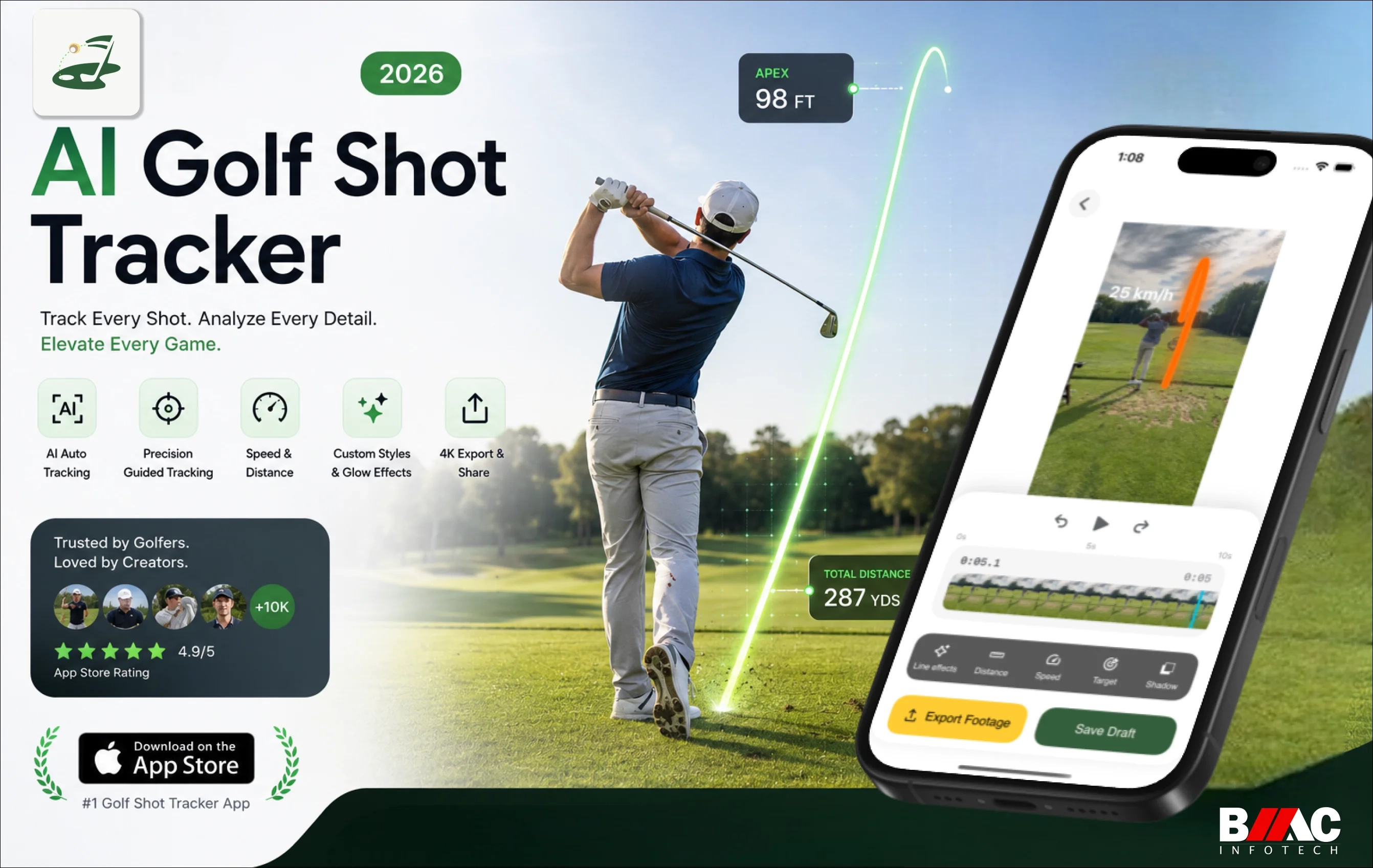
The push is moving just as aggressively at the software boundary. Platforms such as Shot Tracer are capitalizing on improved smartphone camera sensors to turn mobile phones into functional optical monitors. By tracking ball flight and processing video directly on the device, players can log distances and calibrate exact club gappings during routine range visits, eliminating the aimless habit of emptying buckets without knowing true yardages.The push is moving just as aggressively at the software boundary. Platforms such as Shot Tracer are capitalizing on improved smartphone camera sensors to turn mobile phones into functional optical monitors. By tracking ball flight and processing video directly on the device, players can log distances and calibrate exact club gappings during routine range visits, eliminating the aimless habit of emptying buckets without knowing true yardages.
That demand for empirical validation is altering how clubs engage their memberships. Across facilities like The Club at Diamondhead, demo sessions for systems such as the Rainmaker launch monitor are pulling golfers who prioritize objective diagnostic data over subjective swing hunches. Modern golfers want instant clarity on the mechanical inputs that dictate ball flight—decoding key outputs like smash factor, dynamic launch angle, and spin rate to diagnose precisely why a shot underperformed.That demand for empirical validation is altering how clubs engage their memberships. Across facilities like The Club at Diamondhead, demo sessions for systems such as the Rainmaker launch monitor are pulling golfers who prioritize objective diagnostic data over subjective swing hunches. Modern golfers want instant clarity on the mechanical inputs that dictate ball flight—decoding key outputs like smash factor, dynamic launch angle, and spin rate to diagnose precisely why a shot underperformed.
The ongoing evolution in portable launch monitors proves that practice is no longer tethered to intuition alone. As mobile vision tracking and accessible hardware continue to compress the gap with commercial studio systems, range sessions are becoming precise, data-driven calibration runs for golfers at every handicap level.The ongoing evolution in portable launch monitors proves that practice is no longer tethered to intuition alone. As mobile vision tracking and accessible hardware continue to compress the gap with commercial studio systems, range sessions are becoming precise, data-driven calibration runs for golfers at every handicap level.
Gallery
"It was once considered a luxury to have consistent access to your numbers while hitting on the range or indoors into a net."
Why it matters
The rapid democratization of launch monitor tracking turns everyday range sessions into precise, data-informed practice. As smartphone vision and portable devices replace heavy hardware, players can calibrate distances and club gapping without five-figure studio equipment.
Sources
- 1.
- 2.
- 3.
- 4.
Reported by the Downforce & Divots desk from the sources above.
The clubhouse.
- No replies yet. Be the first.