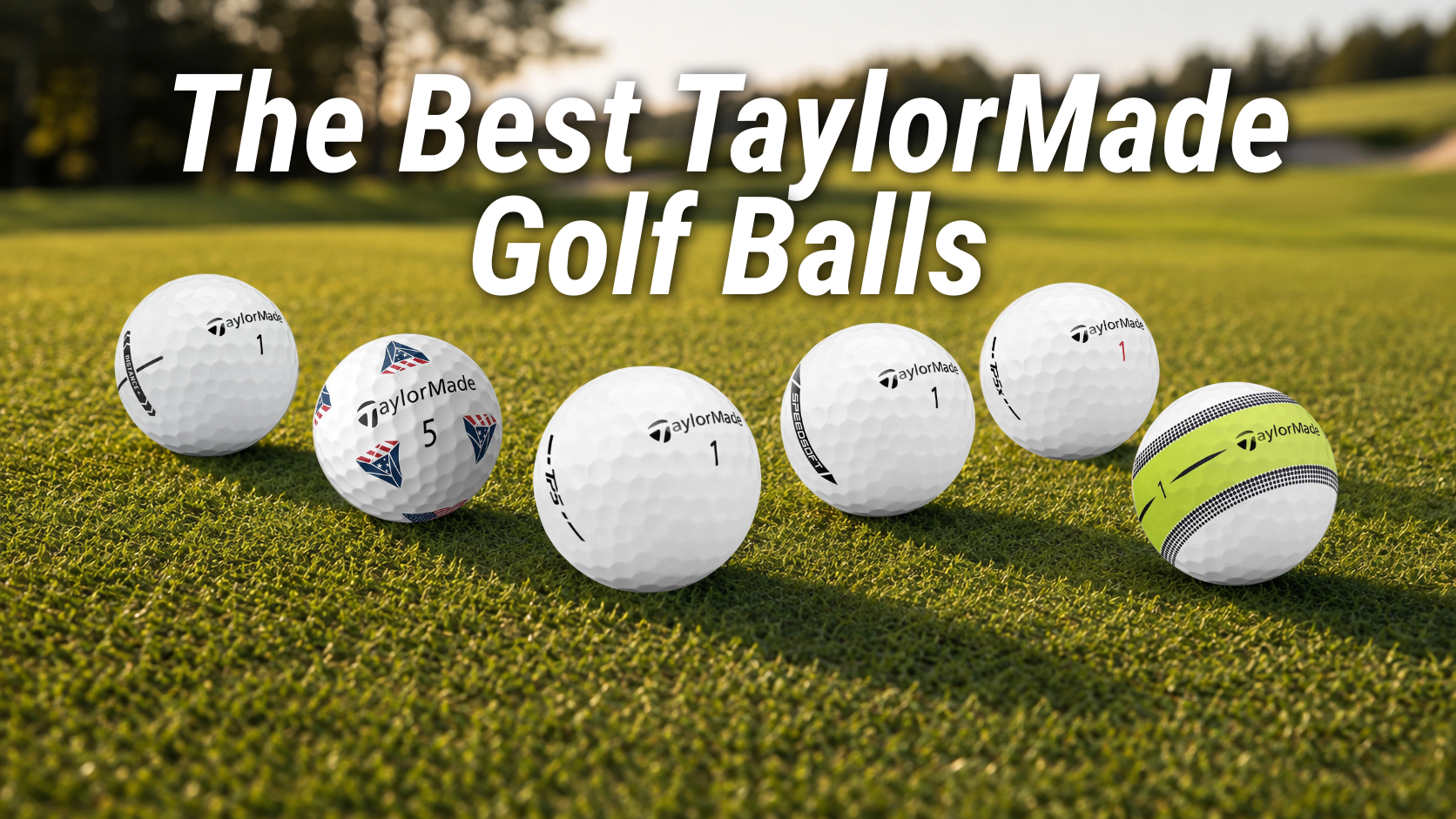
Soft Core, Hard Data: Inside TaylorMade’s Sub-$30 Ball Trinity
Testing the SpeedSoft, SpeedSoft Ink, and Distance+ across driver, iron, and wedge profiles reveals where low-compression compromises truly bite.
The golf ball market is perpetually intoxicated by tour-level urethane, but the commercial battleground is increasingly waged in the sub-$30 aisle. Equipment testing from Golf Ball Addict put three of TaylorMade’s most accessible offerings—the SpeedSoft, SpeedSoft Ink, and Distance+—through a comprehensive multi-club trial spanning driver, iron, wedge, and flatstick metrics to parse whether low-compression marketing withstands robotic scrutiny.The golf ball market is perpetually intoxicated by tour-level urethane, but the commercial battleground is increasingly waged in the sub-$30 aisle. Equipment testing from Golf Ball Addict put three of TaylorMade’s most accessible offerings—the SpeedSoft, SpeedSoft Ink, and Distance+—through a comprehensive multi-club trial spanning driver, iron, wedge, and flatstick metrics to parse whether low-compression marketing withstands robotic scrutiny.
At the center of the inquiry lies the question of whether visual alignment aids and low-compression cores alter true ball dynamics. The standard SpeedSoft and its splattered sibling, the SpeedSoft Ink, present identical structural architecture beneath the cover, yet golfer perception often anticipates divergence. Systematic monitoring of launch angles, ball speed, and spin profiles across both models clarifies that surface paint schemes yield no aerodynamical penalty, retaining identical compression rebound off the tee.At the center of the inquiry lies the question of whether visual alignment aids and low-compression cores alter true ball dynamics. The standard SpeedSoft and its splattered sibling, the SpeedSoft Ink, present identical structural architecture beneath the cover, yet golfer perception often anticipates divergence. Systematic monitoring of launch angles, ball speed, and spin profiles across both models clarifies that surface paint schemes yield no aerodynamical penalty, retaining identical compression rebound off the tee.
Where the data splits sharply is the confrontation between the SpeedSoft family and the venerable Distance+. Built as a firmer, lower-spinning two-piece construction, the Distance+ prioritizes raw velocity off the clubface, generating distinct launch windows and reduced backspin on full iron strikes compared to the softer, dampened core of the SpeedSoft range.Where the data splits sharply is the confrontation between the SpeedSoft family and the venerable Distance+. Built as a firmer, lower-spinning two-piece construction, the Distance+ prioritizes raw velocity off the clubface, generating distinct launch windows and reduced backspin on full iron strikes compared to the softer, dampened core of the SpeedSoft range.
The trade-off manifests most aggressively inside 100 yards. While the SpeedSoft chassis provides noticeably muted acoustics and softer tactile feedback off putter faces and wedge grooves, neither cover formulation replicates cast urethane’s friction-induced greenside grab. Distance control on partial wedge shots requires players to account for extended rollout across firm greens, regardless of whether they select the firmer Distance+ or the softer SpeedSoft casing.The trade-off manifests most aggressively inside 100 yards. While the SpeedSoft chassis provides noticeably muted acoustics and softer tactile feedback off putter faces and wedge grooves, neither cover formulation replicates cast urethane’s friction-induced greenside grab. Distance control on partial wedge shots requires players to account for extended rollout across firm greens, regardless of whether they select the firmer Distance+ or the softer SpeedSoft casing.
Durability evaluations further separate the budget contenders from their multi-layer tour counterparts. Testing through full-wedge turf interaction and high-speed driver impacts demonstrates resilient cover integrity across all three TaylorMade models, though the distinct visual paint on the Ink variant demands scrutiny over repeat strikes to ensure visual clarity remains unblemished over 18 holes.Durability evaluations further separate the budget contenders from their multi-layer tour counterparts. Testing through full-wedge turf interaction and high-speed driver impacts demonstrates resilient cover integrity across all three TaylorMade models, though the distinct visual paint on the Ink variant demands scrutiny over repeat strikes to ensure visual clarity remains unblemished over 18 holes.
Gallery
"Surface paint schemes yield no aerodynamical penalty, retaining identical compression rebound off the tee."
Why it matters
The low-compression golf ball segment dominates amateur sales volume, yet golfers frequently confuse soft auditory feedback with actual greenside spin. Direct comparative testing proves that choosing between TaylorMade's SpeedSoft and Distance+ lines is an intentional trade-off between rollout velocity and impact acoustics.
Sources
- 1.
- 2.
- 3.Latest - MyGolfSpymygolfspy.com
- 4.
Reported by the Downforce & Divots desk from the sources above.
The clubhouse.
- No replies yet. Be the first.