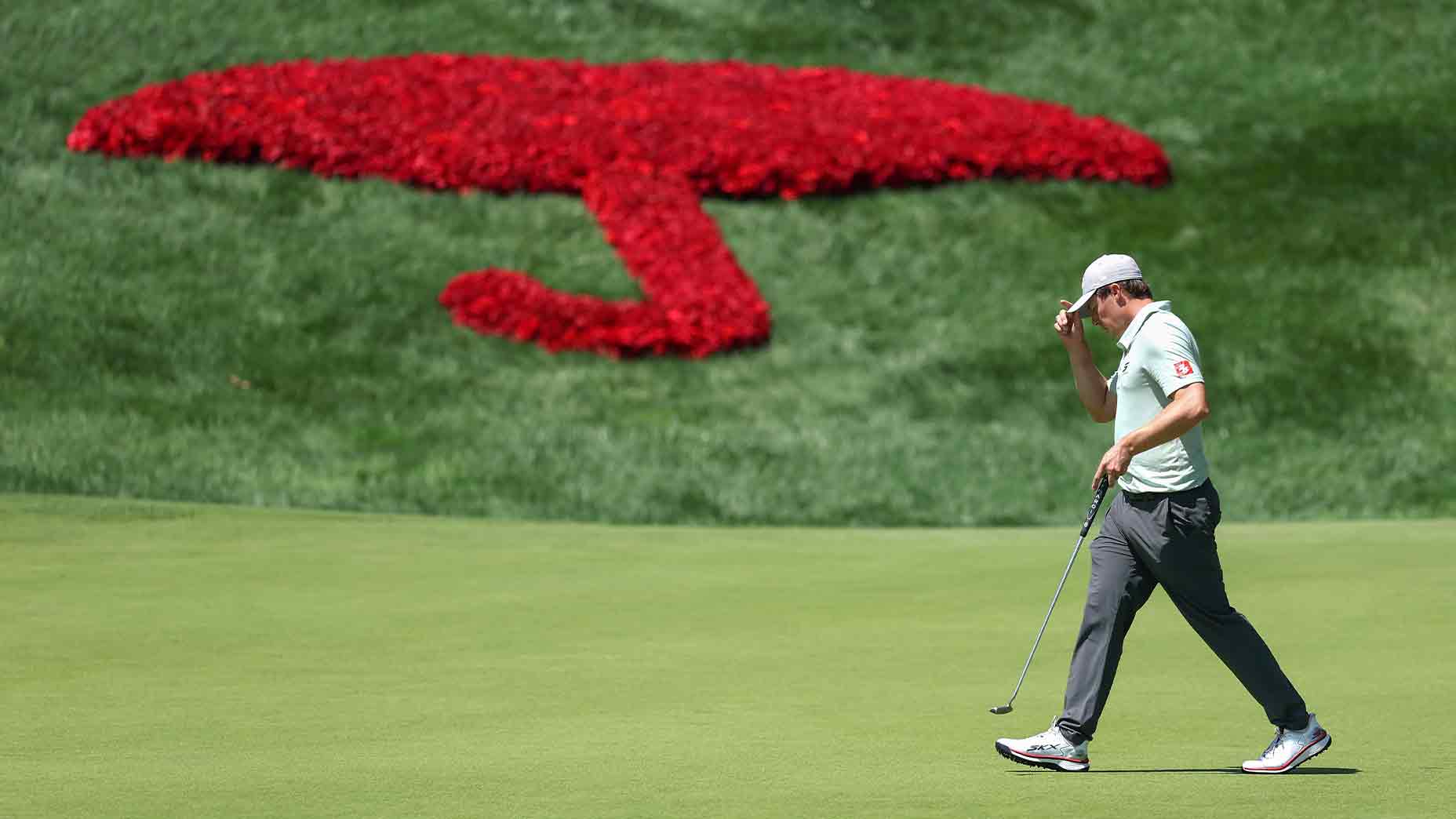
The Stability Play: How Matt Fitzpatrick's High-MOI Driver Borrows from Motorsport's Playbook
After a dismal driving week at the U.S. Open, Matt Fitzpatrick made a rare equipment change to a high-forgiveness driver. It's more than just a quick fix; it's a deep-physics pivot toward stability that has its roots in the high-stakes world of automotive performance and safety engineering.
It’s not often a professional at the absolute peak of the sport makes a mid-season change that feels less like a tweak and more like a concession. Yet on the first tee at the Travelers Championship, that’s exactly what Matt Fitzpatrick did. Just days after an uncharacteristically wild week off the tee at the U.S. Open saw him rank a lowly T60 in driving accuracy, the Englishman, a player known for his meticulous, almost scientific approach, put a brand-new driver in his bag. The result was immediate and profound: an opening round where he found 13 of 14 fairways. This wasn't the act of a tinkerer searching for a feeling; this was a calculated, data-driven defection to a different design philosophy, one that values pure, unadulterated stability above all else.
The move was, as one report noted, a "rare driver change" for Fitzpatrick, who switched into a high-MOI Ping model. For a top-tier professional, this is a path consciously not taken. The prevailing wisdom for elite players, reinforced by the very design of tour-level equipment, is to use clubs that cater to their specific talents. A tour-issue driver, as one analysis of equipment differences points out, is typically engineered with lower spin profiles for players who generate "high clubhead speed and consistent strike patterns." These clubs are surgical tools, designed for workability and distance optimization, rewarding the perfect strike with maximum performance. Fitzpatrick’s pivot to a high-MOI, high-forgiveness model is a deliberate step away from that ethos. He effectively traded the scalpel for a smartly engineered hammer, betting that hitting the nail squarely more often was worth sacrificing the ability to carve it.The move was, as one report noted, a "rare driver change" for Fitzpatrick, who switched into a high-MOI Ping model. For a top-tier professional, this is a path consciously not taken. The prevailing wisdom for elite players, reinforced by the very design of tour-level equipment, is to use clubs that cater to their specific talents. A tour-issue driver, as one analysis of equipment differences points out, is typically engineered with lower spin profiles for players who generate "high clubhead speed and consistent strike patterns." These clubs are surgical tools, designed for workability and distance optimization, rewarding the perfect strike with maximum performance. Fitzpatrick’s pivot to a high-MOI, high-forgiveness model is a deliberate step away from that ethos. He effectively traded the scalpel for a smartly engineered hammer, betting that hitting the nail squarely more often was worth sacrificing the ability to carve it.
At the heart of this decision is a core principle of physics: Moment of Inertia, or MOI. While the term is thrown around liberally in equipment marketing, its true meaning is rooted in the cold, hard science of rotational dynamics. As a physics primer on the topic explains, MOI is the measure of an object's resistance to angular acceleration when a torque is applied. In layman’s terms for a golf club, it’s the head’s ability to resist twisting when the ball is struck anywhere but the dead center of the face. An off-center strike applies a twisting force—a torque—to the clubhead. A head with low MOI will twist significantly, imparting sidespin and sending the ball careening offline. A head with high MOI, typically achieved by pushing mass to the perimeter of the club, resists that twist. It stabilizes the impact, reduces the gear-effect sidespin, and keeps the ball traveling closer to the intended target line. It’s a built-in buffer against human imperfection.At the heart of this decision is a core principle of physics: Moment of Inertia, or MOI. While the term is thrown around liberally in equipment marketing, its true meaning is rooted in the cold, hard science of rotational dynamics. As a physics primer on the topic explains, MOI is the measure of an object's resistance to angular acceleration when a torque is applied. In layman’s terms for a golf club, it’s the head’s ability to resist twisting when the ball is struck anywhere but the dead center of the face. An off-center strike applies a twisting force—a torque—to the clubhead. A head with low MOI will twist significantly, imparting sidespin and sending the ball careening offline. A head with high MOI, typically achieved by pushing mass to the perimeter of the club, resists that twist. It stabilizes the impact, reduces the gear-effect sidespin, and keeps the ball traveling closer to the intended target line. It’s a built-in buffer against human imperfection.
This obsession with mitigating the catastrophic potential of a single moment of instability finds its clearest parallel in the world of motorsport. Consider the extreme physical duress drivers operate under, where the margin for error is nonexistent. During one recent European heat wave, Alpine’s Esteban Ocon admitted to vomiting inside his helmet just 15 laps into a Grand Prix, while Williams driver Logan Sargeant was forced to retire from the same race due to severe illness. In these moments, when the pilot’s cognitive and physical functions are compromised, the inherent predictability of the machine becomes the last line of defense. The car’s aerodynamic and mechanical stability isn't a luxury; it's a fundamental safety and performance requirement that must function perfectly when the human element is at its weakest.This obsession with mitigating the catastrophic potential of a single moment of instability finds its clearest parallel in the world of motorsport. Consider the extreme physical duress drivers operate under, where the margin for error is nonexistent. During one recent European heat wave, Alpine’s Esteban Ocon admitted to vomiting inside his helmet just 15 laps into a Grand Prix, while Williams driver Logan Sargeant was forced to retire from the same race due to severe illness. In these moments, when the pilot’s cognitive and physical functions are compromised, the inherent predictability of the machine becomes the last line of defense. The car’s aerodynamic and mechanical stability isn't a luxury; it's a fundamental safety and performance requirement that must function perfectly when the human element is at its weakest.
Digging deeper, this philosophy is the bedrock of automotive safety engineering. In workshops exploring vehicle design, like those held by Volkswagen to celebrate its history of accident research, the focus is on how a car’s very structure can protect its occupants. Engineers meticulously design a car’s crash structure to absorb and redirect the violent rotational forces of an accident, creating a safety cell for the passengers. A high-MOI driver head operates on the exact same principle. The off-center strike is a micro-crash. The clubhead's perimeter weighting acts as a chassis designed to manage that impact's instability, protecting its precious cargo—the golf ball—from a disastrous journey into the trees or the water hazard. It is, in essence, an admission that error is inevitable and a proactive engineering solution to minimize its consequences.Digging deeper, this philosophy is the bedrock of automotive safety engineering. In workshops exploring vehicle design, like those held by Volkswagen to celebrate its history of accident research, the focus is on how a car’s very structure can protect its occupants. Engineers meticulously design a car’s crash structure to absorb and redirect the violent rotational forces of an accident, creating a safety cell for the passengers. A high-MOI driver head operates on the exact same principle. The off-center strike is a micro-crash. The clubhead's perimeter weighting acts as a chassis designed to manage that impact's instability, protecting its precious cargo—the golf ball—from a disastrous journey into the trees or the water hazard. It is, in essence, an admission that error is inevitable and a proactive engineering solution to minimize its consequences.
Of course, this stability comes with trade-offs. As some discussions among amateur golfers reveal, high-MOI designs aren't a universal panacea. For some players, the same characteristics that create forgiveness can also introduce unwanted variables, with some complaining that "high MOI drivers often cause issues…due to high spin and draw bias." For a professional like Fitzpatrick, a higher-spinning head could potentially sacrifice crucial yards of distance, and a draw bias could neutralize his preferred fade or make it harder to shape the ball both ways on command. This is the crux of his gamble: he is wagering that the strokes gained from simply being in the fairway more often will outweigh any potential distance loss or reduction in shot-shaping versatility. It’s a pragmatic, statistical bet on consistency over peak performance.Of course, this stability comes with trade-offs. As some discussions among amateur golfers reveal, high-MOI designs aren't a universal panacea. For some players, the same characteristics that create forgiveness can also introduce unwanted variables, with some complaining that "high MOI drivers often cause issues…due to high spin and draw bias." For a professional like Fitzpatrick, a higher-spinning head could potentially sacrifice crucial yards of distance, and a draw bias could neutralize his preferred fade or make it harder to shape the ball both ways on command. This is the crux of his gamble: he is wagering that the strokes gained from simply being in the fairway more often will outweigh any potential distance loss or reduction in shot-shaping versatility. It’s a pragmatic, statistical bet on consistency over peak performance.
Fitzpatrick’s driver experiment is not happening in a vacuum; it’s a symptom of a much larger trend across the golf bag, most notably in the putter market. The modern arms race in putter design is, almost entirely, a quest for higher MOI. Players like Scottie Scheffler and Rory McIlroy have found immense success using TaylorMade Spider Tour X mallet putters, which are paragons of stability. In an exhaustive test that evaluated 110 different putter models, “stability” was one of the five key categories for scoring, underscoring its importance to performance. The rise of the entire "zero-torque" putter category, as tracked by publications like Today's Golfer and GolfMagic, is a testament to this movement. These designs are the most extreme examples of MOI-first engineering, designed to completely eliminate the twisting of the face during the stroke. The trend is clear: from tee to green, engineers and players are increasingly prioritizing systems that resist human error.Fitzpatrick’s driver experiment is not happening in a vacuum; it’s a symptom of a much larger trend across the golf bag, most notably in the putter market. The modern arms race in putter design is, almost entirely, a quest for higher MOI. Players like Scottie Scheffler and Rory McIlroy have found immense success using TaylorMade Spider Tour X mallet putters, which are paragons of stability. In an exhaustive test that evaluated 110 different putter models, “stability” was one of the five key categories for scoring, underscoring its importance to performance. The rise of the entire "zero-torque" putter category, as tracked by publications like Today's Golfer and GolfMagic, is a testament to this movement. These designs are the most extreme examples of MOI-first engineering, designed to completely eliminate the twisting of the face during the stroke. The trend is clear: from tee to green, engineers and players are increasingly prioritizing systems that resist human error.
Ultimately, Fitzpatrick's turn toward a more forgiving driver is a fascinating case study in modern elite performance. It represents a subtle but significant shift from the lone-wolf artist, who relies on flawless technique, to the systems-minded operator, who seeks a platform that is robust to failure. The fact that sports stars like seven-time F1 champion Lewis Hamilton unwind by playing golf is a reminder that these two worlds of precision and pressure are closer than they appear. They share a common obsession with managing infinitesimally small variables that have exponentially large consequences. As Fitzpatrick continues his season, the focus won't just be on his scores, but on whether this engineered stability remains in his bag. It’s a high-tech concession that mastery isn’t just about hitting the perfect shot, but also about building a system where your imperfect shots are better than everyone else’s.
Gallery
"The game is governed by rotational dynamics. Torque, angular momentum, and moment of inertia aren't just for physicists—they're the difference between the fairway and the forest."
Why it matters
Matt Fitzpatrick's driver change highlights a critical trend in elite sports: prioritizing engineered forgiveness over pure performance. By adopting a high-MOI driver—a technology often aimed at amateurs—he's borrowing a page from motorsport's stability-first playbook. This move signals a wider shift where even the world's best athletes are building systems to minimize the cost of human error.
Sources
- 1.
- 2.
- 3.
- 4.Matt Fitzpatrick debuts a new driver, goes low Thursday at Travelersgolfweek.usatoday.com
- 5.
- 6.
- 7.
- 8.
- 9.
- 10.
Reported by the Downforce & Divots desk from the sources above.
The clubhouse.
- No replies yet. Be the first.