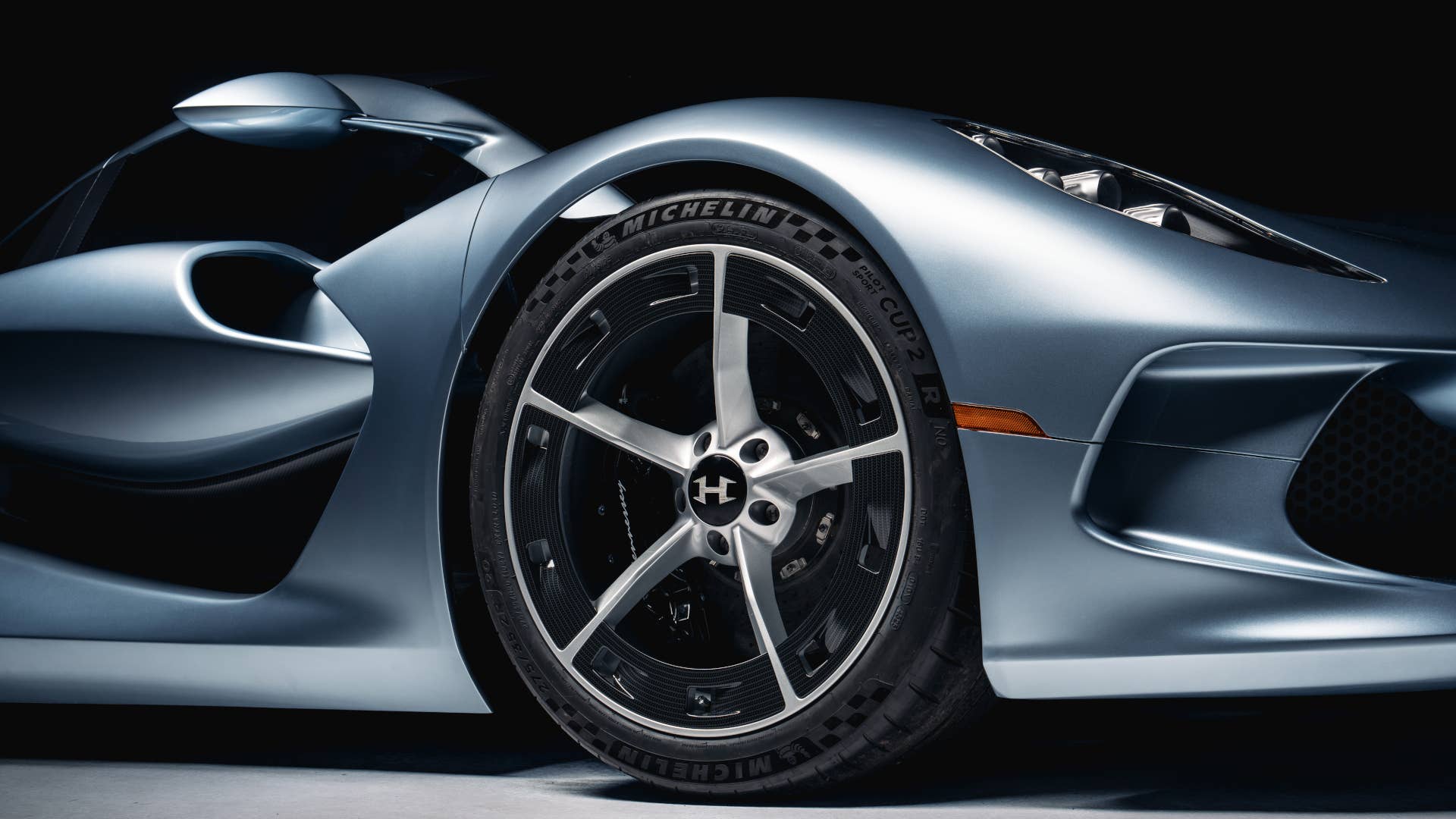
The IndyCar Heart of Texas: Why Hennessey Tapped Ilmor for its Analog Supernova
The new $2.5 million Hennessey Blackbird rejects the hypercar arms race for a screaming, naturally aspirated V8 and a gated manual. The secret to its soul isn't just its spec sheet, but its engine builder: Ilmor Engineering, the legendary name behind countless motorsport victories.
Forget the $2.5 million price tag for a moment. Ignore the carbon-fiber bodywork inspired by the iconic Lockheed SR-71 spy plane. The most revealing detail about the new Hennessey Blackbird is its sound—the shriek of a naturally aspirated V8 climbing past an altitude where other engines give up. At the heart of this Texan hypercar is a bespoke 6.2-liter V8 co-developed with Ilmor Engineering, projected to exceed 9,000 rpm. This partnership poses a fascinating question in the world of high performance: Why did Hennessey, a company that built its reputation on forced-induction fury, turn to the meticulous, decorated architects of IndyCar and Formula 1 engines for what it calls an ‘analog overload’ hypercar? The answer lies not just in horsepower, but in a shared, uncompromising pursuit of mechanical purity.
The Blackbird itself is a deliberate act of defiance against the prevailing winds of automotive technology. Hennessey’s official brief for its third hypercar, following the Venom GT and Venom F5, emphasizes an almost radical focus on ‘driver engagement’ and ‘maximum man-machine connection.’ In an era defined by dual-clutch transmissions, hybrid assistance, and sprawling digital interfaces, the Blackbird counters with a six-speed gated manual transmission, zero screens in the cockpit, purely analog controls, and a dominant, large central tachometer. Even the ignition is a tactile event, requiring a physical key. This entire philosophy, from the rear-wheel drive layout to the touring-focused usability, is designed as a vessel for one thing: to perfectly showcase the character of its high-revving, atmospheric engine.The Blackbird itself is a deliberate act of defiance against the prevailing winds of automotive technology. Hennessey’s official brief for its third hypercar, following the Venom GT and Venom F5, emphasizes an almost radical focus on ‘driver engagement’ and ‘maximum man-machine connection.’ In an era defined by dual-clutch transmissions, hybrid assistance, and sprawling digital interfaces, the Blackbird counters with a six-speed gated manual transmission, zero screens in the cockpit, purely analog controls, and a dominant, large central tachometer. Even the ignition is a tactile event, requiring a physical key. This entire philosophy, from the rear-wheel drive layout to the touring-focused usability, is designed as a vessel for one thing: to perfectly showcase the character of its high-revving, atmospheric engine.
On paper, the performance targets are predictably immense. The all-new Ilmor-developed V8 is projected to generate between 800 and 850 horsepower, a monumental figure for an engine breathing without the aid of turbos or superchargers. Housed within a bespoke carbon monocoque tub and wrapped in a full carbon-fiber body, the car targets a dry weight below 3,000 pounds. This potent power-to-weight ratio is expected to enable a 0-60 mph sprint in a blistering 2.5 seconds and a top speed of 220 mph. But unlike its Venom F5 sibling, which chases absolute velocity with twin-turbochargers, the Blackbird’s performance is about the quality of delivery. As sources note, power from its 6.2-liter Ilmor V8 builds linearly, demanding driver skill to stay in the powerband and extract every last rev on the way to that 9,000+ rpm peak.On paper, the performance targets are predictably immense. The all-new Ilmor-developed V8 is projected to generate between 800 and 850 horsepower, a monumental figure for an engine breathing without the aid of turbos or superchargers. Housed within a bespoke carbon monocoque tub and wrapped in a full carbon-fiber body, the car targets a dry weight below 3,000 pounds. This potent power-to-weight ratio is expected to enable a 0-60 mph sprint in a blistering 2.5 seconds and a top speed of 220 mph. But unlike its Venom F5 sibling, which chases absolute velocity with twin-turbochargers, the Blackbird’s performance is about the quality of delivery. As sources note, power from its 6.2-liter Ilmor V8 builds linearly, demanding driver skill to stay in the powerband and extract every last rev on the way to that 9,000+ rpm peak.
To understand why Hennessey sought out Ilmor is to understand the latter’s quiet dominance as the engineer’s engineer. While the Blackbird collaboration brings the Ilmor name to a new road car audience, the British firm is, as one source rightly identifies, ‘of Indy car fame.’ Their pedigree is unimpeachable, built over decades of designing and building some of the most successful engines in motorsport. A prime example of their behind-the-scenes mastery can be found in the Honda Indy V8 program; as research material details, the 3.5-liter naturally aspirated V8 that powered the series for years may have carried Honda branding, but it was an Ilmor-developed engine at its core. This history of creating reliable, powerful, high-revving V8s for the brutal demands of single-seater racing is precisely the expertise Hennessey needed for an engine that serves as the centerpiece of its most ambitious project.To understand why Hennessey sought out Ilmor is to understand the latter’s quiet dominance as the engineer’s engineer. While the Blackbird collaboration brings the Ilmor name to a new road car audience, the British firm is, as one source rightly identifies, ‘of Indy car fame.’ Their pedigree is unimpeachable, built over decades of designing and building some of the most successful engines in motorsport. A prime example of their behind-the-scenes mastery can be found in the Honda Indy V8 program; as research material details, the 3.5-liter naturally aspirated V8 that powered the series for years may have carried Honda branding, but it was an Ilmor-developed engine at its core. This history of creating reliable, powerful, high-revving V8s for the brutal demands of single-seater racing is precisely the expertise Hennessey needed for an engine that serves as the centerpiece of its most ambitious project.
The decision to partner with Ilmor was therefore not a mere branding exercise but a foundational engineering choice. For the Blackbird—a vehicle Hennessey describes as its ‘most significant engineering and development commitment to date’—an off-the-shelf solution would not suffice. The project demanded a ‘completely bespoke’ 6.2-liter V8, an engine developed from a clean sheet to meet the unique demands of a lightweight, analog hypercar. Ilmor brings a level of meticulous precision and a deep well of experience with atmospheric engine architecture that has become exceedingly rare in the modern automotive landscape. Entrusting the heart of its $2.5 million halo car to Ilmor was a strategic move by Hennessey to secure not just a target horsepower number, but a guarantee of world-class engineering credibility.The decision to partner with Ilmor was therefore not a mere branding exercise but a foundational engineering choice. For the Blackbird—a vehicle Hennessey describes as its ‘most significant engineering and development commitment to date’—an off-the-shelf solution would not suffice. The project demanded a ‘completely bespoke’ 6.2-liter V8, an engine developed from a clean sheet to meet the unique demands of a lightweight, analog hypercar. Ilmor brings a level of meticulous precision and a deep well of experience with atmospheric engine architecture that has become exceedingly rare in the modern automotive landscape. Entrusting the heart of its $2.5 million halo car to Ilmor was a strategic move by Hennessey to secure not just a target horsepower number, but a guarantee of world-class engineering credibility.
This collaboration also speaks volumes about the cultural moment in the hypercar market. As manufacturers universally pivot toward hybridization and full electrification to achieve headline-grabbing performance figures, the Blackbird charts a deliberately contrarian course. Its mission is not to win the spec-sheet war, but to be the ultimate expression of a fading art form. Hennessey’s choice to make it a ‘touring-focused’ machine, complete with adaptive suspension and usable storage space, further distinguishes it. The inspiration drawn from the SR-71 Blackbird is therefore fitting; like the legendary aircraft, this car aims to be the pinnacle achievement of a specific technological era—in this case, the naturally aspirated internal combustion engine—rather than a stepping stone to the next one.This collaboration also speaks volumes about the cultural moment in the hypercar market. As manufacturers universally pivot toward hybridization and full electrification to achieve headline-grabbing performance figures, the Blackbird charts a deliberately contrarian course. Its mission is not to win the spec-sheet war, but to be the ultimate expression of a fading art form. Hennessey’s choice to make it a ‘touring-focused’ machine, complete with adaptive suspension and usable storage space, further distinguishes it. The inspiration drawn from the SR-71 Blackbird is therefore fitting; like the legendary aircraft, this car aims to be the pinnacle achievement of a specific technological era—in this case, the naturally aspirated internal combustion engine—rather than a stepping stone to the next one.
Ultimately, the Blackbird is a bet that for an exclusive clientele, the experience of performance is more valuable than the metrics of performance. The visceral, irreplaceable sensation of rowing through a gated manual shifter, chasing the needle as it sweeps across the tachometer towards a 9,000 rpm crescendo, is the product Hennessey is selling. The linear power delivery of the Ilmor V8 is critical to this experience, creating a direct, predictable relationship between the driver’s right foot and the engine’s response that turbocharged engines, for all their might, often struggle to replicate. This is what the 71 owners worldwide will be paying for: not just a car, but a rolling piece of mechanical theater, orchestrated by one of motorsport's master engine builders.Ultimately, the Blackbird is a bet that for an exclusive clientele, the experience of performance is more valuable than the metrics of performance. The visceral, irreplaceable sensation of rowing through a gated manual shifter, chasing the needle as it sweeps across the tachometer towards a 9,000 rpm crescendo, is the product Hennessey is selling. The linear power delivery of the Ilmor V8 is critical to this experience, creating a direct, predictable relationship between the driver’s right foot and the engine’s response that turbocharged engines, for all their might, often struggle to replicate. This is what the 71 owners worldwide will be paying for: not just a car, but a rolling piece of mechanical theater, orchestrated by one of motorsport's master engine builders.
With its global homologation plan and a limited run of just 71 units, the Hennessey Blackbird is a high-stakes play. It represents Hennessey's ambition to transition from America’s premier tuner to a globally recognized boutique hypercar manufacturer on par with the European titans. Its success or failure will serve as a powerful referendum on the market's appetite for multi-million-dollar analog machines in a digital world. By embedding the unimpeachable pedigree of an Ilmor Engineering powerplant at its core, Hennessey has made its argument in the most compelling way possible: with a bespoke, naturally aspirated V8 that promises to be one of the last and greatest of its kind.With its global homologation plan and a limited run of just 71 units, the Hennessey Blackbird is a high-stakes play. It represents Hennessey's ambition to transition from America’s premier tuner to a globally recognized boutique hypercar manufacturer on par with the European titans. Its success or failure will serve as a powerful referendum on the market's appetite for multi-million-dollar analog machines in a digital world. By embedding the unimpeachable pedigree of an Ilmor Engineering powerplant at its core, Hennessey has made its argument in the most compelling way possible: with a bespoke, naturally aspirated V8 that promises to be one of the last and greatest of its kind.
Gallery
"Driver engagement defines the brief: six-speed gated manual, zero screens, analog controls, large central tachometer, physical key... and maximum man-machine connection."
Why it matters
The Hennessey-Ilmor partnership represents a high-stakes bet on the enduring appeal of analog, driver-focused hypercars in an increasingly digital and electrified market. It's a fusion of Texan ambition and elite British motorsport engineering, aiming to create a definitive icon for the twilight of the internal combustion era. The Blackbird's success could validate the multi-million-dollar market for pure, tactile driving experiences.
Sources
- 1.
- 2.
- 3.All-New Hennessey Blackbird Hypercar Revealedhennesseyspecialvehicles.com
- 4.
- 5.
- 6.Doctor Enginesfacebook.com
- 7.
- 8.With the world's most powerful and high- ...facebook.com
- 9.
- 10.
Reported by the Downforce & Divots desk from the sources above.
The clubhouse.
- No replies yet. Be the first.