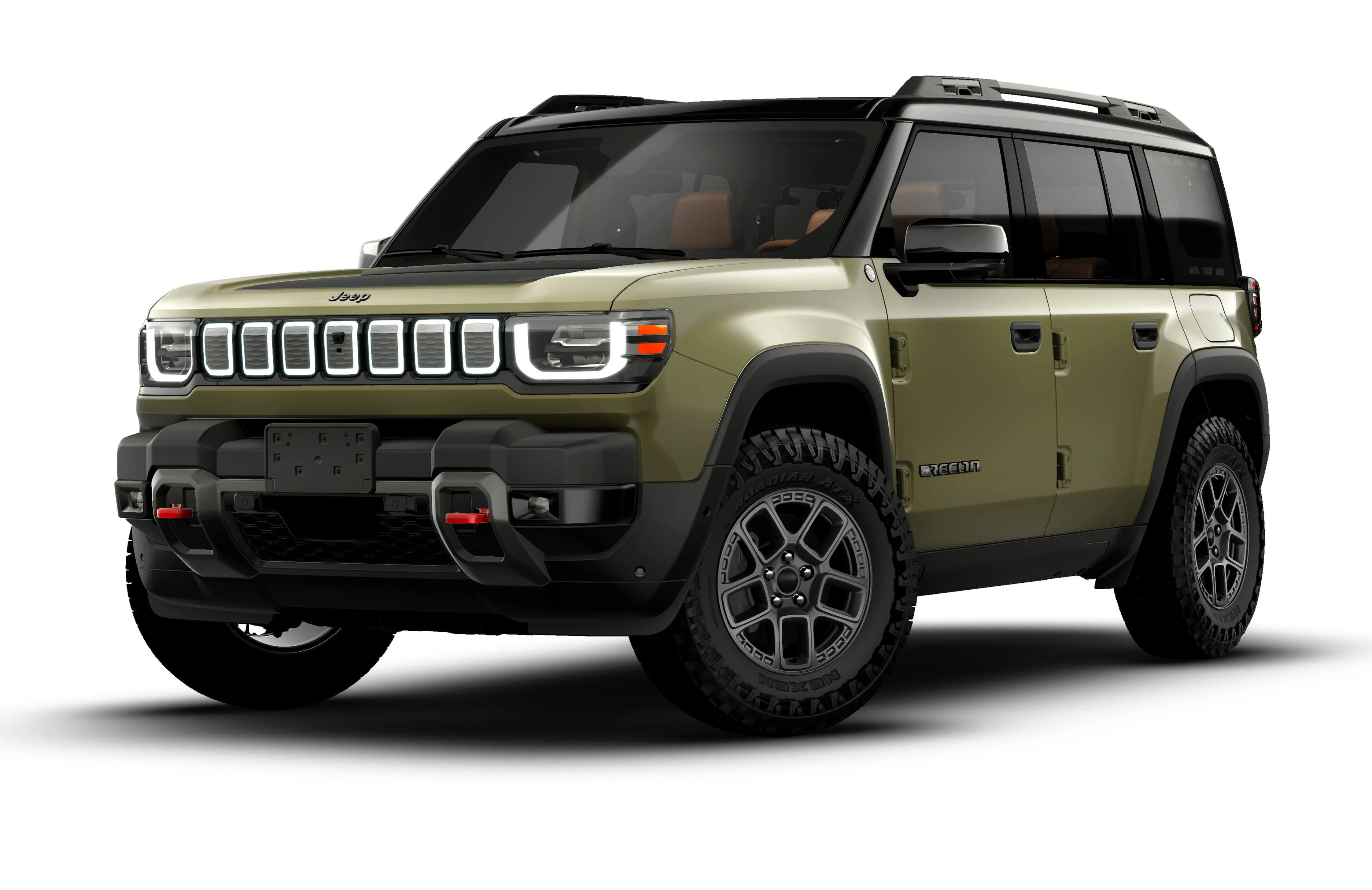
The 2026 Jeep Recon Moab: A 3.6-Second EV Paradox on the Formula 1 Trail
Jeep’s newest battery-electric trail rig delivers supercar acceleration and surgical rock-crawling control via dual fixed-ratio transmissions. To understand its software genius, we drove it across continents in pursuit of the wildly unpredictable 2026 F1 season.
Initial testing of the 2026 Jeep Recon Moab clocks a mind-bending 3.6-second sprint from zero to sixty miles per hour. Yet, it inexplicably pairs that violent launch capability with dual fixed-ratio single-speed transmissions. How exactly does a heavy, battery-electric trail rig deliver supercar-level acceleration off the line without sacrificing the extreme low-speed torque control required for highly technical rock crawling? It is an engineering paradox that sounds completely irreconcilable on paper. Traditional off-roaders rely on heavy, mechanical transfer cases to multiply torque at crawling speeds, while high-performance EVs rely on sophisticated gearing to achieve top-end speed. To uncover how Jeep’s software engineers managed to map such a dual-natured power delivery system using fixed ratios, we needed a suitably gruelling test environment. Rather than a static weekend in the desert, we commandeered the Recon Moab as our long-haul pursuit vehicle for the most technologically tumultuous motorsport season in recent memory, tracking the fiercely contested 2026 Formula 1 World Championship across multiple continents, culminating in the high-stakes atmosphere of the Sao Paulo GP.
The sheer violence of the Recon Moab’s acceleration is best understood not in the dirt, but on unforgiving tarmac. Merging onto the frantic, congested coastal highways outside the Monaco GP, the Jeep’s dual single-speed setup showcased its ability to dump immense electrical current to all four wheels instantaneously. The throttle mapping in its sportiest setting is razor-sharp, throwing occupants back into the heavily bolstered seats with a G-force punch that feels entirely illegal for a vehicle of this ride height. It is a mastery of torque deployment that perfectly mirrors the current hierarchy inside the literal F1 paddock, where the new, radically altered hybrid regulations have completely rewritten the competitive order. Mercedes has undeniably cracked the code of this new era of power delivery. Their young prodigy Kimi Antonelli has harnessed that superior mechanical grip to absolute perfection, racking up a staggering 380 points and nine victories. Just as the Recon utilizes advanced torque vectoring to maintain traction during a brutal launch without wheelspin, Antonelli’s Mercedes seems to effortlessly put its immense electrical power down out of the tightest, slowest traction zones on the calendar.
Cruising through the sweeping, high-speed transit routes connecting the British GP and the Belgian GP, the Recon Moab’s sophisticated software reveals its highway cruising logic. The system seamlessly biases power to the rear electric motor to preserve battery life while maintaining high-speed momentum, disengaging the front axle’s drag until the microprocessors detect slip. It is a delicate balance of aerodynamic efficiency and raw output that other legacy giants are currently struggling to optimize on the track. Take Red Bull Racing as the prime example of this struggle. Despite the relentless brilliance of Max Verstappen, who has muscled his recalcitrant chassis to 11 podiums, three wins, and 261 championship points, the reigning titleholders appear fundamentally compromised this season. They evidently lack the supreme, straight-line electrical deployment of their primary rivals, leaving Verstappen constantly searching for grip and top speed. It is much like an electric off-road rig slipping on loose, wet shale when its fixed-ratio mapping fails to properly sync with the changing terrain beneath the tires.Cruising through the sweeping, high-speed transit routes connecting the British GP and the Belgian GP, the Recon Moab’s sophisticated software reveals its highway cruising logic. The system seamlessly biases power to the rear electric motor to preserve battery life while maintaining high-speed momentum, disengaging the front axle’s drag until the microprocessors detect slip. It is a delicate balance of aerodynamic efficiency and raw output that other legacy giants are currently struggling to optimize on the track. Take Red Bull Racing as the prime example of this struggle. Despite the relentless brilliance of Max Verstappen, who has muscled his recalcitrant chassis to 11 podiums, three wins, and 261 championship points, the reigning titleholders appear fundamentally compromised this season. They evidently lack the supreme, straight-line electrical deployment of their primary rivals, leaving Verstappen constantly searching for grip and top speed. It is much like an electric off-road rig slipping on loose, wet shale when its fixed-ratio mapping fails to properly sync with the changing terrain beneath the tires.
Leaving the pavement entirely, we pointed the Recon Moab into the jagged, alpine trails surrounding the Austrian GP to test its digitized low-range simulation. Because EVs inherently lack a traditional mechanical transfer case, Jeep mimics the ultra-low gearing required for rock crawling by heavily restricting throttle input and utilizing individual wheel braking to route torque away from slipping tires. The result is surgical, methodical forward progress over sharp, wet boulders that would easily rip the oil pan off a lesser SUV. The brake lock differentials engage with a quiet clicking sound, mathematically finding traction where none seems to exist. This composed, strictly digitized control stands in stark contrast to the volatile teething problems Lewis Hamilton has faced during his highly publicized transition to Ferrari. The legendary British driver has scraped together 259 points and a single victory so far this season, highlighting the agonizing difficulty of blending immense straight-line hybrid potential with mechanical reliability as the Maranello squad tries to find its technical footing.Leaving the pavement entirely, we pointed the Recon Moab into the jagged, alpine trails surrounding the Austrian GP to test its digitized low-range simulation. Because EVs inherently lack a traditional mechanical transfer case, Jeep mimics the ultra-low gearing required for rock crawling by heavily restricting throttle input and utilizing individual wheel braking to route torque away from slipping tires. The result is surgical, methodical forward progress over sharp, wet boulders that would easily rip the oil pan off a lesser SUV. The brake lock differentials engage with a quiet clicking sound, mathematically finding traction where none seems to exist. This composed, strictly digitized control stands in stark contrast to the volatile teething problems Lewis Hamilton has faced during his highly publicized transition to Ferrari. The legendary British driver has scraped together 259 points and a single victory so far this season, highlighting the agonizing difficulty of blending immense straight-line hybrid potential with mechanical reliability as the Maranello squad tries to find its technical footing.
The true unsung genius of the Recon is its suspension damping, which manages the massive unsprung weight of its all-terrain tires without transferring harsh, jarring impacts into the passenger cabin. Navigating the deeply rutted, washboard dirt access roads outside the Spanish GP, the chassis absorbed punishing impacts while delivering instantaneous, predictable power to clear steep inclines. The electronic sway bar disconnect allows the front axle to articulate wildly over deep ruts while the cabin remains astonishingly level. Charles Leclerc might look at the Jeep’s compliant, predictable ride with a hint of genuine envy; the Ferrari talisman has secured 245 points and one win, but his 2026 campaign has been defined by a car that looks visibly unstable through high-speed technical sectors. When a vehicle’s suspension cannot perfectly interface with a sudden surge of electrical torque—whether it’s an F1 car leaping out of a chicane or a heavy Jeep scaling a mud-slicked grade—the result is an immediate, catastrophic loss of forward momentum.The true unsung genius of the Recon is its suspension damping, which manages the massive unsprung weight of its all-terrain tires without transferring harsh, jarring impacts into the passenger cabin. Navigating the deeply rutted, washboard dirt access roads outside the Spanish GP, the chassis absorbed punishing impacts while delivering instantaneous, predictable power to clear steep inclines. The electronic sway bar disconnect allows the front axle to articulate wildly over deep ruts while the cabin remains astonishingly level. Charles Leclerc might look at the Jeep’s compliant, predictable ride with a hint of genuine envy; the Ferrari talisman has secured 245 points and one win, but his 2026 campaign has been defined by a car that looks visibly unstable through high-speed technical sectors. When a vehicle’s suspension cannot perfectly interface with a sudden surge of electrical torque—whether it’s an F1 car leaping out of a chicane or a heavy Jeep scaling a mud-slicked grade—the result is an immediate, catastrophic loss of forward momentum.
Inside the Recon Moab, the interior environment remains a vault of serenity regardless of the chaos unfolding outside the glass. The massive battery pack integrated deep into the floorpan lowers the center of gravity while simultaneously acting as a dense acoustic barrier, deadening road noise and trail impacts alike. The result is a premium listening environment. We tuned into the live radio broadcasts of both the Dutch GP and the Italian GP in total acoustic isolation as we navigated alpine passes. Over the bespoke audio system, we heard Lando Norris carve out his second victory of the season, boosting his tally to a highly respectable 221 points for McLaren. Yet, even as Norris celebrates his hard-fought triumphs, the margins in modern automotive engineering have never been tighter. A single degree of temperature variation in a battery cell or a fractional error in a traction control algorithm can be the difference between standing on the top step of the podium and finding yourself entirely out of contention.Inside the Recon Moab, the interior environment remains a vault of serenity regardless of the chaos unfolding outside the glass. The massive battery pack integrated deep into the floorpan lowers the center of gravity while simultaneously acting as a dense acoustic barrier, deadening road noise and trail impacts alike. The result is a premium listening environment. We tuned into the live radio broadcasts of both the Dutch GP and the Italian GP in total acoustic isolation as we navigated alpine passes. Over the bespoke audio system, we heard Lando Norris carve out his second victory of the season, boosting his tally to a highly respectable 221 points for McLaren. Yet, even as Norris celebrates his hard-fought triumphs, the margins in modern automotive engineering have never been tighter. A single degree of temperature variation in a battery cell or a fractional error in a traction control algorithm can be the difference between standing on the top step of the podium and finding yourself entirely out of contention.
Of course, the Recon Moab’s dual-powertrain EV architecture is not without its inherent flaws. During sustained, high-speed climbs at severe elevation, we noticed a distinct plateau in performance—an unavoidable physical limitation when pushing a heavy vehicle with the aerodynamic profile of a cinder block through thin air using fixed-ratio transmissions. The motors can only spin so fast before they run out of breath, forcing the driver to accept a ceiling on top-end momentum. This harsh performance ceiling is exactly what the younger contingent of the F1 grid is currently slamming into. Oscar Piastri has managed 144 points and two podiums for McLaren without breaking through for a win, while Isack Hadjar sits at 107 points for Red Bull. Both are immensely talented drivers constrained by the absolute limits of their respective hardware, proving that when the engineering package reaches its terminal velocity, no amount of human bravery or steering angle can force it to go faster.Of course, the Recon Moab’s dual-powertrain EV architecture is not without its inherent flaws. During sustained, high-speed climbs at severe elevation, we noticed a distinct plateau in performance—an unavoidable physical limitation when pushing a heavy vehicle with the aerodynamic profile of a cinder block through thin air using fixed-ratio transmissions. The motors can only spin so fast before they run out of breath, forcing the driver to accept a ceiling on top-end momentum. This harsh performance ceiling is exactly what the younger contingent of the F1 grid is currently slamming into. Oscar Piastri has managed 144 points and two podiums for McLaren without breaking through for a win, while Isack Hadjar sits at 107 points for Red Bull. Both are immensely talented drivers constrained by the absolute limits of their respective hardware, proving that when the engineering package reaches its terminal velocity, no amount of human bravery or steering angle can force it to go faster.
As we pulled the dust-caked, bug-splattered Jeep into the bustling outskirts of the Sao Paulo GP to finally conclude our transcontinental test, the verdict on the 2026 Recon Moab was irrefutable. It achieves the impossible paradox of supercar acceleration and meticulous trail capability not through brute force, but through sheer software brilliance and electrical architecture. It is a vehicle that proves that in the modern era, having immense power means absolutely nothing if you lack the processing speed to control it. Just as Racing Bulls’ Liam Lawson—currently sitting on 83 points at the back of the top ten—is learning the hard way in the midfield battles, the future belongs to those who can perfectly map their torque to the terrain. The Jeep Recon Moab doesn't just survive the modern trail; it digitally dissects it, completely redefining what a heavy-duty electric off-roader can be in the process.As we pulled the dust-caked, bug-splattered Jeep into the bustling outskirts of the Sao Paulo GP to finally conclude our transcontinental test, the verdict on the 2026 Recon Moab was irrefutable. It achieves the impossible paradox of supercar acceleration and meticulous trail capability not through brute force, but through sheer software brilliance and electrical architecture. It is a vehicle that proves that in the modern era, having immense power means absolutely nothing if you lack the processing speed to control it. Just as Racing Bulls’ Liam Lawson—currently sitting on 83 points at the back of the top ten—is learning the hard way in the midfield battles, the future belongs to those who can perfectly map their torque to the terrain. The Jeep Recon Moab doesn't just survive the modern trail; it digitally dissects it, completely redefining what a heavy-duty electric off-roader can be in the process.
Gallery
"It achieves the impossible paradox of supercar acceleration and meticulous trail capability not through brute force, but through sheer software brilliance."
Why it matters
The Jeep Recon Moab proves that the future of off-roading is dictated by microprocessors rather than mechanical transfer cases. By mastering instantaneous torque vectoring, automakers are solving the same electric power delivery challenges currently dominating elite motorsport.
Sources
- 1.
- 2.
- 3.Formula 1 2026 Sao Paulo GP Results - Motorsport.commotorsport.com
Reported by the Downforce & Divots desk from the sources above.
The clubhouse.
- No replies yet. Be the first.