Saddle Up: Inside the Sanrivatti One’s Radical Head-First Cockpit
The Dutch-built Sanrivatti One trades the traditional carbon bucket for an equestrian, superbike-inspired stance. But how does straddling a V10 change the human body's threshold for extreme lateral G-forces?
Drop yourself into the carbon-fiber belly of the Dutch-built Sanrivatti One, and you will not find a traditional low-slung bucket seat. Unveiled to a stunned automotive press this November, the boutique hypercar features a weird, head-first cockpit architecture that forces the driver to literally straddle the central tub like a saddle. It is a legs-back driving posture lifted directly from the world of superbikes. Instead of sitting inside the chassis, you ride it. Paired with a screaming V10 engine, this equestrian approach to ergonomics poses a radical question for the modern era of performance driving: how does fundamentally altering a driver's physiological anchor point change their tolerance for extreme lateral G-forces?Drop yourself into the carbon-fiber belly of the Dutch-built Sanrivatti One, and you will not find a traditional low-slung bucket seat. Unveiled to a stunned automotive press this November, the boutique hypercar features a weird, head-first cockpit architecture that forces the driver to literally straddle the central tub like a saddle. It is a legs-back driving posture lifted directly from the world of superbikes. Instead of sitting inside the chassis, you ride it. Paired with a screaming V10 engine, this equestrian approach to ergonomics poses a radical question for the modern era of performance driving: how does fundamentally altering a driver's physiological anchor point change their tolerance for extreme lateral G-forces?
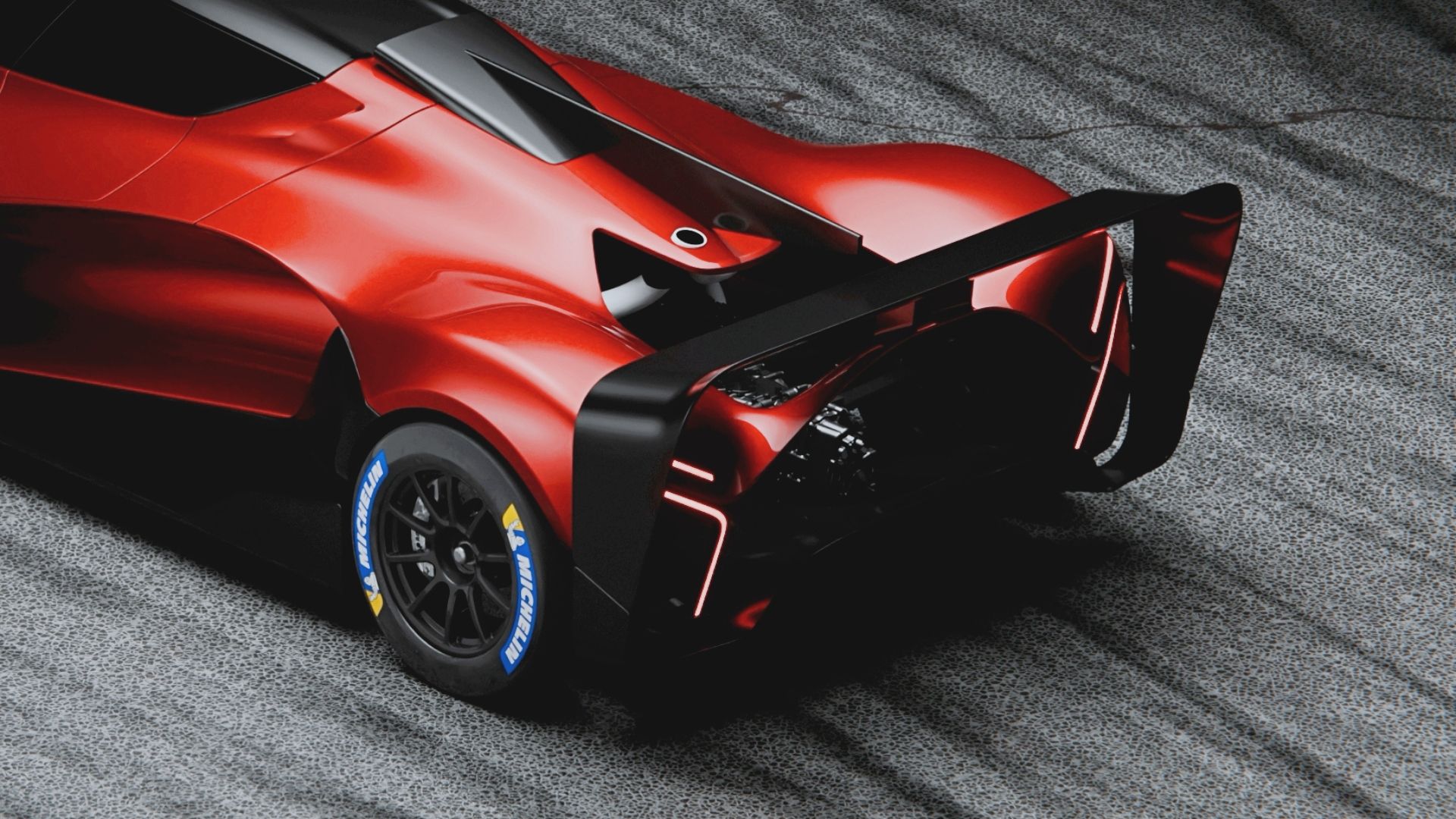
The Sanrivatti One is visually arresting before you even attempt to mount its interior. Its exterior styling aggressively channels both a peregrine falcon and a fighter aircraft, punctuated by jet-inspired side air intakes and a massive rear wing designed to keep the V10’s power pinned to the tarmac. But it is that head-first, legs-back driving position that separates the Dutch creation from the rest of the 2026 debut calendar. While major autumn events like the Zoute Grand Prix and the Paris Motor Show at Porte de Versailles showcased a parade of highly capable machines, the Sanrivatti asks for a different kind of physical commitment. You are no longer reclining; your chest leans into the steering column, demanding a total reimagining of human-machine interaction.The Sanrivatti One is visually arresting before you even attempt to mount its interior. Its exterior styling aggressively channels both a peregrine falcon and a fighter aircraft, punctuated by jet-inspired side air intakes and a massive rear wing designed to keep the V10’s power pinned to the tarmac. But it is that head-first, legs-back driving position that separates the Dutch creation from the rest of the 2026 debut calendar. While major autumn events like the Zoute Grand Prix and the Paris Motor Show at Porte de Versailles showcased a parade of highly capable machines, the Sanrivatti asks for a different kind of physical commitment. You are no longer reclining; your chest leans into the steering column, demanding a total reimagining of human-machine interaction.
To understand how bizarre this seating arrangement is, we have to look at the lineage of central-driving architectures. When Gordon Murray designed the legendary McLaren F1, he placed the central driver’s seat forward, with two passenger seats set back on either side. This gave the driver a symmetrical, unobstructed view straight down the road—a layout later echoed by niche builders like Contera with their MD1. Yet, Murray still relied on a traditional seated posture. Even custom-rebuilt icons, like a recently showcased black Ferrari F40 boasting a freshly rebuilt engine and pristine red leather seats, anchor the driver's hips low and flat. The Sanrivatti discards the seat entirely in favor of an active, straddling mount.
This superbike-inspired posture entirely changes how the human body processes kinetic energy inside a carbon tub. In a traditional bucket seat, the driver’s hips and shoulders are locked into a fixed position, dispersing lateral G-forces across the torso and the seat's side bolsters. By straddling the chassis, the Sanrivatti driver’s limbs are more active, inherently altering their vulnerability to kinetic shock. Medical trauma literature notes that in the event of a high-impact blow, the risk of transverse or oblique bone fractures depends heavily on the angle of the force and whether the limb is fixed or moving at the time of trauma. An equestrian stance inside a hypercar means the driver’s legs are gripping, not just resting, forcing the inner thighs and core to actively stabilize against the G-loads rather than relying solely on a five-point harness.This superbike-inspired posture entirely changes how the human body processes kinetic energy inside a carbon tub. In a traditional bucket seat, the driver’s hips and shoulders are locked into a fixed position, dispersing lateral G-forces across the torso and the seat's side bolsters. By straddling the chassis, the Sanrivatti driver’s limbs are more active, inherently altering their vulnerability to kinetic shock. Medical trauma literature notes that in the event of a high-impact blow, the risk of transverse or oblique bone fractures depends heavily on the angle of the force and whether the limb is fixed or moving at the time of trauma. An equestrian stance inside a hypercar means the driver’s legs are gripping, not just resting, forcing the inner thighs and core to actively stabilize against the G-loads rather than relying solely on a five-point harness.
The timing of this radical experiment is no accident; the global hypercar market is currently saturated with conventional brilliance. The 2026-2028 supercar launch calendar—tracking boutique and luxury launches above a baseline of 500 horsepower—is relentless. From Adrian Newey unveiling the Red Bull RB17 track weapon, to the stateside arrival of the Apollo IE Caribbean Dragon, to recent debuts from Pagani, Zenvo, and Hennessey at the Goodwood Festival of Speed, outright speed is no longer a unique selling point. To command attention among the European marques gathering from Blenheim Palace to Château de Chantilly, a boutique brand must offer an entirely new visceral sensation. The Sanrivatti One does exactly that, trading top-speed vanity for a jarring, hyper-tactile operating environment.The timing of this radical experiment is no accident; the global hypercar market is currently saturated with conventional brilliance. The 2026-2028 supercar launch calendar—tracking boutique and luxury launches above a baseline of 500 horsepower—is relentless. From Adrian Newey unveiling the Red Bull RB17 track weapon, to the stateside arrival of the Apollo IE Caribbean Dragon, to recent debuts from Pagani, Zenvo, and Hennessey at the Goodwood Festival of Speed, outright speed is no longer a unique selling point. To command attention among the European marques gathering from Blenheim Palace to Château de Chantilly, a boutique brand must offer an entirely new visceral sensation. The Sanrivatti One does exactly that, trading top-speed vanity for a jarring, hyper-tactile operating environment.
Shifting the driver from a passive occupant to an active rider yields distinct benefits in steering inputs. Automotive ergonomists continually hunt for improvements in a driver’s range of motion and accuracy at the wheel. When you lean head-first into a corner, your arms operate from a biomechanically superior leverage point, akin to a superbike rider dropping their shoulder into an apex. The steering wheel becomes less of a tiller and more of a focal point for upper-body weight transfer. But this requires an unprecedented level of physical conditioning. The average billionaire collector can comfortably lounge in the plush leather bucket of a Grand Tourer; surviving a track day while gripping a central carbon spine with their knees demands stamina and precision.Shifting the driver from a passive occupant to an active rider yields distinct benefits in steering inputs. Automotive ergonomists continually hunt for improvements in a driver’s range of motion and accuracy at the wheel. When you lean head-first into a corner, your arms operate from a biomechanically superior leverage point, akin to a superbike rider dropping their shoulder into an apex. The steering wheel becomes less of a tiller and more of a focal point for upper-body weight transfer. But this requires an unprecedented level of physical conditioning. The average billionaire collector can comfortably lounge in the plush leather bucket of a Grand Tourer; surviving a track day while gripping a central carbon spine with their knees demands stamina and precision.
As the automotive world digests this November 2026 debut, the Sanrivatti One stands as a provocative outlier. It challenges the assumption that the fundamental architecture of the driver's seat was solved decades ago. By dropping a V10 into a chassis that demands to be ridden rather than driven, the Dutch marque has engineered a machine that will inevitably filter its buyers based on sheer physical audacity. Whether this equestrian, legs-back concept remains a solitary eccentricity or inspires a new sub-genre of head-first track toys remains to be seen. But out on the pit lane, one thing is certain: the Sanrivatti One ensures you will feel every brutal millimeter of the road, right through your bones.As the automotive world digests this November 2026 debut, the Sanrivatti One stands as a provocative outlier. It challenges the assumption that the fundamental architecture of the driver's seat was solved decades ago. By dropping a V10 into a chassis that demands to be ridden rather than driven, the Dutch marque has engineered a machine that will inevitably filter its buyers based on sheer physical audacity. Whether this equestrian, legs-back concept remains a solitary eccentricity or inspires a new sub-genre of head-first track toys remains to be seen. But out on the pit lane, one thing is certain: the Sanrivatti One ensures you will feel every brutal millimeter of the road, right through your bones.
Gallery
"An equestrian stance inside a hypercar means the driver’s legs are gripping, not just resting, forcing the inner thighs and core to actively stabilize against the G-loads."
Why it matters
With the hypercar market saturated by 500-plus horsepower machines, boutique builders are searching for new ways to deliver visceral experiences. Sanrivatti's equestrian ergonomics challenge decades of automotive design by forcing the driver to actively stabilize against G-forces rather than relying on a passive bucket seat.
Sources
- 1.
- 2.
- 3.Upcoming Supercars 2026–2028: Prices & Release Datesbatmangarage.com
- 4.
- 5.
- 6.Jcb112reddit.com
- 7.
- 8.
- 9.Retrospective 11.24.26 - Dania Beach, FLauctionzip.com
- 10.
Reported by the Downforce & Divots desk from the sources above.
The clubhouse.
- No replies yet. Be the first.