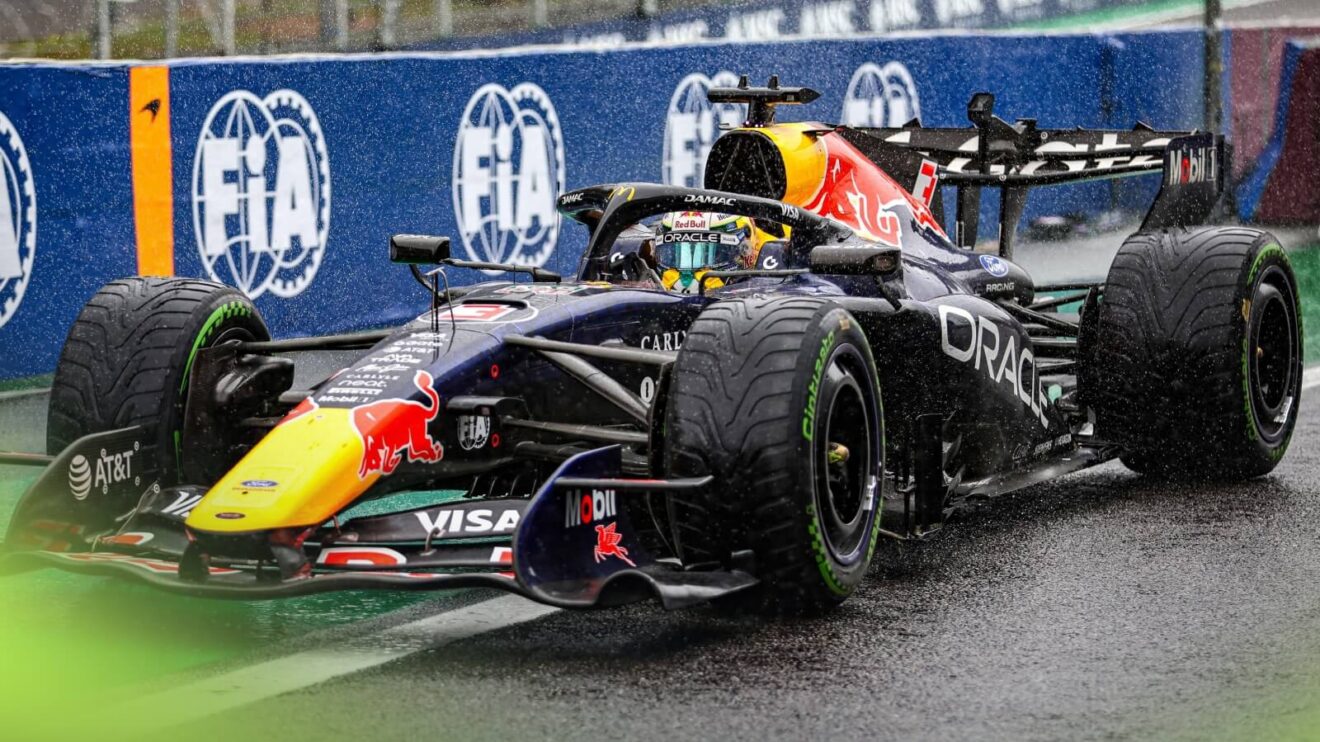
Twenty-Five Thousandths: How Verstappen Staved Off the Silver Arrows in Sao Paulo
A mere 0.025 seconds separated Max Verstappen and Kimi Antonelli at Interlagos, highlighting the knife-edge margins defining late-season Formula 1.
When the telemetry settled over Interlagos on Saturday afternoon, the gap separating Red Bull's Max Verstappen from Mercedes’ Kimi Antonelli was just twenty-five thousandths of a second. At 1:11.622 across a disciplined 19-lap programme, Verstappen found the sweet spot in the Autódromo José Carlos Pace, edging Antonelli’s 1:11.647 to top the final practice sheets before qualifying.When the telemetry settled over Interlagos on Saturday afternoon, the gap separating Red Bull's Max Verstappen from Mercedes’ Kimi Antonelli was just twenty-five thousandths of a second. At 1:11.622 across a disciplined 19-lap programme, Verstappen found the sweet spot in the Autódromo José Carlos Pace, edging Antonelli’s 1:11.647 to top the final practice sheets before qualifying.
The session illustrated just how compressed the front of the grid has become through the twentieth round of the 2026 championship. Antonelli, logging 21 laps in the Mercedes, matched Verstappen through the twisting middle sector of the Autódromo, only losing fractions through the long drag up the hill past the pit lane. It was a calculated demonstration of speed that kept the Brackley garage within striking distance of the front row.The session illustrated just how compressed the front of the grid has become through the twentieth round of the 2026 championship. Antonelli, logging 21 laps in the Mercedes, matched Verstappen through the twisting middle sector of the Autódromo, only losing fractions through the long drag up the hill past the pit lane. It was a calculated demonstration of speed that kept the Brackley garage within striking distance of the front row.
Directly behind them, McLaren’s Lando Norris posted a 1:11.753 over 22 laps, completing the top three within a tenth and a half. Norris, working through longer tyre-degradation runs on higher fuel, demonstrated McLaren’s customary high-speed stability, while George Russell backed up Mercedes’ pace in fourth with a 1:11.806.Directly behind them, McLaren’s Lando Norris posted a 1:11.753 over 22 laps, completing the top three within a tenth and a half. Norris, working through longer tyre-degradation runs on higher fuel, demonstrated McLaren’s customary high-speed stability, while George Russell backed up Mercedes’ pace in fourth with a 1:11.806.
Interlagos has always punished aerodynamic compromises. To gain time through the Senna S and the flat-out sweep of Arquibancadas requires a trim rear wing, but the infield section from Ferradura down to Junção demands total mechanical bite. Red Bull’s low-drag approach handed Verstappen the straight-line advantage, while Mercedes leaned on higher downforce to protect tyre life through the technical mid-lap.Interlagos has always punished aerodynamic compromises. To gain time through the Senna S and the flat-out sweep of Arquibancadas requires a trim rear wing, but the infield section from Ferradura down to Junção demands total mechanical bite. Red Bull’s low-drag approach handed Verstappen the straight-line advantage, while Mercedes leaned on higher downforce to protect tyre life through the technical mid-lap.
With Charles Leclerc rounding out the sharp end of the timing screens for Ferrari, the battle lines for the late-season flyaway rounds are drawn to the millisecond. In a season where single-lap execution dictates track position, twenty-five thousandths is not just a gap—it is the difference between controlling the race and chasing dirty air.With Charles Leclerc rounding out the sharp end of the timing screens for Ferrari, the battle lines for the late-season flyaway rounds are drawn to the millisecond. In a season where single-lap execution dictates track position, twenty-five thousandths is not just a gap—it is the difference between controlling the race and chasing dirty air.
Gallery
"At 1:11.622 across a disciplined 19-lap programme, Verstappen found the sweet spot at Interlagos, edging Antonelli by 0.025 seconds."
Why it matters
With just 0.025 seconds between Verstappen and Antonelli in FP3, qualifying at Interlagos came down to micro-sector execution and tyre temperature management. The razor-thin delta shows that Red Bull and Mercedes have reached aerodynamic parity heading into the closing stages of the 2026 campaign.
Sources
- 1.
- 2.
- 3.
- 4.F1 standings 2026: Driver and constructor points, results ...sports.yahoo.com
Reported by the Downforce & Divots desk from the sources above.
The clubhouse.
- No replies yet. Be the first.