The $20 Million Green Flag: How Formula 1’s Feeder System Became The Most Expensive Barrier in Sport
As academy graduates like Kimi Antonelli dominate the championship, the path to an F1 seat has inflated to an astonishing eight-figure sum. We investigate the unregulated economy of the junior ladder and the talent being priced out of the paddock.
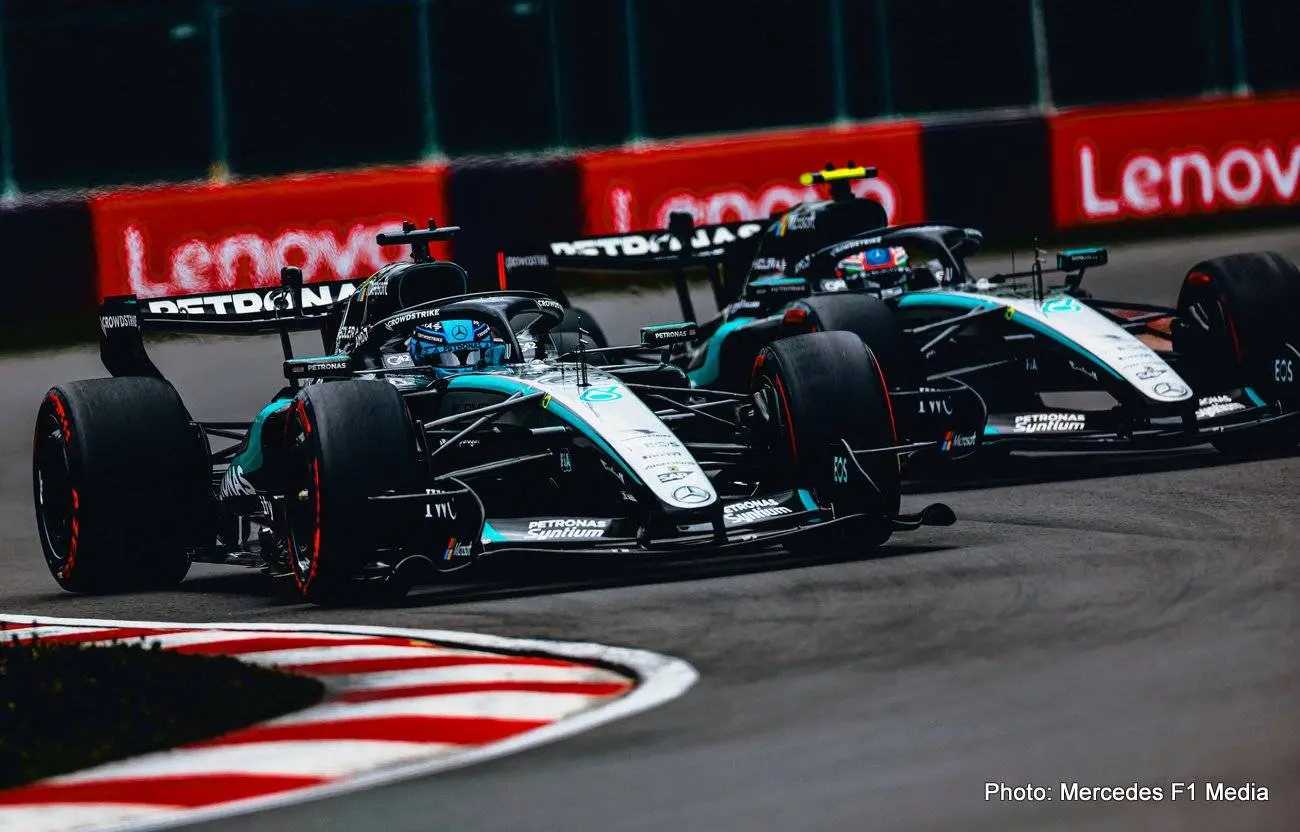
It’s the most brutal and casually spoken figure in modern motorsport: '$20+ million to get to F1.' This number, highlighted in a recent social media analysis, represents not the price of a Formula 1 team, but the cost for a single driver to climb the ladder into one of its 22 coveted seats. As the 2026 season charges past its eleventh round, the evidence of this system is starkly visible at the front of the grid. Kimi Antonelli, a prodigy of the Mercedes junior program, currently leads the drivers' championship, a feat almost unheard of for a rookie. Elsewhere in the standings, fellow Mercedes graduate George Russell remains entrenched in the top three, battling it out with veterans like Lewis Hamilton. Their success is a testament to both their immense talent and the power of an academy system that can underwrite this astronomical financial journey, one that has become the sport’s most significant, and perhaps most damaging, barrier to entry.
The path to a Grand Prix weekend is, on paper, a well-defined meritocracy governed by the Fédération Internationale de l'Automobile (FIA). The goal for any aspiring driver is to secure an FIA Super Licence, the mandatory qualification to compete in Formula 1. This requires earning at least 40 points in other FIA-certified championships over a three-year period, along with meeting a minimum age requirement of 18. This structured 'ladder,' encompassing series like Formula 3 and Formula 2, was designed to create a clear progression based on results. Yet, in practice, it has morphed into a punishing financial gauntlet. That eight-figure sum is not a single cheque written to the FIA; it’s a slow, relentless bleed of capital covering everything from international karting campaigns as a pre-teen to multi-million-dollar budgets for single seasons in F3 and F2, factoring in team fees, crash damage, tyres, travel, and the small army of personnel required to be competitive.
The inflation of these costs is directly linked to Formula 1’s surging global popularity. As viewership and interest in F1 have exploded, the perceived value of the feeder series has skyrocketed in tandem. A Substack newsletter dedicated to the motorsport ecosystem now bundles its analysis of F1 with F2, F3, FE, and the junior 'Formula Academy,' illustrating how tightly integrated this market has become. Seats in F2, the final step before F1, are not just about driver performance; they are valuable media properties. The prestige is undeniable; even a multi-time F1 Grand Prix winner like Sergio Pérez takes to social media to publicly congratulate a driver like Noel León on a maiden F2 feature race win. This visibility makes a competitive seat an incredibly hot commodity, allowing top junior teams to charge exorbitant fees, confident that a queue of hopefuls—backed by sponsors, national funding, or family wealth—is waiting to pay them.The inflation of these costs is directly linked to Formula 1’s surging global popularity. As viewership and interest in F1 have exploded, the perceived value of the feeder series has skyrocketed in tandem. A Substack newsletter dedicated to the motorsport ecosystem now bundles its analysis of F1 with F2, F3, FE, and the junior 'Formula Academy,' illustrating how tightly integrated this market has become. Seats in F2, the final step before F1, are not just about driver performance; they are valuable media properties. The prestige is undeniable; even a multi-time F1 Grand Prix winner like Sergio Pérez takes to social media to publicly congratulate a driver like Noel León on a maiden F2 feature race win. This visibility makes a competitive seat an incredibly hot commodity, allowing top junior teams to charge exorbitant fees, confident that a queue of hopefuls—backed by sponsors, national funding, or family wealth—is waiting to pay them.
This escalating financial pressure has cemented the dominance of Formula 1 team junior academies. For a talent like Kimi Antonelli, being signed by Mercedes at a young age meant access to a pathway insulated from the most extreme financial demands. The same is true for George Russell before him. These academies function as the sport’s ultimate kingmakers, identifying the most promising talents in karting and funding their ascent through the ranks. In doing so, they not only secure a pipeline of future stars for themselves but also effectively monopolize the talent pool. For an independent driver without the backing of a manufacturer or a Red Bull-style program, the challenge becomes twofold: they must not only prove they are as talented as an academy-backed rival but also find the personal funding to outbid them for a seat in the same machinery. The current championship standings, led by an academy graduate, aren't just a reflection of driver skill; they are the logical endpoint of a system where financial backing has become a prerequisite to compete.This escalating financial pressure has cemented the dominance of Formula 1 team junior academies. For a talent like Kimi Antonelli, being signed by Mercedes at a young age meant access to a pathway insulated from the most extreme financial demands. The same is true for George Russell before him. These academies function as the sport’s ultimate kingmakers, identifying the most promising talents in karting and funding their ascent through the ranks. In doing so, they not only secure a pipeline of future stars for themselves but also effectively monopolize the talent pool. For an independent driver without the backing of a manufacturer or a Red Bull-style program, the challenge becomes twofold: they must not only prove they are as talented as an academy-backed rival but also find the personal funding to outbid them for a seat in the same machinery. The current championship standings, led by an academy graduate, aren't just a reflection of driver skill; they are the logical endpoint of a system where financial backing has become a prerequisite to compete.
Even for those who successfully navigate this perilous and expensive journey, the summit remains treacherous and uncertain. The brutal arithmetic of Formula 1 dictates that there are just 22 seats on the grid in any given season, as confirmed by the sport's current technical regulations. The bottleneck this creates is severe. The career of Théo Pourchaire serves as a stark cautionary tale. After a hard-fought campaign, Pourchaire was crowned the 2023 Formula 2 champion, theoretically the single most qualified driver for an F1 promotion. Yet, with no seats available, he found himself on the outside looking in, ultimately signing to race in the 2024-2025 Formula E season. His situation underscores the terrifying reality of the F1 gamble: a driver can win the feeder series, having already spent the requisite millions and proven their mettle, only to find the door to F1 firmly closed.Even for those who successfully navigate this perilous and expensive journey, the summit remains treacherous and uncertain. The brutal arithmetic of Formula 1 dictates that there are just 22 seats on the grid in any given season, as confirmed by the sport's current technical regulations. The bottleneck this creates is severe. The career of Théo Pourchaire serves as a stark cautionary tale. After a hard-fought campaign, Pourchaire was crowned the 2023 Formula 2 champion, theoretically the single most qualified driver for an F1 promotion. Yet, with no seats available, he found himself on the outside looking in, ultimately signing to race in the 2024-2025 Formula E season. His situation underscores the terrifying reality of the F1 gamble: a driver can win the feeder series, having already spent the requisite millions and proven their mettle, only to find the door to F1 firmly closed.
The rise of series like Formula E, which boasts a full grid of 22 drivers, offers a professional and highly competitive alternative. It has become a viable, respectable career for drivers who, for one reason or another, don't land an F1 drive. However, the singular, gravitational pull of the Formula 1 World Championship, an institution since its inaugural season in 1950, remains undiminished in the minds of young drivers. The entire ecosystem, from media coverage to the FIA’s own licensing structure, is built around the premise that F2 and F3 are not destinations in themselves, but simply steps on the ladder to F1. This F1-or-bust mentality is precisely what justifies the gargantuan spending, turning the junior categories into a high-stakes, high-cost poker game where the ultimate prize is a ticket to the main event, and anything less feels like a disappointment.The rise of series like Formula E, which boasts a full grid of 22 drivers, offers a professional and highly competitive alternative. It has become a viable, respectable career for drivers who, for one reason or another, don't land an F1 drive. However, the singular, gravitational pull of the Formula 1 World Championship, an institution since its inaugural season in 1950, remains undiminished in the minds of young drivers. The entire ecosystem, from media coverage to the FIA’s own licensing structure, is built around the premise that F2 and F3 are not destinations in themselves, but simply steps on the ladder to F1. This F1-or-bust mentality is precisely what justifies the gargantuan spending, turning the junior categories into a high-stakes, high-cost poker game where the ultimate prize is a ticket to the main event, and anything less feels like a disappointment.
This dynamic creates a fascinating paradox when set against the backdrop of Formula 1's new cost-cap era. The budget cap was introduced with the express purpose of leveling the playing field and ensuring the long-term sustainability of the sport, particularly for smaller outfits. Yet, the struggles of teams like Haas, whose team principal has openly admitted to financial limitations and running a comparatively small staff of around 400 people, show that massive financial disparities persist. Crucially, this regulatory oversight does not extend down to the feeder series. While F1 teams have their spending curtailed, the financial arms race on the 'Road to F1' continues completely unchecked. This has an insidious knock-on effect: a financially struggling F1 team is more likely to favour a rookie who brings significant sponsorship—or one whose junior career was paid for by a powerhouse like Mercedes or Ferrari—over an equally talented driver who would require team funding.This dynamic creates a fascinating paradox when set against the backdrop of Formula 1's new cost-cap era. The budget cap was introduced with the express purpose of leveling the playing field and ensuring the long-term sustainability of the sport, particularly for smaller outfits. Yet, the struggles of teams like Haas, whose team principal has openly admitted to financial limitations and running a comparatively small staff of around 400 people, show that massive financial disparities persist. Crucially, this regulatory oversight does not extend down to the feeder series. While F1 teams have their spending curtailed, the financial arms race on the 'Road to F1' continues completely unchecked. This has an insidious knock-on effect: a financially struggling F1 team is more likely to favour a rookie who brings significant sponsorship—or one whose junior career was paid for by a powerhouse like Mercedes or Ferrari—over an equally talented driver who would require team funding.
Looking forward, the sport faces a critical identity crisis. The current system is inexorably filtering for a very specific type of driver: one who is either a generational talent identified and funded by an academy from a young age, or one who possesses access to the kind of wealth that can absorb the $20 million cost of entry. What is impossible to quantify is the talent being lost along the way—the drivers who are priced out in their teens before they ever get a chance to sit in an F3 car, let alone an F1 machine. The FIA’s rigid structure, from the Super Licence points system to the formalized ladder, has brought order to driver progression, but at the unintended cost of creating the most formidable financial barrier in professional sports. As Kimi Antonelli and George Russell fight for championships, their success serves as a celebration of a system that works, but also a chilling reminder of who, and how much, it leaves behind.Looking forward, the sport faces a critical identity crisis. The current system is inexorably filtering for a very specific type of driver: one who is either a generational talent identified and funded by an academy from a young age, or one who possesses access to the kind of wealth that can absorb the $20 million cost of entry. What is impossible to quantify is the talent being lost along the way—the drivers who are priced out in their teens before they ever get a chance to sit in an F3 car, let alone an F1 machine. The FIA’s rigid structure, from the Super Licence points system to the formalized ladder, has brought order to driver progression, but at the unintended cost of creating the most formidable financial barrier in professional sports. As Kimi Antonelli and George Russell fight for championships, their success serves as a celebration of a system that works, but also a chilling reminder of who, and how much, it leaves behind.
Gallery
"It’s over $20 million to get to F1."
Why it matters
The spiraling cost of junior formulas creates a massive barrier to entry, threatening to make Formula 1 a closed shop accessible only to the prodigiously wealthy or those hand-picked by powerhouse academies. This financial gatekeeping risks shrinking the talent pool and fundamentally changing the meritocratic ideal of motorsport. It poses a critical question: is F1 selecting the best drivers, or just the best-funded?
Sources
- 1.Eleven rounds of the season down ✅ Here's how ...instagram.com
- 2.F1 Results: All Time Championship Table Results by Yearf1-fansite.com
- 3.
- 4.
- 5.Formula Oneen.wikipedia.org
- 6.
- 7.Robust contaminant plume estimation for risk assessmentsciencedirect.com
- 8.What Does The FIA Do In F1? The Governing Body ...f1chronicle.substack.com
- 9.Some disappointments never leave you.facebook.com
- 10.
Reported by the Downforce & Divots desk from the sources above.
The clubhouse.
- No replies yet. Be the first.