The Opt-Out Engine: Why Ford is Killing the Telematics Broker Market
In the wake of GM's scandal over selling driver data to insurance actuaries, Ford is pitching absolute privacy as the ultimate luxury option. But as the automaker returns to the data-obsessed world of Formula 1, can a modern software-defined vehicle truly turn off the spigot?
Inside the Red Bull Racing garage at the 2026 Mexican Grand Prix, the most valuable asset isn’t the carbon fiber chassis or the bespoke tire compounds—it is the invisible, relentless river of telemetry flowing from the cars to the pit wall. Data is the modern motorsport religion, a closed-loop system of perpetual surveillance designed to extract fractional performance gains from human operators. Yet, outside the racing bubble, this exact breed of vehicle telemetry has recently become a toxic asset. In the wake of General Motors' scandal—where civilian braking and acceleration data was quietly bundled and sold to insurance risk brokers—Ford is taking a radically different approach. As the Detroit giant returns to the grid in 2026 as Red Bull's powertrain partner, it is simultaneously pitching explicit consumer data opt-outs as a headline selling point. The very company building the architecture to process race telemetry is loudly promising to ignore yours.Inside the Red Bull Racing garage at the 2026 Mexican Grand Prix, the most valuable asset isn’t the carbon fiber chassis or the bespoke tire compounds—it is the invisible, relentless river of telemetry flowing from the cars to the pit wall. Data is the modern motorsport religion, a closed-loop system of perpetual surveillance designed to extract fractional performance gains from human operators. Yet, outside the racing bubble, this exact breed of vehicle telemetry has recently become a toxic asset. In the wake of General Motors' scandal—where civilian braking and acceleration data was quietly bundled and sold to insurance risk brokers—Ford is taking a radically different approach. As the Detroit giant returns to the grid in 2026 as Red Bull's powertrain partner, it is simultaneously pitching explicit consumer data opt-outs as a headline selling point. The very company building the architecture to process race telemetry is loudly promising to ignore yours.
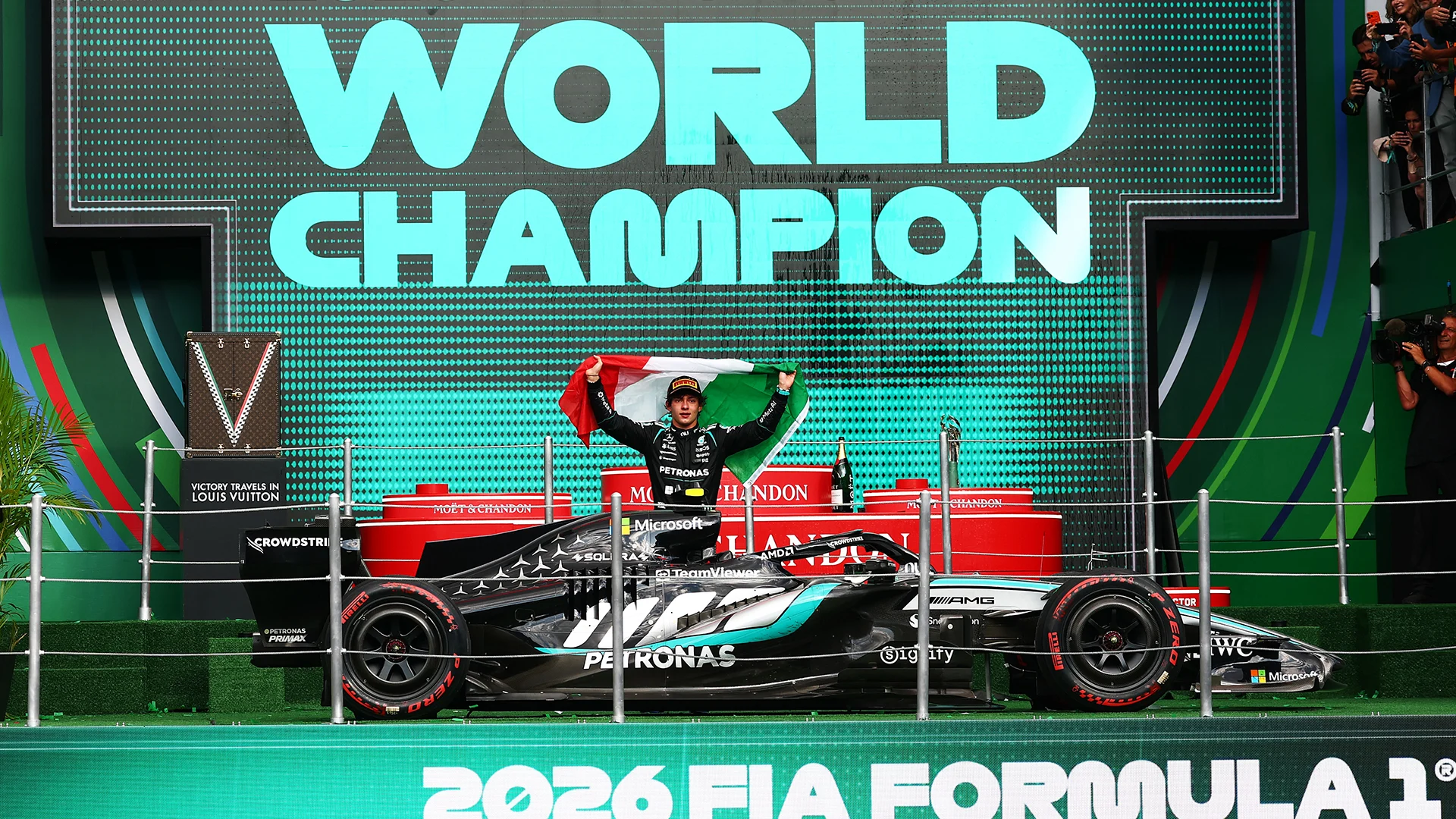
To comprehend the sheer scale of automotive data collection and its inherent value, one must look at the sharp end of the current Formula 1 World Championship. The margins at the pinnacle of motorsport are defined entirely by digital surveillance. Mercedes prodigy Kimi Antonelli is currently steamrolling the 2026 season with an astonishing 380 points, nine victories, and 16 podiums. Every millimeter of Antonelli's steering angle, every microsecond of his braking input, and every throttle lift is beamed back to the engineers and analyzed by sprawling algorithms. Modern consumer cars—which are functionally software-defined vehicles rolling on 20-inch alloys—operate on the exact same principles. They map how hard you brake for a yellow light, how sharply you navigate a highway off-ramp, and what time of night you start the ignition.
For decades, this level of microscopic driver analysis was confined to the literal F1 paddock. But as cars grew smarter, automakers realized the digital exhaust of a daily commuter was worth billions to third-party risk assessors, transforming basic diagnostics into a stealth revenue engine. General Motors' capitulation to the data brokers exposed the grim reality of the connected car, but Ford's public pivot recognizes a shifting cultural tide. While Red Bull Racing absolutely requires a constant feed of telemetry to keep defending champion Max Verstappen in the title fight—he sits second in the current standings with 261 points, three wins, and 11 podiums—the average F-150 driver does not want their morning commute scrutinized by an actuary. Ford is gambling that in a market saturated with surveillance capitalism, verified privacy is the ultimate premium feature.
The temptation for automakers to hoard this data is easy to understand when you look at the claustrophobic margins created by telemetry optimization. The battle for third place in the 2026 driver standings is a masterclass in data-driven parity. Lewis Hamilton has settled into his Ferrari era with 259 points and seven podiums, but he is being relentlessly hunted by Mercedes’ George Russell (250 points, three wins) and his own teammate, Charles Leclerc (245 points, six podiums). The gaps between these drivers are measured in thousandths of a second, found hidden inside vast lakes of telemetry data. For consumer auto manufacturers, the equivalent of this data lake is behavioral modeling. Insurance brokers use telemetry to calculate premium hikes based on microscopic driving infractions. Ford's anti-broker pledge is a firewall against this practice, essentially telling customers that the data spigot can, and will, be turned off.The temptation for automakers to hoard this data is easy to understand when you look at the claustrophobic margins created by telemetry optimization. The battle for third place in the 2026 driver standings is a masterclass in data-driven parity. Lewis Hamilton has settled into his Ferrari era with 259 points and seven podiums, but he is being relentlessly hunted by Mercedes’ George Russell (250 points, three wins) and his own teammate, Charles Leclerc (245 points, six podiums). The gaps between these drivers are measured in thousandths of a second, found hidden inside vast lakes of telemetry data. For consumer auto manufacturers, the equivalent of this data lake is behavioral modeling. Insurance brokers use telemetry to calculate premium hikes based on microscopic driving infractions. Ford's anti-broker pledge is a firewall against this practice, essentially telling customers that the data spigot can, and will, be turned off.
But can a modern, software-defined vehicle truly go dark? The logistical architecture of the 2026 F1 calendar illustrates how difficult it is to separate a machine from its data stream. The global circus stretches from the Australian Grand Prix and the Jeddah Street Circuit to the Miami GP and the Monaco GP, requiring teams to beam terabytes of car data back to European headquarters in real-time. For a road car, disabling telematics isn't as simple as snipping a wire; it requires fundamental software architecture that treats user privacy as a foundational rule rather than a compliance afterthought. By explicitly blocking the transfer of data to risk brokers, Ford’s engineers are promising a hard, verifiable opt-out, ensuring that the car's internal diagnostics never make the jump to the cloud servers of third-party assessors.But can a modern, software-defined vehicle truly go dark? The logistical architecture of the 2026 F1 calendar illustrates how difficult it is to separate a machine from its data stream. The global circus stretches from the Australian Grand Prix and the Jeddah Street Circuit to the Miami GP and the Monaco GP, requiring teams to beam terabytes of car data back to European headquarters in real-time. For a road car, disabling telematics isn't as simple as snipping a wire; it requires fundamental software architecture that treats user privacy as a foundational rule rather than a compliance afterthought. By explicitly blocking the transfer of data to risk brokers, Ford’s engineers are promising a hard, verifiable opt-out, ensuring that the car's internal diagnostics never make the jump to the cloud servers of third-party assessors.
In motorsport, the brutal transparency of telemetry is accepted as a basic term of employment. Data disparity leaves nowhere to hide, a reality deeply felt by Red Bull's secondary driver, Isack Hadjar. While his teammate Verstappen battles for the championship, Hadjar languishes with 107 points and just two podiums. Telemetry exposes exactly where Hadjar is losing time, offering zero cover for human error. But consumer driving shouldn't be a relentless, punitive performance review. Ford’s stance against data brokering acknowledges this fundamental difference. The telemetry that makes a Red Bull chassis fast is the same category of data that could flag a suburban parent as a "high risk" due to a sudden, evasive stop on a wet road. By severing the tie to insurance brokers, Ford is stripping the punitive aspect from the connected vehicle.In motorsport, the brutal transparency of telemetry is accepted as a basic term of employment. Data disparity leaves nowhere to hide, a reality deeply felt by Red Bull's secondary driver, Isack Hadjar. While his teammate Verstappen battles for the championship, Hadjar languishes with 107 points and just two podiums. Telemetry exposes exactly where Hadjar is losing time, offering zero cover for human error. But consumer driving shouldn't be a relentless, punitive performance review. Ford’s stance against data brokering acknowledges this fundamental difference. The telemetry that makes a Red Bull chassis fast is the same category of data that could flag a suburban parent as a "high risk" due to a sudden, evasive stop on a wet road. By severing the tie to insurance brokers, Ford is stripping the punitive aspect from the connected vehicle.
This initiative goes far beyond saving a few dollars on monthly insurance premiums; it is a battle for the sanctity of the personal vehicle. Further down the F1 constructors' hierarchy, drivers like McLaren’s Lando Norris (221 points, two victories) and Oscar Piastri (144 points, two podiums) rely on Woking’s server farms just to remain relevant in the development race. Automotive giants once looked at that centralized data model and envisioned millions of road cars acting as free data-gathering nodes for the corporate mothership. GM's scandal was simply the mask slipping. Ford's public, aggressive rejection of that model is a high-stakes brand positioning. They are banking on the idea that a driver will choose a brand that acts as a vault for their digital footprint over one that quietly auctions it off to the highest bidder.This initiative goes far beyond saving a few dollars on monthly insurance premiums; it is a battle for the sanctity of the personal vehicle. Further down the F1 constructors' hierarchy, drivers like McLaren’s Lando Norris (221 points, two victories) and Oscar Piastri (144 points, two podiums) rely on Woking’s server farms just to remain relevant in the development race. Automotive giants once looked at that centralized data model and envisioned millions of road cars acting as free data-gathering nodes for the corporate mothership. GM's scandal was simply the mask slipping. Ford's public, aggressive rejection of that model is a high-stakes brand positioning. They are banking on the idea that a driver will choose a brand that acts as a vault for their digital footprint over one that quietly auctions it off to the highest bidder.
As the sprawling 2026 schedule marches on—having already ticked off the Dutch, Italian, and Azerbaijan Grands Prix—the convergence of elite racing technology and consumer software is absolute. The grid is packed with data-reliant machines piloted by drivers like Liam Lawson at Racing Bulls (83 points) and Pierre Gasly, all feeding the telemetry beast. Ford's return to this ecosystem is a massive flex of engineering and data mastery. But their most enduring triumph might be entirely off the track. By drawing a hard, unyielding line between the telemetry required to win world championships and the privacy expected by the everyday consumer, Ford is attempting to rewrite the ethical rulebook for the software-defined vehicle. They are proving that just because a car is technically capable of broadcasting every move you make, doesn't mean it ever should.As the sprawling 2026 schedule marches on—having already ticked off the Dutch, Italian, and Azerbaijan Grands Prix—the convergence of elite racing technology and consumer software is absolute. The grid is packed with data-reliant machines piloted by drivers like Liam Lawson at Racing Bulls (83 points) and Pierre Gasly, all feeding the telemetry beast. Ford's return to this ecosystem is a massive flex of engineering and data mastery. But their most enduring triumph might be entirely off the track. By drawing a hard, unyielding line between the telemetry required to win world championships and the privacy expected by the everyday consumer, Ford is attempting to rewrite the ethical rulebook for the software-defined vehicle. They are proving that just because a car is technically capable of broadcasting every move you make, doesn't mean it ever should.
Gallery
"The telemetry that makes a Red Bull chassis fast is the exact same category of data that could flag a suburban parent as a 'high risk' for a sudden stop on a wet road."
Why it matters
The modern connected car generates terabytes of behavioral data, which automakers have quietly monetized by selling it to insurance risk brokers. Ford's decision to offer a hard, verified opt-out attempts to rebrand privacy as a premium feature, fundamentally challenging the industry's shift toward surveillance capitalism.
Sources
- 1.
- 2.
- 3.Formula 1 2026 Mexican GP Results - Motorsport.commotorsport.com
Reported by the Downforce & Divots desk from the sources above.
The clubhouse.
- No replies yet. Be the first.