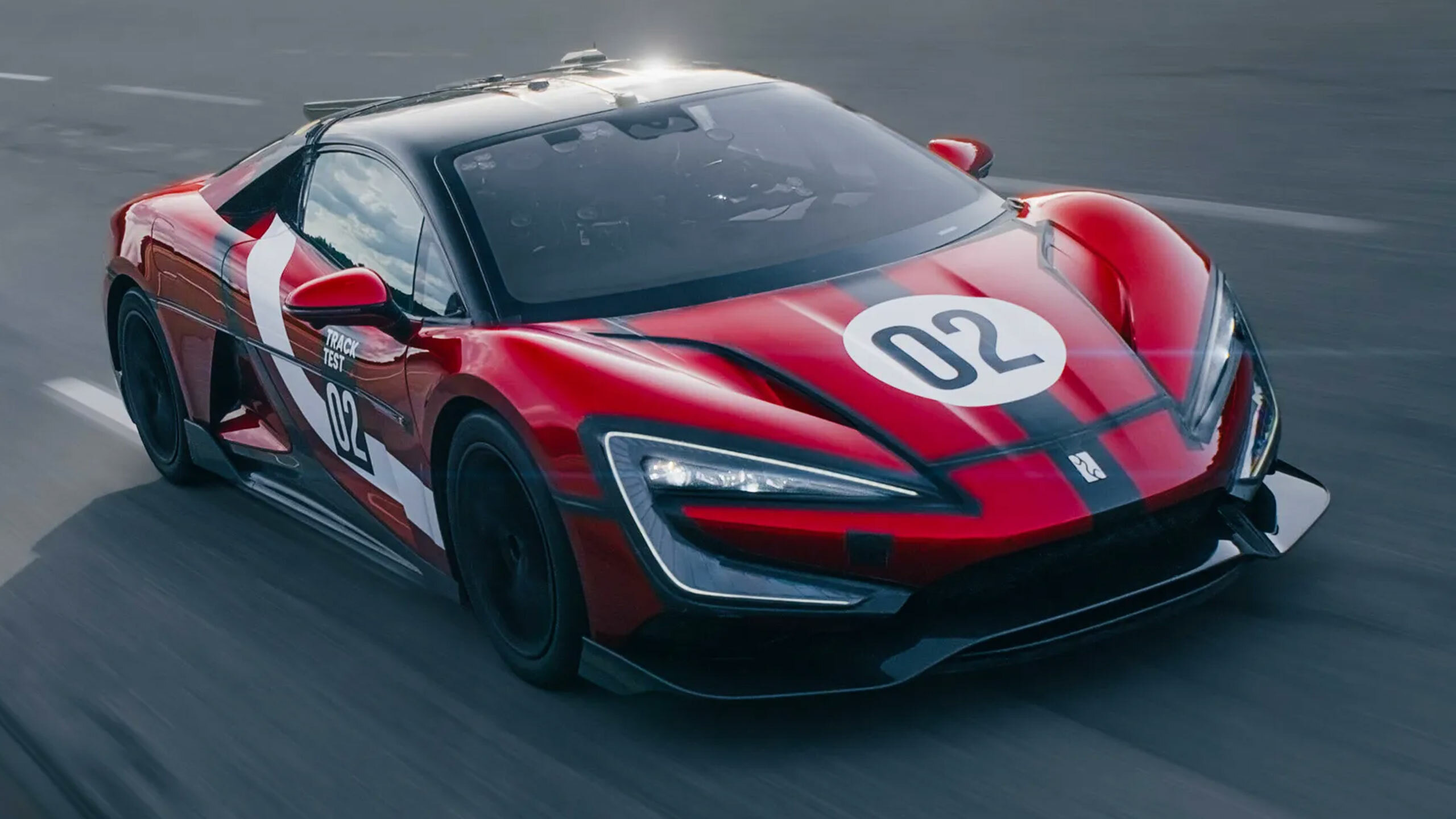
The Gimmick Escalation: Inside China’s Push for the $150,000 Cyber-Luxury Flagship
From rooftop drone hangars to 500-kilometre charging in five minutes, China’s top automakers are out-engineering legacy luxury with pure spectacle.
There was a time, not particularly long ago, when European boardrooms comforted themselves with the belief that China’s domestic auto sector was merely an exercise in high-volume, low-margin mimicry. That comforting illusion has dissolved completely. Across Shenzhen, Hangzhou, and Shanghai, the conversation has violently pivoted from commuter hatchbacks to six-figure halo machines, where domestic powerhouses are rolling out $150,000 electric flagships engineered to make Stuttgart and Goodwood look technologically stagnant.There was a time, not particularly long ago, when European boardrooms comforted themselves with the belief that China’s domestic auto sector was merely an exercise in high-volume, low-margin mimicry. That comforting illusion has dissolved completely. Across Shenzhen, Hangzhou, and Shanghai, the conversation has violently pivoted from commuter hatchbacks to six-figure halo machines, where domestic powerhouses are rolling out $150,000 electric flagships engineered to make Stuttgart and Goodwood look technologically stagnant.
The sheer scale of this offensive is staggering. Legacy giants like Geely, Changan, and BYD are running neck-and-neck with well-funded digital disruptors such as NIO, XPeng, Xiaomi, AITO, and Zeekr. Instead of competing solely on minimalist leather and badge heritage, these manufacturers are treating the premium segment as a sandbox for high-stakes mechanical theatre. Suspensions engineered to physically jump over potholes, amphibious SUVs capable of floating across floodwaters, and onboard hangars that deploy scouting drones from carbon-clad roofs have migrated from motor-show concept stands directly onto production lines.
Behind the visual spectacle lies brutal, uncompromised powertrain engineering. Chery is now championing its Volt Dragon system, boasting charging capabilities that claim to replenish 500 kilometres of range in just five minutes. Meanwhile, as rivals like XPeng and NIO continue their relentless focus on pure battery-electric architecture, competitors like Li Auto carved their initial market dominance by mastering extended-range powertrains before taking their global expansion plays toward export territories.
This technological arms race is already spilling over borders. Armed with blistering domestic development cycles and unyielding scale, Chinese automakers—spearheaded by BYD, Xiaomi, and Zeekr—are leaning into export offensives to capitalize on pricing volatility across Europe and beyond. They are no longer entering foreign markets cap in hand as budget alternatives; they are arriving as hyper-connected flagships with intelligent automated parking arrays, bespoke chassis electronics, and software ecosystems refined at lightning speed.
The existential question for global buyers is where genuine utility ends and high-priced digital novelty begins. A roof-mounted drone or an active suspension that leaps over broken asphalt might sound like pure science-fiction theatre, but in the fiercely contested Chinese domestic crucible, novelty is the currency of survival. For the established European old guard, the threat is no longer cheap entry-level steel—it is an ultra-luxury technical blitzkrieg that moves faster than legacy product cycles can even fathom.The existential question for global buyers is where genuine utility ends and high-priced digital novelty begins. A roof-mounted drone or an active suspension that leaps over broken asphalt might sound like pure science-fiction theatre, but in the fiercely contested Chinese domestic crucible, novelty is the currency of survival. For the established European old guard, the threat is no longer cheap entry-level steel—it is an ultra-luxury technical blitzkrieg that moves faster than legacy product cycles can even fathom.
Gallery
"China is changing the future of the automobile with some of the wildest car technologies ever seen."
Why it matters
Chinese EV makers are no longer content undercutting entry-level price points; they are deploying six-figure flagship tech to dismantle legacy European luxury dominance on the global stage.
Sources
- 1.
- 2.
- 3.
- 4.
Reported by the Downforce & Divots desk from the sources above.
The clubhouse.
- No replies yet. Be the first.