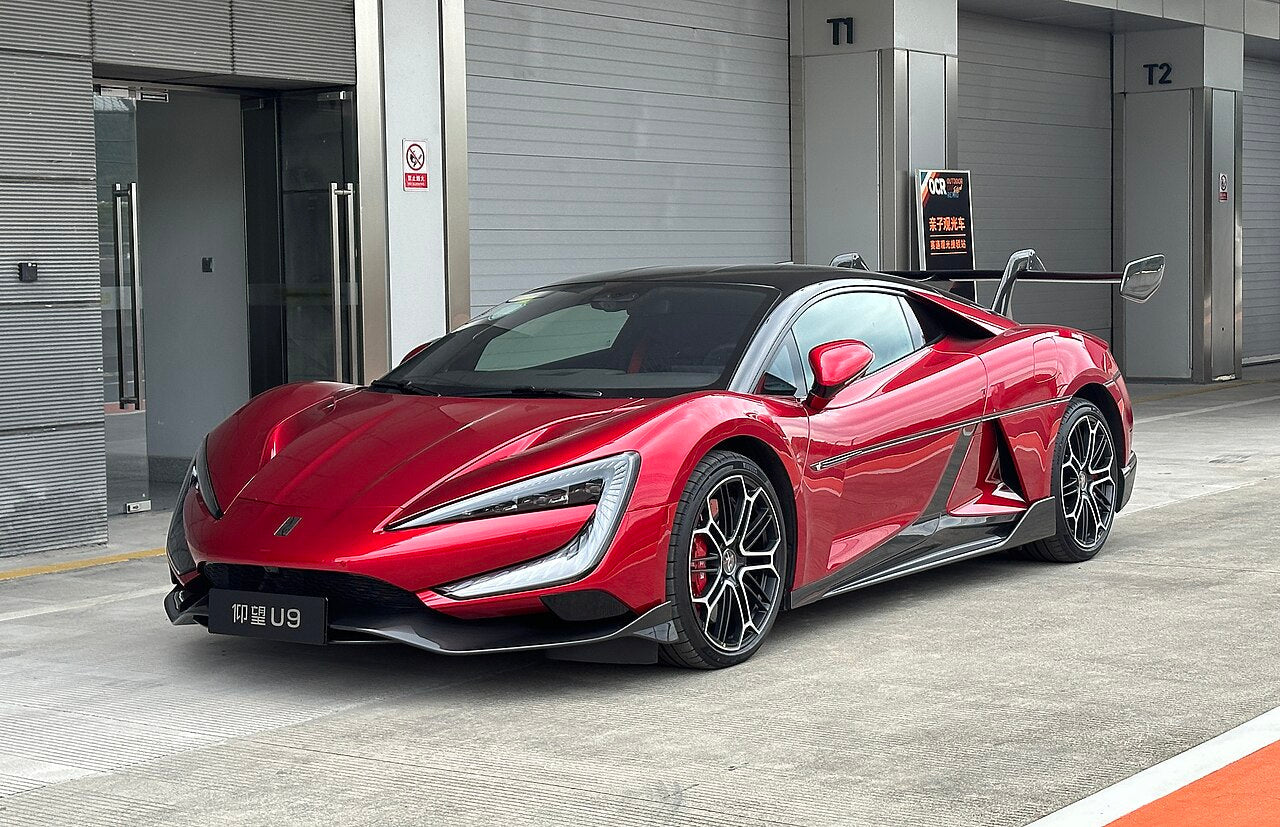
The 1,300-Horsepower Pivot: Inside the Chinese Super-EV Shaking Tesla’s Fortress
Beyond delivery tallies and balance sheets, China's four-figure output platforms and aggressive autonomous software are dismantling the West's technological moat.
For the better part of a decade, the narrative protecting Western electric ambition was anchored in a comfortable dogma: legacy makers and insurgent American brands might lose the low-cost volume skirmish, but they owned the high-performance software and powertrain summit. That protective barrier is evaporating at track speed. The arrival of 1,300-horsepower Chinese platforms—demonstrating violent acceleration matched with sophisticated autonomous capability—has shifted the fight from budget commuter appliances to the bleeding edge of engineering.For the better part of a decade, the narrative protecting Western electric ambition was anchored in a comfortable dogma: legacy makers and insurgent American brands might lose the low-cost volume skirmish, but they owned the high-performance software and powertrain summit. That protective barrier is evaporating at track speed. The arrival of 1,300-horsepower Chinese platforms—demonstrating violent acceleration matched with sophisticated autonomous capability—has shifted the fight from budget commuter appliances to the bleeding edge of engineering.
When independent evaluators and Western teardown specialists finally get their hands on China’s top-tier machinery, the revelation is rarely just about brute force. A 1,300-hp output is impressive in any language, but the existential threat to incumbent brands lies in the total integration. The seamless interplay of high-voltage battery architecture, rapid recharge cycles, and hands-off urban navigation proves that domestic Chinese development cycles have outpaced Silicon Valley's traditional software head start.When independent evaluators and Western teardown specialists finally get their hands on China’s top-tier machinery, the revelation is rarely just about brute force. A 1,300-hp output is impressive in any language, but the existential threat to incumbent brands lies in the total integration. The seamless interplay of high-voltage battery architecture, rapid recharge cycles, and hands-off urban navigation proves that domestic Chinese development cycles have outpaced Silicon Valley's traditional software head start.
The broader commercial landscape explains why these technical leaps are landing with such force. BYD has already surpassed Tesla in total battery-electric volume, but the real structural shift is occurring on the ledger. As Western manufacturers absorb bruising balance-sheet hits attempting to scale their high-voltage architectures, multiple Chinese EV manufacturers are already operating in the black, converting heavy domestic volume into pure development capital.
That profitability changes the tempo of technological iteration. Rather than husbanding capital to survive platform transitions, profitable Chinese manufacturers are pouring revenue directly back into autonomous drive suites, high-density cell chemistry, and extreme multi-motor configurations. The resulting hardware leaves Western competitors wrestling with an uncomfortable question: if the software advantage and the horsepower halo have both been equalised, what remains of the premium moat?That profitability changes the tempo of technological iteration. Rather than husbanding capital to survive platform transitions, profitable Chinese manufacturers are pouring revenue directly back into autonomous drive suites, high-density cell chemistry, and extreme multi-motor configurations. The resulting hardware leaves Western competitors wrestling with an uncomfortable question: if the software advantage and the horsepower halo have both been equalised, what remains of the premium moat?
Gallery
"While American and European rivals bleed cash transitioning to EVs, a new crop of Chinese EV startups are in the black."
Why it matters
The transition from price-point disruptor to technological benchmark marks a critical phase in the global EV race. With Chinese makers achieving both 1,300-horsepower performance ceilings and operating profitability, the West's perceived software and performance advantage has officially narrowed.
Sources
- 1.
- 2.
- 3.
- 4.**Tesla vs BYD: Who's Winning the Global EV War ...instagram.com
Reported by the Downforce & Divots desk from the sources above.
The clubhouse.
- No replies yet. Be the first.