Editor's Guide · Updated September 2026

The Best Golf Irons for High Handicappers

The short answer

The Ping G430 is our top pick for high handicappers because its exceptionally low center of gravity and wide sole make it incredibly easy to get the ball airborne while masking severe heel and toe strikes. If you struggle with slow swing speeds, the TaylorMade Qi HL offers weaker lofts to maximize your carry distance. For golfers who frequently chunk the turf, the hybrid-style Cleveland Launcher XL2 Halo is the most forgiving alternative.

For high handicappers—generally classified as golfers with an index of 18 or above—the iron game is often a battle of attrition. Thin strikes barely clear the forward tees, while heavy strikes leave deep trenches and the ball going nowhere. This guide covers game-improvement and super-game-improvement irons designed specifically to solve these problems by prioritizing high launch, maximum forgiveness across the face, and turf interaction that prevents digging.

The iron landscape has shifted noticeably over the last two years. Manufacturers previously engaged in a distance war, strengthening lofts to absurd degrees so their 7-iron would fly further in a simulator. The result was a generation of clubs that slow-swinging amateurs couldn't get into the air. Fortunately, the pendulum has swung back. The best irons today, particularly High Launch (HL) variants, pair lighter overall weights with sensible lofts to ensure the ball reaches its peak apex, landing softly on the green instead of bounding into the rough.

Updated September 2026. We buy our own clubs and test them on outdoor turf and launch monitors to verify carry numbers and forgiveness. We never rely on manufacturer marketing claims.

At a glance

PickAwardCategory7-Iron LoftConstructionOffsetPrice
Ping G430Best overallGame Improvement29°Cast cavity backModerate-High~$1,100
TaylorMade Qi HLBest for slow swing speedsSuper Game Improvement31.5°Cast cavity backHigh~$1,000
Cleveland Launcher XL2 HaloBest hybrid iron setSuper Game Improvement29.5°Hollow body hybridMaximum~$800
Callaway Paradym Ai Smoke HLBest for off-center ball speedGame Improvement30°Hollow bodyHigh~$1,000
Mizuno JPX925 Hot Metal HLBest feeling game-improvement ironGame Improvement31°Cast Chromoly cavityModerate~$1,200
Cobra DarkspeedBest for raw distanceGame Improvement27°Foam-filled hollow bodyModerate~$1,000

The picks

01 · Best overall

Ping G430

Best for: The 18+ handicapper who wants maximum consistency and struggles with hitting the ground before the ball.

Ping has dominated the game-improvement category for a decade, and the G430 perfects the formula. By thinning the face and lowering the center of gravity via a shorter hosel, Ping managed to increase ball speed without strengthening the loft to an unhittable degree. What separates the G430 from competitors is its turf interaction; the wide sole features a generous bounce that glides through the grass, turning what would be a chunked shot into a functional approach. It is not the absolute longest iron on perfectly centered strikes, but high handicappers do not need peak distance—they need their worst swings to end up near the green. The G430 delivers that consistency better than anything else we tested.

Category
Game Improvement
7-Iron Loft
29°
Construction
Cast cavity back
Offset
Moderate-High
Pros
  • + Phenomenal turf interaction prevents digging
  • + PurFlex badge greatly improves feel over previous generations
  • + Incredibly tight dispersion on heel and toe strikes
Cons
  • − Chunky topline won't suit the eye of traditionalists
  • − Premium price point for a cast iron

Typical price: ~$1,100

02 · Best for slow swing speeds

TaylorMade Qi HL

Best for: Senior golfers or players with slower swing speeds who struggle to hit high approach shots.

TaylorMade’s standard Qi irons are built for raw distance, but the Qi HL (High Launch) is specifically engineered for the slower swinger. High handicappers often lack the clubhead speed required to generate lift with strong-lofted modern irons. The Qi HL solves this by significantly weakening the lofts (the 7-iron sits at 31.5 degrees compared to 28 degrees on the standard model) and shedding overall weight. The result is a drastically improved descent angle. Instead of hitting low bullets that roll through the back of the green, the ball drops from a steeper angle and stops. Skip this if you already generate high swing speeds, as the combination of weak lofts and high launch will cause you to balloon the ball.

Category
Super Game Improvement
7-Iron Loft
31.5°
Construction
Cast cavity back
Offset
High
Pros
  • + Effortless elevation, even on thin strikes
  • + Lighter swing weight increases clubhead speed
  • + Excellent stopping power on firm greens
Cons
  • − Significant offset can induce a hook for faster swingers
  • − Shorter total distance than standard lofted irons

Typical price: ~$1,000

03 · Best hybrid iron set

Cleveland Launcher XL2 Halo

Best for: Golfers who chronically chunk their irons and want the absolute easiest club to hit.

Traditionalists will scoff at the bulky, hollow-body profile of the Launcher XL2 Halo, but for a 20+ handicap golfer, aesthetics should be secondary to results. This is a full set of hybrid replacements. The massive soles feature Cleveland's Gliderail technology, which makes digging the leading edge into the turf nearly impossible. Out of thick rough or tight fairway lies, the clubhead simply skids through impact. The ultra-deep center of gravity produces towering shots with very little effort. The downside to this extreme forgiveness is a complete lack of workability and a cumbersome look at address, particularly in the short irons. But if you want to eliminate the dreaded fat shot entirely, nothing else compares.

Category
Super Game Improvement
7-Iron Loft
29.5°
Construction
Hollow body hybrid
Offset
Maximum
Pros
  • + Nearly impossible to chunk
  • + Seamless progression from long irons to fairway woods
  • + Extremely forgiving on severe mishits
Cons
  • − Very bulky visual profile behind the ball
  • − Zero shot-shaping capability
  • − Short irons lack precision around the greens

Typical price: ~$800

04 · Best for off-center ball speed

Callaway Paradym Ai Smoke HL

Best for: Players who struggle with striking the toe of the club and need maximum ball speed retention.

Callaway's flagship game-improvement iron uses face architecture designed by artificial intelligence, mapped specifically to the swing dynamics of higher handicappers. The Ai Smoke HL excels dramatically on toe strikes—the most common miss for players who cast the club or swing outside-in. During testing, shots hit nearly a half-inch off the toe retained almost 95 percent of their center-strike ball speed. The HL version utilizes a slightly weaker loft structure than the standard Ai Smoke, aiding in launch. The main drawback is the sound and feel; it produces a louder, clickier acoustic than the Ping G430 or the Mizuno, which some players find harsh. However, the raw distance retention on bad swings makes it a top-tier choice.

Category
Game Improvement
7-Iron Loft
30°
Construction
Hollow body
Offset
High
Pros
  • + Incredible ball speed on severe toe strikes
  • + Modern, premium shelf appeal
  • + Elevates the ball easily without sacrificing raw distance
Cons
  • − Clicky, somewhat harsh feel at impact
  • − Badging on the back of the club is busy

Typical price: ~$1,000

05 · Best feeling game-improvement iron

Mizuno JPX925 Hot Metal HL

Best for: Improving high handicappers who want great feel and a cleaner look without sacrificing too much forgiveness.

High handicappers shouldn't have to settle for clubs that look like shovels. The JPX925 Hot Metal HL brings Mizuno’s renowned aesthetic refinement to the super-game-improvement space. Cast from Chromoly, the face is exceptionally thin, delivering satisfying, explosive feedback that feels significantly softer than the Callaway Ai Smoke. The HL designation here means higher launch, employing wider soles and lower weighting to help elevate the ball. It strikes a rare balance: it offers enough offset and perimeter weighting to help correct a slice and maintain distance on mishits, but the topline remains surprisingly clean. It is slightly less forgiving on severe heel strikes compared to the Ping G430, making it best for players hovering right around the 18 handicap mark who want a club they can grow into.

Category
Game Improvement
7-Iron Loft
31°
Construction
Cast Chromoly cavity
Offset
Moderate
Pros
  • + Best-in-class feel for a non-forged iron
  • + Sleek topline masks the underlying game-improvement tech
  • + Highly durable finish
Cons
  • − Not as forgiving on severe heel strikes as the Ping or Cleveland
  • − Expensive relative to some competitors

Typical price: ~$1,200

06 · Best for raw distance

Cobra Darkspeed

Best for: High handicappers with decent swing speed who prioritize hitting the ball as far as possible.

If you simply want to hit the ball further and aren't as concerned with steep descent angles, the Cobra Darkspeed is an absolute rocket. Using a hollow-body construction injected with foam, Cobra has pushed the limits of face flex. The lofts are strong (a 27-degree 7-iron), and the resulting ball flight is penetrating and long. The dark finish gives it an incredibly aggressive, premium look in the bag, though you should expect that finish to show scratches and wear on the sole after a season of bunker play. The trade-off for this massive distance is spin; the Darkspeed produces lower spin rates, meaning approaches will roll out significantly upon landing. It suits a player who plays on softer parkland courses where the greens are naturally receptive.

Category
Game Improvement
7-Iron Loft
27°
Construction
Foam-filled hollow body
Offset
Moderate
Pros
  • + Unmatched raw distance in this category
  • + Aggressive, premium aesthetics
  • + Foam injection dampens harsh vibrations
Cons
  • − Low spin and strong lofts make holding firm greens difficult
  • − Dark finish shows wear quickly

Typical price: ~$1,000

How to choose

Stop Chasing Strong Lofts

Many modern game-improvement irons feature remarkably strong lofts—sometimes a 7-iron is bent to 27 degrees, which is traditionally a 5-iron loft. While this creates impressive simulator distance on perfect strikes, it requires high clubhead speed to generate enough backspin and height to keep the ball in the air. If you swing slowly, a strong loft will result in low, diving shots that lack carry. Look for High Launch (HL) models that pair weaker lofts with low centers of gravity to maximize your actual carry distance.

Graphite vs. Steel Shafts

The stock shaft is the engine of the golf club. High handicappers, particularly those with slower swing speeds or joint pain, should strongly consider graphite shafts. Graphite is significantly lighter than steel, which can naturally increase your swing speed and help launch the ball higher. Furthermore, graphite absorbs vibration much better than steel, saving your hands and elbows on heavy strikes. Steel shafts are better suited for stronger, faster players who struggle with hook misses and need more heft to control the clubface.

The Importance of Sole Width

A high handicapper's worst enemy is the fat shot, where the club digs into the ground before contacting the ball. The wider the sole of an iron, the more 'bounce' it effectively has. Wide soles act like a ski, allowing the clubhead to glide or skid over the turf rather than digging a trench. While wide soles aren't preferred by low handicappers who want to manipulate trajectory and shape shots, they provide a massive margin for error for beginners and bogey golfers.

Reconsidering Your Set Makeup

There is very little reason for a high handicapper to carry a 4-iron or even a 5-iron. The length of the shaft and the low loft make them incredibly difficult to hit consistently off the turf. When purchasing a new set, look for configurations that start at the 6-iron or 7-iron and replace the longer clubs with easy-to-hit hybrids or high-lofted fairway woods. Your scores will immediately benefit from retiring the long irons.

How we picked

Our iron testing isolates the exact metrics that matter most to high handicappers: carry distance retention on mishits, launch angle, and turf interaction. We test on outdoor turf using Trackman launch monitors to capture accurate ball data, ensuring we see how the sole reacts to real grass, not just synthetic mats. We strike every iron out of the center, the extreme toe, the heel, and low on the face. Clubs that severely punish off-center hits with a massive drop in distance are penalized. We excluded players' distance irons (like the TaylorMade P790 or Titleist T200) from this specific guide; while popular, their smaller profiles and lower launch windows do not offer the sheer mechanical advantage an 18+ handicap requires to consistently get the ball airborne.

Related coverage

The Seven-Club Surgery: Inside Rory McIlroy’s High-Stakes 2026 Bag Overhaul — Equipment
Golf
4 min
Equipment · Nov 12, 2026

The Seven-Club Surgery: Inside Rory McIlroy’s High-Stakes 2026 Bag Overhaul

Coming off a historic career Grand Slam campaign, the six-time major champion has swapped half his setup for 2026.

Margot Vellis 4 min
The Teenager Who Broke the Tour: Blades Brown’s $1.1 Million Masterclass in Mexico — PGA Tour
Golf
Deep Dive
8 min
PGA Tour · Nov 10, 2026

The Teenager Who Broke the Tour: Blades Brown’s $1.1 Million Masterclass in Mexico

At 17 years old, Blades Brown didn't just win the World Wide Technology Championship at El Cardonal—he dismantled the traditional pipeline of professional golf with a 23-under-par coronation.

Margot Vellis 8 min
The Suspended Benchmark: Ben James Posts 15 Under Before Darkness Halts Round Two in Mexico — PGA Tour
Golf
3 min
PGA Tour · Nov 9, 2026

The Suspended Benchmark: Ben James Posts 15 Under Before Darkness Halts Round Two in Mexico

A blistering eight-under-par second round places the American at 15 under as the World Wide Technology Championship field contends with an interrupted schedule.

Margot Vellis 3 min
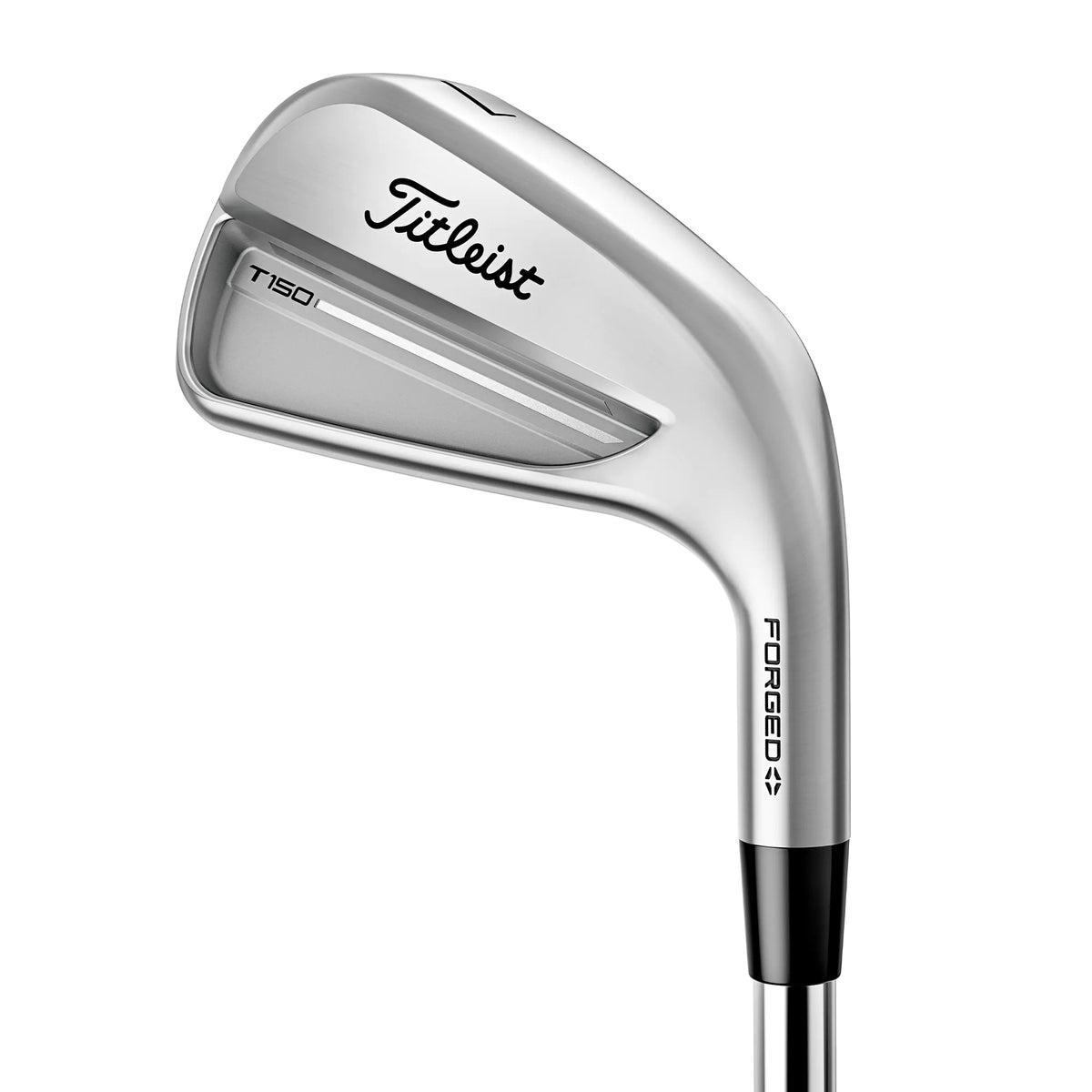
The Goldilocks Profile: Why the Titleist T150 Still Commands the Player’s Iron Conversation — Equipment
Golf
4 min
Equipment · Nov 9, 2026

The Goldilocks Profile: Why the Titleist T150 Still Commands the Player’s Iron Conversation

Sitting between razor-thin tour blades and hollow-body distance cannons, Titleist’s refined player’s cavity continues to earn its reputation as the market’s most balanced iron.

Margot Vellis 4 min
Lead Tape and Frankenstein Putters: Inside the Equipment Anarchy of the Senior Circuit — Equipment
Golf
4 min
Equipment · Nov 8, 2026

Lead Tape and Frankenstein Putters: Inside the Equipment Anarchy of the Senior Circuit

While the main tour is chained to 14-club corporate OEM contracts, PGA Tour Champions players are building time capsules that actually win.

Margot Vellis 4 min
The Ghost League: Why the Attempted ‘LIV 2.0’ Rescue Died on Arrival — Tour News
Golf
4 min
Tour News · Nov 8, 2026

The Ghost League: Why the Attempted ‘LIV 2.0’ Rescue Died on Arrival

When outside investors pulled the plug on a rebooted breakaway circuit over a lack of committed talent, the curtain finally slammed down on professional golf’s costliest civil war.

Margot Vellis 4 min
The Fine Print Impasse: Rahm Puts His Money Where Koepka’s Was — PGA Tour
Golf
4 min
PGA Tour · Nov 7, 2026

The Fine Print Impasse: Rahm Puts His Money Where Koepka’s Was

Jon Rahm confirms he is prepared to match the financial penalty paid by Brooks Koepka, but Ponte Vedra has yet to put an official offer on the table.

Margot Vellis 4 min
Autumn Reckoning: Inside the High-Stakes Schwab Cup Bubble in Arkansas — PGA Tour
Golf
4 min
PGA Tour · Nov 6, 2026

Autumn Reckoning: Inside the High-Stakes Schwab Cup Bubble in Arkansas

As the PGA Tour Champions descends on the Simmons Bank Championship, the Charles Schwab Cup playoffs reach their most unforgiving sorting mechanism.

Margot Vellis 4 min
The Shotgun Finale: How LIV Golf Finally Reached the End of the Road — Tour News
Golf
4 min
Tour News · Nov 6, 2026

The Shotgun Finale: How LIV Golf Finally Reached the End of the Road

After five turbulent years, billions in sovereign capital, and a failed 2.0 pivot, men's professional golf's most divisive venture prepares to shut its doors.

Margot Vellis 4 min
The El Cardonal Blitz: Chris Kirk Fires an Opening 63 at the World Wide Technology — PGA Tour
Golf
4 min
PGA Tour · Nov 5, 2026

The El Cardonal Blitz: Chris Kirk Fires an Opening 63 at the World Wide Technology

A blistering nine-under opening lap puts Chris Kirk in prime position as the FedExCup Fall sprint reaches Los Cabos.

Margot Vellis 4 min
The Private Equity Pullout: Inside BC Partners’ Exit and LIV’s Existential Brink — Tour News
Golf
4 min
Tour News · Nov 5, 2026

The Private Equity Pullout: Inside BC Partners’ Exit and LIV’s Existential Brink

BC Partners drops its financial backing over player recruitment shortfalls, plunging LIV Golf’s 2.0 vision into immediate peril.

Margot Vellis 4 min
The $249 Disruption: MacGregor’s Tourney MAX Stirs the Budget Driver Market — Equipment
Golf
4 min
Equipment · Nov 5, 2026

The $249 Disruption: MacGregor’s Tourney MAX Stirs the Budget Driver Market

Delivering 260 yards of carry at under half the cost of major OEM flagships, MacGregor’s latest big stick makes a compelling case for value engineering.

Margot Vellis 4 min
The Basque Backtrack: Inside Jon Rahm’s Calculated Path Back to the PGA Tour — Tour News
Golf
4 min
Tour News · Nov 4, 2026

The Basque Backtrack: Inside Jon Rahm’s Calculated Path Back to the PGA Tour

Unimpressed by LIV’s proposed 2027 relaunch, the two-time major champion signals an openness to pay the penalty box toll to return to Ponte Vedra.

Margot Vellis 4 min
Shell Game: Odyssey’s Radical TRTL Brings Ai-STAR Tech to Mallet Design — Equipment
Golf
4 min
Equipment · Nov 4, 2026

Shell Game: Odyssey’s Radical TRTL Brings Ai-STAR Tech to Mallet Design

With an unconventional silhouette, Dual Track alignment, and an artificial-intelligence insert, Odyssey's newest flatstick aims to dominate autumn testing.

Margot Vellis 4 min
The Autumn Squeeze: Novak’s Late Flurry and the Brutal Math of VidantaWorld — PGA Tour
Golf
4 min
PGA Tour · Nov 3, 2026

The Autumn Squeeze: Novak’s Late Flurry and the Brutal Math of VidantaWorld

A three-shot cushion in Mexico reshuffles the FedExCup Fall hierarchy as the tour turns toward Bermuda.

Margot Vellis 4 min
The Forever Pitch: Inside Bryson DeChambeau’s LIV 2.0 Realpolitik — Tour News
Golf
4 min
Tour News · Nov 3, 2026

The Forever Pitch: Inside Bryson DeChambeau’s LIV 2.0 Realpolitik

As player departures mount and LIV Golf pivots toward a non-hostile 2.0 model, Bryson DeChambeau insists the breakaway project is built for eternity.

Margot Vellis 4 min
Autumn Grinders: Hughes Lurks as VidantaWorld Tests Fall Resolves — PGA Tour
Golf
4 min
PGA Tour · Nov 3, 2026

Autumn Grinders: Hughes Lurks as VidantaWorld Tests Fall Resolves

While Andrew Novak surged clear on the Pacific coast, Mackenzie Hughes’s steady climb inside the top ten underscores the high-stakes grind of the FedExCup Fall.

Margot Vellis 4 min
The Zero-Torque Arms Race: Inside Performance Golf’s Bid to Topple L.A.B. — Equipment
Golf
4 min
Equipment · Nov 2, 2026

The Zero-Torque Arms Race: Inside Performance Golf’s Bid to Topple L.A.B.

As Performance Golf unleashes the RS1 to challenge lie-angle balancing supremacy, the modern green has become an uncompromising battleground for pure forgiveness.

Margot Vellis 4 min
FAQ

Frequently asked

Should a high handicapper ever use blade irons?

Absolutely not. Blade irons have a tiny sweet spot and a high center of gravity designed for elite workability. If you miss the center of the face even slightly, you will lose massive amounts of distance and feel a harsh sting in your hands. Stick to cavity backs or hollow-body designs.

What is the difference between game-improvement and super-game-improvement?

Game-improvement irons balance forgiveness with a somewhat traditional look. Super-game-improvement irons maximize forgiveness above all else, featuring ultra-wide soles, massive offset to fight slices, and very thick toplines. Super-game-improvement is ideal for true beginners and players consistently shooting over 100.

Will forgiving irons fix my slice?

No iron will completely cure a slice, as a slice is caused by an open clubface relative to your swing path. However, high-handicap irons feature 'offset'—where the clubface sits slightly behind the shaft. This buys you a fraction of a second to square the face, minimizing the severity of the slice.

Should I get custom fitted as a beginner or high handicapper?

Yes, but keep it simple. You don't need to stress over hyper-specific shaft kick points. Instead, a basic fitting will ensure the club length and lie angle are correct for your height and posture. Playing clubs that are too long or too upright will ingrain bad swing habits.

How many irons do I actually need in my bag?

Most high handicappers only need five or six irons: a 6-iron through a Pitching Wedge, plus a Sand Wedge. Long approaches should be handled by 7-woods or hybrids, which are vastly easier to launch off the ground.