Editor's Guide · Updated September 2026

The Best Golf Balls for Maximum Distance in 2026

The short answer

The Titleist Pro V1x Left Dash remains the best distance golf ball, offering unparalleled low long-game spin and high launch for high-speed swingers. If you want distance without completely sacrificing greenside feel, the TaylorMade TP5x is the top premium alternative. Budget-conscious distance chasers should grab the Vice Pro Plus.

Distance is the ultimate siren song in golf, but buying it in a box requires understanding how your swing interacts with a ball's core and mantle. Modern distance balls are no longer the rock-hard, two-piece distance pellets of the 1990s. The current crop utilizes complex multi-layer constructions to keep driver spin ruthlessly low while maintaining just enough urethane grip to stop a wedge shot on a firm green.

This guide is for players who actively want to squeeze five to fifteen extra yards out of their bag, specifically through the optimization of launch conditions. We have seen a massive shift recently toward firmer, high-compression models across all major manufacturers. We evaluate these balls based on their ability to elevate ball speed and lower spin off the tee, while critically assessing exactly what you give up when you miss the green.

We buy all golf balls at retail and evaluate them independently on-course and via launch monitor data. This guide is updated every autumn to reflect the latest urethane releases.

At a glance

PickAwardConstructionCompression ProfileDriver SpinTarget Swing SpeedTrajectoryPrice
Titleist Pro V1x Left DashBest overall for distance4-Piece Cast UrethaneFirmVery Low105+ mphHigh~$55/dozen
TaylorMade TP5xBest for distance with greenside control5-Piece Cast UrethaneFirmLow100+ mphHigh~$55/dozen
Vice Pro PlusBest value distance ball4-Piece Cast UrethaneFirmLow100+ mphMid-High~$39/dozen
Callaway Chrome Tour XBest for workable distance4-Piece UrethaneMid-FirmLow105+ mphMid~$55/dozen
Bridgestone Tour B XBest for wind stability3-Piece UrethaneFirmLow105+ mphMid-Low~$50/dozen
Srixon Z-Star XVBest for extreme swing speeds3-Piece UrethaneVery FirmLow110+ mphMid-High~$50/dozen

The picks

01 · Best overall for distance

Titleist Pro V1x Left Dash

Best for: Fast swingers who generate too much driver spin and need a penetrating, low-spin ball flight.

Originally a tour-only prototype, the Left Dash is a unicorn in the premium ball market. It takes the naturally high flight of the standard Pro V1x and strips away a significant amount of long-game spin, resulting in a flatter, more penetrating descent that maximizes rollout upon landing. It feels noticeably firmer off the putter face than a standard Pro V1, sounding almost clicky, which is the inevitable trade-off for its core speed. It beats the TaylorMade TP5x slightly in raw ball speed retention on off-center driver strikes, making it the undisputed king for players swinging over 105 mph who desperately need to shed spin to maximize their carry distance. Be warned: if you struggle to launch the ball high, this firm profile will actually cost you distance; it demands raw clubhead speed to properly compress.

Construction
4-Piece Cast Urethane
Compression Profile
Firm
Driver Spin
Very Low
Target Swing Speed
105+ mph
Trajectory
High
Pros
  • + Unmatched low-spin profile for the driver
  • + Excellent durability and scuff resistance
  • + Piercing ball flight cuts through wind efficiently
Cons
  • − Distinctly firm, clicky feel off the putter
  • − Requires high swing speed to unlock distance

Typical price: ~$55/dozen

02 · Best for distance with greenside control

TaylorMade TP5x

Best for: Players wanting a tour-level distance ball without entirely giving up short-game spin and feel.

The TP5x is TaylorMade’s fastest tour ball, and recent iterations have focused heavily on core stiffness to boost ball speed while utilizing a softer cast urethane cover to maintain short-game viability. While it sits just a fraction behind the Left Dash in raw low-spin rollout, it offers a noticeably softer feel on touch shots. This means you surrender a tiny fraction of yardage on your driver in exchange for genuine grab on a 30-yard bunker shot. The five-layer construction allows it to launch high without ballooning in the wind, and it feels slightly less harsh on mid-irons than the Titleist counterpart. If you are a mid-handicap player hovering around 100 mph of swing speed who wants extra yards but absolutely refuses to play a rock around the greens, the TP5x strikes the most playable balance currently on the market.

Construction
5-Piece Cast Urethane
Compression Profile
Firm
Driver Spin
Low
Target Swing Speed
100+ mph
Trajectory
High
Pros
  • + Excellent speed and launch off the driver
  • + Noticeably softer cover than pure distance competitors
  • + Five-layer design transitions smoothly from woods to wedges
Cons
  • − Can spin slightly more off the driver than Left Dash
  • − Premium price limits experimentation for high-handicaps

Typical price: ~$55/dozen

03 · Best value distance ball

Vice Pro Plus

Best for: Budget-conscious golfers swinging over 100 mph who want tour-level distance without the tour markup.

Vice has built a formidable reputation on delivering tour-like performance at direct-to-consumer prices, and the Pro Plus is their dedicated distance heavyweight. Engineered as a four-piece ball for higher swing speeds, it prioritizes low driver spin and a penetrating ball flight. In practical evaluations, it keeps pace with the premium $55 dozens off the tee, trailing only by fractional margins in extreme crosswind stability. The primary compromise comes in cover durability; the cast urethane cover on the Pro Plus tends to scuff noticeably faster out of bunkers or off cart paths than a Pro V1x or Chrome Tour X. However, at roughly forty dollars a dozen, swapping out a lightly scuffed ball stings significantly less.

Construction
4-Piece Cast Urethane
Compression Profile
Firm
Driver Spin
Low
Target Swing Speed
100+ mph
Trajectory
Mid-High
Pros
  • + Phenomenal price-to-performance ratio
  • + Excellent raw ball speed comparable to top-tier brands
  • + Very low driver spin prevents ballooning
Cons
  • − Urethane cover cuts and scuffs more easily than rivals
  • − Feels heavier and firmer off the putter face

Typical price: ~$39/dozen

04 · Best for workable distance

Callaway Chrome Tour X

Best for: Low-handicap players who want maximum driver distance but demand high spin on approach shots.

Replacing the long-standing Chrome Soft X, the Chrome Tour X is built to satisfy elite players demanding both speed and workability. It actually spins slightly more than the Left Dash or TP5x on iron shots, which might seem counterintuitive for a strict distance guide, but it maintains remarkably low spin off the driver. This creates a highly workable ball for skilled players who want to bomb it off the tee but still hit aggressive, shaping iron shots into tucked pins. Callaway's seamless aerodynamic dimple pattern holds its line brilliantly in the wind. However, because it isn't the absolute lowest-spinning ball across the entire bag, if you are fighting a massive slice, the extra mid-iron spin will likely exacerbate your misses compared to a purely low-spin distance model.

Construction
4-Piece Urethane
Compression Profile
Mid-Firm
Driver Spin
Low
Target Swing Speed
105+ mph
Trajectory
Mid
Pros
  • + Superb aerodynamic stability in crosswinds
  • + Great iron spin for approach shot control
  • + Softer feel on chips than ultra-distance models
Cons
  • − Higher iron spin can heavily penalize lateral misses
  • − Not the longest option if you need maximum rollout

Typical price: ~$55/dozen

05 · Best for wind stability

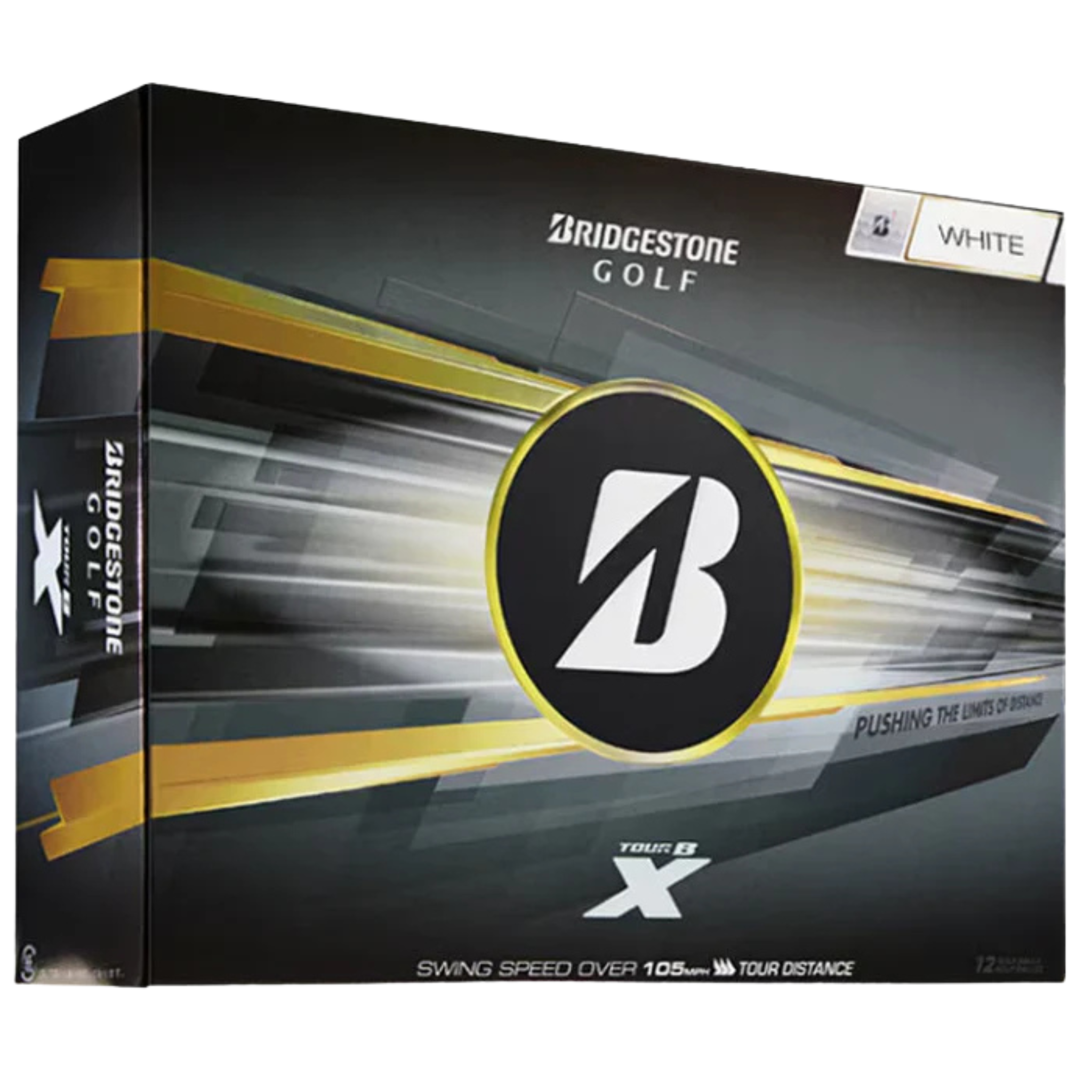
Bridgestone Tour B X

Best for: High-speed players who play in windy conditions and prefer a flatter, rollout-heavy trajectory.

The ball trusted by Jason Day and Tiger Woods is explicitly engineered for players with swing speeds over 105 mph who want a piercing, wind-cheating trajectory. The Tour B X uses a proprietary dual-dimple technology that alters aerodynamic drag in flight, keeping the apex flatter and significantly more stable in breezy conditions than its competitors. Off the driver, it sits firmly in the low-spin category, promoting tremendous rollout on firm fairways. Around the greens, its slip-resistant cover provides decent friction, though it lacks the immediate bite of the TaylorMade TP5x. The manufacturing consistency is incredible, making it the superior choice if you regularly play on coastal or links-style courses where the wind dictates every yardage.

Construction
3-Piece Urethane
Compression Profile
Firm
Driver Spin
Low
Target Swing Speed
105+ mph
Trajectory
Mid-Low
Pros
  • + Unrivaled wind performance and flight stability
  • + Excellent rollout off the tee
  • + Highly consistent core-to-cover manufacturing
Cons
  • − Flatter trajectory requires the player to generate their own launch angle
  • − Firm feel on chips requires adjustment

Typical price: ~$50/dozen

06 · Best for extreme swing speeds

Srixon Z-Star XV

Best for: The absolute fastest swingers (110+ mph) who can fully compress a highly rigid core.

Srixon's Z-Star XV is famously robust, featuring a fast-layer core construction designed to transfer maximum energy only when struck with violent force. If your driver swing speed routinely eclipses 110 mph, this ball activates its inner core better than almost anything else on the market, generating massive ball speeds. However, for players swinging under 100 mph, it will feel like hitting a stone and will almost certainly result in lost distance due to inadequate compression. It has a slightly clicky acoustic profile, and the spin coating works hard around the greens, but the sheer yardage it provides to the game's fastest swingers makes it a highly specialized standout.

Construction
3-Piece Urethane
Compression Profile
Very Firm
Driver Spin
Low
Target Swing Speed
110+ mph
Trajectory
Mid-High
Pros
  • + Massive ball speed unlocked for very fast swingers
  • + Highly durable cover resists wedge shearing
  • + Holds its line well under high-torque impacts
Cons
  • − Far too firm for average swing speeds, costing distance
  • − Noticeably loud, clicky sound off wedges and putters

Typical price: ~$50/dozen

How to choose

Understanding Compression and Swing Speed

Distance is generated by compressing the golf ball’s core. If you buy a highly rigid, high-compression ball (like the Srixon Z-Star XV) but swing your driver at 90 mph, you simply will not compress the core enough to unlock its built-in speed. Instead, the ball will feel harsh, launch poorly, and likely fall short of a softer ball. Be entirely honest about your swing speed. If you are under 95 mph, a tour-level distance ball will likely rob you of yards compared to a mid-compression alternative that fits your mechanics.

The Spin Paradox

To maximize driver distance, you want high launch and low spin. However, a golf ball does not know which club you are hitting. A ball engineered for extremely low driver spin will inevitably spin less on your 8-iron and sand wedge as well. The best modern multi-layer urethane balls mitigate this by utilizing thin, sticky covers, but you are always trading a small amount of short-game control for those extra yards off the tee. You have to decide if an extra eight yards is worth a slightly longer rollout on your chip shots.

Urethane vs. Ionomer/Surlyn Covers

You will notice we only recommend urethane-covered balls in this guide. Cheap distance balls use ionomer or Surlyn covers. They spin very little, meaning they fly straight and roll forever, but they are nearly impossible to stop on a fast green. Urethane allows a ball to be firm in the inner core for driver distance while remaining sticky on the outside for wedge friction. If a ball doesn't have a urethane cover, it belongs on a mini-golf course, not in your bag for a serious round of golf.

How we picked

We selected these balls by focusing strictly on the premium urethane distance category, intentionally excluding two-piece 'distance' balls (such as the Top Flite XL or Titleist Velocity). While those two-piece models undeniably fly far, their total lack of greenside spin renders them unplayable for serious golf. Our rankings are based on aggregated launch monitor data from industry testing, on-course playability evaluations, and head-to-head comparisons of cover durability over 18 holes. We weigh driver ball speed, launch angle, and spin retention heavily, but immediately penalize balls that refuse to stop on a firm green with a wedge. We do not operate our own robotic testing lab; instead, we rely on established swing data patterns from high-level amateurs and professionals to determine which ball profiles genuinely deliver extra yardage without ruining your scorecard.

Related coverage

The Medinah Crucible: Inside the 7,548-Yard Presidents Cup Gauntlet — PGA Tour
Golf
4 min
PGA Tour · Sep 29, 2026

The Medinah Crucible: Inside the 7,548-Yard Presidents Cup Gauntlet

Medinah’s muscular Course No. 3 laid down a brutal 70-par blueprint in the pursuit of 15.5 points.

Margot Vellis 4 min
The Woodwork Revolution: Inside Srixon’s Radical ZXi RKT Overhaul — Equipment
Golf
4 min
Equipment · Sep 28, 2026

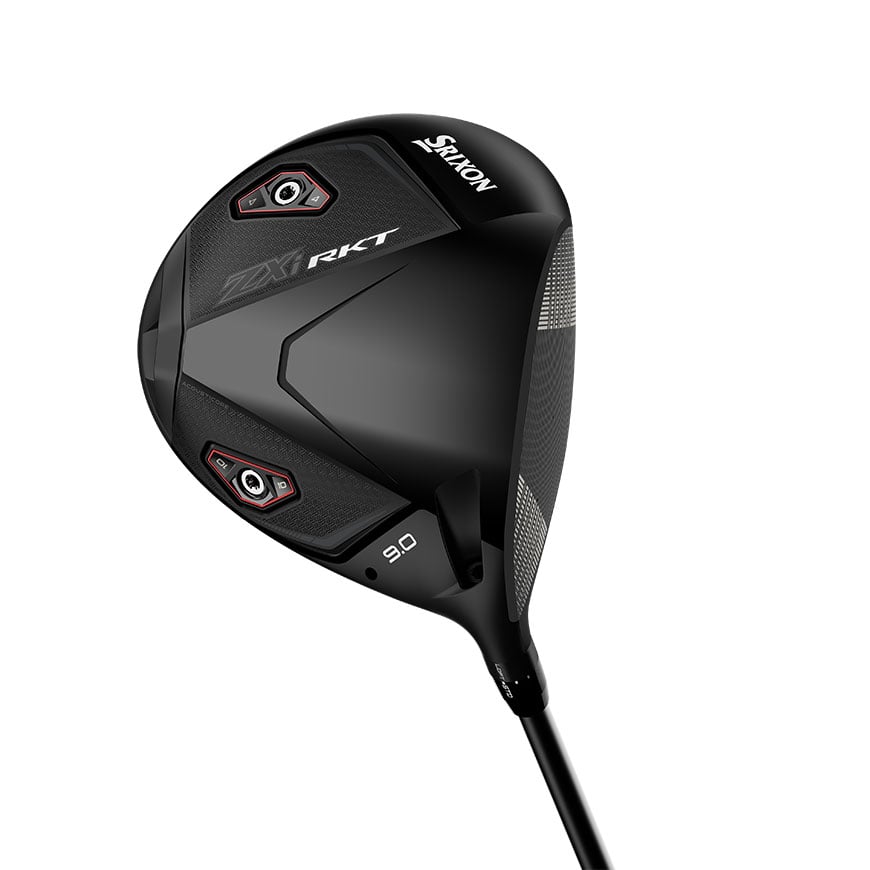
The Woodwork Revolution: Inside Srixon’s Radical ZXi RKT Overhaul

By binning its legacy metalwood blueprints for the ZXi RKT line, Srixon scores immediate major validation while reshaping the modern driver arms race.

Margot Vellis 4 min
The Unsigned Corridor: Why Rahm and Niemann Are Keeping LIV on Hold — Tour News
Golf
4 min
Tour News · Sep 26, 2026

The Unsigned Corridor: Why Rahm and Niemann Are Keeping LIV on Hold

With Jon Rahm leaving his future open and Joaquin Niemann remaining unsigned for next season, LIV Golf faces an uneasy roster holding pattern.

Margot Vellis 4 min
The Valderrama Hesitation: Inside LIV’s Survival Scramble and the European Refuge — Tour News
Golf
4 min
Tour News · Sep 25, 2026

The Valderrama Hesitation: Inside LIV’s Survival Scramble and the European Refuge

As Scott O’Neil pitches a rebooted ‘LIV 2.0’ to wary investors, Sotogrande’s crown jewel quietly assesses an exit ramp back to the DP World Tour.

Margot Vellis 4 min
Blueprint in the Bag: Deconstructing Team USA’s Presidents Cup Hardware — Equipment
Golf
4 min
Equipment · Sep 25, 2026

Blueprint in the Bag: Deconstructing Team USA’s Presidents Cup Hardware

As Captain Brandt Snedeker’s squad dials in their specs, GolfWRX’s bag breakdowns reveal a ruthless pursuit of technical precision.

Margot Vellis 4 min
The Peninsula Prescription: Zach Johnson’s Pure Statement at Pebble — PGA Tour
Golf
3 min
PGA Tour · Sep 25, 2026

The Peninsula Prescription: Zach Johnson’s Pure Statement at Pebble

Trading brute force for Monterey precision, the two-time major champion secures top honours at the PURE Insurance Championship.

Margot Vellis 3 min
The $9 Million Interception: What J.J. Spaun’s Surrey Takeover Cost the European Elite — PGA Tour
Golf
4 min
PGA Tour · Sep 24, 2026

The $9 Million Interception: What J.J. Spaun’s Surrey Takeover Cost the European Elite

By conquering Wentworth's 7,267-yard West Course, J.J. Spaun denied Rory McIlroy and dethroned Alex Noren to claim the DP World Tour’s crown jewel.

Margot Vellis 4 min
The Surrey Raid: What J.J. Spaun’s Wentworth Statement Means for Transatlantic Golf — PGA Tour
Golf
4 min
PGA Tour · Sep 22, 2026

The Surrey Raid: What J.J. Spaun’s Wentworth Statement Means for Transatlantic Golf

An American unseating the European establishment across 7,267 yards of Surrey woodland confirms a stark reality for the DP World Tour’s flagship showpiece.

Margot Vellis 4 min
Twin 61s and Zero Margin: Inside Ben James’s Relentless Chase at Walnut Cove — PGA Tour
Golf
4 min
PGA Tour · Sep 22, 2026

Twin 61s and Zero Margin: Inside Ben James’s Relentless Chase at Walnut Cove

A closing 10-under-par barrage forced Jacob Bridgeman to match perfection stroke for stroke in Arden.

Margot Vellis 4 min
The Sunday Squeeze: How Jacob Bridgeman Stole Neal Shipley's Thunder in Asheville — PGA Tour
Golf
Deep Dive
9 min
PGA Tour · Sep 22, 2026

The Sunday Squeeze: How Jacob Bridgeman Stole Neal Shipley's Thunder in Asheville

Neal Shipley brought a career-low 62 and a clinical wedge game to the inaugural Biltmore Championship. But on the modern PGA Tour, holding a lead requires more than perfect mechanics—it requires a Sunday 61.

Margot Vellis 9 min
The Anti-Obsolescence Play: Behind the Mizuno Pro S-4 Cavity Back — Equipment
Golf
4 min
Equipment · Sep 22, 2026

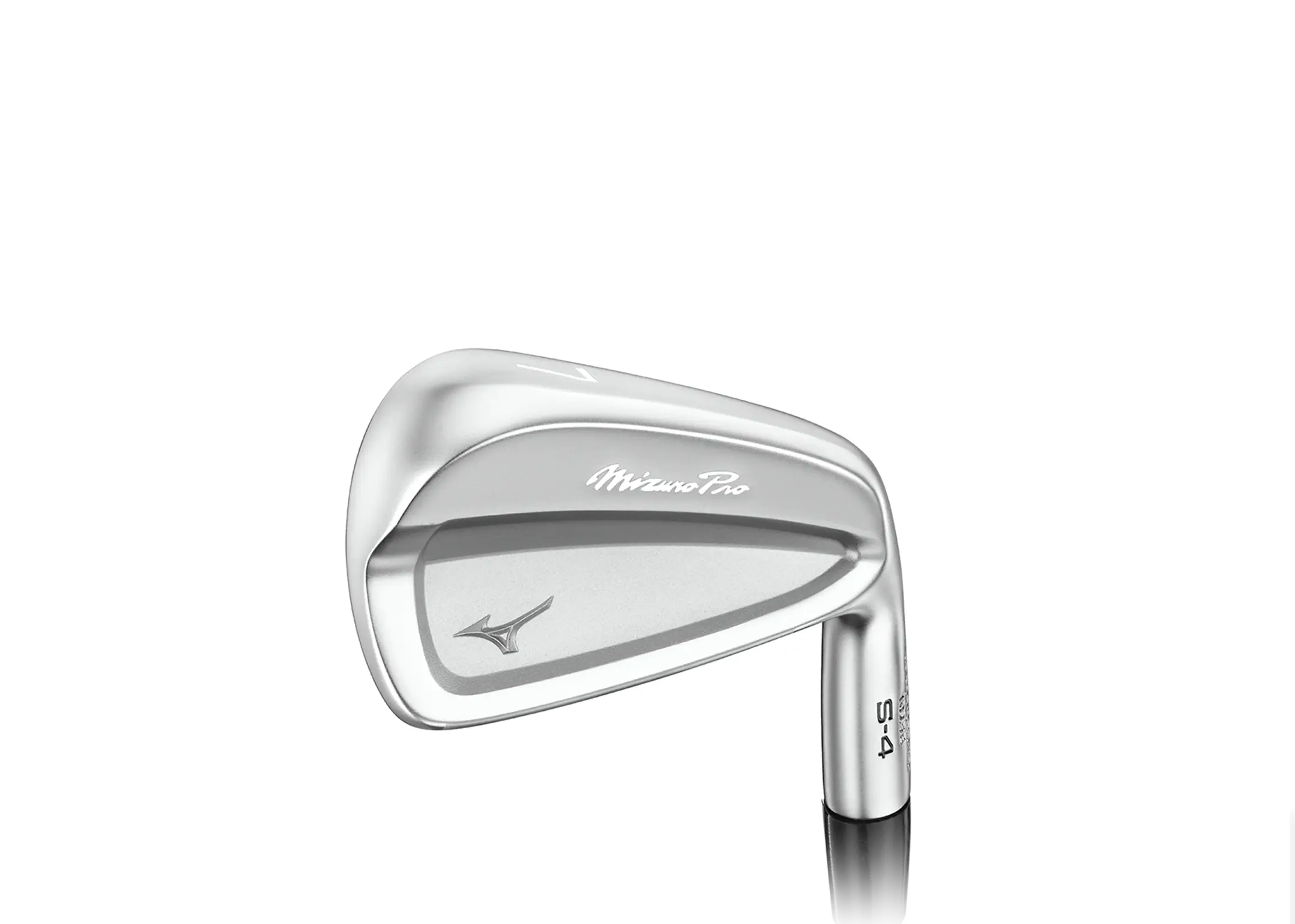
The Anti-Obsolescence Play: Behind the Mizuno Pro S-4 Cavity Back

By anchoring its Signature series to a multi-year lifecycle, Mizuno delivers a forgiving players' cavity back that refuses to chase the annual retail churn.

Margot Vellis 4 min
The Cavity-Back Covenant: Inside Mizuno’s Pro S-4 Strategy — Equipment
Golf
4 min
Equipment · Sep 22, 2026

The Cavity-Back Covenant: Inside Mizuno’s Pro S-4 Strategy

With the new Pro S-4 cavity back, Mizuno expands its Signature lineup while pushing back against the relentless churn of annual release cycles.

Margot Vellis 4 min
The $329 Counterpunch: Inside Takomo’s Ignis D2 Driver Ambush — Equipment
Golf
4 min
Equipment · Sep 21, 2026

The $329 Counterpunch: Inside Takomo’s Ignis D2 Driver Ambush

With the Ignis D2, direct-to-consumer upstart Takomo delivers head adjustability and clean engineering at nearly half the price of legacy metalwoods.

Margot Vellis 4 min
The Eastern Defection: How Royal Birkdale Rewrote Golf’s Global Map — Tour News
Golf
4 min
Tour News · Sep 21, 2026

The Eastern Defection: How Royal Birkdale Rewrote Golf’s Global Map

A covert negotiation during the Open Championship has severed LIV Golf’s Asian pipeline, leaving the breakaway circuit staring down insolvency.

Margot Vellis 4 min
The Wentworth Incursion: How J.J. Spaun Stared Down Rory McIlroy — PGA Tour
Golf
4 min
PGA Tour · Sep 21, 2026

The Wentworth Incursion: How J.J. Spaun Stared Down Rory McIlroy

Crashing European golf’s marquee gathering, J.J. Spaun delivers a career-defining statement at the BMW PGA Championship.

Margot Vellis 4 min
The Weight Shift: Inside TaylorMade’s Qi4D Max Driver Evolution — Equipment
Golf
4 min
Equipment · Sep 19, 2026

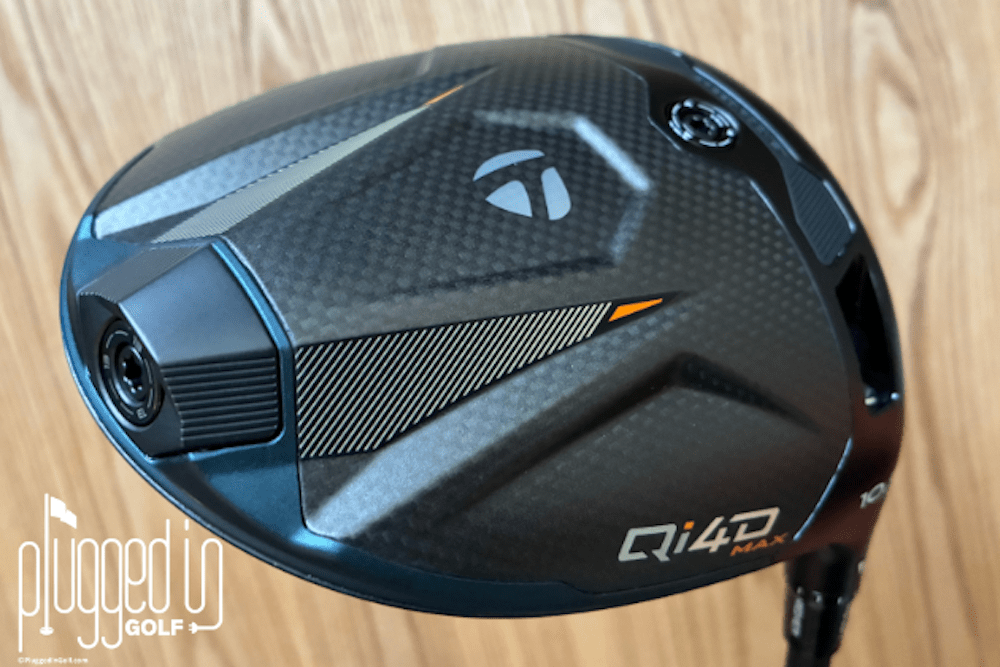
The Weight Shift: Inside TaylorMade’s Qi4D Max Driver Evolution

TaylorMade unveils shiftable weight architecture in the Qi4D Max, targeting dynamic delivery and maximum stability.

Margot Vellis 4 min
The Data Reckoning: Inside MyGolfSpy’s 2026 Ball Test Verdicts — Golf Tech
Golf
4 min
Golf Tech · Sep 19, 2026

The Data Reckoning: Inside MyGolfSpy’s 2026 Ball Test Verdicts

Fresh independent testing puts the modern urethane market under the microscope, elevating Bridgestone's Tour B X while challenging OEM marketing narratives.

Hollis Wren 4 min
The White Box Ritual: Inside the Secret Seeding of Titleist’s 2027 Pro V1 — Golf Tech
Golf
4 min
Golf Tech · Sep 19, 2026

The White Box Ritual: Inside the Secret Seeding of Titleist’s 2027 Pro V1

Titleist unleashes its next-generation Pro V1 and Pro V1x prototypes into the wild, kicking off golf equipment's most scrutinised R&D cycle.

Hollis Wren 4 min
FAQ

Frequently asked

Will a distance golf ball fix my slice?

No, but a lower-spinning distance ball can slightly reduce the severity of it. Slices are caused by an open clubface relative to your swing path, which creates lateral spin. Low-spin balls reduce all spin, including lateral spin, meaning your slice might end up a few yards further right in the rough, rather than deep out of bounds.

Why are distance balls usually firmer?

A firmer core rebounds faster off the clubface, translating to higher ball speed. Softer cores absorb more energy at impact, which feels pleasant on the hands but generally results in lower raw ball speeds. Manufacturers increase core compression specifically to maximize the energy transfer from high-speed swings.

Do I swing fast enough for a premium distance ball?

Generally, to see the true distance benefits of firm tour balls like the Pro V1x Left Dash or TP5x, you need a driver swing speed of at least 100 mph. If you are in the 85-95 mph range, you will likely get more distance out of a softer, mid-compression ball that your swing can fully compress.

How much distance can I actually gain by switching balls?

If you are currently playing a ball that spins way too much for your specific swing profile, switching to a low-spin distance ball can realistically gain you anywhere from 5 to 15 yards off the tee, largely through increased rollout. If your current ball is already well-fit to your swing, the gains will be minimal.