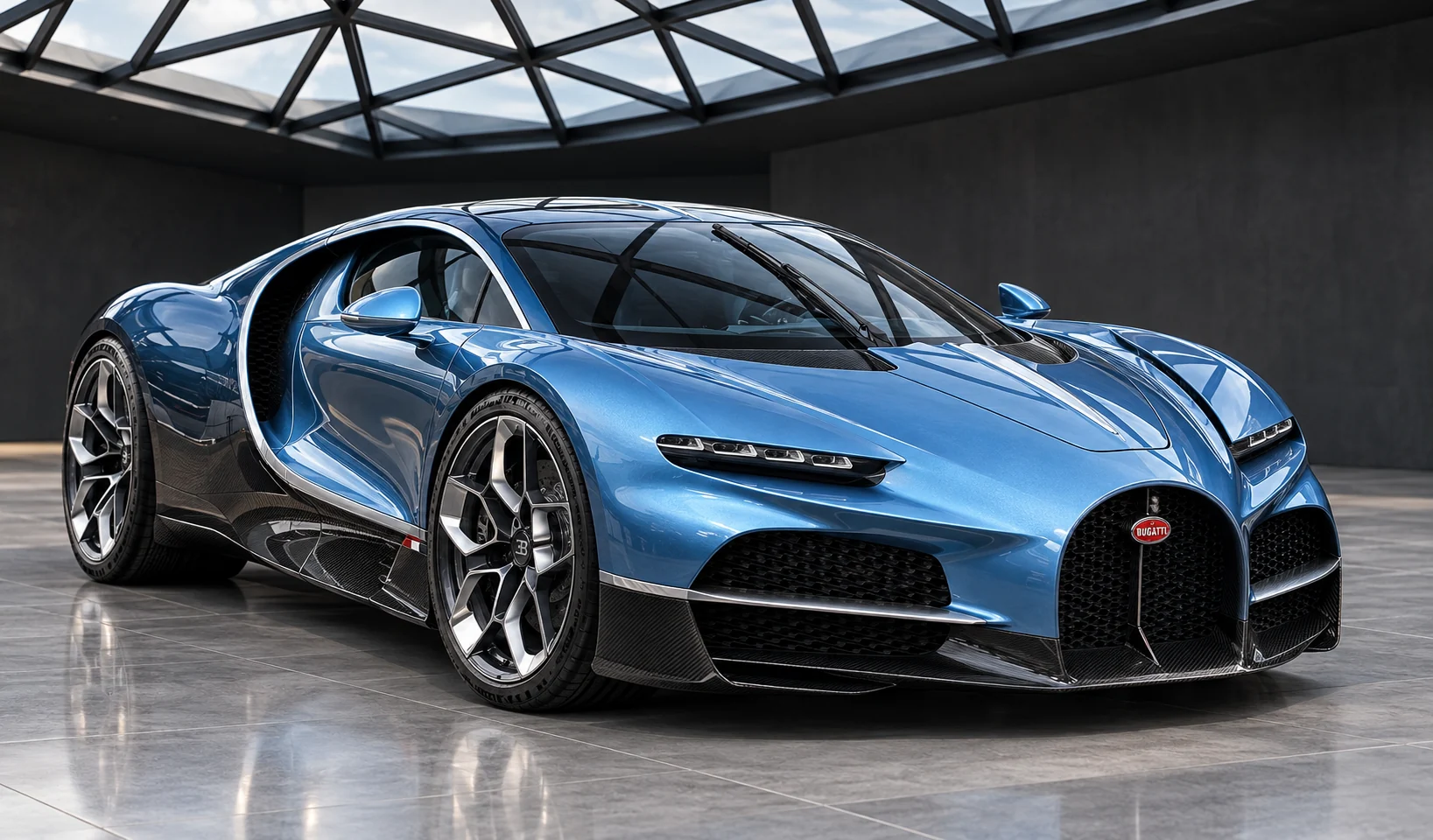
The Second Coming: How the W1, Tourbillon, and F80 Redefine the Hypercar Crown
A decade after the P1, 918 Spyder, and LaFerrari rewrote the laws of physics, a new triumvirate arrives to challenge the sacred canon.
Every generation of ultra-high performance eventually demands its reckoning. Over a decade ago, automotive history fractured cleanly along a new fault line when the McLaren P1, Porsche 918 Spyder, and Ferrari LaFerrari converged to establish the original Holy Trinity. They were not merely fast; they were architectural declarations that petrol and electric current could coalesce into something violently coherent. Now, as the collector market watches original LaFerrari examples command $8 million while the Porsche 918 commands $3 million, the mantle is being challenged by a fresh vanguard: the McLaren W1, the Bugatti Tourbillon, and the Ferrari F80.Every generation of ultra-high performance eventually demands its reckoning. Over a decade ago, automotive history fractured cleanly along a new fault line when the McLaren P1, Porsche 918 Spyder, and Ferrari LaFerrari converged to establish the original Holy Trinity. They were not merely fast; they were architectural declarations that petrol and electric current could coalesce into something violently coherent. Now, as the collector market watches original LaFerrari examples command $8 million while the Porsche 918 commands $3 million, the mantle is being challenged by a fresh vanguard: the McLaren W1, the Bugatti Tourbillon, and the Ferrari F80.
The sheer audacity of this new crop lies in how sharply it departs from the philosophical compromises of 2013. When Ferrari introduced the LaFerrari, its recipe was uncompromisingly theatrical: an atmospheric 6.3-litre V12 screaming to 9,250 RPM, paired with an F1-derived HY-KERS system that funnelled 950 horsepower exclusively through the rear wheels. It was wild, analog in its fury, and intentionally difficult to master. By contrast, the arrival of machines like the F80 and W1 signals an era where hypercars are no longer just hybrid experiments, but holistic aerodynamic and electronic weapons.
Yet the broader automotive landscape has become infinitely more crowded. Between boutique homologation specials and thirty-unit limited runs, the top tier of performance machinery risks diluting its own mystique through sheer volume. What preserved the mystique of the original hybrid gods was timing; they arrived precisely when electrification was viewed with suspicion by purists, conquering skepticism through lap times and visceral acoustic violence.Yet the broader automotive landscape has become infinitely more crowded. Between boutique homologation specials and thirty-unit limited runs, the top tier of performance machinery risks diluting its own mystique through sheer volume. What preserved the mystique of the original hybrid gods was timing; they arrived precisely when electrification was viewed with suspicion by purists, conquering skepticism through lap times and visceral acoustic violence.
The new trinity—McLaren’s W1, Bugatti’s Tourbillon, and Ferrari’s F80—does not have the luxury of surprising a skeptical world. Electrification is no longer a novelty; it is the default engineering baseline. Instead, these new flagships must justify their existence by pushing beyond baseline metrics into unprecedented realms of usable downforce, active chassis manipulation, and ungodly power delivery that eclipses the four-figure horsepower mark with clinical ease.The new trinity—McLaren’s W1, Bugatti’s Tourbillon, and Ferrari’s F80—does not have the luxury of surprising a skeptical world. Electrification is no longer a novelty; it is the default engineering baseline. Instead, these new flagships must justify their existence by pushing beyond baseline metrics into unprecedented realms of usable downforce, active chassis manipulation, and ungodly power delivery that eclipses the four-figure horsepower mark with clinical ease.
Whether the new hierarchy will replicate the collector romance of their predecessors remains the multibillion-pound question. While auction blocks across Europe and North America continue to treat the 2013 class as blue-chip modern art, the Tourbillon, W1, and F80 are rolling out of design studios into a much more demanding spotlight. Speed alone is no longer enough to build a legend; what matters now is soul in an age of hyper-calculated perfection.Whether the new hierarchy will replicate the collector romance of their predecessors remains the multibillion-pound question. While auction blocks across Europe and North America continue to treat the 2013 class as blue-chip modern art, the Tourbillon, W1, and F80 are rolling out of design studios into a much more demanding spotlight. Speed alone is no longer enough to build a legend; what matters now is soul in an age of hyper-calculated perfection.
Gallery
"The screaming 9,250 RPM 6.3L V12 paired with an F1-derived HY-KERS system pushed 950 horsepower exclusively to the rear wheels."
Why it matters
As the McLaren W1, Ferrari F80, and Bugatti Tourbillon establish the new hypercar standard, they must compete with the soaring collector valuations and emotional resonance of the 2013 hybrid trinity. Their success will define how extreme performance balances digital mastery against purist mechanical drama.
Sources
- 1.
- 2.
- 3.
- 4.
Reported by the Downforce & Divots desk from the sources above.
The clubhouse.
- No replies yet. Be the first.