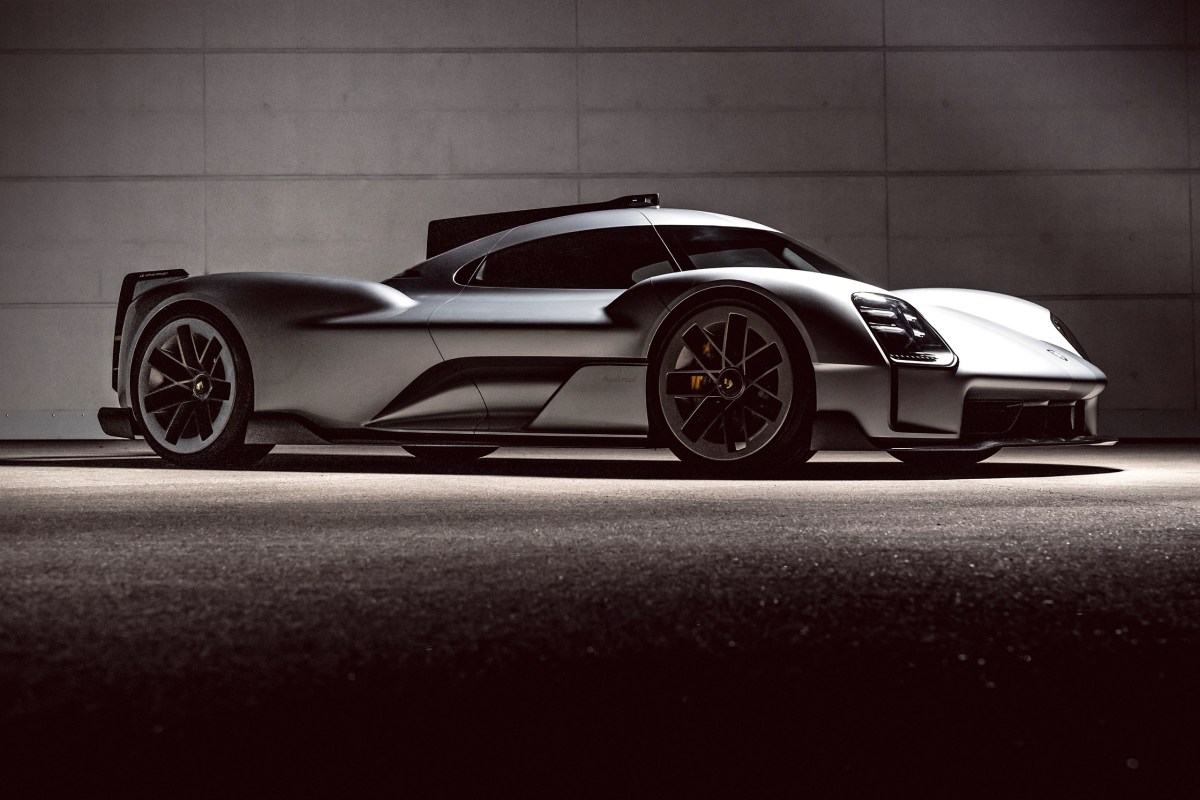
The Architecture of Defiance: Why Porsche is Resurrecting the Flat-Eight
By abandoning the proven V8 for an ultra-wide, horizontally opposed eight-cylinder layout unseen since the 1960s, Porsche's next flagship is choosing agonizing mechanical complexity over easily digitized speed.
News that Porsche’s next flagship hypercar will abandon the modern industry standard in favour of a flat-eight engine layout is the sort of mechanical revelation that stops the automotive world dead in its tracks. Confirmed in recent industry dispatches detailing Porsche's forthcoming supercar, the decision to engineer an ultra-wide horizontally opposed eight-cylinder resurrects an exotic, highly complex boxer layout that has remained essentially untouched in Stuttgart since the marque's fearsome prototype era of the 1960s. The engineering implications of this confirmation are staggering. Why would a manufacturer with a perfectly viable, emissions-compliant electrified flat-six, or a proven race-derived V8, choose to burden its engineering teams with a flat-eight? An eight-cylinder boxer engine is notoriously difficult to package, creating immense lateral width that inherently compromises the rear suspension geometry and the massive aerodynamic venturi tunnels crucial to generating modern downforce. Yet, by committing to this layout, Porsche is signaling a return to the absolute bleeding edge of mechanical exoticism, prioritizing a subterranean center of gravity over the easy, heavily trodden path of conventional vee-configurations.News that Porsche’s next flagship hypercar will abandon the modern industry standard in favour of a flat-eight engine layout is the sort of mechanical revelation that stops the automotive world dead in its tracks. Confirmed in recent industry dispatches detailing Porsche's forthcoming supercar, the decision to engineer an ultra-wide horizontally opposed eight-cylinder resurrects an exotic, highly complex boxer layout that has remained essentially untouched in Stuttgart since the marque's fearsome prototype era of the 1960s. The engineering implications of this confirmation are staggering. Why would a manufacturer with a perfectly viable, emissions-compliant electrified flat-six, or a proven race-derived V8, choose to burden its engineering teams with a flat-eight? An eight-cylinder boxer engine is notoriously difficult to package, creating immense lateral width that inherently compromises the rear suspension geometry and the massive aerodynamic venturi tunnels crucial to generating modern downforce. Yet, by committing to this layout, Porsche is signaling a return to the absolute bleeding edge of mechanical exoticism, prioritizing a subterranean center of gravity over the easy, heavily trodden path of conventional vee-configurations.
To understand the audacity of engineering a bespoke flat-eight, one must examine the specific legacy it is meant to succeed. The early 2010s came to define a remarkable moment in the high-performance zeitgeist, an era dominated by what enthusiast circles dubbed the 'Holy Trinity': the Ferrari LaFerrari, the McLaren P1, and Porsche’s own 918 Spyder. As these three hybrid hypercars increasingly hit the auction blocks today as established modern classics, they represent the absolute zenith of their era's philosophy—using nascent electrification to torque-fill the power bands of highly strung, conventional internal combustion engines. Porsche’s 918 Spyder utilized a screaming, naturally aspirated V8 derived directly from LMP2 endurance racing. Moving to a flat-eight for the 918's successor is not merely an iterative update; it is a fundamental rewrite of the hypercar rulebook. It suggests that Stuttgart’s top brass believe the highest tier of the market has moved beyond the sheer novelty of hybridization, demanding instead a deeply bespoke internal combustion heart that simply cannot be found in any lesser product portfolio.To understand the audacity of engineering a bespoke flat-eight, one must examine the specific legacy it is meant to succeed. The early 2010s came to define a remarkable moment in the high-performance zeitgeist, an era dominated by what enthusiast circles dubbed the 'Holy Trinity': the Ferrari LaFerrari, the McLaren P1, and Porsche’s own 918 Spyder. As these three hybrid hypercars increasingly hit the auction blocks today as established modern classics, they represent the absolute zenith of their era's philosophy—using nascent electrification to torque-fill the power bands of highly strung, conventional internal combustion engines. Porsche’s 918 Spyder utilized a screaming, naturally aspirated V8 derived directly from LMP2 endurance racing. Moving to a flat-eight for the 918's successor is not merely an iterative update; it is a fundamental rewrite of the hypercar rulebook. It suggests that Stuttgart’s top brass believe the highest tier of the market has moved beyond the sheer novelty of hybridization, demanding instead a deeply bespoke internal combustion heart that simply cannot be found in any lesser product portfolio.
The necessity for such drastic mechanical differentiation becomes crystal clear when examining the broader automotive landscape, where staggering performance has become dangerously commodified. Take, for instance, the recent release of the BMW X3 M50. Through what is essentially an aggressive factory software tune, this luxury crossover now casually dispatches 437 horsepower, signaling a broader, industry-wide standardization of M-level performance across all chassis types. When a two-ton luxury crossover can generate nearly five hundred horsepower largely via lines of code and optimized boost pressures, the very concept of a multi-million-dollar flagship is existentially threatened. If speed is reduced to a standardized software equation, the traditional supercar loses its reason for being. Porsche’s shift to a flat-eight is a deliberate, wildly expensive barricade against this encroaching digital standardization. An eight-cylinder boxer engine cannot be replicated with a software patch; it is an uncompromising, physical manifestation of engineering superiority that physically forces the entire chassis to adapt to its unique, sprawling dimensions.The necessity for such drastic mechanical differentiation becomes crystal clear when examining the broader automotive landscape, where staggering performance has become dangerously commodified. Take, for instance, the recent release of the BMW X3 M50. Through what is essentially an aggressive factory software tune, this luxury crossover now casually dispatches 437 horsepower, signaling a broader, industry-wide standardization of M-level performance across all chassis types. When a two-ton luxury crossover can generate nearly five hundred horsepower largely via lines of code and optimized boost pressures, the very concept of a multi-million-dollar flagship is existentially threatened. If speed is reduced to a standardized software equation, the traditional supercar loses its reason for being. Porsche’s shift to a flat-eight is a deliberate, wildly expensive barricade against this encroaching digital standardization. An eight-cylinder boxer engine cannot be replicated with a software patch; it is an uncompromising, physical manifestation of engineering superiority that physically forces the entire chassis to adapt to its unique, sprawling dimensions.
Beyond the philosophical rebellion against digitized performance, the flat-eight answers a crucial, visceral demand of the modern hypercar ownership experience: auditory theatre. In an era where digital engagement heavily drives brand cachet, the acoustic signature of a flagship is scrutinized like never before. One need only scroll through social media to witness the endless stream of hypercar 'sound off' competitions, where the screaming exhaust notes of Ferraris, McLarens, Lamborghinis, and Porsches are obsessively compared and debated by millions. A standard V8, whether utilizing a flat-plane or cross-plane crank, produces a familiar cadence. A flat-eight, however, introduces entirely different crank harmonics. The firing order and the horizontally opposed movement of the pistons cancel out primary and secondary forces in a way that produces an exceedingly smooth, yet sonically terrifying wail at high revolutions. Resolving those crank harmonics is an absolute nightmare for powertrain engineers—the crankshaft must be incredibly long and robust to prevent catastrophic torsional vibration—but the resulting exhaust note will be utterly singular, guaranteeing Porsche the undisputed crown in the acoustic amphitheater.Beyond the philosophical rebellion against digitized performance, the flat-eight answers a crucial, visceral demand of the modern hypercar ownership experience: auditory theatre. In an era where digital engagement heavily drives brand cachet, the acoustic signature of a flagship is scrutinized like never before. One need only scroll through social media to witness the endless stream of hypercar 'sound off' competitions, where the screaming exhaust notes of Ferraris, McLarens, Lamborghinis, and Porsches are obsessively compared and debated by millions. A standard V8, whether utilizing a flat-plane or cross-plane crank, produces a familiar cadence. A flat-eight, however, introduces entirely different crank harmonics. The firing order and the horizontally opposed movement of the pistons cancel out primary and secondary forces in a way that produces an exceedingly smooth, yet sonically terrifying wail at high revolutions. Resolving those crank harmonics is an absolute nightmare for powertrain engineers—the crankshaft must be incredibly long and robust to prevent catastrophic torsional vibration—but the resulting exhaust note will be utterly singular, guaranteeing Porsche the undisputed crown in the acoustic amphitheater.
There is also the reality of the ultra-high-net-worth collector market to consider, a demographic that increasingly views vehicles as rolling pieces of fine art requiring unique, unrepeatable provenance. The market’s appetite for hyper-specific, historically significant machines is virtually insatiable. Consider the recent commotion surrounding the Bugatti Veyron Black Bess—specifically, the emergence of the single US-spec Legend edition hitting the market. Collectors at this stratospheric level are no longer satisfied with simply acquiring the fastest car; they demand supreme mechanical exclusivity that tells a distinct historical story. By reviving a flat-eight architecture last seen powering lightweight hillclimb specials and fearsome Le Mans prototypes in the 1960s, Porsche is baking historical romance directly into the aluminum block of its new flagship. They are not just selling a hybrid hypercar; they are selling a mechanical ghost story, an impossibly wide, low-slung piece of automotive jewelry that separates true connoisseurs from casual speed enthusiasts.
The true genius of the flat-eight project, however, will not be in the engine block itself, but in how Porsche resolves the inevitable and massive packaging penalties. An engine this wide devours the physical space typically reserved for complex inboard suspension components and rear diffusers. The engineering team must somehow deliver track-dominating dynamics despite these severe spatial constraints. Yet, we are currently in a golden age of suspension technology where engineers routinely bend the laws of physics. We see this mechanical wizardry deployed across the industry, even in the heavy super-SUV segment, where vehicles like the Aston Martin DBX GT manage to masterfully blend supreme ride comfort with astonishing chassis composure despite their inherent center-of-gravity disadvantages. Porsche’s Weissach engineers will have to channel that exact same caliber of chassis magic—but in reverse. Instead of mitigating the towering height of an SUV, they must mitigate the sprawling width of the flat-eight, designing a bespoke, ultra-compact suspension architecture that maintains flawless composure under high lateral loads without widening the car's track to undriveable proportions.The true genius of the flat-eight project, however, will not be in the engine block itself, but in how Porsche resolves the inevitable and massive packaging penalties. An engine this wide devours the physical space typically reserved for complex inboard suspension components and rear diffusers. The engineering team must somehow deliver track-dominating dynamics despite these severe spatial constraints. Yet, we are currently in a golden age of suspension technology where engineers routinely bend the laws of physics. We see this mechanical wizardry deployed across the industry, even in the heavy super-SUV segment, where vehicles like the Aston Martin DBX GT manage to masterfully blend supreme ride comfort with astonishing chassis composure despite their inherent center-of-gravity disadvantages. Porsche’s Weissach engineers will have to channel that exact same caliber of chassis magic—but in reverse. Instead of mitigating the towering height of an SUV, they must mitigate the sprawling width of the flat-eight, designing a bespoke, ultra-compact suspension architecture that maintains flawless composure under high lateral loads without widening the car's track to undriveable proportions.
Ultimately, the confirmation of a flat-eight powertrain is a massive line drawn in the sand by Stuttgart's most ambitious minds. As the broader automotive industry sprints toward an increasingly homogenized, electrified future where straight-line performance is easily synthesized, true luxury lies in mechanical defiance. The Ferrari LaFerrari, McLaren P1, and Porsche 918 Spyder proved a decade ago that hybrid technology could elevate a hypercar; Porsche’s upcoming flat-eight is poised to prove that the soul of a machine still beats within its mechanical complexity. Resolving the brutal crank harmonics, battling the severe packaging penalties, and engineering an entire chassis around an engine layout dormant since the 1960s is an agonizingly difficult path. But it is precisely this difficulty that justifies the entire endeavor. When the garage doors finally open on Porsche’s next flagship, it won't just be another fast car—it will be a horizontally opposed masterclass in the art of the impossible.Ultimately, the confirmation of a flat-eight powertrain is a massive line drawn in the sand by Stuttgart's most ambitious minds. As the broader automotive industry sprints toward an increasingly homogenized, electrified future where straight-line performance is easily synthesized, true luxury lies in mechanical defiance. The Ferrari LaFerrari, McLaren P1, and Porsche 918 Spyder proved a decade ago that hybrid technology could elevate a hypercar; Porsche’s upcoming flat-eight is poised to prove that the soul of a machine still beats within its mechanical complexity. Resolving the brutal crank harmonics, battling the severe packaging penalties, and engineering an entire chassis around an engine layout dormant since the 1960s is an agonizingly difficult path. But it is precisely this difficulty that justifies the entire endeavor. When the garage doors finally open on Porsche’s next flagship, it won't just be another fast car—it will be a horizontally opposed masterclass in the art of the impossible.
Gallery
"An eight-cylinder boxer engine cannot be replicated with a software patch; it is an uncompromising, physical manifestation of engineering superiority."
Why it matters
Porsche's confirmed move to a flat-eight engine signals a massive shift in the hypercar market. It proves that in an era where massive horsepower is easily achieved via software tunes and electrification, ultra-high-end automakers must differentiate their flagship vehicles through bespoke, exotic, and historically significant mechanical layouts.
Sources
- 1.
- 2.
- 3.Porsche's Next Supercar Could: Flat-Eight Engine Confirmedautonews-mag.com
Reported by the Downforce & Divots desk from the sources above.
The clubhouse.
- No replies yet. Be the first.