The Succession War: How the Holy Trinity Became Classics in the Shadow of W1 and F80
As the original hybrid triumvirate heads to the auction block, McLaren's W1, Ferrari's F80, and Bugatti's Tourbillon inaugurate hypercar engineering's ruthless next chapter.
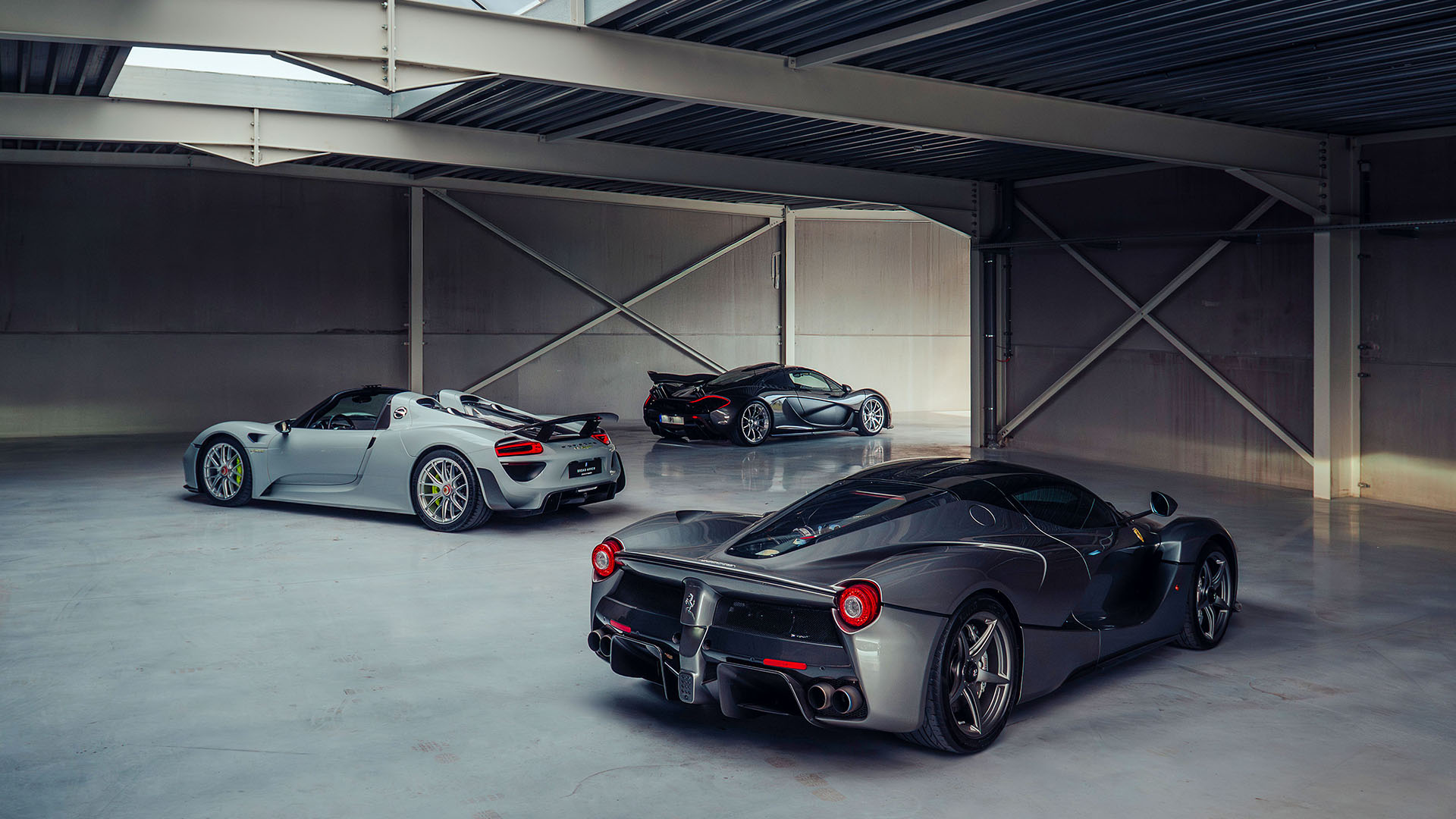
A decade ago, the hypercar landscape was cleaved in two by a single, seismic arms race. When McLaren unleashed the P1 in 2014, flanked closely by the 2015 arrivals of the Porsche 918 Spyder and Ferrari LaFerrari, the collective motoring consciousness christened them the Holy Trinity. They were not merely very fast sports cars; they were proof of concept for an unproven hybrid gospel, harnessing electric torque fill to drag internal combustion kicking and screaming into the modern era.A decade ago, the hypercar landscape was cleaved in two by a single, seismic arms race. When McLaren unleashed the P1 in 2014, flanked closely by the 2015 arrivals of the Porsche 918 Spyder and Ferrari LaFerrari, the collective motoring consciousness christened them the Holy Trinity. They were not merely very fast sports cars; they were proof of concept for an unproven hybrid gospel, harnessing electric torque fill to drag internal combustion kicking and screaming into the modern era.
Now, that foundational triad has officially crossed the threshold from cutting-edge disruptors to blue-chip auction royalty. With full sets of the Trinity arriving across marquee auction catalogues, collectors and track-day devotees are looking back at the early 2010s as a gold-standard epoch—a vintage defined by naturally aspirated V12 howling, twin-turbo punch, and Stuttgart's all-wheel-drive computational wizardry.Now, that foundational triad has officially crossed the threshold from cutting-edge disruptors to blue-chip auction royalty. With full sets of the Trinity arriving across marquee auction catalogues, collectors and track-day devotees are looking back at the early 2010s as a gold-standard epoch—a vintage defined by naturally aspirated V12 howling, twin-turbo punch, and Stuttgart's all-wheel-drive computational wizardry.
Yet nostalgia in the supercar sector is an extraordinarily fleeting luxury. Just as the gavel warms up for the 2014–2015 icons, the automotive world is being violently upended by their direct spiritual and mechanical successors: the McLaren W1, the Ferrari F80, and the Bugatti Tourbillon. The generational contrast is not just an incremental step in downforce and lap times; it is a fundamental leap in how kinetic excess is delivered.Yet nostalgia in the supercar sector is an extraordinarily fleeting luxury. Just as the gavel warms up for the 2014–2015 icons, the automotive world is being violently upended by their direct spiritual and mechanical successors: the McLaren W1, the Ferrari F80, and the Bugatti Tourbillon. The generational contrast is not just an incremental step in downforce and lap times; it is a fundamental leap in how kinetic excess is delivered.
Where the P1, 918, and LaFerrari used batteries as an exotic supplement to salvage throttle response and emissions compliance, the newcomer vanguard treats electrified architecture as the primary structural weapon. The Bugatti Tourbillon abandons W16 quad-turbochargers for high-revving naturally aspirated V16 hybrid propulsion, while the Ferrari F80 and McLaren W1 push active aerodynamics and ground-effect trickery to levels previously quarantined to Le Mans prototypes.
The central question animating collector garages and track garages alike is no longer simply which member of the original Trinity crosses the line first in a straight drag race. The real debate is whether the visceral charm of that first hybrid generation—with its raw transition dynamics and analog-digital friction—holds a purer soul than the four-figure megawatt juggernauts rolling out today.The central question animating collector garages and track garages alike is no longer simply which member of the original Trinity crosses the line first in a straight drag race. The real debate is whether the visceral charm of that first hybrid generation—with its raw transition dynamics and analog-digital friction—holds a purer soul than the four-figure megawatt juggernauts rolling out today.
What remains indisputable is the Trinity's enduring status as the definitive hinge of modern performance. As the W1 and F80 prepare to carve out their own decade of supremacy, the cars that first dared to electrify speed have earned their permanent place in the pantheon.What remains indisputable is the Trinity's enduring status as the definitive hinge of modern performance. As the W1 and F80 prepare to carve out their own decade of supremacy, the cars that first dared to electrify speed have earned their permanent place in the pantheon.
"The Ferrari LaFerrari, McLaren P1 and Porsche 918 Spyder came to define a remarkable moment in the early 2010s."
Why it matters
The transition of the hybrid 'Holy Trinity' to auction headline status marks the formal passing of the hypercar torch. With the arrival of the McLaren W1, Ferrari F80, and Bugatti Tourbillon, the industry enters a new paradigm of hyper-hybrid performance that redefines collector and enthusiast benchmarks.
Sources
- 1.
- 2.
- 3.
- 4.
Reported by the Downforce & Divots desk from the sources above.
The clubhouse.
- No replies yet. Be the first.