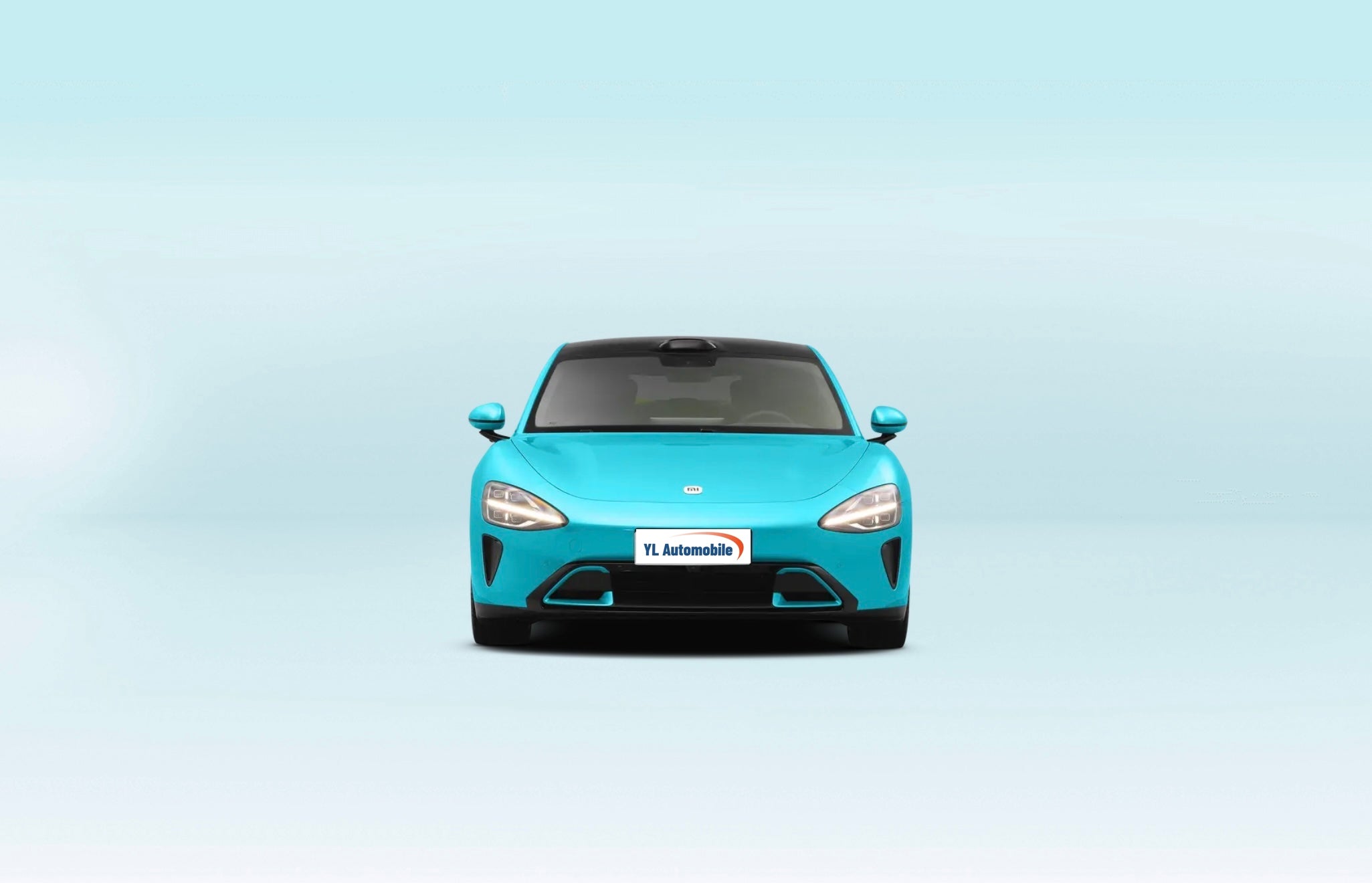
The Price of Disruption: How Xiaomi’s Sub-$30,000 Saloon Is Rewriting the Chinese EV Playbook
With the 215,900-yuan SU7 and battery tech outstripping legacy rivals, China's tech giants are aggressively dismantling the mass-market stigma.
When consumer tech titans pivot into the automotive space, legacy manufacturers usually expect protracted delays, clumsy prototypes, and bloated balance sheets. Instead, Xiaomi’s entrance into the electric vehicle arena with the SU7 has executed an ambush on the market, landing with an entry price of 215,900 yuan—roughly $29,870. It is an opening salvo that underscores just how rapidly the Chinese EV ecosystem has matured from opportunistic assembly to ruthless industrial execution.When consumer tech titans pivot into the automotive space, legacy manufacturers usually expect protracted delays, clumsy prototypes, and bloated balance sheets. Instead, Xiaomi’s entrance into the electric vehicle arena with the SU7 has executed an ambush on the market, landing with an entry price of 215,900 yuan—roughly $29,870. It is an opening salvo that underscores just how rapidly the Chinese EV ecosystem has matured from opportunistic assembly to ruthless industrial execution.
For decades, the global perception of automotive manufacturing in China was shackled to low-cost, badge-engineered runabouts built strictly for mass volume. Today, that hierarchy is collapsing under the weight of sheer technical ambition. Automakers like XPeng are actively working to shed the lingering, cheap mass-market baggage historically pinned to the 'Made in China' label, electing instead to fight on software sophistication, build quality, and high-margin luxury appeal.
The competitive landscape revealed in August 2026 delivery numbers across major Chinese automakers reflects a market firing on all cylinders. Rather than competing purely on price cuts, brands are leveraging extreme vertical integration and industrial automation to deliver premium specifications at aggressive retail figures. Inside Zeekr’s advanced production facilities, heavy robotics construct high-end electric machinery with obsessive precision, while the brand boasts that its latest generation of batteries recharges faster than anything offered by industry benchmark Tesla.
The Xiaomi SU7 is the sharpest distillation yet of this shift. At under $30,000 for the base model, it provides a benchmark of exterior styling, interior digital architecture, and electric performance that puts Western rivals on notice. By leveraging existing supply chain dominance and smart device integration, Xiaomi has bypassed the steep learning curves that historically hobbled non-traditional automakers.The Xiaomi SU7 is the sharpest distillation yet of this shift. At under $30,000 for the base model, it provides a benchmark of exterior styling, interior digital architecture, and electric performance that puts Western rivals on notice. By leveraging existing supply chain dominance and smart device integration, Xiaomi has bypassed the steep learning curves that historically hobbled non-traditional automakers.
This dual-front assault—pairing aggressive entry points like the SU7 with the relentless fast-charging battery claims of Zeekr and XPeng’s upmarket repositioning—has fundamentally altered the global electric equation. Western marques are no longer merely defending against cheap alternatives; they are facing high-tech flagships capable of out-specifying them at half the sticker price.This dual-front assault—pairing aggressive entry points like the SU7 with the relentless fast-charging battery claims of Zeekr and XPeng’s upmarket repositioning—has fundamentally altered the global electric equation. Western marques are no longer merely defending against cheap alternatives; they are facing high-tech flagships capable of out-specifying them at half the sticker price.
As export ambitions ramp up and domestic delivery tallies accelerate into the autumn, the narrative around Chinese automotive manufacturing is no longer about catching up to foreign incumbents. It is about setting an uncompromising tempo that traditional carmakers are struggling to match.As export ambitions ramp up and domestic delivery tallies accelerate into the autumn, the narrative around Chinese automotive manufacturing is no longer about catching up to foreign incumbents. It is about setting an uncompromising tempo that traditional carmakers are struggling to match.
Gallery
"Xiaomi's entry into the EV market with the SU7 has quickly made waves, priced competitively at 215,900 yuan."
Why it matters
Xiaomi’s sub-$30k SU7 entry and Zeekr's rapid battery innovations prove Chinese manufacturers have moved past cost-cutting to dominate pure tech specs. For Western legacy brands, competing on price without sacrificing software and battery parity is becoming an existential challenge.
Sources
- 1.
- 2.
- 3.
- 4.
Reported by the Downforce & Divots desk from the sources above.
The clubhouse.
- No replies yet. Be the first.