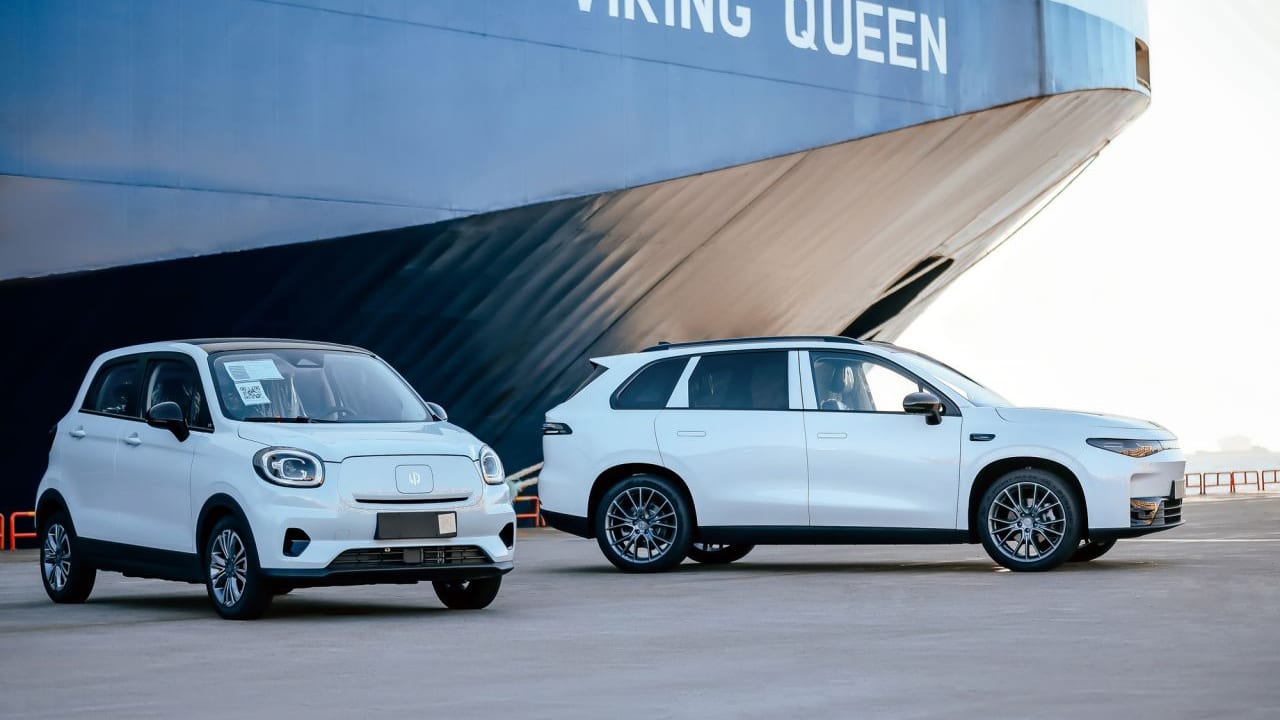
The Hundred-Thousand Club: Leapmotor’s Shenzhen Sprint and the Great Startup Reshuffle
As Leapmotor shatters the 100,000-unit monthly delivery barrier, a brutal hierarchy is emerging among the new guard of Chinese electric performance.
The 18-month development cycle is no longer a theoretical threat; it is the new baseline for survival. In the latest August delivery reports, Leapmotor has solidified its position at the vanguard of the 'Shenzhen Blitz,' delivering a staggering 103,100 units. This represents a year-on-year growth of over 80.7%, a metric that should send a collective shudder through the traditional boardrooms of Munich and Detroit. The sheer velocity of this scale-up confirms that the ranking of China’s 'new power' automakers is no longer a static list but a volatile leaderboard where record highs are refreshed monthly.The 18-month development cycle is no longer a theoretical threat; it is the new baseline for survival. In the latest August delivery reports, Leapmotor has solidified its position at the vanguard of the 'Shenzhen Blitz,' delivering a staggering 103,100 units. This represents a year-on-year growth of over 80.7%, a metric that should send a collective shudder through the traditional boardrooms of Munich and Detroit. The sheer velocity of this scale-up confirms that the ranking of China’s 'new power' automakers is no longer a static list but a volatile leaderboard where record highs are refreshed monthly.
While Leapmotor joins the elite hundred-thousand club, the market is beginning to show signs of a distinct stratification. The August data reveals a tale of two paddocks: seven new power brand groups recorded sales exceeding 30,000 units, yet four EV startups simultaneously saw their volumes decline. This consolidation suggests that the initial 'gold rush' phase of the Chinese EV market is concluding, replaced by a ruthless phase of industrial Darwinism where only those with hyper-efficient manufacturing ecosystems can sustain momentum.While Leapmotor joins the elite hundred-thousand club, the market is beginning to show signs of a distinct stratification. The August data reveals a tale of two paddocks: seven new power brand groups recorded sales exceeding 30,000 units, yet four EV startups simultaneously saw their volumes decline. This consolidation suggests that the initial 'gold rush' phase of the Chinese EV market is concluding, replaced by a ruthless phase of industrial Darwinism where only those with hyper-efficient manufacturing ecosystems can sustain momentum.
The hardware itself is evolving with similar aggression. Beyond the volume play, the technological ceiling continues to lift. BYD’s luxury sub-brand, Denza, recently showcased what it terms the 'world’s longest-range pure electric' vehicle, a direct challenge to the range-anxiety narrative that has historically hampered EV adoption. This technological one-upmanship is happening in parallel with Xiaomi’s SU7, which has become a tangible symbol of how rapidly consumer tech giants can transition into legitimate automotive contenders, blending software ecosystems with high-performance electric platforms.The hardware itself is evolving with similar aggression. Beyond the volume play, the technological ceiling continues to lift. BYD’s luxury sub-brand, Denza, recently showcased what it terms the 'world’s longest-range pure electric' vehicle, a direct challenge to the range-anxiety narrative that has historically hampered EV adoption. This technological one-upmanship is happening in parallel with Xiaomi’s SU7, which has become a tangible symbol of how rapidly consumer tech giants can transition into legitimate automotive contenders, blending software ecosystems with high-performance electric platforms.
Inside the belly of the beast, the manufacturing process has moved beyond traditional assembly. At the Zeekr automated factories, the production of luxury electric cars has become a high-tech choreography of robotics, minimizing human variance and maximizing output speed. This automated precision is what allows brands like Li Auto to increase monthly sales by 7,000 units in a single window while simultaneously scaling their export capabilities to compete on a global stage.Inside the belly of the beast, the manufacturing process has moved beyond traditional assembly. At the Zeekr automated factories, the production of luxury electric cars has become a high-tech choreography of robotics, minimizing human variance and maximizing output speed. This automated precision is what allows brands like Li Auto to increase monthly sales by 7,000 units in a single window while simultaneously scaling their export capabilities to compete on a global stage.
Geely and Chery are also leveraging this manufacturing prowess to pivot toward aggressive overseas expansion. For the traditional automotive establishment, the concern is no longer just the quality of Chinese exports, but the pace at which they arrive. When a startup can refresh its delivery records every thirty days, the conventional four-to-seven-year product cycle starts to look like a relic of a slower era. The 'Shenzhen Blitz' isn't just about selling cars; it’s about rewriting the physics of how a car company scales.Geely and Chery are also leveraging this manufacturing prowess to pivot toward aggressive overseas expansion. For the traditional automotive establishment, the concern is no longer just the quality of Chinese exports, but the pace at which they arrive. When a startup can refresh its delivery records every thirty days, the conventional four-to-seven-year product cycle starts to look like a relic of a slower era. The 'Shenzhen Blitz' isn't just about selling cars; it’s about rewriting the physics of how a car company scales.
As we move into the final quarter of 2026, the question is no longer whether Chinese EVs can compete on performance, but who among the current crop of startups will survive the inevitable winnowing. With Leapmotor setting the 100,000-unit benchmark, the entry fee for the top tier of the EV market has just become significantly more expensive. In this race, the podium is reserved for those who can maintain the slipstream of 80% growth without losing their engineering soul.As we move into the final quarter of 2026, the question is no longer whether Chinese EVs can compete on performance, but who among the current crop of startups will survive the inevitable winnowing. With Leapmotor setting the 100,000-unit benchmark, the entry fee for the top tier of the EV market has just become significantly more expensive. In this race, the podium is reserved for those who can maintain the slipstream of 80% growth without losing their engineering soul.
Gallery
"Leapmotor delivered 103,100 units, representing a year-on-year increase of 80.7%... refreshing its single-month delivery record once more."
Why it matters
The August delivery data confirms that China's EV market has moved from a chaotic startup phase into a high-volume, automated era of dominance. With Leapmotor crossing the 100,000-unit monthly threshold, the pressure on Western OEMs to accelerate their own development cycles has reached a breaking point.
Sources
- 1.
- 2.
- 3.
- 4.
Reported by the Downforce & Divots desk from the sources above.
The clubhouse.
- No replies yet. Be the first.