The Optical Compromise: Can an iPhone Truly Replace Dedicated Launch Hardware?
As smartphone tracking apps challenge benchmark launch monitors on the driving range, head-to-head testing reveals the current limits of pocket-sized telemetry.
The modern driving range has quietly transformed into an optical laboratory. Where golfers once relied purely on ball flight, divot patterns, and feel off the clubface, the baseline expectation now demands cold, unvarnished telemetry. But while access to swing data has exploded, the financial barrier between basic ball flight tracking and tour-grade precision remains one of the most hotly contested frontiers in golf equipment.The modern driving range has quietly transformed into an optical laboratory. Where golfers once relied purely on ball flight, divot patterns, and feel off the clubface, the baseline expectation now demands cold, unvarnished telemetry. But while access to swing data has exploded, the financial barrier between basic ball flight tracking and tour-grade precision remains one of the most hotly contested frontiers in golf equipment.
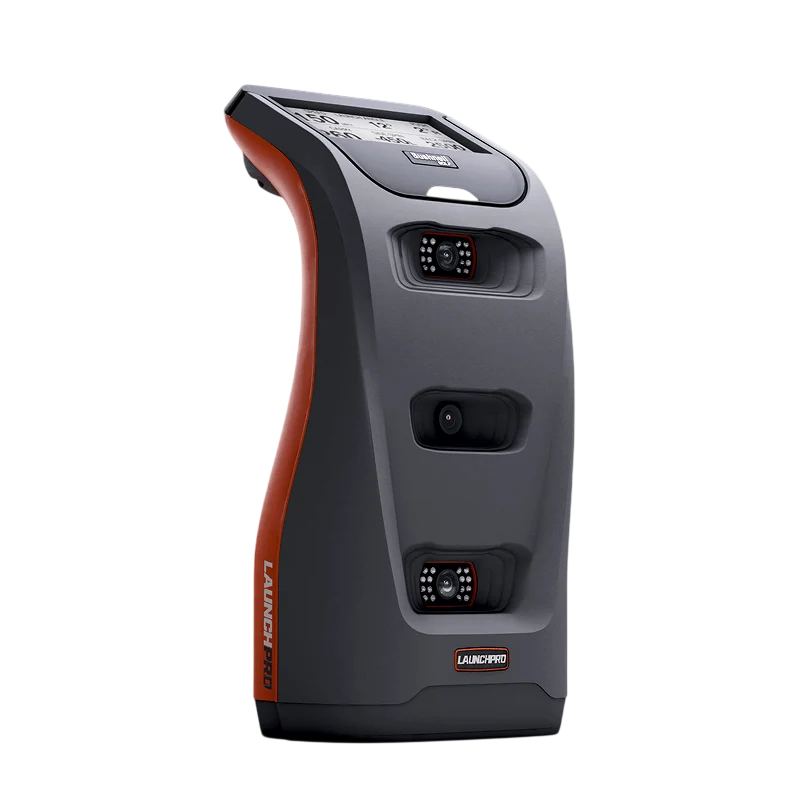
The latest flashpoint in that fight is taking place directly on smartphone screens. In recent head-to-head testing conducted by Andrew Jensen, mobile tracking application ShotVision was pitted against the Bushnell Launch Pro across both indoor bays and outdoor driving ranges. The test set out to answer a pressing question for data-hungry golfers: can an iPhone camera genuinely calculate clubhead speed, ball speed, launch angle, spin rate, and carry distance with enough fidelity to challenge dedicated hardware?The latest flashpoint in that fight is taking place directly on smartphone screens. In recent head-to-head testing conducted by Andrew Jensen, mobile tracking application ShotVision was pitted against the Bushnell Launch Pro across both indoor bays and outdoor driving ranges. The test set out to answer a pressing question for data-hungry golfers: can an iPhone camera genuinely calculate clubhead speed, ball speed, launch angle, spin rate, and carry distance with enough fidelity to challenge dedicated hardware?
The appeal of pocket-sized ball tracking is obvious. Dedicated launch monitors occupying the sub-$5,000 bracket—a category spanning roughly a dozen competing personal units tested across the market—pack high-speed optical cameras and radar arrays to capture micro-second impact data. For golfers looking to log clubhead speed, ball speed, smash factor, and carry distance for personal analysis, dropping four figures on a standalone unit is a substantial investment.The appeal of pocket-sized ball tracking is obvious. Dedicated launch monitors occupying the sub-$5,000 bracket—a category spanning roughly a dozen competing personal units tested across the market—pack high-speed optical cameras and radar arrays to capture micro-second impact data. For golfers looking to log clubhead speed, ball speed, smash factor, and carry distance for personal analysis, dropping four figures on a standalone unit is a substantial investment.
Yet optical physics remains a stubborn obstacle. While smartphone applications have made remarkable strides in capturing initial ball velocity and broad launch windows under clean outdoor lighting, capturing precise backspin rates and side spin indoors without high-frame-rate dedicated flash illumination remains the critical differentiator. Against a dedicated benchmark like the Bushnell Launch Pro, smartphone algorithms must infer what purpose-built sensors directly measure.Yet optical physics remains a stubborn obstacle. While smartphone applications have made remarkable strides in capturing initial ball velocity and broad launch windows under clean outdoor lighting, capturing precise backspin rates and side spin indoors without high-frame-rate dedicated flash illumination remains the critical differentiator. Against a dedicated benchmark like the Bushnell Launch Pro, smartphone algorithms must infer what purpose-built sensors directly measure.
For recreational players seeking a directional diagnostic tool at the range, the convenience of phone-based capture lowers the barrier to entry significantly. But for golfers building out home simulators or fine-tuning exact yardage gapping where a 300-rpm spin variance completely alters ball flight, dedicated optical hardware still holds the definitive high ground.For recreational players seeking a directional diagnostic tool at the range, the convenience of phone-based capture lowers the barrier to entry significantly. But for golfers building out home simulators or fine-tuning exact yardage gapping where a 300-rpm spin variance completely alters ball flight, dedicated optical hardware still holds the definitive high ground.
Gallery
"Can an iPhone launch monitor actually measure ball speed, carry distance, launch, and spin against dedicated hardware?"
Why it matters
The scramble for affordable swing telemetry is pushing optical ball tracking from multi-thousand-dollar units directly into consumer smartphones. Understanding the accuracy delta between phone apps and dedicated hardware determines whether players are getting actionable ball data or merely calculated approximations.
Sources
- 1.
- 2.Best Golf Balls 2026 (Our Test Winners) - MyGolfSpymygolfspy.com
- 3.
- 4.
Reported by the Downforce & Divots desk from the sources above.
The clubhouse.
- No replies yet. Be the first.