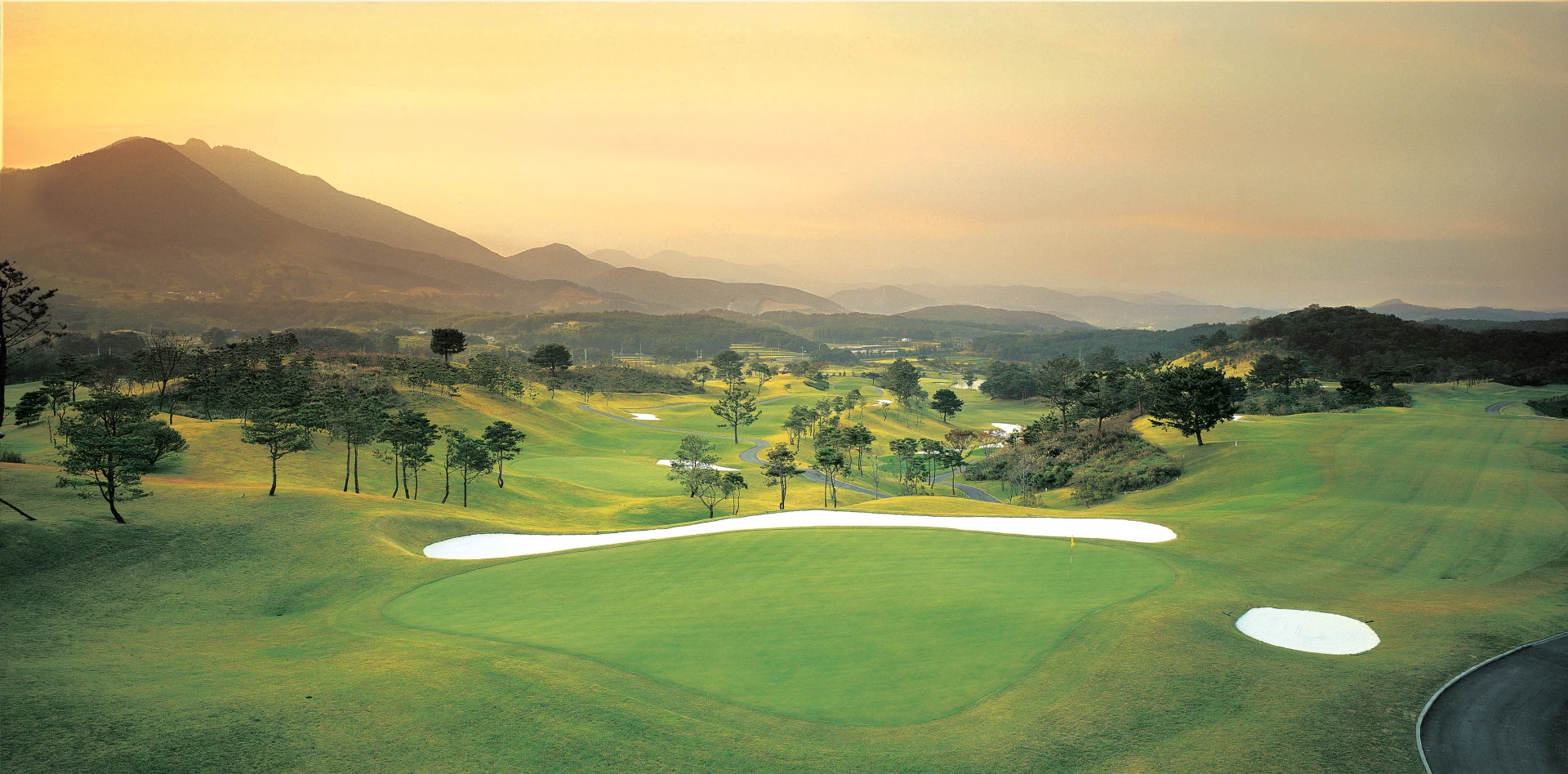
The Korean Gauntlet: Why Asiad Country Club’s Tight Fairways Were LIV Golf's Real Winner
Bryson DeChambeau arrived in Busan as the defending champion and the avatar of golf’s power era. But the claustrophobic design of Asiad Country Club presented a unique architectural challenge that even his high-octane game couldn't fully conquer.
As the hot and humid air settled over Asiad Country Club in Busan, defending LIV Golf Korea champion Bryson DeChambeau stepped to the first tee. With AC/DC's “Back in Black” blasting from the speakers, he unleashed a towering drive just as Brian Johnson belted out the lyric, “I'm glad to be back,” a moment reported by the Korea JoongAng Daily. The rock-and-roll entrance set the stage for a clash of philosophies: DeChambeau, the five-time LIV Golf winner and master of the power game, against a tight, demanding course built for precision, not pyrotechnics. This wasn't the same venue as the inaugural 2025 event; Asiad Country Club marked the 32nd different course to host the league, presenting a fresh and decidedly narrow test for the sport's longest hitters.As the hot and humid air settled over Asiad Country Club in Busan, defending LIV Golf Korea champion Bryson DeChambeau stepped to the first tee. With AC/DC's “Back in Black” blasting from the speakers, he unleashed a towering drive just as Brian Johnson belted out the lyric, “I'm glad to be back,” a moment reported by the Korea JoongAng Daily. The rock-and-roll entrance set the stage for a clash of philosophies: DeChambeau, the five-time LIV Golf winner and master of the power game, against a tight, demanding course built for precision, not pyrotechnics. This wasn't the same venue as the inaugural 2025 event; Asiad Country Club marked the 32nd different course to host the league, presenting a fresh and decidedly narrow test for the sport's longest hitters.
While DeChambeau still managed to fire a blistering 65 during the week, his ultimate finish—a tie for third according to Data Golf—suggests the course exacted its toll. For a player with two U.S. Open victories on his resume, conquering tough layouts is standard procedure, but Asiad's architectural questions were different. This wasn't about surviving penal rough but about threading a needle on nearly every shot. The result was a leaderboard where the course itself felt like a primary competitor, demonstrating that even for a player who famously geeks out on the “physics of golf,” some equations are harder to solve when the variables are tree-lined fairways instead of open fields.
The showdown in Busan widens the lens on LIV Golf's entire global strategy. The Korean stop was the league’s fourth tournament in Asia during the 2026 season alone, underscoring a deliberate push into a region with a burgeoning golf community and where some believe the league's survival is “crucial to the future of the sport.” By choosing a venue like Asiad over a more modern, sprawling stadium course, LIV is testing the adaptability of its entertainment-first product. The contest becomes less about pure athletic dominance and more a fascinating case study: can the bomb-and-gouge spectacle that captivates fans in one market translate to a classical stage that demands a different kind of performance?The showdown in Busan widens the lens on LIV Golf's entire global strategy. The Korean stop was the league’s fourth tournament in Asia during the 2026 season alone, underscoring a deliberate push into a region with a burgeoning golf community and where some believe the league's survival is “crucial to the future of the sport.” By choosing a venue like Asiad over a more modern, sprawling stadium course, LIV is testing the adaptability of its entertainment-first product. The contest becomes less about pure athletic dominance and more a fascinating case study: can the bomb-and-gouge spectacle that captivates fans in one market translate to a classical stage that demands a different kind of performance?
Gallery
"DeChambeau promptly unleashed a towering drive just as Brian Johnson belted out, ‘I'm glad to be back.’"
Why it matters
This event was a compelling case study in the ongoing conflict between golf's modern power game and traditional course architecture. It highlights a key strategic challenge for LIV Golf's international expansion: successfully staging its high-octane, 'bomb-and-gouge' product on older, tighter courses that demand precision over pure distance. The outcome in Korea suggests that course design can still be a powerful equalizer.
Sources
- 1.
- 2.
- 3.
- 4.
- 5.
- 6.Bryson DeChambeau Stats - Data Golfdatagolf.com
- 7.
- 8.First Look: LIV Golf Korea 2026livgolf.com
- 9.LIV Golf Korea 2026 Primer: TV, Format, Field, Teams, Oddsprogolfweekly.com
- 10.LIV Golf Korea 2026: Prize Money Breakdown and Winner's Payoutessentiallysports.com
Reported by the Downforce & Divots desk from the sources above.
The clubhouse.
- No replies yet. Be the first.