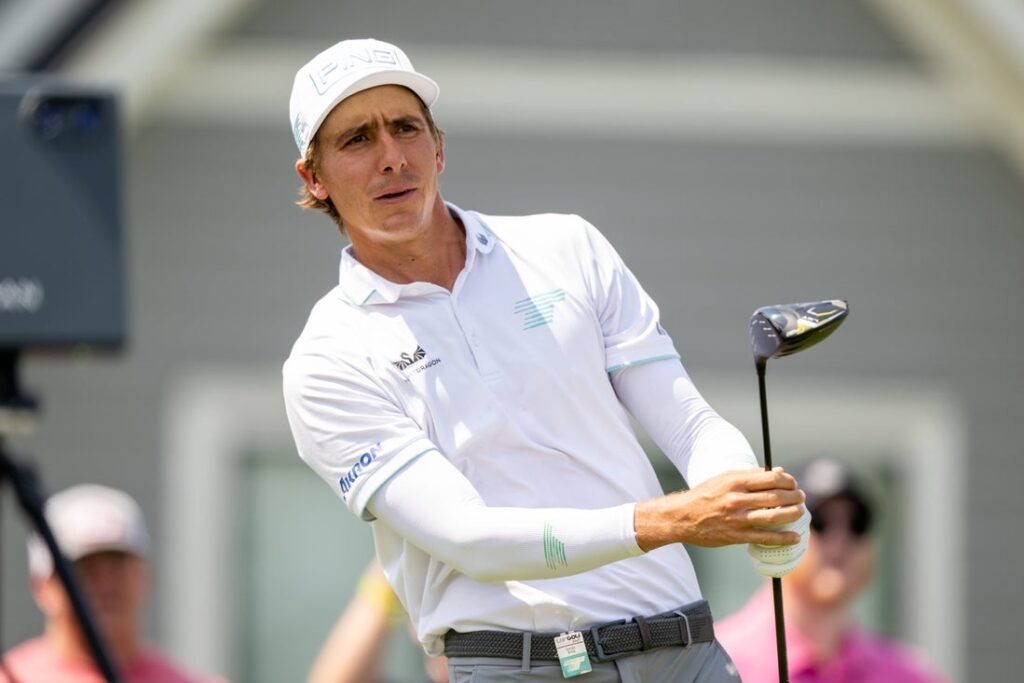
The Post-Purse Hangover: LIV Golf’s $300 Million Identity Crisis
As the PIF’s blank checks meet reality, the breakaway circuit scrambles to justify its existence beyond the bottom line.
The era of the open-ended Saudi sovereign wealth fund spigot is facing its first genuine pressure test. While LIV Golf prepares for its fourth international tournament of the year, the mood in the paddock has shifted from disruptive swagger to a calculated—and perhaps anxious—financial consolidation. The rift in professional golf, once defined by moral high-grounding, has devolved into a stark conversation about ROI. As one LIV golfer recently acknowledged, the league’s long-term future is currently "not looking great" as the novelty of the breakaway circuit begins to wear thin against the reality of stagnant TV ratings and a crowded sporting calendar.The era of the open-ended Saudi sovereign wealth fund spigot is facing its first genuine pressure test. While LIV Golf prepares for its fourth international tournament of the year, the mood in the paddock has shifted from disruptive swagger to a calculated—and perhaps anxious—financial consolidation. The rift in professional golf, once defined by moral high-grounding, has devolved into a stark conversation about ROI. As one LIV golfer recently acknowledged, the league’s long-term future is currently "not looking great" as the novelty of the breakaway circuit begins to wear thin against the reality of stagnant TV ratings and a crowded sporting calendar.
The financial architecture of the sport has been fundamentally rewired, but not necessarily for the better. Insiders at the PGA Tour are pointing fingers at LIV for a fundamental shift where "the game became about money," prioritizing upfront guarantees over the historical prestige of the schedule. This fiscal arms race has left both tours at a crossroads: one struggling to maintain its legacy sponsors, and the other—even with the backing of the Public Investment Fund—facing a reported $300 million question regarding the sustainability of its spending model.
Despite the looming clouds, LIV is still attempting to project growth, recently announcing the arrival of six new players to its squad ahead of the September window. Joaquin Niemann and his contemporaries continue to iron out next season’s plans, but the conversation has moved from "who is next?" to "how is this paid for?" The league's fourth international tournament, scheduled for September 2-4, will serve as a bellwether for whether the team-franchise model can actually generate independent revenue or if it remains a vanity project on a very expensive life-support machine.Despite the looming clouds, LIV is still attempting to project growth, recently announcing the arrival of six new players to its squad ahead of the September window. Joaquin Niemann and his contemporaries continue to iron out next season’s plans, but the conversation has moved from "who is next?" to "how is this paid for?" The league's fourth international tournament, scheduled for September 2-4, will serve as a bellwether for whether the team-franchise model can actually generate independent revenue or if it remains a vanity project on a very expensive life-support machine.
The tension is palpable among the players who took the initial leap. While Carlos Ortiz remains a vocal contender and defender of the league’s potential, there is a growing realization that the DP World Tour and PGA Tour's defensive maneuvers have successfully siloed LIV, limiting its cultural reach. The "blank check" era, which lured stars with nine-figure signing bonuses, appears to be pivoting toward a leaner, more disciplined operational phase—one that might not accommodate the same level of excess that defined its debut season.The tension is palpable among the players who took the initial leap. While Carlos Ortiz remains a vocal contender and defender of the league’s potential, there is a growing realization that the DP World Tour and PGA Tour's defensive maneuvers have successfully siloed LIV, limiting its cultural reach. The "blank check" era, which lured stars with nine-figure signing bonuses, appears to be pivoting toward a leaner, more disciplined operational phase—one that might not accommodate the same level of excess that defined its debut season.
If the LIV experiment is to survive, it must transition from a disruptive start-up into a viable commercial property. The current trajectory suggests that the novelty of the 54-hole, no-cut format is no longer enough to distract from the lack of world ranking points and the general fragmentation of the fan base. For a sport that prides itself on precision, the current financial landscape is looking increasingly messy, leaving the world’s best players caught in a fiscal bunker with no clear line to the green.If the LIV experiment is to survive, it must transition from a disruptive start-up into a viable commercial property. The current trajectory suggests that the novelty of the 54-hole, no-cut format is no longer enough to distract from the lack of world ranking points and the general fragmentation of the fan base. For a sport that prides itself on precision, the current financial landscape is looking increasingly messy, leaving the world’s best players caught in a fiscal bunker with no clear line to the green.
Gallery
"The game became about money... the league’s future is not looking great as we move into this next phase."
Why it matters
The professional golf ecosystem is facing a liquidity and identity crisis as the Saudi-backed LIV circuit faces internal pressure to prove financial sustainability. This shift determines whether golf remains a fragmented exhibition or returns to a unified, meritocratic structure.
Sources
- 1.
- 2.PGA Tour Insider Blames LIV for Reshaping Golf's Prioritiessports.yahoo.com
- 3.
- 4.LIV golfer acknowledges league's future 'not looking great'fieldlevelmedia.com
Reported by the Downforce & Divots desk from the sources above.
The clubhouse.
- No replies yet. Be the first.