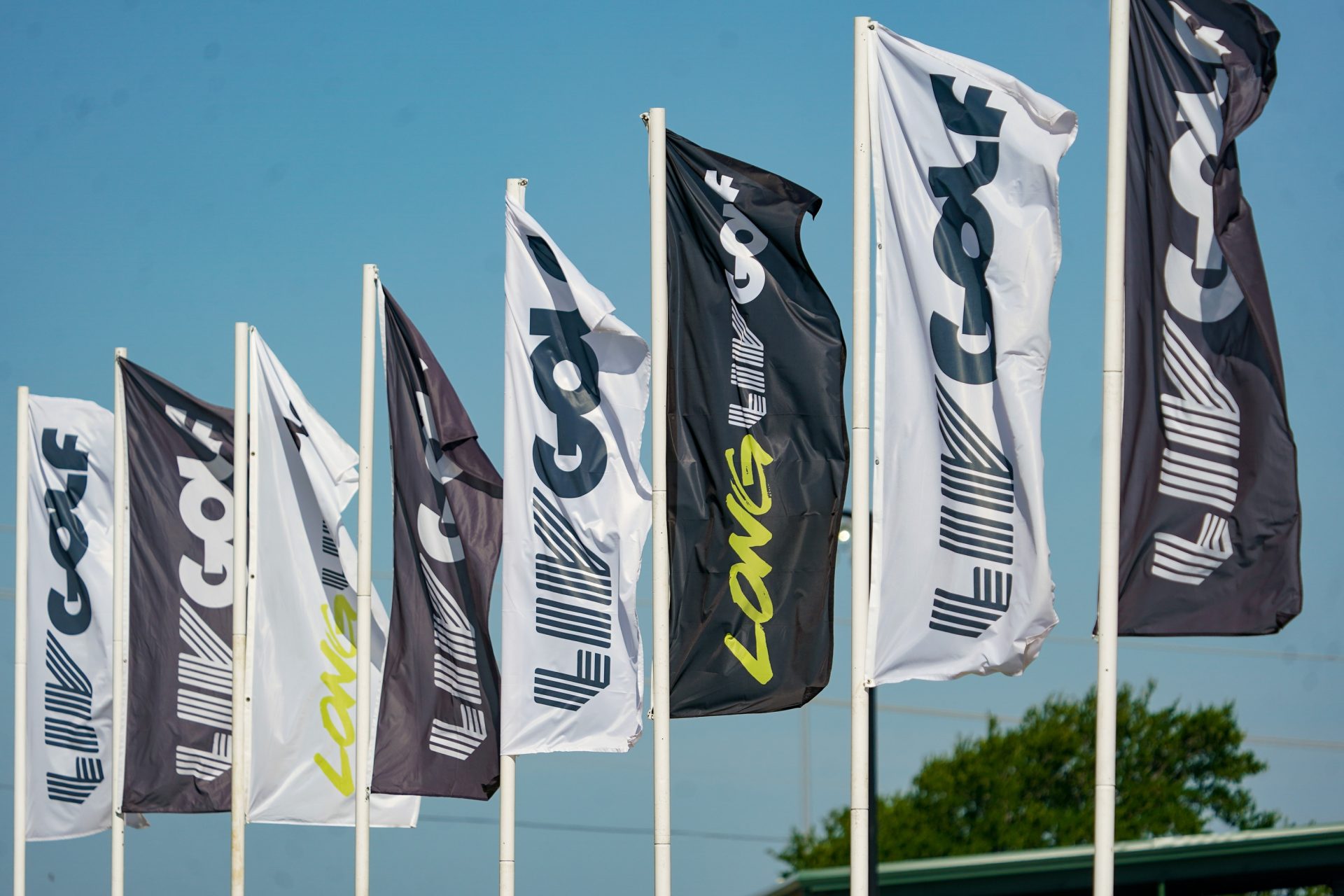
The $300 Million Question: Inside LIV Golf's Race Against Time and the End of the 'Blank Check' Era
With a reported September 1st deadline to raise $300 million for 2027 operations, the Saudi-backed golf league faces a pivotal moment. The era of infinite spending is over, replaced by a high-stakes search for market validation.
Three hundred million dollars. It’s a number that feels both astronomical and, in the context of LIV Golf, strangely specific. According to recent reports, this is the figure LIV Golf officials are seeking by September 1st to keep their disruptive enterprise operating into 2027. This isn’t a vague ambition for a future funding round; it's a hard number with a near-term deadline. For a league born from the seemingly bottomless coffers of Saudi Arabia’s Public Investment Fund (PIF), this public-facing capital raise represents a stark departure from the ‘blank check’ narrative that defined its explosive arrival. The search for $300 million in bridge funding suggests the PIF’s firehose of cash may now be attached to a flow meter, transforming LIV from a state project into a commercial entity that must now prove its own viability in the open market.Three hundred million dollars. It’s a number that feels both astronomical and, in the context of LIV Golf, strangely specific. According to recent reports, this is the figure LIV Golf officials are seeking by September 1st to keep their disruptive enterprise operating into 2027. This isn’t a vague ambition for a future funding round; it's a hard number with a near-term deadline. For a league born from the seemingly bottomless coffers of Saudi Arabia’s Public Investment Fund (PIF), this public-facing capital raise represents a stark departure from the ‘blank check’ narrative that defined its explosive arrival. The search for $300 million in bridge funding suggests the PIF’s firehose of cash may now be attached to a flow meter, transforming LIV from a state project into a commercial entity that must now prove its own viability in the open market.
To grasp the significance of this $300 million target, one must first comprehend the sheer scale of the initial investment. The PIF has reportedly injected nearly $5 billion into the league since its inception, a war chest used to lure major champions with nine-figure contracts and stage lavish global events. For the years 2024 and 2025 alone, LIV’s cash burn was reportedly close to $100 million per month, a staggering sum financed almost entirely by the PIF rather than revenue from tickets or traditional broadcast deals. The current fundraising goal, then, represents just three months of that previous operating expenditure. It signals a critical strategic pivot. The league, which has long operated on a principle of relying on "endless capital rather than profitability," is now being forced to confront a financial reality where outside investment or operational self-sufficiency is no longer a theoretical goal, but an urgent necessity.To grasp the significance of this $300 million target, one must first comprehend the sheer scale of the initial investment. The PIF has reportedly injected nearly $5 billion into the league since its inception, a war chest used to lure major champions with nine-figure contracts and stage lavish global events. For the years 2024 and 2025 alone, LIV’s cash burn was reportedly close to $100 million per month, a staggering sum financed almost entirely by the PIF rather than revenue from tickets or traditional broadcast deals. The current fundraising goal, then, represents just three months of that previous operating expenditure. It signals a critical strategic pivot. The league, which has long operated on a principle of relying on "endless capital rather than profitability," is now being forced to confront a financial reality where outside investment or operational self-sufficiency is no longer a theoretical goal, but an urgent necessity.
This shift throws the entire financial model into sharp relief. By its own admission, LIV’s early strategy was never about near-term profit. The focus was on disruption, acquisition of talent, and building a global footprint. But now, as it seeks external capital, potential investors will be asking hard questions about the path to profitability. For context, the prize money for the winning nation of the 2026 FIFA World Cup—the biggest sporting event on the planet—is a comparatively modest $40 million. LIV is seeking more than seven times that amount simply to sustain its operations for another year. This isn't just about covering expenses; it’s about validating a business model that has, to date, been more theoretical than proven. Without a clear revenue story to tell, attracting that level of investment from sources beyond the PIF becomes a monumental challenge, akin to a nation needing to prove it has the "right policies" to attract foreign capital, as is the case in markets like Nigeria.This shift throws the entire financial model into sharp relief. By its own admission, LIV’s early strategy was never about near-term profit. The focus was on disruption, acquisition of talent, and building a global footprint. But now, as it seeks external capital, potential investors will be asking hard questions about the path to profitability. For context, the prize money for the winning nation of the 2026 FIFA World Cup—the biggest sporting event on the planet—is a comparatively modest $40 million. LIV is seeking more than seven times that amount simply to sustain its operations for another year. This isn't just about covering expenses; it’s about validating a business model that has, to date, been more theoretical than proven. Without a clear revenue story to tell, attracting that level of investment from sources beyond the PIF becomes a monumental challenge, akin to a nation needing to prove it has the "right policies" to attract foreign capital, as is the case in markets like Nigeria.
The financial pressures facing LIV are not unique in the modern sports landscape. Across the Atlantic, American college athletics programs are grappling with intense budgetary strain as "financial requirements... continue to evolve and grow," forcing even storied institutions to re-evaluate their models. Other challenger leagues, like the Premier Lacrosse League, have pursued a more traditional path to growth, balancing expansion into major markets like Las Vegas with grassroots necessities like providing financial aid and equipment to players. This approach builds enterprise value from the ground up by cultivating a loyal fanbase and a sustainable ecosystem. LIV, by contrast, attempted to build its house from the roof down, paying superstar salaries before it had a proven audience or a profitable franchise model. Now, it must convince investors that the foundation is solid enough to support the gilded structure it has already built.The financial pressures facing LIV are not unique in the modern sports landscape. Across the Atlantic, American college athletics programs are grappling with intense budgetary strain as "financial requirements... continue to evolve and grow," forcing even storied institutions to re-evaluate their models. Other challenger leagues, like the Premier Lacrosse League, have pursued a more traditional path to growth, balancing expansion into major markets like Las Vegas with grassroots necessities like providing financial aid and equipment to players. This approach builds enterprise value from the ground up by cultivating a loyal fanbase and a sustainable ecosystem. LIV, by contrast, attempted to build its house from the roof down, paying superstar salaries before it had a proven audience or a profitable franchise model. Now, it must convince investors that the foundation is solid enough to support the gilded structure it has already built.
While LIV scrambles for capital, its primary rival, the PGA Tour, is executing a radically different strategy for its future. The Tour recently announced a fundamental restructuring that will debut in 2028, establishing a two-series model with a PGA Tour Championship Series and a PGA Tour Challenger Series. The entire system is explicitly built upon a foundation of "meritocracy," featuring structured promotion and relegation to move players between the tiers. The PGA Tour's stated goal is to create a more compelling and clearer experience for fans, partners, and—crucially—the players themselves. This is a product-led evolution, a bet that strengthening the sport’s competitive integrity is the surest path to long-term commercial success. It presents a clear philosophical schism in professional golf’s civil war: one side is building a better competitive engine, while the other is trying to refuel the jet in mid-air.
This precarious financial moment is undoubtedly creating ripples in the locker room. According to insights from former tour pro Johnson Wagner, at least one LIV player has already begun exploring a potential return to the PGA Tour. While this may be an isolated case, it hints at a potential vulnerability beneath the surface of guaranteed contracts. The league’s foundational promise to players was security and stability, a refuge from the grind of week-to-week qualification on the established tours. A public scramble for $300 million in operating funds directly challenges that narrative. For the legion of players who didn't receive nine-figure signing bonuses, the prospect of an uncertain future could easily erode the loyalty that PIF’s billions were meant to buy, creating a palpable sense of unease about what happens if the September 1st deadline is missed.This precarious financial moment is undoubtedly creating ripples in the locker room. According to insights from former tour pro Johnson Wagner, at least one LIV player has already begun exploring a potential return to the PGA Tour. While this may be an isolated case, it hints at a potential vulnerability beneath the surface of guaranteed contracts. The league’s foundational promise to players was security and stability, a refuge from the grind of week-to-week qualification on the established tours. A public scramble for $300 million in operating funds directly challenges that narrative. For the legion of players who didn't receive nine-figure signing bonuses, the prospect of an uncertain future could easily erode the loyalty that PIF’s billions were meant to buy, creating a palpable sense of unease about what happens if the September 1st deadline is missed.
Ultimately, LIV Golf's long-term survival hinges on the success of its franchise model. The goal has always been to transform teams like Legion XIII and the RangeGoats into independently valuable assets that can attract their own owners and sponsors, with executives hoping the teams will be discussed "in real franchise terms." The early stages of this strategy can be seen in initiatives like the new retail gear cycle ramping up in Canada through partners like Golf Town for the 2026 launch. This $300 million funding round is the bridge to that future. It’s the essential capital needed to buy the time for these franchises to mature, build fanbases, and become attractive investment opportunities in their own right. If LIV secures the money, it lives to fight another day and continue building its team-based vision. If it fails, the entire franchise concept, the very bedrock of its claim to innovation, risks collapsing.Ultimately, LIV Golf's long-term survival hinges on the success of its franchise model. The goal has always been to transform teams like Legion XIII and the RangeGoats into independently valuable assets that can attract their own owners and sponsors, with executives hoping the teams will be discussed "in real franchise terms." The early stages of this strategy can be seen in initiatives like the new retail gear cycle ramping up in Canada through partners like Golf Town for the 2026 launch. This $300 million funding round is the bridge to that future. It’s the essential capital needed to buy the time for these franchises to mature, build fanbases, and become attractive investment opportunities in their own right. If LIV secures the money, it lives to fight another day and continue building its team-based vision. If it fails, the entire franchise concept, the very bedrock of its claim to innovation, risks collapsing.
Even as this corporate drama unfolds, the quest for on-course legitimacy continues unabated. Recently, ten LIV Golf players teed it up in Final Qualifying for The 154th Open Championship, a grueling 36-hole test of nerve and skill. Young gun Caleb Surratt, who previously survived a six-for-one playoff to qualify for a U.S. Open, was among the three LIV players—along with Josele Ballester and Peter Uihlein—who successfully punched their tickets to Royal Birkdale. This parallel track is essential to the LIV story. On one hand, it’s a high-finance saga of burn rates and capital calls. On the other, it remains a simple sport where players chase a spot in golf's oldest major. The existential question for LIV Golf is which of these two stories will ultimately define its legacy: its ability to raise capital or its players’ ability to raise the Claret Jug.
Gallery
"LIV relies on endless capital rather than profitability."
Why it matters
LIV Golf's search for $300M in bridge funding marks a crucial pivot from a project underwritten by sovereign wealth to a business seeking market viability. Whether it succeeds or fails will not only determine the league's survival into 2027 but could also redefine the financial landscape of professional sports, signaling whether disruptive, capital-intensive ventures can achieve long-term sustainability.
Sources
- 1.LIV Golf predicted to fold in August as player who lives in ...sports.yahoo.com
- 2.
- 3.
- 4.
- 5.
- 6.
- 7.PGA Tour Unveils Two-Series Model Competitive Schedule from 2028sportstravelmagazine.com
- 8.
- 9.
- 10.
Reported by the Downforce & Divots desk from the sources above.
The clubhouse.
- No replies yet. Be the first.