The Invisible Arms Race: Inside Aston Martin's Bespoke AMR26 Gearbox
Why pour developmental capital into exotic casing metallurgy when the 2026 regulations dictate severe rear-packaging constraints? Because on the tight streets of Madrid, mechanical traction is the only currency that matters.
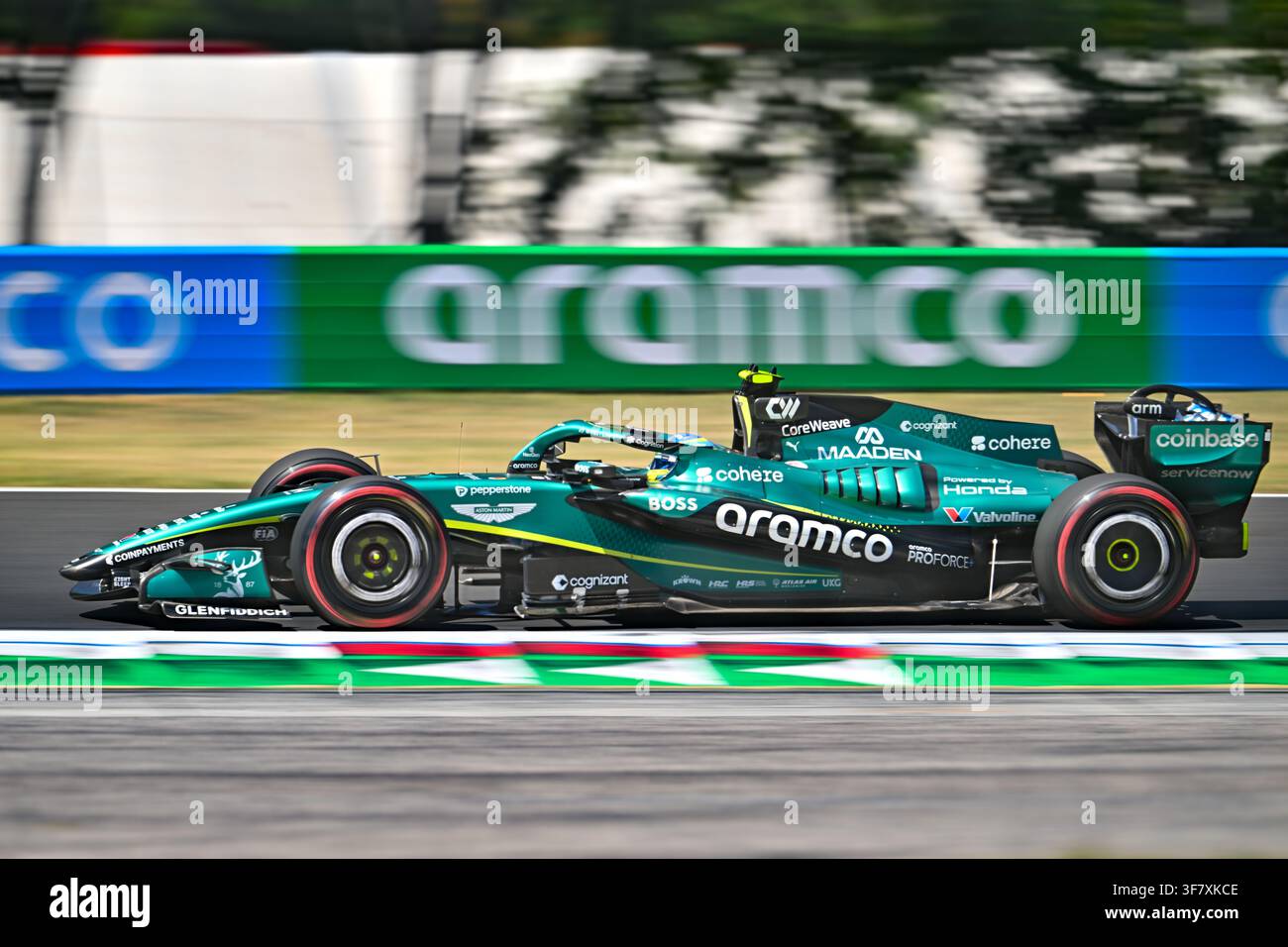
Beneath the meticulously sculpted carbon-fibre skin of Aston Martin's AMR26 lies a secret forged in exotic casing metallurgy, a hidden masterpiece of mechanical engineering that reveals just how paranoid the Formula One grid has become. Ahead of the incredibly tight, traction-heavy layout of the Madrid street circuit, the Silverstone-based team quietly unveiled a bespoke, ultra-lightweight gearbox structure. It is a staggering, almost unprecedented commitment of developmental capital for a single venue. The sweeping 2026 regulatory overhaul introduced radically shifted power unit dimensions that dictate severe chassis constraints, turning the rear end of these cars into an impossibly dense, heat-soaked puzzle. Every square millimeter behind the driver's seat is fiercely contested real estate, forcing designers to make agonizing compromises between cooling, aerodynamics, and structural integrity. Yet, here is a team deliberately pouring millions into the furnace, relentlessly shaving qualitative fractions of weight off a transmission housing simply to survive the Spanish capital's brutal sequence of slow-speed corners.Beneath the meticulously sculpted carbon-fibre skin of Aston Martin's AMR26 lies a secret forged in exotic casing metallurgy, a hidden masterpiece of mechanical engineering that reveals just how paranoid the Formula One grid has become. Ahead of the incredibly tight, traction-heavy layout of the Madrid street circuit, the Silverstone-based team quietly unveiled a bespoke, ultra-lightweight gearbox structure. It is a staggering, almost unprecedented commitment of developmental capital for a single venue. The sweeping 2026 regulatory overhaul introduced radically shifted power unit dimensions that dictate severe chassis constraints, turning the rear end of these cars into an impossibly dense, heat-soaked puzzle. Every square millimeter behind the driver's seat is fiercely contested real estate, forcing designers to make agonizing compromises between cooling, aerodynamics, and structural integrity. Yet, here is a team deliberately pouring millions into the furnace, relentlessly shaving qualitative fractions of weight off a transmission housing simply to survive the Spanish capital's brutal sequence of slow-speed corners.
To truly understand the sheer madness of this localized investment, you have to examine the broader landscape of the 2026 development war. The new power unit regulations mandate a massive shift in electrical output, requiring heavily revised battery storage solutions and completely upending traditional aerodynamic packaging philosophies that teams have relied upon for the better part of a decade. The rear footprint is virtually locked by the FIA's stringent rulebook. Finding essential mechanical grip without widening that footprint or increasing aerodynamic drag requires obsessive, localized engineering at a microscopic scale. The AMR26's gearbox casing isn't merely a protective housing for the intricate gears; it acts as a highly stressed structural chassis member. It must be heavily sculpted to clear turbulent airflow exiting the underfloor tunnels, all while surviving the brutal, immediate torque delivery required to launch the car out of heavy braking zones. Aston Martin's engineers have turned to aerospace-grade alloys, seeking a miraculous blend of extreme torsional rigidity and absolute minimal mass.To truly understand the sheer madness of this localized investment, you have to examine the broader landscape of the 2026 development war. The new power unit regulations mandate a massive shift in electrical output, requiring heavily revised battery storage solutions and completely upending traditional aerodynamic packaging philosophies that teams have relied upon for the better part of a decade. The rear footprint is virtually locked by the FIA's stringent rulebook. Finding essential mechanical grip without widening that footprint or increasing aerodynamic drag requires obsessive, localized engineering at a microscopic scale. The AMR26's gearbox casing isn't merely a protective housing for the intricate gears; it acts as a highly stressed structural chassis member. It must be heavily sculpted to clear turbulent airflow exiting the underfloor tunnels, all while surviving the brutal, immediate torque delivery required to launch the car out of heavy braking zones. Aston Martin's engineers have turned to aerospace-grade alloys, seeking a miraculous blend of extreme torsional rigidity and absolute minimal mass.
Aston Martin is certainly not the only squad resorting to extreme, venue-specific measures to find a competitive edge in this highly restricted era. Look down the pit lane at the recent 2026 Italian Grand Prix for proof of how specialized the development race has become. While the green garage looked ahead to the stop-and-go streets of Madrid, the relentless media scrutiny at Monza centered entirely on Maranello's localized, high-speed upgrades. As dissected meticulously during the weekend's technical briefings and tech talks, the central question echoing through the historic grandstands was whether Ferrari's sweeping aerodynamic and mechanical changes would finally help them conquer their home soil. The Temple of Speed inherently demands ultimate aerodynamic efficiency and minimal drag to maximize straight-line dominance, whereas a circuit like Madrid demands ultimate mechanical traction and highly compliant suspension geometry. Both fundamentally opposite challenges require teams to stretch their engineering budgets to the absolute limit under the unyielding constraints of the financial cost cap.Aston Martin is certainly not the only squad resorting to extreme, venue-specific measures to find a competitive edge in this highly restricted era. Look down the pit lane at the recent 2026 Italian Grand Prix for proof of how specialized the development race has become. While the green garage looked ahead to the stop-and-go streets of Madrid, the relentless media scrutiny at Monza centered entirely on Maranello's localized, high-speed upgrades. As dissected meticulously during the weekend's technical briefings and tech talks, the central question echoing through the historic grandstands was whether Ferrari's sweeping aerodynamic and mechanical changes would finally help them conquer their home soil. The Temple of Speed inherently demands ultimate aerodynamic efficiency and minimal drag to maximize straight-line dominance, whereas a circuit like Madrid demands ultimate mechanical traction and highly compliant suspension geometry. Both fundamentally opposite challenges require teams to stretch their engineering budgets to the absolute limit under the unyielding constraints of the financial cost cap.
This relentless pursuit of localized, track-specific perfection is happening under an intense human spotlight, adding immense psychological weight to the engineering choices being made deep within the factories. The current grid is a wildly volatile, high-pressure ecosystem where job security is virtually nonexistent. As industry analysts at Motorsport recently highlighted while discussing the broader racing landscape, sudden driver changes and rapidly shifting market dynamics exponentially heighten attention on race weekend results and fierce intra-team matchups. When a driver is actively fighting to retain their seat for the following season, or trying to assert sheer dominance over a newly signed, highly touted teammate, the qualitative feel of a car on the throttle becomes the ultimate differentiator. An ultra-stiff, featherweight gearbox structure gives a driver the microscopic boost in confidence needed to aggressively lean on the rear tires out of a 90-degree street circuit hairpin, knowing the rear end won't snap unpredictably under immense load.This relentless pursuit of localized, track-specific perfection is happening under an intense human spotlight, adding immense psychological weight to the engineering choices being made deep within the factories. The current grid is a wildly volatile, high-pressure ecosystem where job security is virtually nonexistent. As industry analysts at Motorsport recently highlighted while discussing the broader racing landscape, sudden driver changes and rapidly shifting market dynamics exponentially heighten attention on race weekend results and fierce intra-team matchups. When a driver is actively fighting to retain their seat for the following season, or trying to assert sheer dominance over a newly signed, highly touted teammate, the qualitative feel of a car on the throttle becomes the ultimate differentiator. An ultra-stiff, featherweight gearbox structure gives a driver the microscopic boost in confidence needed to aggressively lean on the rear tires out of a 90-degree street circuit hairpin, knowing the rear end won't snap unpredictably under immense load.
There is a fascinating, almost poetic philosophical tension underlying this mechanical arms race, contrasting sharply with where the rest of the automotive world is heading. The wider motorsport industry is currently flirting heavily with the extremes of artificial intelligence, with serious global capital flowing into the development of fully autonomous racing championships. The notion of removing the driver entirely, replacing human instinct with cold, calculating code, is gaining significant traction in specific tech-heavy sectors. But Formula One remains resolutely tethered to the human nervous system, championing the visceral connection between man and machine. No predictive algorithm is piloting the AMR26 through the perilous streets of Madrid; it is a highly trained human being relying entirely on organic feedback loops and raw sensory input. The exotic metallurgy of that gearbox casing is designed precisely to translate the brutal mechanical violence of a hybrid power unit into readable, tactile signals sent straight up the driver's spine.There is a fascinating, almost poetic philosophical tension underlying this mechanical arms race, contrasting sharply with where the rest of the automotive world is heading. The wider motorsport industry is currently flirting heavily with the extremes of artificial intelligence, with serious global capital flowing into the development of fully autonomous racing championships. The notion of removing the driver entirely, replacing human instinct with cold, calculating code, is gaining significant traction in specific tech-heavy sectors. But Formula One remains resolutely tethered to the human nervous system, championing the visceral connection between man and machine. No predictive algorithm is piloting the AMR26 through the perilous streets of Madrid; it is a highly trained human being relying entirely on organic feedback loops and raw sensory input. The exotic metallurgy of that gearbox casing is designed precisely to translate the brutal mechanical violence of a hybrid power unit into readable, tactile signals sent straight up the driver's spine.
That vital tactile translation is exactly why the bespoke Madrid specification is so utterly crucial to Aston Martin's immediate championship hopes. Modern street circuits forgive absolutely nothing; they are lined with unforgiving concrete walls and demand absolute, millimeter-perfect precision lap after lap. A slightly delayed power delivery, or a minute fraction of unwanted structural flex in the rear suspension mounting points—which bolt directly to this newly engineered transmission casing—spells immediate disaster and millions in crash damage. By investing so heavily in this bespoke lightweight architecture, Aston Martin is essentially attempting to buy pure mechanical traction. They are manipulating the fundamental weight distribution of the chassis, utilizing the mass saved at the rear to shift vital ballast forward. This crucial adjustment is heavily targeted to cure the inherent handling imbalances and stubborn low-speed understeer that chronically plague this new generation of ground-effect cars in remarkably tight confines.That vital tactile translation is exactly why the bespoke Madrid specification is so utterly crucial to Aston Martin's immediate championship hopes. Modern street circuits forgive absolutely nothing; they are lined with unforgiving concrete walls and demand absolute, millimeter-perfect precision lap after lap. A slightly delayed power delivery, or a minute fraction of unwanted structural flex in the rear suspension mounting points—which bolt directly to this newly engineered transmission casing—spells immediate disaster and millions in crash damage. By investing so heavily in this bespoke lightweight architecture, Aston Martin is essentially attempting to buy pure mechanical traction. They are manipulating the fundamental weight distribution of the chassis, utilizing the mass saved at the rear to shift vital ballast forward. This crucial adjustment is heavily targeted to cure the inherent handling imbalances and stubborn low-speed understeer that chronically plague this new generation of ground-effect cars in remarkably tight confines.
The sheer scale of this engineering effort underscores a fundamental shift in how teams approach the grueling Formula One calendar. Gone are the days when a team could roll out a base chassis in Bahrain and simply bolt on larger wings for high-downforce tracks. The margins have become so incredibly compressed that generic solutions simply bleed lap time. The AMR26's transmission structure represents a new era of hyper-specialization, where components are birthed, tested, and raced for the unique topographical demands of a single city block, only to be shelved when the circus moves to a purpose-built circuit. It is a staggering logistical and financial tightrope walk, completely at odds with the spirit of the financial regulations, yet absolutely essential for anyone harboring serious aspirations of standing on the top step of the podium.The sheer scale of this engineering effort underscores a fundamental shift in how teams approach the grueling Formula One calendar. Gone are the days when a team could roll out a base chassis in Bahrain and simply bolt on larger wings for high-downforce tracks. The margins have become so incredibly compressed that generic solutions simply bleed lap time. The AMR26's transmission structure represents a new era of hyper-specialization, where components are birthed, tested, and raced for the unique topographical demands of a single city block, only to be shelved when the circus moves to a purpose-built circuit. It is a staggering logistical and financial tightrope walk, completely at odds with the spirit of the financial regulations, yet absolutely essential for anyone harboring serious aspirations of standing on the top step of the podium.
Ultimately, Aston Martin's custom gearbox is a striking testament to the uncompromising, relentless nature of modern Formula One engineering. The 2026 regulations were initially supposed to standardize the playing field, forcing all competitors into tightly prescribed technical boxes and severely limiting the scope for outlandish innovation. Instead, the rigid limitations have only forced the engineering brilliance deeper beneath the surface, driving the innovation war down to the granular, molecular level of the alloys used in the hidden depths of the rear end. As the world championship heads into these densely packed urban arenas, the razor-thin difference between triumph and the barriers won't be seen by the naked eye on a television broadcast. It will remain hidden in the dark, tightly packaged rear of the car, an invisible masterpiece waiting silently for the driver to bury the throttle.Ultimately, Aston Martin's custom gearbox is a striking testament to the uncompromising, relentless nature of modern Formula One engineering. The 2026 regulations were initially supposed to standardize the playing field, forcing all competitors into tightly prescribed technical boxes and severely limiting the scope for outlandish innovation. Instead, the rigid limitations have only forced the engineering brilliance deeper beneath the surface, driving the innovation war down to the granular, molecular level of the alloys used in the hidden depths of the rear end. As the world championship heads into these densely packed urban arenas, the razor-thin difference between triumph and the barriers won't be seen by the naked eye on a television broadcast. It will remain hidden in the dark, tightly packaged rear of the car, an invisible masterpiece waiting silently for the driver to bury the throttle.
Gallery
"Instead of standardizing the playing field, the rigid 2026 limitations have only forced the engineering brilliance deeper beneath the surface, down to the granular, molecular level of the alloys."
Why it matters
As the strict 2026 chassis and power unit regulations choke off traditional avenues of aerodynamic development, teams are forced to exploit localized, venue-specific mechanical upgrades. Aston Martin's exotic gearbox investment for the Madrid street circuit exemplifies how the technological war is moving away from visible aero parts into the deeply hidden structural components of the cars.
Sources
- 1.FP3 Highlights: 2026 Italian Grand Prix - F1formula1.com
- 2.FP1 Highlights: 2026 Italian Grand Prix - F1formula1.com
- 3.
Reported by the Downforce & Divots desk from the sources above.
The clubhouse.
- No replies yet. Be the first.