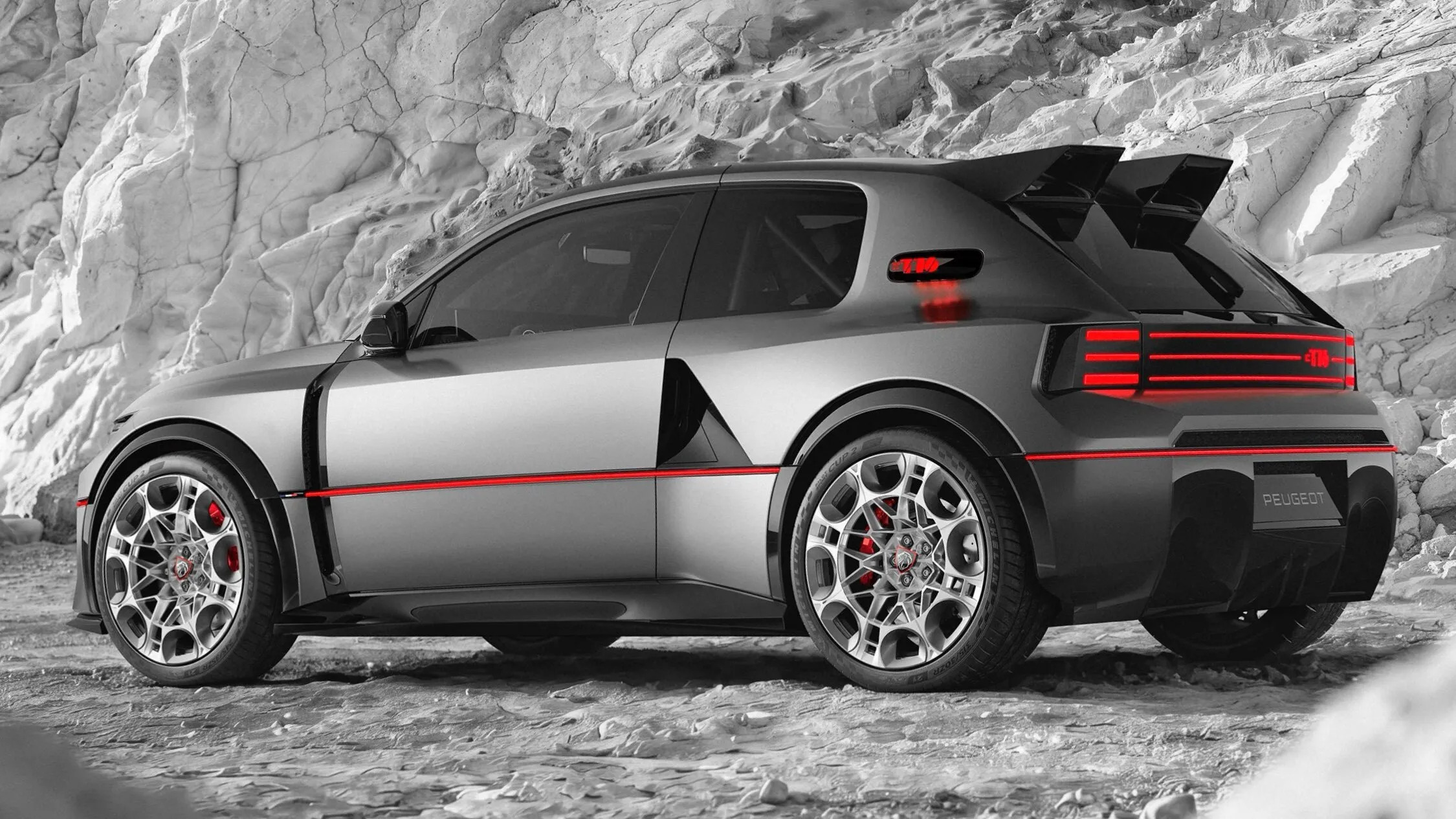
The Voltage of Nostalgia: Why Peugeot's E-T16 Concept is a Group B Ghost Story
Resurrecting a fabled wide-body rally icon for the battery-electric era is a packaging nightmare—and exactly what the 2027 Electric 208 needs to survive the sterilization of the hot hatch.
When the words "Group B" appear in modern automotive marketing, they are usually accompanied by a heavy dose of caution. The era was defined by fire, unregulated boost, and tragedy—a far cry from the sanitized, heavily regulated landscape of modern car design. Yet, when Peugeot pulled the covers off the E-T16 Concept, the mandate was clear. As documented by early reveals echoing the sentiment that "Group B rides again," the French marque is resurrecting its fabled homologation icon. But this is not merely a styling exercise rooted in the past; it is an aggressive electric prototype explicitly tasked with previewing the forthcoming 2027 Electric 208. It is a collision of eras: wrapping the silent, algorithmic precision of modern battery-electric architecture in the flared, violent clothing of a 1980s rally monster.When the words "Group B" appear in modern automotive marketing, they are usually accompanied by a heavy dose of caution. The era was defined by fire, unregulated boost, and tragedy—a far cry from the sanitized, heavily regulated landscape of modern car design. Yet, when Peugeot pulled the covers off the E-T16 Concept, the mandate was clear. As documented by early reveals echoing the sentiment that "Group B rides again," the French marque is resurrecting its fabled homologation icon. But this is not merely a styling exercise rooted in the past; it is an aggressive electric prototype explicitly tasked with previewing the forthcoming 2027 Electric 208. It is a collision of eras: wrapping the silent, algorithmic precision of modern battery-electric architecture in the flared, violent clothing of a 1980s rally monster.
The original T16 was a masterclass in packaging absurdity—taking a humble front-engine, front-wheel-drive hatchback and cramming a turbocharged engine behind the front seats, routing power to all four wheels, and swelling the bodywork to accommodate a dramatically wider track. Translating that wide-body, mid-engine homologation nostalgia into a modern battery-electric road car poses a fascinating engineering challenge. In an internal combustion vehicle, moving the engine dictates the entire dynamic personality of the chassis, centralizing mass to create a low polar moment of inertia. In a modern electric vehicle, however, the bulk of the mass—the battery pack—typically resides flat beneath the floor in a skateboard configuration. To invoke the spirit of a mid-engine homologation special, Peugeot’s engineers must manipulate torque vectoring and carefully stack battery modules to simulate the razor-sharp rotation on gravel that defined the original T16.The original T16 was a masterclass in packaging absurdity—taking a humble front-engine, front-wheel-drive hatchback and cramming a turbocharged engine behind the front seats, routing power to all four wheels, and swelling the bodywork to accommodate a dramatically wider track. Translating that wide-body, mid-engine homologation nostalgia into a modern battery-electric road car poses a fascinating engineering challenge. In an internal combustion vehicle, moving the engine dictates the entire dynamic personality of the chassis, centralizing mass to create a low polar moment of inertia. In a modern electric vehicle, however, the bulk of the mass—the battery pack—typically resides flat beneath the floor in a skateboard configuration. To invoke the spirit of a mid-engine homologation special, Peugeot’s engineers must manipulate torque vectoring and carefully stack battery modules to simulate the razor-sharp rotation on gravel that defined the original T16.
What makes the E-T16 Concept genuinely compelling is its dual purpose. It is a wild, unapologetic tribute to a bygone era of motorsport, but it is also a very real preview of the 2027 Electric 208. This grounds the fantasy in commercial reality. Peugeot is signaling that the visual aggression of the T16—the blistered arches, the prominent aerodynamic elements, the squat, purposeful stance—will influence a high-volume hot hatch. The challenge here is dilution. Concepts are invariably softened by the time they reach the showroom floor, constrained by pedestrian safety regulations, aerodynamic drag targets crucial for electric range, and the harsh realities of mass-manufacturing costs. Maintaining the visceral impact of the E-T16 in the final 2027 production model will require immense discipline from Peugeot's design and engineering teams.What makes the E-T16 Concept genuinely compelling is its dual purpose. It is a wild, unapologetic tribute to a bygone era of motorsport, but it is also a very real preview of the 2027 Electric 208. This grounds the fantasy in commercial reality. Peugeot is signaling that the visual aggression of the T16—the blistered arches, the prominent aerodynamic elements, the squat, purposeful stance—will influence a high-volume hot hatch. The challenge here is dilution. Concepts are invariably softened by the time they reach the showroom floor, constrained by pedestrian safety regulations, aerodynamic drag targets crucial for electric range, and the harsh realities of mass-manufacturing costs. Maintaining the visceral impact of the E-T16 in the final 2027 production model will require immense discipline from Peugeot's design and engineering teams.
Looking beyond the immediate mechanical hurdles, the E-T16 Concept highlights a broader trend in the automotive industry’s transition to electric propulsion: the weaponization of heritage to sell a radically different future. Legacy automakers are acutely aware that battery-electric vehicles often struggle to deliver the mechanical charisma of their combustion predecessors. Without the sensory inputs of a rising rev counter, a surging turbocharger, or the mechanical feedback of a manual transmission, manufacturers must lean heavily on design and brand equity. By invoking the T16 badge—a nameplate dripping with motorsport lore and unhinged performance—Peugeot is attempting to transfer the emotional weight of its internal combustion history onto its electrified future. It is a strategic play to ensure the 2027 Electric 208 is perceived not just as a commuter appliance, but as a dedicated enthusiast’s machine.Looking beyond the immediate mechanical hurdles, the E-T16 Concept highlights a broader trend in the automotive industry’s transition to electric propulsion: the weaponization of heritage to sell a radically different future. Legacy automakers are acutely aware that battery-electric vehicles often struggle to deliver the mechanical charisma of their combustion predecessors. Without the sensory inputs of a rising rev counter, a surging turbocharger, or the mechanical feedback of a manual transmission, manufacturers must lean heavily on design and brand equity. By invoking the T16 badge—a nameplate dripping with motorsport lore and unhinged performance—Peugeot is attempting to transfer the emotional weight of its internal combustion history onto its electrified future. It is a strategic play to ensure the 2027 Electric 208 is perceived not just as a commuter appliance, but as a dedicated enthusiast’s machine.
The stakes for this project are considerable, arriving at a time when the B-segment hot hatch is undergoing a foundational identity crisis. The inherent weight of electric drivetrains threatens the core tenet of the hot hatch philosophy: lightweight agility. If the 2027 Electric 208 can capture even a fraction of the E-T16 Concept’s dynamic promise—using dual electric motors for instantaneous, precisely metered torque delivery to mimic the aggressive, tail-happy nature of its ancestor—it could fundamentally redefine the segment. It requires a philosophical shift from relying on mechanical grip and raw horsepower to utilizing software-defined dynamics, where electric motors can brake and accelerate individual wheels with a speed and precision entirely impossible in the analog era.The stakes for this project are considerable, arriving at a time when the B-segment hot hatch is undergoing a foundational identity crisis. The inherent weight of electric drivetrains threatens the core tenet of the hot hatch philosophy: lightweight agility. If the 2027 Electric 208 can capture even a fraction of the E-T16 Concept’s dynamic promise—using dual electric motors for instantaneous, precisely metered torque delivery to mimic the aggressive, tail-happy nature of its ancestor—it could fundamentally redefine the segment. It requires a philosophical shift from relying on mechanical grip and raw horsepower to utilizing software-defined dynamics, where electric motors can brake and accelerate individual wheels with a speed and precision entirely impossible in the analog era.
Ultimately, the E-T16 Concept serves as a bold statement of intent from a brand with deep motorsport roots. The original T16 was born out of sheer necessity, a wild machine built to satisfy homologation rules so Peugeot could conquer the World Rally Championship. Today, the rules of the game have changed entirely, driven by strict global emissions mandates and a wholesale industry shift toward electrification. Yet, the desire to create a halo product that stirs the soul remains intact. By promising that the wild spirit of the T16 will live on in the 2027 Electric 208, Peugeot is accepting a formidable challenge. They are tasked with proving that the electric future does not have to abandon the thrilling, slightly unhinged joy of the past—a high-voltage tribute ensuring that, in spirit at least, the golden age of rally lives on.Ultimately, the E-T16 Concept serves as a bold statement of intent from a brand with deep motorsport roots. The original T16 was born out of sheer necessity, a wild machine built to satisfy homologation rules so Peugeot could conquer the World Rally Championship. Today, the rules of the game have changed entirely, driven by strict global emissions mandates and a wholesale industry shift toward electrification. Yet, the desire to create a halo product that stirs the soul remains intact. By promising that the wild spirit of the T16 will live on in the 2027 Electric 208, Peugeot is accepting a formidable challenge. They are tasked with proving that the electric future does not have to abandon the thrilling, slightly unhinged joy of the past—a high-voltage tribute ensuring that, in spirit at least, the golden age of rally lives on.
Gallery
"Group B rides again! Peugeot Unveils E-T16 Concept as a Preview of the 2027 Electric 208."
Why it matters
The transition to electric hot hatches risks losing the lightweight agility that defined the segment for decades. By anchoring the upcoming 2027 Electric 208 to the legendary mid-engine T16, Peugeot is attempting to use software-defined dynamics and aggressive packaging to preserve the emotional thrill of analog driving in a heavy, battery-powered era.
Sources
- 1.
- 2.
- 3.
Reported by the Downforce & Divots desk from the sources above.
The clubhouse.
- No replies yet. Be the first.