The 800-Volt Ambush: How BYD's Seal 07 Turned Tesla’s Model 3 Into Yesterday’s News
While Fremont stretches its aging 400-volt architecture, Shenzhen has democratized silicon-carbide power and roof-mounted LiDAR at a sub-$25,000 price point. The global EV baseline will never be the same.
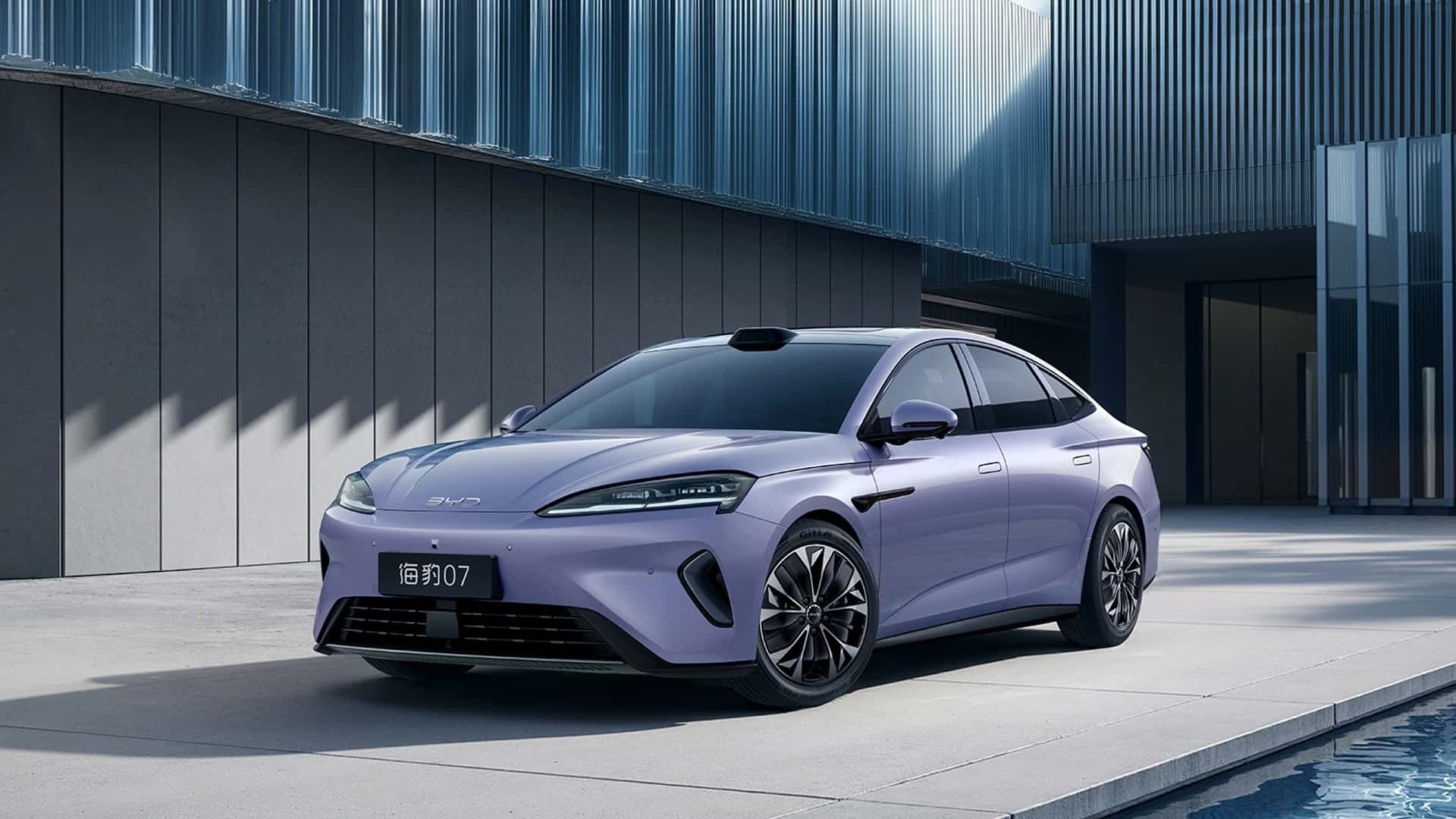
There is a distinct, metallic thud when you close the door of a genuinely well-engineered car—a resonant frequency that signals exactly how much chassis rigidity you’ve just bought. For years, conventional wisdom dictated that a sub-$25,000 price tag bought you a tin can with a sluggish infotainment screen. But the refreshed BYD Seal 07 has arrived to violently disabuse Fremont of that notion. Armed with roof-mounted LiDAR and an 800-volt silicon-carbide architecture, Shenzhen’s latest export isn’t merely undercutting the Tesla Model 3; it is brutally exposing the age of Tesla’s 400-volt foundation. It is a technological flex masquerading as a commuter sedan, serving up flagship-level hardware at a domestic price point that has left Western automotive executives staring blankly at their balance sheets.
To understand how BYD pulled off this coup, you have to look beneath the floorboards at the e-Platform 3.0 Evo architecture. While Tesla has spent the last half-decade stretching, tweaking, and heavily relying on over-the-air software updates to keep the Model 3 relevant, BYD has been busy rethinking the physical skeleton of the electric vehicle. The shift to an 800-volt system, complete with silicon-carbide power electronics, is the kind of generational leap usually reserved for the Porsche Taycan or Lucid Air. It dictates superior thermal efficiency, optimized battery weight, and most crucially, hyper-fast charging times. Packaging this tier of telemetry and power management into a sedan that starts under $25,000 in China is an engineering triumph that irrevocably shifts the baseline of what constitutes a 'standard' car.
The automotive press has taken notice, with industry monitors like InsideEVs plainly labeling the Seal 07 as 'The Tesla Model 3’s Worst Nightmare.' That moniker isn’t born from abstract marketing jargon; it is born from hard performance metrics. The Seal 07 leads outright in charging performance and integrated tech suites. Tesla’s strategy has long been to offer a minimalist, austere interior backed by a robust Supercharger network, but BYD is countering with raw hardware superiority. When a car that costs nearly half as much domestically can gulp electrons twice as fast and process its surroundings with dramatically higher fidelity, the fundamental value proposition of the American EV darling begins to structurally fracture.The automotive press has taken notice, with industry monitors like InsideEVs plainly labeling the Seal 07 as 'The Tesla Model 3’s Worst Nightmare.' That moniker isn’t born from abstract marketing jargon; it is born from hard performance metrics. The Seal 07 leads outright in charging performance and integrated tech suites. Tesla’s strategy has long been to offer a minimalist, austere interior backed by a robust Supercharger network, but BYD is countering with raw hardware superiority. When a car that costs nearly half as much domestically can gulp electrons twice as fast and process its surroundings with dramatically higher fidelity, the fundamental value proposition of the American EV darling begins to structurally fracture.
Naturally, there is skepticism—a lingering, outdated reflex to question the physical durability and assembly quality of Chinese manufacturing. Social media is currently littered with physical stress tests, such as the viral durability videos from reviewers like Azizdrives, who actively try to punch holes in the Seal's interior build quality. They poke, prod, and yank at the center console, searching for the creaks, rattles, and misaligned plastics that traditionally plague budget-friendly cars. Yet, the Seal holds its own. The cabin materials and assembly tolerances aren't just passable; they are actively putting pressure on the sometimes-spotty panel gaps and stripped-down finishes rolling out of Tesla's own Gigafactories.Naturally, there is skepticism—a lingering, outdated reflex to question the physical durability and assembly quality of Chinese manufacturing. Social media is currently littered with physical stress tests, such as the viral durability videos from reviewers like Azizdrives, who actively try to punch holes in the Seal's interior build quality. They poke, prod, and yank at the center console, searching for the creaks, rattles, and misaligned plastics that traditionally plague budget-friendly cars. Yet, the Seal holds its own. The cabin materials and assembly tolerances aren't just passable; they are actively putting pressure on the sometimes-spotty panel gaps and stripped-down finishes rolling out of Tesla's own Gigafactories.
This hardware arms race is happening against a backdrop of severe geopolitical friction. As Consumer Reports recently noted, the global electric vehicle pipeline is currently being heavily disrupted by a volatile mix of evaporating tax credits and aggressive new international tariffs. BYD’s hyper-aggressive pricing strategy in its domestic market is undoubtedly a flex, but it is also a necessary margin buffer. When your vehicle costs under $25,000 to produce and sell profitably at home, you inherently possess the financial shock absorbers required to weather steep import taxes in Europe and the Americas. Fremont, bound by Western labor and supply chain costs, simply does not have that kind of downward pricing elasticity.This hardware arms race is happening against a backdrop of severe geopolitical friction. As Consumer Reports recently noted, the global electric vehicle pipeline is currently being heavily disrupted by a volatile mix of evaporating tax credits and aggressive new international tariffs. BYD’s hyper-aggressive pricing strategy in its domestic market is undoubtedly a flex, but it is also a necessary margin buffer. When your vehicle costs under $25,000 to produce and sell profitably at home, you inherently possess the financial shock absorbers required to weather steep import taxes in Europe and the Americas. Fremont, bound by Western labor and supply chain costs, simply does not have that kind of downward pricing elasticity.
Then there is the roof-mounted LiDAR. This is perhaps the most audacious maneuver against the current EV establishment. Tesla has stubbornly doubled down on 'Tesla Vision,' relying entirely on optical cameras and neural nets to navigate the world, strategically stripping out ultrasonic sensors and radar to cut production costs. BYD, meanwhile, has taken a sophisticated sensor suite that was previously the exclusive domain of six-figure luxury cruisers and experimental robotaxis, and slapped it onto a mass-market sedan. LiDAR provides unassailable, millimeter-accurate depth mapping, regardless of fog, rain, or blinding glare. Democratizing this technology at this price bracket fundamentally rewrites the safety and autonomous-driving equations for the everyday commuter.Then there is the roof-mounted LiDAR. This is perhaps the most audacious maneuver against the current EV establishment. Tesla has stubbornly doubled down on 'Tesla Vision,' relying entirely on optical cameras and neural nets to navigate the world, strategically stripping out ultrasonic sensors and radar to cut production costs. BYD, meanwhile, has taken a sophisticated sensor suite that was previously the exclusive domain of six-figure luxury cruisers and experimental robotaxis, and slapped it onto a mass-market sedan. LiDAR provides unassailable, millimeter-accurate depth mapping, regardless of fog, rain, or blinding glare. Democratizing this technology at this price bracket fundamentally rewrites the safety and autonomous-driving equations for the everyday commuter.
The stakes here extend far beyond a single model year refresh or a quarterly delivery report. What we are witnessing on the grid right now is the sheer, unadulterated triumph of total vertical integration. Tesla may have redefined the industry with massive gigacasting machines and seamless software integration, but BYD literally owns the lithium mines, manufactures its own high-density Blade batteries, fabricates its own silicon-carbide chips, and even builds the transport ships to export the final product. The Seal 07 and its e-Platform 3.0 Evo are simply the sharpest edge of that massive industrial spear. It is a terrifying proposition for any legacy competitor still trying to buy off-the-shelf components from third-party suppliers.The stakes here extend far beyond a single model year refresh or a quarterly delivery report. What we are witnessing on the grid right now is the sheer, unadulterated triumph of total vertical integration. Tesla may have redefined the industry with massive gigacasting machines and seamless software integration, but BYD literally owns the lithium mines, manufactures its own high-density Blade batteries, fabricates its own silicon-carbide chips, and even builds the transport ships to export the final product. The Seal 07 and its e-Platform 3.0 Evo are simply the sharpest edge of that massive industrial spear. It is a terrifying proposition for any legacy competitor still trying to buy off-the-shelf components from third-party suppliers.
As the auto industry lines up for the next grueling phase of the electric transition, the burden of proof has entirely shifted. The BYD Seal 07 proves that high-voltage, fast-charging, LiDAR-equipped architectures are no longer the exclusive toys of early adopters with bottomless pockets. The 400-volt era is officially on notice. For Fremont, and indeed for Stuttgart, Munich, and Detroit, the message from Shenzhen is unmistakably clear: adapt to the new high-voltage baseline, or get permanently left behind in the garage.As the auto industry lines up for the next grueling phase of the electric transition, the burden of proof has entirely shifted. The BYD Seal 07 proves that high-voltage, fast-charging, LiDAR-equipped architectures are no longer the exclusive toys of early adopters with bottomless pockets. The 400-volt era is officially on notice. For Fremont, and indeed for Stuttgart, Munich, and Detroit, the message from Shenzhen is unmistakably clear: adapt to the new high-voltage baseline, or get permanently left behind in the garage.
Gallery
"The Tesla Model 3’s worst nightmare has arrived in China, costing far less but leading in charging performance and overall tech."
Why it matters
The BYD Seal 07 marks a critical inflection point in the EV price-to-performance ratio. By standardizing 800-volt silicon-carbide architectures and roof-mounted LiDAR at entry-level prices, BYD is forcing legacy automakers to either drastically accelerate their hardware development or face obsolescence in key global markets.
Sources
- 1.
- 2.Hot, New Electric Cars That Are Coming Soon - Consumer Reportsconsumerreports.org
- 3.
Reported by the Downforce & Divots desk from the sources above.
The clubhouse.
- No replies yet. Be the first.