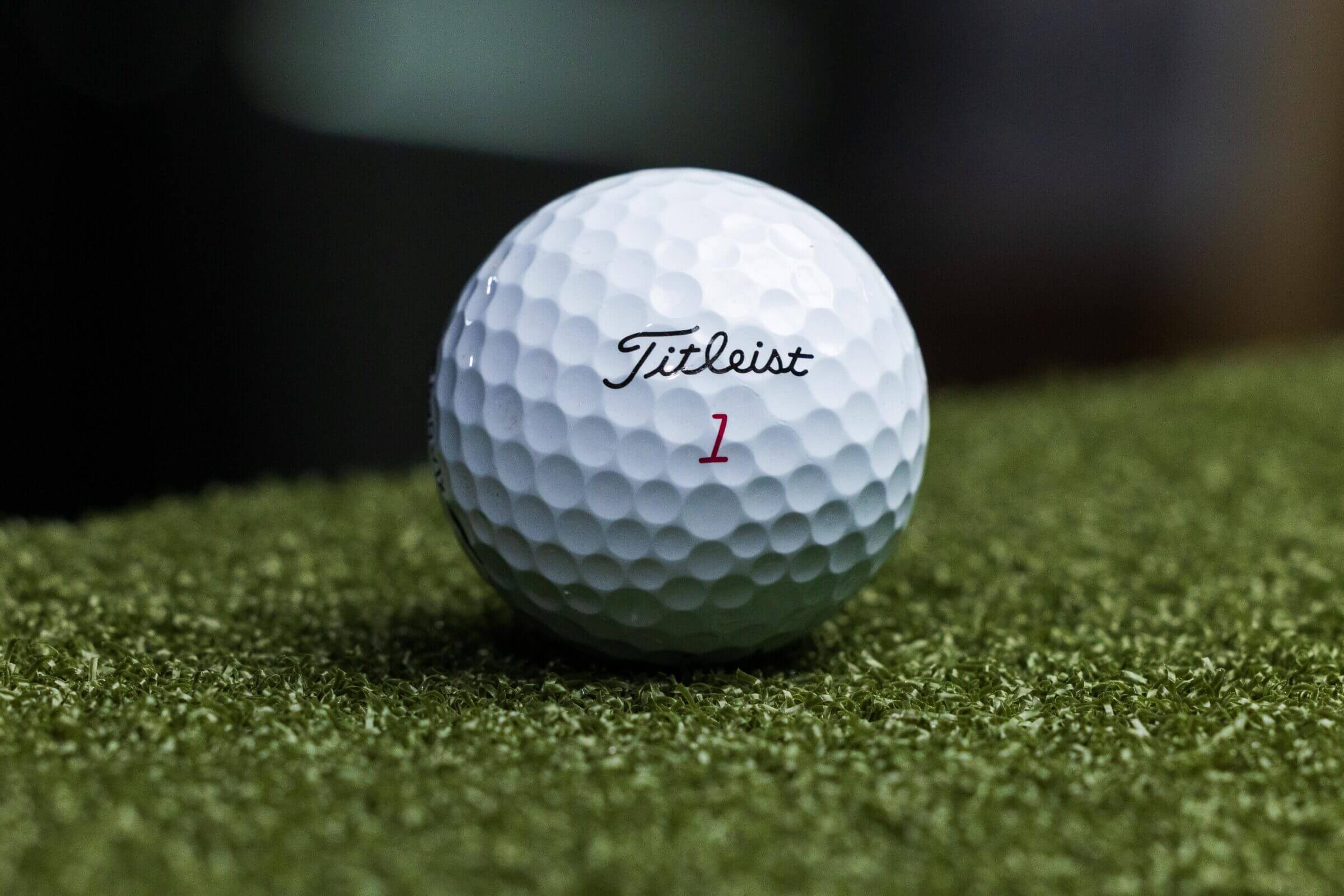
The Hydroplaning Paradox: Why Premium Tour Balls Bleed Spin in the Dew
Fresh 2026 robotic testing proves that top-tier urethane golf balls lose critical spin and alter their launch in wet conditions, exposing a microscopic flaw at the impact boundary that budget ionomer covers manage to avoid.
Most amateur golfers step onto the first tee box at dawn, wipe the morning dew off their cleats, and expect their premium tour-tier golf ball to perform exactly as it did on a bone-dry Tuesday afternoon. But a recent, exhaustive data drop from MyGolfSpy’s October 2026 Golf Ball Test shatters that illusion. Testing 48 different golf balls in both dry and wet conditions, equipment analyst Brittany Olizarowicz highlighted a glaring vulnerability in the modern game's most essential piece of gear. Fresh robotic testing reveals a troubling paradox: premium urethane tour balls—the undisputed kings of greenside control—lose critical spin and alter their carry characteristics under moisture, while budget-friendly ionomer covers barely flinch at the sight of a raindrop.Most amateur golfers step onto the first tee box at dawn, wipe the morning dew off their cleats, and expect their premium tour-tier golf ball to perform exactly as it did on a bone-dry Tuesday afternoon. But a recent, exhaustive data drop from MyGolfSpy’s October 2026 Golf Ball Test shatters that illusion. Testing 48 different golf balls in both dry and wet conditions, equipment analyst Brittany Olizarowicz highlighted a glaring vulnerability in the modern game's most essential piece of gear. Fresh robotic testing reveals a troubling paradox: premium urethane tour balls—the undisputed kings of greenside control—lose critical spin and alter their carry characteristics under moisture, while budget-friendly ionomer covers barely flinch at the sight of a raindrop.
The physics of a golf shot are dictated entirely in the milliseconds of compression at the impact boundary. As MyGolfSpy’s comprehensive report notes, when a golfer encounters morning dew, a light drizzle, a damp fairway, or wet rough, that water acts as a microscopic lubricant. It wedges itself directly between the clubface and the ball, which, as Olizarowicz writes, is "exactly where spin is made." The result of this unwanted lubrication is a phenomenon akin to hydroplaning. Instead of the precision-milled grooves grabbing the soft urethane cover to generate thousands of RPMs of backspin, the ball slides violently up the face of the club.The physics of a golf shot are dictated entirely in the milliseconds of compression at the impact boundary. As MyGolfSpy’s comprehensive report notes, when a golfer encounters morning dew, a light drizzle, a damp fairway, or wet rough, that water acts as a microscopic lubricant. It wedges itself directly between the clubface and the ball, which, as Olizarowicz writes, is "exactly where spin is made." The result of this unwanted lubrication is a phenomenon akin to hydroplaning. Instead of the precision-milled grooves grabbing the soft urethane cover to generate thousands of RPMs of backspin, the ball slides violently up the face of the club.
The resulting ball flight defies traditional expectations for premium equipment. According to the 2026 testing data, when a top-tier urethane ball gets wet, it spins significantly less and launches much higher off the face. However, the data also presents a fascinating caveat: the ball doesn’t necessarily fly shorter. Because the spin loft changes and the backspin drops so drastically, the ball can balloon or knuckle depending on the specific aerodynamic profile of its dimple pattern. This creates a nightmare scenario for precision wedge play, where predictability is the only currency that matters. Players who rely on a low, spinning checker into a tucked pin are suddenly left with a high, floaty trajectory that hits the green and releases like a runaway freight train.The resulting ball flight defies traditional expectations for premium equipment. According to the 2026 testing data, when a top-tier urethane ball gets wet, it spins significantly less and launches much higher off the face. However, the data also presents a fascinating caveat: the ball doesn’t necessarily fly shorter. Because the spin loft changes and the backspin drops so drastically, the ball can balloon or knuckle depending on the specific aerodynamic profile of its dimple pattern. This creates a nightmare scenario for precision wedge play, where predictability is the only currency that matters. Players who rely on a low, spinning checker into a tucked pin are suddenly left with a high, floaty trajectory that hits the green and releases like a runaway freight train.
We are only now fully understanding the scope of this cover-chemistry flaw because the tools used to measure it have undergone a dramatic evolution. "Bad data leads to bad golf," reads the prevailing ethos at GolfTRK Summerlin, a Las Vegas training facility that recently made waves for installing state-of-the-art TrackMan iO systems in all four of its indoor hitting bays. Facilities outfitting themselves with "the best of the best when it comes to indoor launch monitor technology" have allowed both fitters and players to precisely quantify the spin decay that previously felt like a mere anecdotal excuse for a blown approach shot. The data is no longer theoretical; it is projected in high definition on the simulator screen.We are only now fully understanding the scope of this cover-chemistry flaw because the tools used to measure it have undergone a dramatic evolution. "Bad data leads to bad golf," reads the prevailing ethos at GolfTRK Summerlin, a Las Vegas training facility that recently made waves for installing state-of-the-art TrackMan iO systems in all four of its indoor hitting bays. Facilities outfitting themselves with "the best of the best when it comes to indoor launch monitor technology" have allowed both fitters and players to precisely quantify the spin decay that previously felt like a mere anecdotal excuse for a blown approach shot. The data is no longer theoretical; it is projected in high definition on the simulator screen.
This analytical awakening isn't restricted to high-end indoor academies, either. The democratization of ball-flight analysis means average players are confronting their own wet-weather data right at home. A recent showcase by PlayBetter.com highlighted a booming market for sub-$1,000 consumer-grade launch monitors. By providing a "visual comparison of popular consumer-grade golf technology," these affordable units—which pack enough punch to rival the tour-level radars of a decade ago—are exposing the specific spin drops of urethane covers in real-time. A player standing in a damp backyard net can now see the exact RPM loss when their expensive tour ball gets slick, bridging the gap between robotic testing and everyday practice.This analytical awakening isn't restricted to high-end indoor academies, either. The democratization of ball-flight analysis means average players are confronting their own wet-weather data right at home. A recent showcase by PlayBetter.com highlighted a booming market for sub-$1,000 consumer-grade launch monitors. By providing a "visual comparison of popular consumer-grade golf technology," these affordable units—which pack enough punch to rival the tour-level radars of a decade ago—are exposing the specific spin drops of urethane covers in real-time. A player standing in a damp backyard net can now see the exact RPM loss when their expensive tour ball gets slick, bridging the gap between robotic testing and everyday practice.
The traditional industry solution to this moisture problem has always been focused entirely on the clubface rather than the ball itself. Golfers and equipment manufacturers alike have spent years obsessing over groove geometry, micro-milling, and face roughness. MyGolfSpy previously conducted a highly publicized "wet wedge spin" test to see which specific club models could hold their spin when moisture showed up. The assumption was that an aggressive enough groove pattern could channel away the water and aggressively bite into the cover, effectively solving the hydroplaning issue at the source and saving the player's short game.The traditional industry solution to this moisture problem has always been focused entirely on the clubface rather than the ball itself. Golfers and equipment manufacturers alike have spent years obsessing over groove geometry, micro-milling, and face roughness. MyGolfSpy previously conducted a highly publicized "wet wedge spin" test to see which specific club models could hold their spin when moisture showed up. The assumption was that an aggressive enough groove pattern could channel away the water and aggressively bite into the cover, effectively solving the hydroplaning issue at the source and saving the player's short game.
But the 2026 data flips that club-centric narrative completely on its head. For this latest study, the testing protocol took the exact opposite approach: researchers kept the wedge completely static—a controlled variable—and rotated through 48 different ball models, running them all dry and wet. By isolating the ball, the testers proved that the cover chemistry itself is just as culpable, if not more so, than the wedge's grooves. The soft, cast urethane that gives tour balls their buttery feel and elite dry-weather performance becomes a sheer liability when coated in water. Conversely, harder, budget-tier ionomer materials slide less drastically across the face, maintaining a more consistent, albeit lower, baseline of spin regardless of the elements.But the 2026 data flips that club-centric narrative completely on its head. For this latest study, the testing protocol took the exact opposite approach: researchers kept the wedge completely static—a controlled variable—and rotated through 48 different ball models, running them all dry and wet. By isolating the ball, the testers proved that the cover chemistry itself is just as culpable, if not more so, than the wedge's grooves. The soft, cast urethane that gives tour balls their buttery feel and elite dry-weather performance becomes a sheer liability when coated in water. Conversely, harder, budget-tier ionomer materials slide less drastically across the face, maintaining a more consistent, albeit lower, baseline of spin regardless of the elements.
Ultimately, the revelation that budget balls maintain their structural launch integrity under moisture better than tour-level urethane forces a fundamental rethinking of course management. For the dawn-patrol amateur navigating a saturated fairway, the optimal play might no longer be the most expensive sleeve in the bag. Until the chemical engineering departments at the major OEMs can formulate a premium cover that actively repels water at the microscopic impact boundary, the wet-weather advantage ironically belongs to the budget tier. It is a rare moment in golf technology where opting for the affordable alternative might actually yield more predictable results when the skies open up.Ultimately, the revelation that budget balls maintain their structural launch integrity under moisture better than tour-level urethane forces a fundamental rethinking of course management. For the dawn-patrol amateur navigating a saturated fairway, the optimal play might no longer be the most expensive sleeve in the bag. Until the chemical engineering departments at the major OEMs can formulate a premium cover that actively repels water at the microscopic impact boundary, the wet-weather advantage ironically belongs to the budget tier. It is a rare moment in golf technology where opting for the affordable alternative might actually yield more predictable results when the skies open up.
Gallery
"When a golf ball gets wet, it spins less and launches higher but it doesn’t necessarily fly shorter. How much it changes depends a lot on the ball."
Why it matters
The long-held assumption that premium urethane guarantees peak performance is upended by microscopic hydroplaning. For players grinding out early morning rounds in the dew or navigating damp fairways, understanding this specific spin decay is the key to controlling approach shot trajectories and rethinking equipment choices.
Sources
- 1.
- 2.
- 3.
Reported by the Downforce & Divots desk from the sources above.
The clubhouse.
- No replies yet. Be the first.