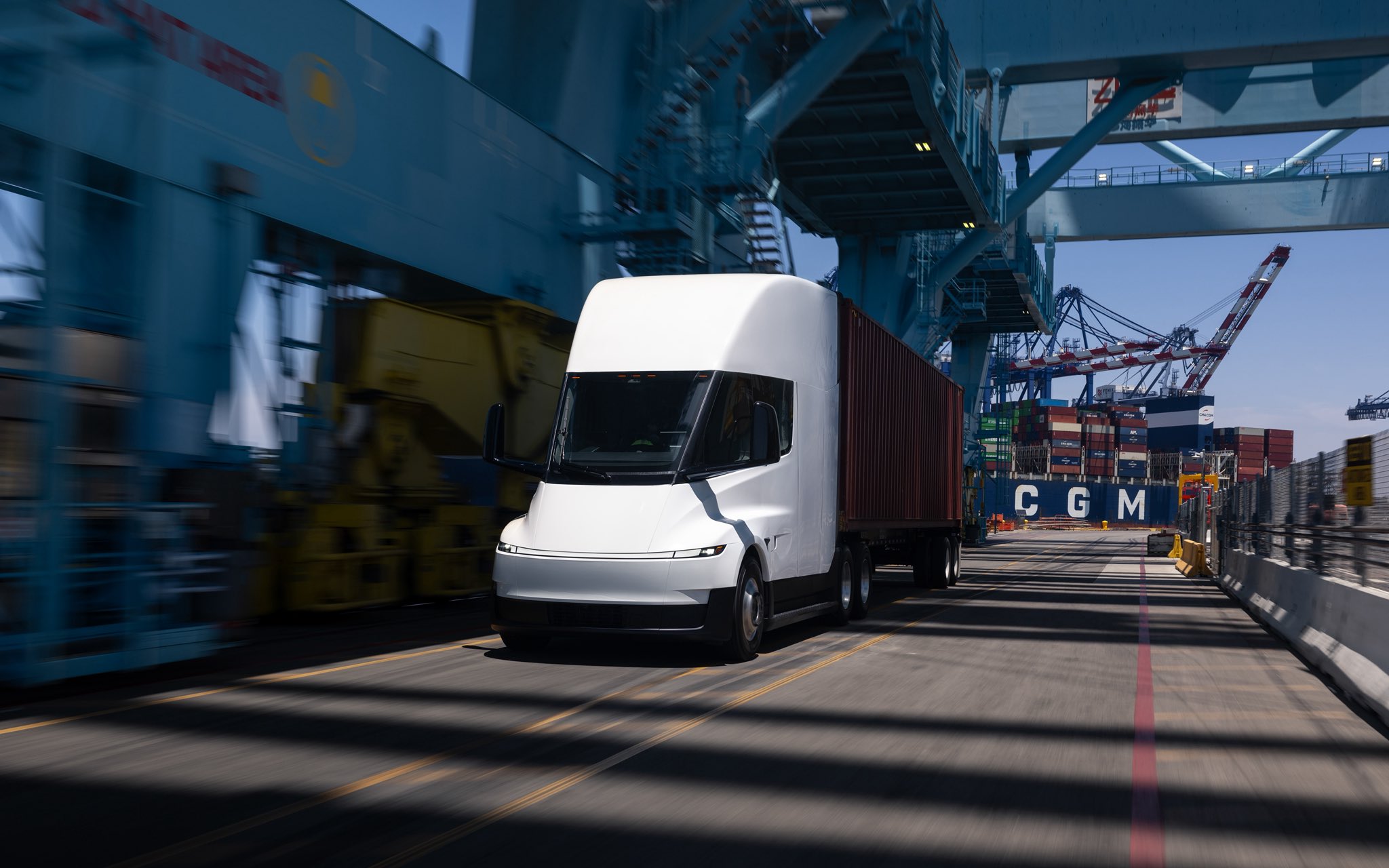
The Hauling Paradox: Is the Tesla Semi a Diesel Killer or a Giant Cybertruck?
As Tesla pushes its Class 8 electric rig deeper into commercial fleets, the freight world must decide whether it represents genuine logistics salvation or high-voltage theater.
The Class 8 commercial haulage sector has never had patience for Silicon Valley tech evangelism. For decades, fleet operators and logistics directors have measured the universe through ruthless spreadsheets: cost per ton-mile, tare weight versus payload capacity, pump turnaround times, and brutal mechanical uptime. Now, as the Tesla Semi stakes its claim on interstate freight corridors, the transport industry faces an unavoidable question: is this the machine that finally executes diesel, or simply a giant Cybertruck built for corporate boardrooms?The Class 8 commercial haulage sector has never had patience for Silicon Valley tech evangelism. For decades, fleet operators and logistics directors have measured the universe through ruthless spreadsheets: cost per ton-mile, tare weight versus payload capacity, pump turnaround times, and brutal mechanical uptime. Now, as the Tesla Semi stakes its claim on interstate freight corridors, the transport industry faces an unavoidable question: is this the machine that finally executes diesel, or simply a giant Cybertruck built for corporate boardrooms?
The tension, framed sharply by MotorTrend's Edward Loh, gets to the heart of heavy-duty commercial electrification. In theory, the Semi’s performance credentials—colossal electric torque, zero localized tailpipe emissions, and projected lifetime operational savings—threaten to make century-old internal combustion rigs look like relics. On open highways, the sight of a fully loaded electric tractor effortlessly holding speed up steep mountain grades is an undeniably potent proof of concept.The tension, framed sharply by MotorTrend's Edward Loh, gets to the heart of heavy-duty commercial electrification. In theory, the Semi’s performance credentials—colossal electric torque, zero localized tailpipe emissions, and projected lifetime operational savings—threaten to make century-old internal combustion rigs look like relics. On open highways, the sight of a fully loaded electric tractor effortlessly holding speed up steep mountain grades is an undeniably potent proof of concept.
Yet heavy transport is inherently allergic to aesthetic indulgence and unproven durability. Where legacy haulers from Freightliner, Kenworth, and Peterbilt offer deeply entrenched service networks, modular repairability, and standard cab layouts, the Semi insists on a radical rethink. Its center-mounted driver’s seat, twin wraparound display screens, and aerodynamically sleek composite bodywork owe far more to passenger EV minimalism than rugged industrial utility.Yet heavy transport is inherently allergic to aesthetic indulgence and unproven durability. Where legacy haulers from Freightliner, Kenworth, and Peterbilt offer deeply entrenched service networks, modular repairability, and standard cab layouts, the Semi insists on a radical rethink. Its center-mounted driver’s seat, twin wraparound display screens, and aerodynamically sleek composite bodywork owe far more to passenger EV minimalism than rugged industrial utility.
The real crucible, however, lies in the charging depot. Operating a fleet of Class 8 electric rigs requires immense megawatt-level charging infrastructure that tests local electrical grids to their limits. Between battery pack weight potentially eating into valuable freight payloads and the sheer capital expenditure needed to electrify regional hubs, the gap between promotional range figures and grueling daily logistics remains wide.The real crucible, however, lies in the charging depot. Operating a fleet of Class 8 electric rigs requires immense megawatt-level charging infrastructure that tests local electrical grids to their limits. Between battery pack weight potentially eating into valuable freight payloads and the sheer capital expenditure needed to electrify regional hubs, the gap between promotional range figures and grueling daily logistics remains wide.
For commercial freight, romance will never trump return on investment. If the Tesla Semi can consistently out-haul, out-save, and outlast conventional diesel without crumbling under twenty-four-hour logistics cycles, it will genuinely transform modern commerce. If its real-world numbers falter, it risks going down as another high-voltage spectacle—a curiosity destined to haul corporate virtue rather than the nation's cargo.For commercial freight, romance will never trump return on investment. If the Tesla Semi can consistently out-haul, out-save, and outlast conventional diesel without crumbling under twenty-four-hour logistics cycles, it will genuinely transform modern commerce. If its real-world numbers falter, it risks going down as another high-voltage spectacle—a curiosity destined to haul corporate virtue rather than the nation's cargo.
Gallery
"Is the Tesla Semi a diesel killer, or is it merely a giant Cybertruck built on high-voltage promises?"
Why it matters
Heavy commercial transport represents one of the most demanding operational sectors in mobility. How the Tesla Semi performs under rigorous fleet conditions will determine whether battery-electric heavy haulage is commercially viable at scale or strictly confined to short-haul duty.
Sources
- 1.MotorTrend: New Cars - Car News and Expert Reviewsmotortrend.com
- 2.2026 Subaru Uncharted | Road Test - YouTubeyoutube.com
- 3.
- 4.New Cars Coming Soon - Consumer Reportsconsumerreports.org
Reported by the Downforce & Divots desk from the sources above.
The clubhouse.
- No replies yet. Be the first.