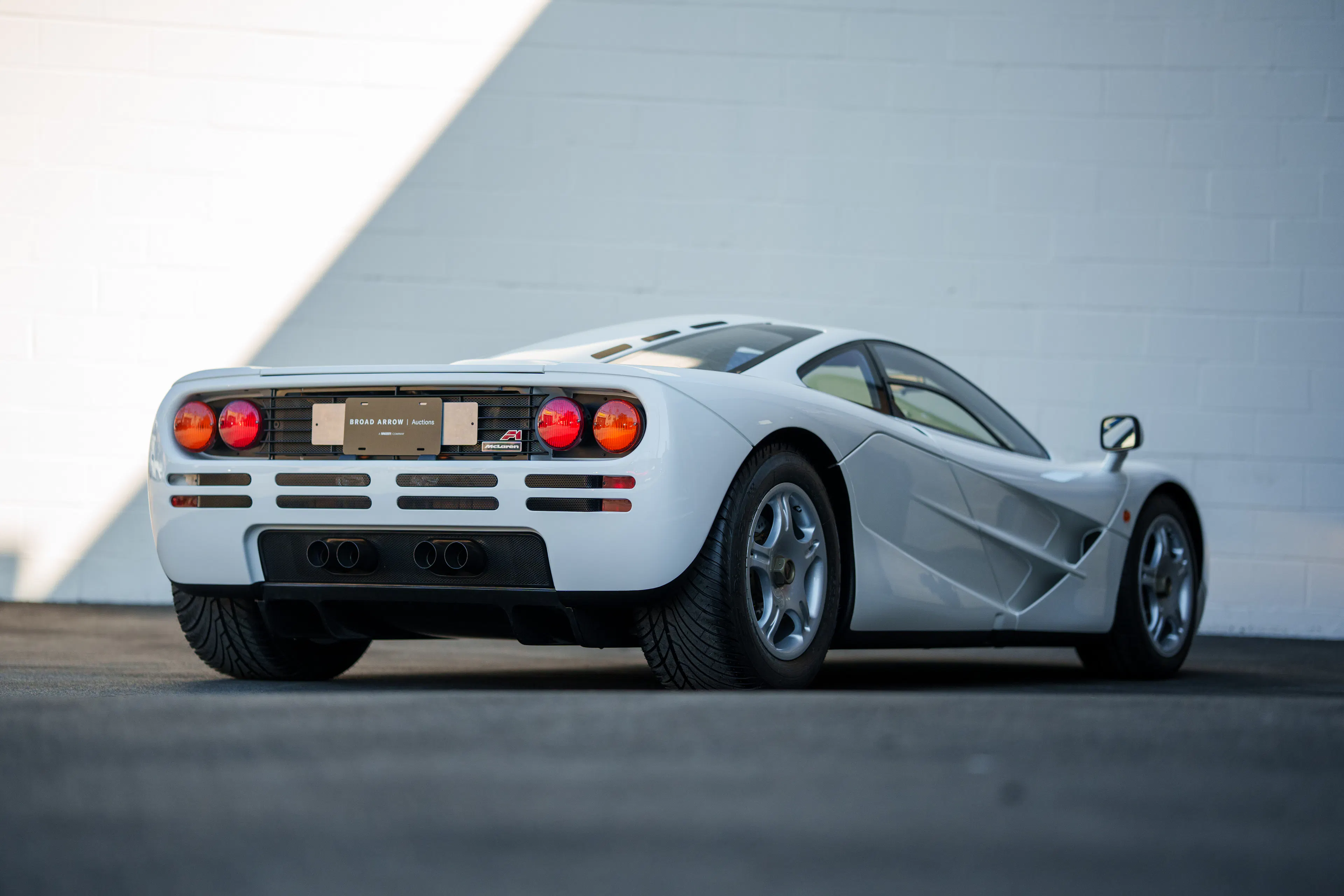
The Genesis Metric: Why the McLaren F1 Remains the Undisputed Blueprint
Decades after its 1992 unveiling, Gordon Murray’s three-seater creation proves that modern exotics are still chasing the purity of the world’s first true hypercar.
The exact moment the term ‘hypercar’ entered automotive vernacular remains somewhat foggy. It certainly was not in common circulation on May 28, 1992, when the McLaren F1 was first revealed to the world at the Sporting Club in Monaco. Back then, the industry spoke in terms of supercars, benchmarking capability against top speed runs and raw road presence. Yet looking back across three decades of escalating horsepower wars, the F1 stands undisputed as the single watershed moment that created an entirely new tier of automotive engineering.
Modern hypercar discourse often fixates on the technological leaps of subsequent eras—most notably the hybrid Holy Trinity of the McLaren P1, Ferrari LaFerrari, and Porsche 918 Spyder, which redefined what battery-assisted powertrains could deliver on track and road. But while those machines proved what complex electrical integration could achieve, the F1 established the fundamental ethos: an uncompromising pursuit of weight reduction, driver immersion, and bespoke engineering without regulatory or boardroom concessions.Modern hypercar discourse often fixates on the technological leaps of subsequent eras—most notably the hybrid Holy Trinity of the McLaren P1, Ferrari LaFerrari, and Porsche 918 Spyder, which redefined what battery-assisted powertrains could deliver on track and road. But while those machines proved what complex electrical integration could achieve, the F1 established the fundamental ethos: an uncompromising pursuit of weight reduction, driver immersion, and bespoke engineering without regulatory or boardroom concessions.
As veteran automotive writer Richard Meaden notes in his reflection on the landmark machine, ‘hypercar’ is a label applied retrospectively to dozens of vehicles, but only the F1 genuinely earned the status as the category's opening chapter. It was not entirely without flaw—its synchromesh and high-speed stability under braking demanded respect and finesse—yet those imperfections only accentuated its raw, analogue character rather than diminishing it.As veteran automotive writer Richard Meaden notes in his reflection on the landmark machine, ‘hypercar’ is a label applied retrospectively to dozens of vehicles, but only the F1 genuinely earned the status as the category's opening chapter. It was not entirely without flaw—its synchromesh and high-speed stability under braking demanded respect and finesse—yet those imperfections only accentuated its raw, analogue character rather than diminishing it.
Today, as collectors bid values into the tens of millions and modern successors grapple with the added bulk of hybrid systems and active aerodynamic suites, the F1’s singular packaging remains unmatched. It remains the North Star against which every multi-million-pound exotic, from Woking to Maranello, must inevitably measure its ambition.Today, as collectors bid values into the tens of millions and modern successors grapple with the added bulk of hybrid systems and active aerodynamic suites, the F1’s singular packaging remains unmatched. It remains the North Star against which every multi-million-pound exotic, from Woking to Maranello, must inevitably measure its ambition.
Gallery
"Hypercar is a name applied retrospectively to a lot of cars. But only one is the watershed moment that earned the title."
Why it matters
The McLaren F1 established the technical and philosophical blueprint for every hypercar that followed. As the industry transitions into an era of unprecedented electrification and weight, Gordon Murray’s original vision serves as a timeless reminder that pure driver involvement remains the ultimate automotive currency.
Sources
- 1.
- 2.
- 3.
- 4.
Reported by the Downforce & Divots desk from the sources above.
The clubhouse.
- No replies yet. Be the first.