The Dynasty Pincher: Inside BYD’s High-Spec Assault on the Family EV Benchmark
With an 850-kilometre range and roof-mounted LiDAR for roughly $33,500, the third-generation Tang proves Shenzhen is no longer competing on price alone.
In the bruising arena of China’s domestic electric vehicle market, momentum is a fragile currency. Automakers either iterate at breakneck speed or get swallowed by the pricing undertow. BYD, fresh off cementing its balance-sheet dominance over Western legacy rivals, has fired its next tactical salvo: the official launch of the third-generation Tang five-seat electric SUV, slated for November 24.
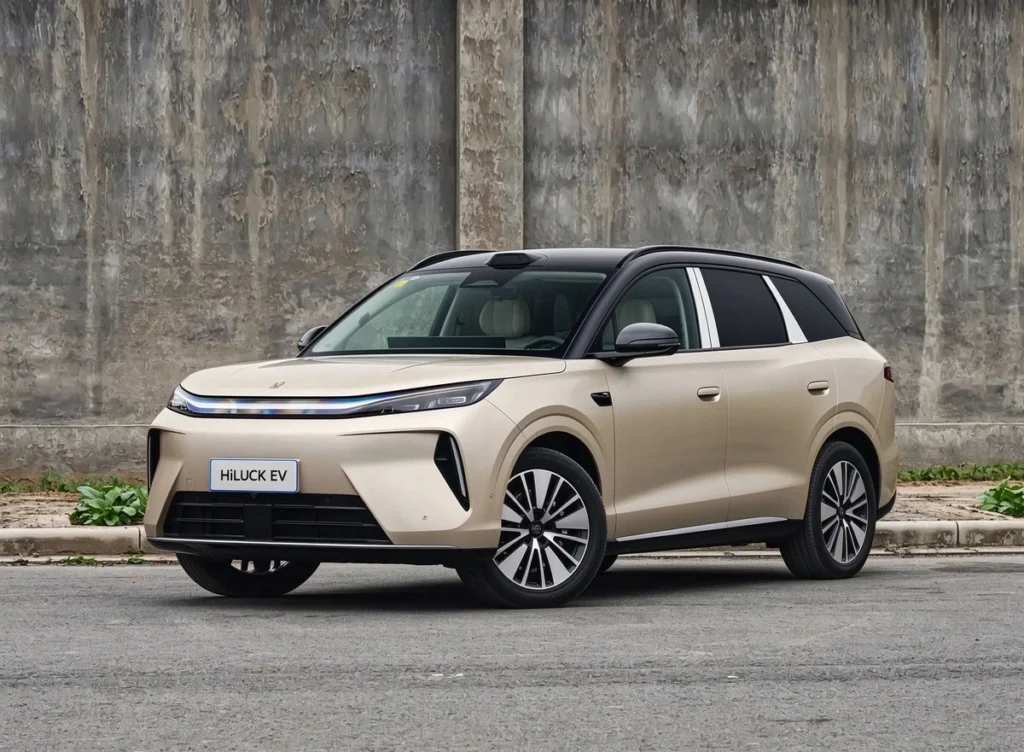
Having initiated pre-sales with an aggressive starting price of 225,000 yuan ($33,510), the revamped Tang arrives bearing the hallmarks of premium hardware once reserved for six-figure imports. Studio imagery reveals a two-tone aesthetic with a gold body and contrasting black roof, anchored by a full-width, through-type front light bar and, most crucially, a roof-mounted LiDAR pod signaling advanced autonomous drive capability.Having initiated pre-sales with an aggressive starting price of 225,000 yuan ($33,510), the revamped Tang arrives bearing the hallmarks of premium hardware once reserved for six-figure imports. Studio imagery reveals a two-tone aesthetic with a gold body and contrasting black roof, anchored by a full-width, through-type front light bar and, most crucially, a roof-mounted LiDAR pod signaling advanced autonomous drive capability.
More potent than the styling, however, is the headline endurance figure. Delivering up to 850 kilometres of range, the new five-seater directly tackles the long-distance anxiety that still lingers in the crossover segment. It does not stand alone; the five-seat variant is designed to operate in tandem with the larger, seven-seat 'Da Tang' rolled out in June, locking down BYD’s Dynasty lineup in a coordinated dual-flagship assault on mid-size and large family haulers.More potent than the styling, however, is the headline endurance figure. Delivering up to 850 kilometres of range, the new five-seater directly tackles the long-distance anxiety that still lingers in the crossover segment. It does not stand alone; the five-seat variant is designed to operate in tandem with the larger, seven-seat 'Da Tang' rolled out in June, locking down BYD’s Dynasty lineup in a coordinated dual-flagship assault on mid-size and large family haulers.
This dual-pronged strategy addresses a specific operational reality in tier-one and tier-two Chinese cities. By separating the spacious, utilitarian three-row layout from a sleeker, technology-dense five-seater, BYD can protect its margins while defending the lucrative 200,000 to 300,000 yuan territory against aggressive domestic rivals like NIO, XPeng, and Zeekr.
While foreign competitors continue to wrestle with platform profitability and software integration delays, Shenzhen’s vertical integration allows it to introduce fresh sheet metal, expanded battery chemistry, and suite-level sensor packages on timelines that leave Western planning cycles looking archaic. The third-generation Tang is less of a routine mid-cycle refresh and more of a demonstration of manufacturing cadence.While foreign competitors continue to wrestle with platform profitability and software integration delays, Shenzhen’s vertical integration allows it to introduce fresh sheet metal, expanded battery chemistry, and suite-level sensor packages on timelines that leave Western planning cycles looking archaic. The third-generation Tang is less of a routine mid-cycle refresh and more of a demonstration of manufacturing cadence.
When the order books formally open on November 24, the metric that will matter most to competitors is not merely the order volume, but the speed at which BYD ramps deliveries. In a market where range, charging performance, and sensory tech are moving targets, the new Tang represents the current line in the sand.When the order books formally open on November 24, the metric that will matter most to competitors is not merely the order volume, but the speed at which BYD ramps deliveries. In a market where range, charging performance, and sensory tech are moving targets, the new Tang represents the current line in the sand.
Gallery
"The new model joins the 7-seat Da Tang launched in June to form a dual-flagship SUV lineup under the Dynasty series."
Why it matters
BYD's rapid dual-flagship deployment in the Dynasty SUV line underscores how quickly market leaders in China can refresh flagship hardware. Offering 850 km of range and LiDAR under $34,000 tightens the vice on legacy foreign brands trying to maintain relevance in the world's largest EV market.
Sources
- 1.
- 2.
- 3.
- 4.
Reported by the Downforce & Divots desk from the sources above.
The clubhouse.
- No replies yet. Be the first.