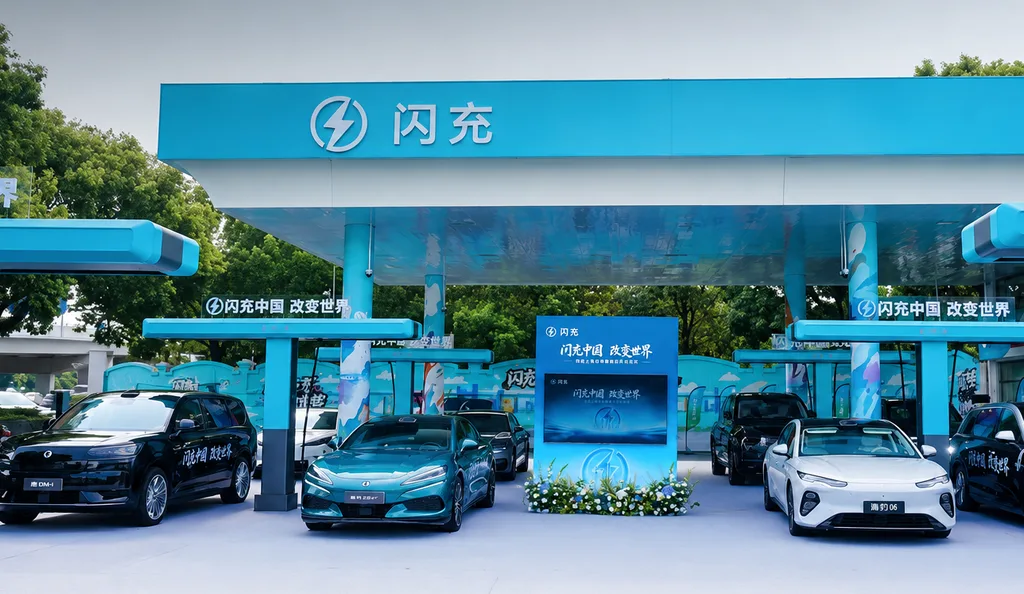
The Brutalist Efficiency of the Flash Charging Siege
As BYD occupies the former cathedrals of fossil fuel, Leapmotor is quietly executing a sales coup that has left the premium old guard gasping.
The transition of power in the Chinese automotive landscape is no longer a polite suggestion; it is a tactical occupation. In Shanghai, the traditional petrol station—once the undisputed domain of the internal combustion engine—is being repurposed into a cathedral of high-voltage commerce. BYD has partnered with Sinopec to transform these legacy hubs into 'Flash Charging' stations, a move that signals the literal dismantling of the old fuel infrastructure in favor of a kilowatt-driven hegemony.
While the Western press remains fixated on the boutique appeal of high-end startups, the real volatility is found in the mid-market insurgency of Leapmotor. In a staggering display of volume, Leapmotor recently outsold XPeng, NIO, and Zeekr combined in a single month. This isn't just a sales spike; it is an indictment of the premium sector’s vulnerability. While NIO and Zeekr have focused on lifestyle ecosystems and high-margin luxury, Leapmotor has weaponized affordability and scale to dominate the domestic balance sheet.
Zeekr, for its part, is not retreating. The Geely-owned subsidiary is pivoting toward a dual-track strategy of international expansion and high-stakes diplomacy. Even before its official market launch, the Zeekr 8X has reportedly been air-shipped to royal families and acquired by diplomatic fleets. It is a play for soft power, attempting to position the brand as the carriage of choice for the global elite, even as it struggles to maintain its volume lead against the Leapmotor juggernaut.
The technological gap is also narrowing at an alarming rate for foreign incumbents. Companies like BYD, Li Auto, and XPeng are now integrating advanced autonomous and software suites across nearly their entire lineups—often at price points that would be considered entry-level in Europe or North America. This software-first siege is making the traditional hardware-led cycles of legacy manufacturers look increasingly archaic in a market that demands instant updates and digital integration.The technological gap is also narrowing at an alarming rate for foreign incumbents. Companies like BYD, Li Auto, and XPeng are now integrating advanced autonomous and software suites across nearly their entire lineups—often at price points that would be considered entry-level in Europe or North America. This software-first siege is making the traditional hardware-led cycles of legacy manufacturers look increasingly archaic in a market that demands instant updates and digital integration.
The sheer audacity of the $34,000 EV sports car segment illustrates this shift. Chinese manufacturers are now producing performance-oriented vehicles at a fraction of the cost of their Western counterparts, utilizing a vertically integrated supply chain that legacy brands simply cannot replicate. This is no longer about government subsidies; it is about an industrial efficiency that allows for rapid prototyping and deployment at a scale the world has never seen.The sheer audacity of the $34,000 EV sports car segment illustrates this shift. Chinese manufacturers are now producing performance-oriented vehicles at a fraction of the cost of their Western counterparts, utilizing a vertically integrated supply chain that legacy brands simply cannot replicate. This is no longer about government subsidies; it is about an industrial efficiency that allows for rapid prototyping and deployment at a scale the world has never seen.
Ultimately, the partnership between BYD and Sinopec serves as the most potent symbol of this new era. By turning petrol stations into charging hubs, the industry is physically rewriting the landscape of the city. The fossil fuel era isn't just ending in China; it's being paved over by flash-charging pads and the relentless software-driven momentum of brands that were barely footnotes a decade ago.Ultimately, the partnership between BYD and Sinopec serves as the most potent symbol of this new era. By turning petrol stations into charging hubs, the industry is physically rewriting the landscape of the city. The fossil fuel era isn't just ending in China; it's being paved over by flash-charging pads and the relentless software-driven momentum of brands that were barely footnotes a decade ago.
Gallery
"Leapmotor recently outsold XPeng, NIO, and Zeekr combined in a single month."
Why it matters
The rapid conversion of Sinopec stations by BYD and the market dominance of Leapmotor signal a shift from 'emerging' tech to total infrastructure dominance. The established premium EV players are now being squeezed by a new wave of high-volume, software-first insurgents.
Sources
- 1.
- 2.China's CRAZY $34000 EV Sports Car - Instagraminstagram.com
- 3.EV Latest News - CarNewsChina.comcarnewschina.com
- 4.
Reported by the Downforce & Divots desk from the sources above.
The clubhouse.
- No replies yet. Be the first.