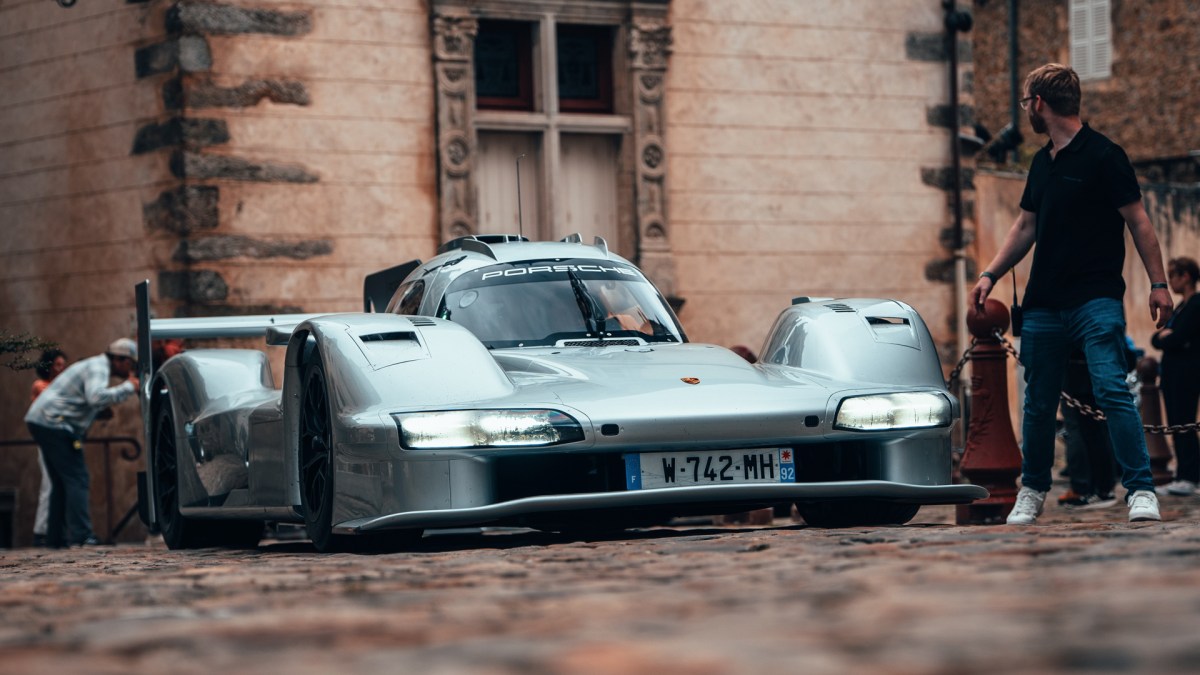
License Plates on a Le Mans Winner: The Brutal Engineering of Porsche's 963 RSP
Porsche has officially confirmed the 963 RSP, an audacious one-off hypercar that brings an LMDh prototype to the street. But taming a ground-effect endurance racer for municipal compliance requires fighting against every instinct its original designers had.
The audacity of bolting a license plate onto a carbon-fiber endurance prototype is an exercise in pure engineering masochism. Yet, recent whispers out of Stuttgart have materialized into a concrete, asphalt-tearing reality: Porsche has officially confirmed the impending arrival of the 963 RSP. Originally debated in dark corners of the internet under the moniker of the "Porsche Mission S Concept," this one-off hypercar is a direct, unfiltered descendant of the Le Mans-winning Porsche 963 LMDh prototype. The fundamental lunacy of adapting a purpose-built LMDh chassis for municipal compliance cannot be overstated. We are talking about taking a floor engineered to generate massive ground-effect downforce on the Mulsanne straight and attempting to clear a suburban speed bump without shattering thousands of dollars of composite weave. There are brutal engineering hurdles at play here. Thermal management architectures that require a constant 200-mph flow of atmospheric air to cool high-voltage hybrid systems will suddenly find themselves idling in Mediterranean gridlock. Furthermore, the crash homologation required to transform a carbon tub designed to glance off tire barriers into a vessel that complies with pedestrian safety mandates is a regulatory nightmare.
However, Porsche is no stranger to the dark arts of prototype homologation; if anything, the 963 RSP resurrects a deeply ingrained, extreme lineage that defined the brand’s most chaotic eras. To understand the genesis of the 963 RSP, one must look back to the late 1980s. Following a frustrating post-1987 dry spell at the Circuit de la Sarthe, the factory needed a lifeline. It came in the form of Porsche customer Jochen Dauer, who identified a glorious, gaping loophole in the newly minted ACO regulations. Dauer took the venerable, world-beating 962 prototype and successfully campaigned to have it re-classified as a road-legal GT1 car. The resulting machine, the Dauer 962 Le Mans, was essentially a thinly veiled endurance racer masquerading as a street car. To meet the regulatory fine print, they created the 962 CR—a dedicated road-going homologation special produced in strictly limited numbers. This wasn't merely a paper exercise to appease French rule-makers; it was a devastatingly effective weapon. The heavily modified chassis, exploiting the GT1 regulations to the absolute limit, returned to the track and outright won the 24 Hours of Le Mans. It remains one of the most audacious regulatory heists in motorsport history.However, Porsche is no stranger to the dark arts of prototype homologation; if anything, the 963 RSP resurrects a deeply ingrained, extreme lineage that defined the brand’s most chaotic eras. To understand the genesis of the 963 RSP, one must look back to the late 1980s. Following a frustrating post-1987 dry spell at the Circuit de la Sarthe, the factory needed a lifeline. It came in the form of Porsche customer Jochen Dauer, who identified a glorious, gaping loophole in the newly minted ACO regulations. Dauer took the venerable, world-beating 962 prototype and successfully campaigned to have it re-classified as a road-legal GT1 car. The resulting machine, the Dauer 962 Le Mans, was essentially a thinly veiled endurance racer masquerading as a street car. To meet the regulatory fine print, they created the 962 CR—a dedicated road-going homologation special produced in strictly limited numbers. This wasn't merely a paper exercise to appease French rule-makers; it was a devastatingly effective weapon. The heavily modified chassis, exploiting the GT1 regulations to the absolute limit, returned to the track and outright won the 24 Hours of Le Mans. It remains one of the most audacious regulatory heists in motorsport history.
The formula proved too intoxicating to abandon, leading directly to the creation of the legendary 911 GT1 Straßenversion in 1996. Much like the current 963 RSP project, Porsche only built this road-going oddity because the rulebook explicitly demanded it. Despite carrying the iconic 911 nomenclature, the GT1 was a completely different animal from the road-going 911s of its era. Beneath its stretched, aggressive carbon-Kevlar skin sat a 3.2-liter twin-turbo flat-six engine positioned entirely ahead of the rear axle. This mid-engine layout was a radical departure, completely alien to the rear-engine purity of traditional 911s. Transforming the GT1 into the Straßenversion for street legality required glaring visual and structural compromises. A side-by-side comparison reveals stark differences between the street version and its white race-car sibling: the road car mandated completely different wheels wrapped in street-legal rubber, the removal of the race car’s extra front lights that were essential for piercing the night at Le Mans, and a drastically altered aerodynamic profile to prevent the chassis from bottoming out on public asphalt.The formula proved too intoxicating to abandon, leading directly to the creation of the legendary 911 GT1 Straßenversion in 1996. Much like the current 963 RSP project, Porsche only built this road-going oddity because the rulebook explicitly demanded it. Despite carrying the iconic 911 nomenclature, the GT1 was a completely different animal from the road-going 911s of its era. Beneath its stretched, aggressive carbon-Kevlar skin sat a 3.2-liter twin-turbo flat-six engine positioned entirely ahead of the rear axle. This mid-engine layout was a radical departure, completely alien to the rear-engine purity of traditional 911s. Transforming the GT1 into the Straßenversion for street legality required glaring visual and structural compromises. A side-by-side comparison reveals stark differences between the street version and its white race-car sibling: the road car mandated completely different wheels wrapped in street-legal rubber, the removal of the race car’s extra front lights that were essential for piercing the night at Le Mans, and a drastically altered aerodynamic profile to prevent the chassis from bottoming out on public asphalt.
Today, the arrival of the 963 RSP signals a violent changing of the guard in the hypercar landscape. We are currently transitioning out of the era defined by the legendary McLaren P1, the Porsche 918 Spyder, and the Ferrari LaFerrari—a holy trinity that fundamentally changed the hypercar world over a decade ago with their integration of hybrid technology. Now, that space is being aggressively contested by a new breed of excess, headlined by the McLaren W1 and the latest quad-turbocharged leviathans from Bugatti. With the 963 RSP, Porsche finally reunites with Ferrari and McLaren at the absolute bleeding edge of the automotive taxonomy. The debate is already raging furiously across enthusiast platforms over semantics: fans and prospective buyers are actively questioning whether this Mission S descendant qualifies merely as a supercar or if it demands the elevated title of a true hypercar. But when you are dealing with a direct descendant of a Le Mans-winning prototype, traditional categories lose all structural integrity.Today, the arrival of the 963 RSP signals a violent changing of the guard in the hypercar landscape. We are currently transitioning out of the era defined by the legendary McLaren P1, the Porsche 918 Spyder, and the Ferrari LaFerrari—a holy trinity that fundamentally changed the hypercar world over a decade ago with their integration of hybrid technology. Now, that space is being aggressively contested by a new breed of excess, headlined by the McLaren W1 and the latest quad-turbocharged leviathans from Bugatti. With the 963 RSP, Porsche finally reunites with Ferrari and McLaren at the absolute bleeding edge of the automotive taxonomy. The debate is already raging furiously across enthusiast platforms over semantics: fans and prospective buyers are actively questioning whether this Mission S descendant qualifies merely as a supercar or if it demands the elevated title of a true hypercar. But when you are dealing with a direct descendant of a Le Mans-winning prototype, traditional categories lose all structural integrity.
The modern reality of forcing a race car onto the street is far more perilous than it was in Jochen Dauer's era, fraught with modern safety protocols and electronic complexities. Look across the current prototype and GT landscape to see the sheer toll of homologation. The Lamborghini SC63 program offers a cautionary tale of how difficult this transition can be. During its development, the SRO homologated version of the car faced major, well-documented flaws. It struggled to balance the raw mechanical grip of a race chassis with the compliance required by regulatory bodies. To legalize a track-focused car into competitiveness and compliance means fighting against every instinct the original designers had when they laid down the carbon fiber. For Lamborghini, the main problem was compounded by a heavy crash early in its development cycle, proving just how violently these highly strung chassis can react when pushed outside their extremely narrow operating windows. Porsche’s engineers face these same brutal physics as they attempt to soften the 963 LMDh's ride without castrating its soul.The modern reality of forcing a race car onto the street is far more perilous than it was in Jochen Dauer's era, fraught with modern safety protocols and electronic complexities. Look across the current prototype and GT landscape to see the sheer toll of homologation. The Lamborghini SC63 program offers a cautionary tale of how difficult this transition can be. During its development, the SRO homologated version of the car faced major, well-documented flaws. It struggled to balance the raw mechanical grip of a race chassis with the compliance required by regulatory bodies. To legalize a track-focused car into competitiveness and compliance means fighting against every instinct the original designers had when they laid down the carbon fiber. For Lamborghini, the main problem was compounded by a heavy crash early in its development cycle, proving just how violently these highly strung chassis can react when pushed outside their extremely narrow operating windows. Porsche’s engineers face these same brutal physics as they attempt to soften the 963 LMDh's ride without castrating its soul.
Historically, the obsession with putting number plates on track monsters has fallen to eccentric third parties and aftermarket engineering firms rather than the original manufacturers. Across the globe, there is a thriving cottage industry of horsepower lunacy. In Australia, outfits have birthed creations like the Showtime Repco Mod-933, a terrifying 1200-horsepower monster based on the Type 996 Porsche platform. Closer to Porsche's European home, spy photographers recently captured footage of a bespoke RML GT hypercar prototype testing under the gray skies of the M11 in the UK—an absolute beast trying desperately to masquerade as a morning commuter. But aftermarket tuning is one thing; factory backing is another entirely. For Porsche to officially sanction the 963 RSP as an in-house, one-off hypercar requires the full, multi-million-euro weight of Weissach's R&D department. They must ensure that the transition from a closed-circuit weapon to a road-legal machine is seamless, guaranteeing that the highly volatile hybrid systems do not self-immolate while waiting in a drive-thru lane.Historically, the obsession with putting number plates on track monsters has fallen to eccentric third parties and aftermarket engineering firms rather than the original manufacturers. Across the globe, there is a thriving cottage industry of horsepower lunacy. In Australia, outfits have birthed creations like the Showtime Repco Mod-933, a terrifying 1200-horsepower monster based on the Type 996 Porsche platform. Closer to Porsche's European home, spy photographers recently captured footage of a bespoke RML GT hypercar prototype testing under the gray skies of the M11 in the UK—an absolute beast trying desperately to masquerade as a morning commuter. But aftermarket tuning is one thing; factory backing is another entirely. For Porsche to officially sanction the 963 RSP as an in-house, one-off hypercar requires the full, multi-million-euro weight of Weissach's R&D department. They must ensure that the transition from a closed-circuit weapon to a road-legal machine is seamless, guaranteeing that the highly volatile hybrid systems do not self-immolate while waiting in a drive-thru lane.
Ultimately, the 963 RSP is the ultimate flex of Stuttgart’s engineering muscle, a vehicle that exists purely to answer a question no sane regulatory body was asking. It represents a total bypassing of the traditional constraints of Balance of Performance (BoP) that keep modern LMDh racers somewhat leashed in competition. Here is a Le Mans-winning chassis, potentially liberated from the mandated racing restrictor plates, yet simultaneously caged by municipal noise ordinances and crash structures. The 963 RSP proves that while the rulebooks of endurance racing may have evolved from the wild west days of 1996, Porsche's desire to violently blur the line between the starting grid and the street remains terrifyingly intact.Ultimately, the 963 RSP is the ultimate flex of Stuttgart’s engineering muscle, a vehicle that exists purely to answer a question no sane regulatory body was asking. It represents a total bypassing of the traditional constraints of Balance of Performance (BoP) that keep modern LMDh racers somewhat leashed in competition. Here is a Le Mans-winning chassis, potentially liberated from the mandated racing restrictor plates, yet simultaneously caged by municipal noise ordinances and crash structures. The 963 RSP proves that while the rulebooks of endurance racing may have evolved from the wild west days of 1996, Porsche's desire to violently blur the line between the starting grid and the street remains terrifyingly intact.
Gallery
"Porsche only built a road-going 911 GT1 because the rulebook explicitly made it mandatory. The 963 RSP proves that desire to blur the line between the grid and the street remains terrifyingly intact."
Why it matters
The 963 RSP marks the first time since the 1996 911 GT1 that Porsche is attempting a direct, factory-backed conversion of a top-tier Le Mans prototype for public roads. It sets a new benchmark in the hypercar arms race against McLaren and Ferrari, testing the absolute limits of crash homologation and thermal management for ground-effect race cars.
Sources
- 1.
- 2.
- 3.
- 4.
- 5.
- 6.
- 7.
- 8.
- 9.
- 10.
Reported by the Downforce & Divots desk from the sources above.
The clubhouse.
- No replies yet. Be the first.