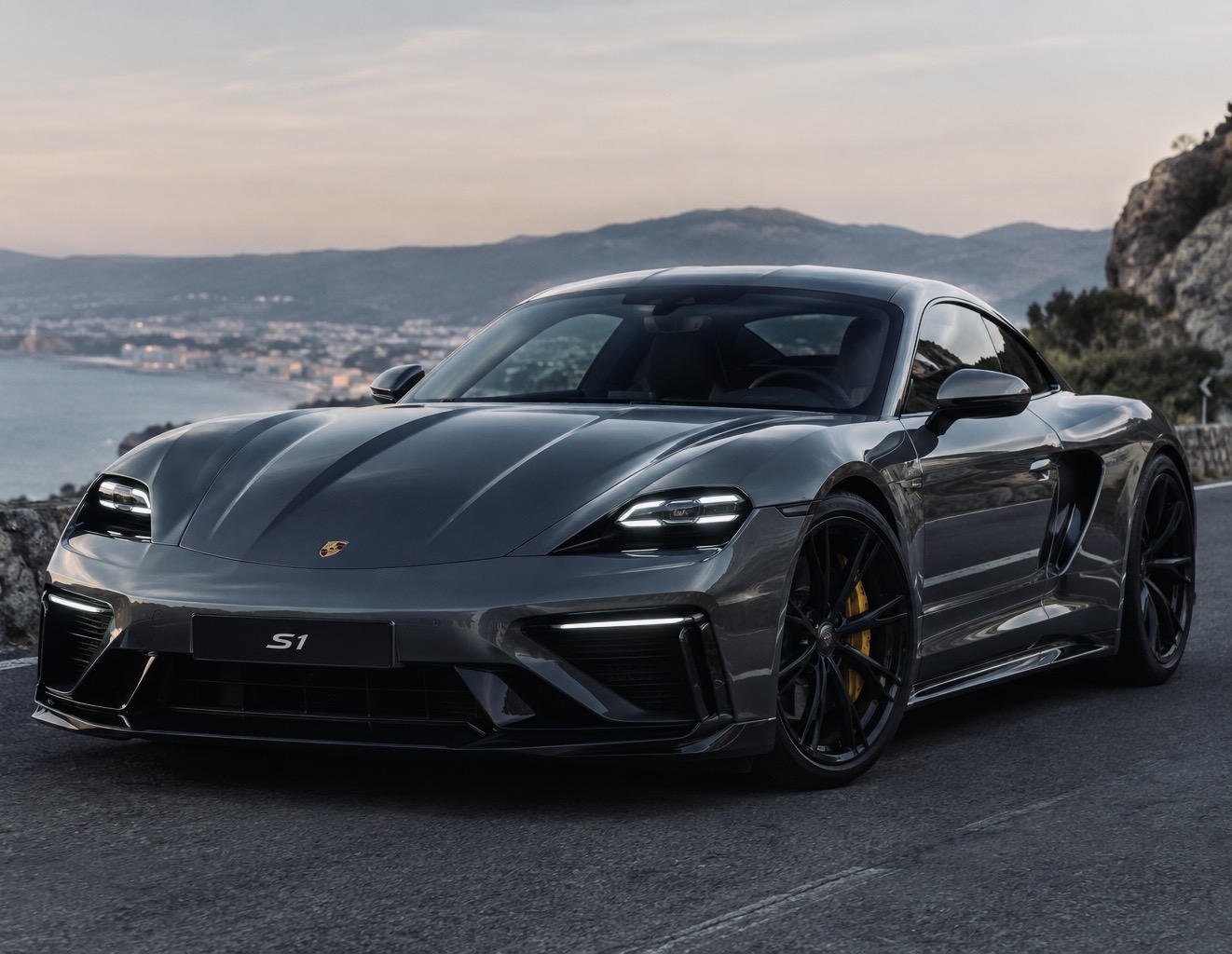
The Geometry of Speed: Why Porsche’s Rumored Flat-Eight Hypercar Changes Everything
Reports out of Weissach suggest Stuttgart is reviving a Piëch-era engine layout to solve the thermal and packaging nightmares of modern hybrid performance, rejecting the pure-EV path of its rivals.
Twenty hours ago, a tremor rattled through the global enthusiast community, originating not from a polished corporate press release, but from the ARC DRIVER network—a self-proclaimed "anti-AI source for automotive news." The provocation was wrapped in an eight-minute and forty-one-second dispatch titled simply: "Is Porsche Really Building a Flat-Eight Hypercar?" Within hours, 28,616 viewers had tuned in to scrutinize the dispatch, dissecting rumors out of Weissach that point to a radical departure from the status quo. The whispers suggest Stuttgart is developing a bespoke flat-eight engine for its next flagship hypercar. It is an architectural configuration that has been functionally absent from the brand’s top-tier motorsport and road efforts since Ferdinand Piëch's prototype era. In a modern automotive landscape defined by towering battery stacks and heavily compromised engine bays, an inherently balanced, ultra-low boxer-eight represents a holy grail of packaging, theoretically solving the thermal and center-of-gravity hurdles that traditional, top-heavy V8s simply cannot overcome in a hybrid framework.Twenty hours ago, a tremor rattled through the global enthusiast community, originating not from a polished corporate press release, but from the ARC DRIVER network—a self-proclaimed "anti-AI source for automotive news." The provocation was wrapped in an eight-minute and forty-one-second dispatch titled simply: "Is Porsche Really Building a Flat-Eight Hypercar?" Within hours, 28,616 viewers had tuned in to scrutinize the dispatch, dissecting rumors out of Weissach that point to a radical departure from the status quo. The whispers suggest Stuttgart is developing a bespoke flat-eight engine for its next flagship hypercar. It is an architectural configuration that has been functionally absent from the brand’s top-tier motorsport and road efforts since Ferdinand Piëch's prototype era. In a modern automotive landscape defined by towering battery stacks and heavily compromised engine bays, an inherently balanced, ultra-low boxer-eight represents a holy grail of packaging, theoretically solving the thermal and center-of-gravity hurdles that traditional, top-heavy V8s simply cannot overcome in a hybrid framework.
To fully understand why Weissach might resurrect such a complex and historically fraught layout, one only has to look at the current state of the hypercar aristocracy. Just two days ago, outside the Duke of London, casual onlookers filmed what they accurately dubbed "hypercar chaos" as a dark grey McLaren P1 and a blue-and-black Bugatti Chiron navigated a weekend drive through the capital's heavily congested streets. These breathtaking machines represent the absolute peak of the last decade's performance philosophy: the McLaren utilizing a fiercely tightly-wound twin-turbo V8 paired with early hybrid tech, and the Bugatti relying on a gargantuan, thermally explosive W16 engine. Both architectures require massive, heavy cooling apparatuses and dictate the entire aerodynamic envelope of the car from the greenhouse down. A flat-eight, by contrast, lies completely parallel to the tarmac. It allows the carbon fiber bodywork to drape significantly lower over the rear axle, cleaning up turbulent airflow to the rear wing and diffuser, and naturally generating the kind of mechanical grip and downforce that hypercar engineers typically have to conjure through weighty active aero systems.To fully understand why Weissach might resurrect such a complex and historically fraught layout, one only has to look at the current state of the hypercar aristocracy. Just two days ago, outside the Duke of London, casual onlookers filmed what they accurately dubbed "hypercar chaos" as a dark grey McLaren P1 and a blue-and-black Bugatti Chiron navigated a weekend drive through the capital's heavily congested streets. These breathtaking machines represent the absolute peak of the last decade's performance philosophy: the McLaren utilizing a fiercely tightly-wound twin-turbo V8 paired with early hybrid tech, and the Bugatti relying on a gargantuan, thermally explosive W16 engine. Both architectures require massive, heavy cooling apparatuses and dictate the entire aerodynamic envelope of the car from the greenhouse down. A flat-eight, by contrast, lies completely parallel to the tarmac. It allows the carbon fiber bodywork to drape significantly lower over the rear axle, cleaning up turbulent airflow to the rear wing and diffuser, and naturally generating the kind of mechanical grip and downforce that hypercar engineers typically have to conjure through weighty active aero systems.
Porsche is currently standing at an existential crossroads, heavily debating what exactly constitutes the soul of their sports cars moving into the latter half of the decade. This identity crisis is actively playing out across the brand’s lower ranks, demanding a philosophical anchor at the top. Recent internal strategy discussions—characterized by industry analysts in a recent eight-minute and fifty-six-second breakdown as "Porsche's Plan For Survival"—highlight a marque wrestling with mechanical purity versus digital progress. We see this granularly in the agonizing internal calculus over the upcoming 2027 model year 911 lineup, specifically the fierce debate surrounding the 911 Carrera S Manual versus the 911 Carrera T Manual. If the core customer base is still fiercely demanding three pedals, analog feedback, and tactile engagement in a base Carrera, the flagship hypercar cannot simply be a muted, electrified spaceship. It must be a visceral, mechanical event. A flat-eight hybrid perfectly answers that demand, bridging the raw, mechanical vibration of the air-cooled era with the instantaneous torque-fill of modern electrification.Porsche is currently standing at an existential crossroads, heavily debating what exactly constitutes the soul of their sports cars moving into the latter half of the decade. This identity crisis is actively playing out across the brand’s lower ranks, demanding a philosophical anchor at the top. Recent internal strategy discussions—characterized by industry analysts in a recent eight-minute and fifty-six-second breakdown as "Porsche's Plan For Survival"—highlight a marque wrestling with mechanical purity versus digital progress. We see this granularly in the agonizing internal calculus over the upcoming 2027 model year 911 lineup, specifically the fierce debate surrounding the 911 Carrera S Manual versus the 911 Carrera T Manual. If the core customer base is still fiercely demanding three pedals, analog feedback, and tactile engagement in a base Carrera, the flagship hypercar cannot simply be a muted, electrified spaceship. It must be a visceral, mechanical event. A flat-eight hybrid perfectly answers that demand, bridging the raw, mechanical vibration of the air-cooled era with the instantaneous torque-fill of modern electrification.
Widen the lens, and the sheer audacity of Porsche’s rumored flat-eight becomes even more stark when contrasted with its immediate European rivals. Take Alpine, for example. The French marque has officially confirmed plans for what they are currently dubbing a "Future Alpine Supercar," which is entirely expected to be an EV. At next week's Paris motor show, Alpine is scheduled to pull the cover off the highly anticipated "Projet Spécial 1." Rather than investing hundreds of millions into bespoke internal combustion, Alpine is pushing all its chips into battery technology, developing the new vehicle at a brand-new, dedicated EV research and development base aptly named Hypertech Alpine. This is the prevailing industry wind: drop the internal combustion engine entirely to avoid the packaging nightmares of hybrid systems, and let the software manage the torque vectoring. For Porsche to survey that frictionless, battery-powered landscape and decide instead to cast a highly complex, wide, and flat eight-cylinder engine block is a statement of immense, almost stubborn engineering pride.Widen the lens, and the sheer audacity of Porsche’s rumored flat-eight becomes even more stark when contrasted with its immediate European rivals. Take Alpine, for example. The French marque has officially confirmed plans for what they are currently dubbing a "Future Alpine Supercar," which is entirely expected to be an EV. At next week's Paris motor show, Alpine is scheduled to pull the cover off the highly anticipated "Projet Spécial 1." Rather than investing hundreds of millions into bespoke internal combustion, Alpine is pushing all its chips into battery technology, developing the new vehicle at a brand-new, dedicated EV research and development base aptly named Hypertech Alpine. This is the prevailing industry wind: drop the internal combustion engine entirely to avoid the packaging nightmares of hybrid systems, and let the software manage the torque vectoring. For Porsche to survey that frictionless, battery-powered landscape and decide instead to cast a highly complex, wide, and flat eight-cylinder engine block is a statement of immense, almost stubborn engineering pride.
The packaging benefits of a boxer engine in a hybrid application cannot be overstated, particularly when compared to the absurd lengths owners and manufacturers must go to in order to manage the airflow and downforce on front- or mid-engine V-block cars. Consider the current aerodynamic arms race in the track-toy market; hardcore enthusiasts are spending nearly fifteen minutes—fourteen minutes and thirty-six seconds, to be exact, according to recent technical tutorials—just documenting the agonizing removal of the massive carbon fiber aero package from the Corvette ZR1X just to make it functional for standard street driving. High-slung V8s inherently raise a car's center of gravity, necessitating aggressive, towering wings and jutting splitters to keep the car planted at speed. A flat-eight sits virtually on the floor of the chassis. By dramatically lowering the engine mass, engineers inherently lower the car's center of gravity, naturally enhancing the vehicle's mechanical grip without relying entirely on bolt-on carbon fiber appendages that render the car unusable for a casual weekend drive through a city center.The packaging benefits of a boxer engine in a hybrid application cannot be overstated, particularly when compared to the absurd lengths owners and manufacturers must go to in order to manage the airflow and downforce on front- or mid-engine V-block cars. Consider the current aerodynamic arms race in the track-toy market; hardcore enthusiasts are spending nearly fifteen minutes—fourteen minutes and thirty-six seconds, to be exact, according to recent technical tutorials—just documenting the agonizing removal of the massive carbon fiber aero package from the Corvette ZR1X just to make it functional for standard street driving. High-slung V8s inherently raise a car's center of gravity, necessitating aggressive, towering wings and jutting splitters to keep the car planted at speed. A flat-eight sits virtually on the floor of the chassis. By dramatically lowering the engine mass, engineers inherently lower the car's center of gravity, naturally enhancing the vehicle's mechanical grip without relying entirely on bolt-on carbon fiber appendages that render the car unusable for a casual weekend drive through a city center.
Ultimately, the appeal of a flat-eight hypercar comes down to street-level drivability and emotional resonance, metrics that remain absolutely paramount for the Porsche faithful. The enthusiast community is constantly re-evaluating what makes a car truly legendary on the tarmac, entirely separate from spec-sheet racing. Just hours ago, the Porsche Pulse network released a comprehensive, twelve-minute and forty-seven-second review debating "The 5 Best Street 911s You'll Actually Want to Drive," drawing hundreds of purists into the conversation almost immediately. The consensus in these forums is always the same: usability, acoustics, and a low center of gravity triumph over peak horsepower numbers achieved through forced induction and compromised, top-heavy hybrid systems. A flat-eight hypercar takes the fundamental, celebrated geometry of the beloved 911 and extrapolates it to its most extreme, exotic conclusion. It promises the intoxicating wail of a naturally aspirated boxer engine paired with the modern thrust of a hybrid front axle, creating an all-wheel-drive monster that still feels fundamentally and undeniably like a Porsche.Ultimately, the appeal of a flat-eight hypercar comes down to street-level drivability and emotional resonance, metrics that remain absolutely paramount for the Porsche faithful. The enthusiast community is constantly re-evaluating what makes a car truly legendary on the tarmac, entirely separate from spec-sheet racing. Just hours ago, the Porsche Pulse network released a comprehensive, twelve-minute and forty-seven-second review debating "The 5 Best Street 911s You'll Actually Want to Drive," drawing hundreds of purists into the conversation almost immediately. The consensus in these forums is always the same: usability, acoustics, and a low center of gravity triumph over peak horsepower numbers achieved through forced induction and compromised, top-heavy hybrid systems. A flat-eight hypercar takes the fundamental, celebrated geometry of the beloved 911 and extrapolates it to its most extreme, exotic conclusion. It promises the intoxicating wail of a naturally aspirated boxer engine paired with the modern thrust of a hybrid front axle, creating an all-wheel-drive monster that still feels fundamentally and undeniably like a Porsche.
If the reports originating from Weissach hold true, this flat-eight architecture is much more than just a nostalgic nod to Ferdinand Piëch’s historical racing prototypes; it is a definitive line drawn in the sand. As Alpine prepares to unveil its Hypertech EV future in Paris, and as Bugatti transitions away from the monolithic W16, Porsche is refusing to concede the internal combustion engine to the history books. They are instead entirely reimagining it in its most balanced, thermodynamically efficient, and geometrically perfect form. A bespoke flat-eight hybrid would not just be the most mechanically fascinating hypercar of the decade; it would be a roaring testament to the belief that the future of ultimate performance doesn't have to be a silent battery sled. It can scream, it can rev, and it can lay perfectly flat on the pavement.If the reports originating from Weissach hold true, this flat-eight architecture is much more than just a nostalgic nod to Ferdinand Piëch’s historical racing prototypes; it is a definitive line drawn in the sand. As Alpine prepares to unveil its Hypertech EV future in Paris, and as Bugatti transitions away from the monolithic W16, Porsche is refusing to concede the internal combustion engine to the history books. They are instead entirely reimagining it in its most balanced, thermodynamically efficient, and geometrically perfect form. A bespoke flat-eight hybrid would not just be the most mechanically fascinating hypercar of the decade; it would be a roaring testament to the belief that the future of ultimate performance doesn't have to be a silent battery sled. It can scream, it can rev, and it can lay perfectly flat on the pavement.
Gallery
"For Porsche to survey a frictionless, battery-powered landscape and decide to cast a highly complex, flat eight-cylinder engine block is a statement of immense, almost stubborn engineering pride."
Why it matters
As rivals like Alpine pivot completely to EV architectures, Porsche's rumored bespoke flat-eight engine represents a massive engineering gamble. It aims to preserve the visceral soul of internal combustion by solving the packaging and thermal challenges of modern hybrid systems through ultra-low geometry.
Sources
- 1.
- 2.
- 3.
Reported by the Downforce & Divots desk from the sources above.
The clubhouse.
- No replies yet. Be the first.