The Woking Fairway: Why Zak Brown’s Paddock is Trading Apexes for Albatrosses
As McLaren expands its reach from the Quail to the clubhouse, Formula 1’s grid is increasingly finding its second home on the links.
There is a peculiar rhythm to the modern Formula 1 paddock, one that increasingly involves the clatter of cleats rather than the whine of pneumatic guns. While the Dutch Grand Prix serves as a crucible for the next generation, the sport’s established stars are pivoting toward a different kind of precision. At the center of this shift is the Woking-based McLaren outfit, led by Zak Brown, a man as comfortable navigating a boardroom as he is a bunker.
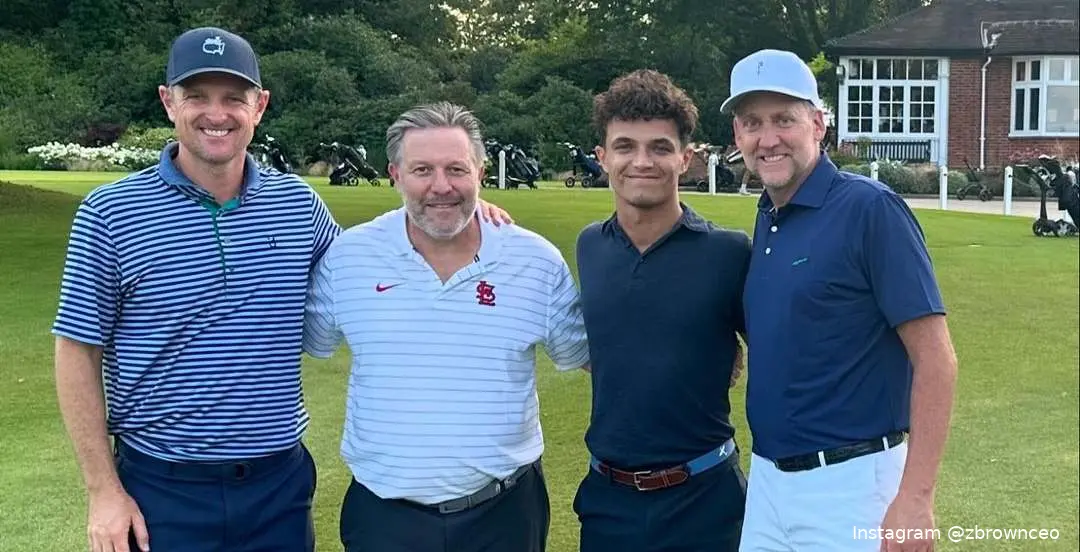
The connection between McLaren and the golf world has moved beyond mere hobbyism into a strategic lifestyle expansion. Brown and his star driver, Lando Norris, have become the poster boys for this crossover, frequently spotted sharing tee times during the grueling triple-header stretches of the season. It is a partnership that mirrors the team’s recent technical resurgence: disciplined, data-driven, and focused on the marginal gains found in a calm temperament.The connection between McLaren and the golf world has moved beyond mere hobbyism into a strategic lifestyle expansion. Brown and his star driver, Lando Norris, have become the poster boys for this crossover, frequently spotted sharing tee times during the grueling triple-header stretches of the season. It is a partnership that mirrors the team’s recent technical resurgence: disciplined, data-driven, and focused on the marginal gains found in a calm temperament.
This affinity for the fairway isn't limited to the Papaya squad. Paddock insiders note that a growing cohort of drivers, including Pierre Gasly, have caught what is colloquially known as the 'golf bug.' In a sport where heart rates frequently spike to 180 beats per minute, the calculated silence of a par-five offers a rare psychological reset. It is a trend that explains why brands like Vessel Golf are now finding as much real estate in the F1 paddock as traditional lubricants and watchmakers.
The technical parallels are hard to ignore for those who operate at the limit. Just as Viktor Hovland recently stunned the PGA Tour by successfully playing a 'driver off the deck'—a high-risk maneuver requiring millimetric accuracy—F1 drivers are drawn to the unforgiving physics of the golf swing. Both disciplines punish the slightest deviation in geometry, whether that is a front-wing angle at Zandvoort or the face angle of a Krank Golf driver.
However, the crossover isn't always harmonious. While some find peace on the green, others remain embroiled in the high-stakes friction of the circuit. Lewis Hamilton’s recent strategic frustrations at the Dutch Grand Prix, where he found himself hamstrung by internal Ferrari tactics, serve as a reminder that the paddock remains a shark tank. For Hamilton, the serenity of a fairway might seem a long way off when stuck behind a teammate in the North Sea dunes.However, the crossover isn't always harmonious. While some find peace on the green, others remain embroiled in the high-stakes friction of the circuit. Lewis Hamilton’s recent strategic frustrations at the Dutch Grand Prix, where he found himself hamstrung by internal Ferrari tactics, serve as a reminder that the paddock remains a shark tank. For Hamilton, the serenity of a fairway might seem a long way off when stuck behind a teammate in the North Sea dunes.
History, too, offers a cautionary tale for those playing the supporting role. The recent reflection on Mark Webber’s career—noted as the only driver to see a teammate clinch four world titles without ever cracking the top two himself—highlights the brutal hierarchy of the sport. In golf, you are alone with the course; in F1, you are often at the mercy of the garage next door.History, too, offers a cautionary tale for those playing the supporting role. The recent reflection on Mark Webber’s career—noted as the only driver to see a teammate clinch four world titles without ever cracking the top two himself—highlights the brutal hierarchy of the sport. In golf, you are alone with the course; in F1, you are often at the mercy of the garage next door.
As we move deeper into the 2026 season, the 'Woking Cartel' of McLaren and its luxury partners suggests that the lifestyle gap between the two sports is closing. Whether it is Norris fine-tuning his putting stroke or the team debuting the W1 hypercar at Monterey, the message is clear: the modern driver is no longer just an athlete in a cockpit, but a curator of high-performance leisure.As we move deeper into the 2026 season, the 'Woking Cartel' of McLaren and its luxury partners suggests that the lifestyle gap between the two sports is closing. Whether it is Norris fine-tuning his putting stroke or the team debuting the W1 hypercar at Monterey, the message is clear: the modern driver is no longer just an athlete in a cockpit, but a curator of high-performance leisure.
Ultimately, the fascination with golf among the 200-mph elite comes down to control. In a world of variable downforce and unpredictable strategy calls, the golf ball is the only thing on the weekend that does exactly what you tell it to—provided you have the hands to handle it.Ultimately, the fascination with golf among the 200-mph elite comes down to control. In a world of variable downforce and unpredictable strategy calls, the golf ball is the only thing on the weekend that does exactly what you tell it to—provided you have the hands to handle it.
"Lando Norris and Zak Brown are known to share tee times. More than a handful of F1 drivers have caught the golf bug."
Why it matters
The intersection of F1 and golf represents a multi-million dollar lifestyle shift where luxury carry brands and hypercar manufacturers are targeting a shared high-net-worth audience. It marks a transition from F1 drivers as pure racers to holistic lifestyle icons.
Sources
- 1.Why F1 drivers love golffacebook.com
- 2.
- 3.
- 4.
Reported by the Downforce & Divots desk from the sources above.
The clubhouse.
- No replies yet. Be the first.