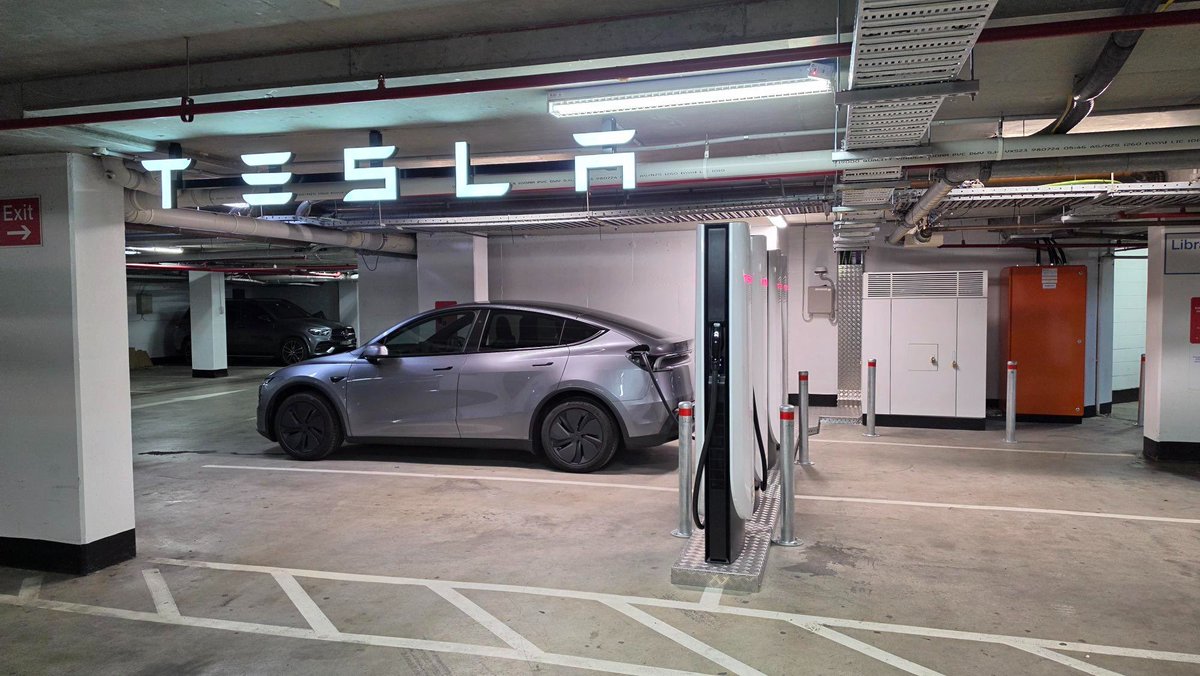
The Trojan Horse on the Grid: How Tesla Weaponized the Supercharger
Tesla isn't merely opening its walled-garden charging network to rivals anymore. By selling its proprietary hardware directly to competitors like EVgo, the automaker is quietly transforming into the wholesale backbone of the American highway.
In a quiet corner of Chicago, a subtle but tectonic shift in the automotive landscape is unfolding. EVgo, one of the most prominent public charging networks in North America, has flipped the switch on a new charging plaza. But the dispensers delivering the electrons aren't EVgo's usual proprietary fare; they are Tesla Superchargers, sold directly to the rival network. As reported by Kevin Williams at InsideEVs, this move to power one of its biggest charging rivals signals a profound pivot. Tesla is no longer merely cracking open its walled-garden charging network to third-party vehicles via adapters; it has begun selling its fast-charging hardware as a white-label utility. The Texas automaker is effectively transforming from a retail charging operator into the wholesale equipment backbone of American electric vehicle infrastructure.In a quiet corner of Chicago, a subtle but tectonic shift in the automotive landscape is unfolding. EVgo, one of the most prominent public charging networks in North America, has flipped the switch on a new charging plaza. But the dispensers delivering the electrons aren't EVgo's usual proprietary fare; they are Tesla Superchargers, sold directly to the rival network. As reported by Kevin Williams at InsideEVs, this move to power one of its biggest charging rivals signals a profound pivot. Tesla is no longer merely cracking open its walled-garden charging network to third-party vehicles via adapters; it has begun selling its fast-charging hardware as a white-label utility. The Texas automaker is effectively transforming from a retail charging operator into the wholesale equipment backbone of American electric vehicle infrastructure.
To understand why EVgo would cede its hardware identity to its most formidable competitor, you have to look at the stubborn psychology of the modern car buyer. Range anxiety remains the defining friction point of the EV transition. According to Department of Transportation data cited by Cars.com, the average American driver covers a mere 29 miles a day. Yet buyers demand a massive buffer. While modern electric platforms routinely offer 300, 400, and even 500 miles of range, the fear of being stranded persists. That fear is not unfounded; as Cars.com notes, real-world range can fluctuate wildly based on outside temperature, weather conditions, passenger load, and even the vehicle's specific trim level. Consumers know the hardware is vulnerable to the elements, and in the volatile business of public charging, Tesla's equipment has earned a reputation for bulletproof reliability.To understand why EVgo would cede its hardware identity to its most formidable competitor, you have to look at the stubborn psychology of the modern car buyer. Range anxiety remains the defining friction point of the EV transition. According to Department of Transportation data cited by Cars.com, the average American driver covers a mere 29 miles a day. Yet buyers demand a massive buffer. While modern electric platforms routinely offer 300, 400, and even 500 miles of range, the fear of being stranded persists. That fear is not unfounded; as Cars.com notes, real-world range can fluctuate wildly based on outside temperature, weather conditions, passenger load, and even the vehicle's specific trim level. Consumers know the hardware is vulnerable to the elements, and in the volatile business of public charging, Tesla's equipment has earned a reputation for bulletproof reliability.
For years, Tesla's moat was built on a vertically integrated ecosystem. Industry analysts broadly concede that the automaker's AI infrastructure, self-driving autonomy, software integration, and powertrain efficiency are considered best in class. But as the sheer volume of electric vehicles on the road expands, the battleground has shifted from the garage to the grid. By supplying EVgo with its proprietary dispensers, Tesla is weaponizing its manufacturing efficiency. It is a calculated move to capture revenue from every electron pumped into an EV, regardless of the badge on the hood. If you cannot sell every consumer a pricier battery-electric pickup, you can at least ensure that when they plug in a competitor's truck, the profit margin still flows back to Austin.For years, Tesla's moat was built on a vertically integrated ecosystem. Industry analysts broadly concede that the automaker's AI infrastructure, self-driving autonomy, software integration, and powertrain efficiency are considered best in class. But as the sheer volume of electric vehicles on the road expands, the battleground has shifted from the garage to the grid. By supplying EVgo with its proprietary dispensers, Tesla is weaponizing its manufacturing efficiency. It is a calculated move to capture revenue from every electron pumped into an EV, regardless of the badge on the hood. If you cannot sell every consumer a pricier battery-electric pickup, you can at least ensure that when they plug in a competitor's truck, the profit margin still flows back to Austin.
The Chicago installation serves as a brutal proving ground for this new B2B strategy. The Midwest's punishing winters are notorious for halving battery efficiency and freezing inferior charging cables. If Tesla's hardware can maintain its legendary uptime under the banner of EVgo in an Illinois January, it cements the equipment's status as the industry standard. It is a stark contrast to the boutique, fragmented nature of the broader EV aftermarket. While startups like Hoffman Badger are pitching wild concepts at the SEMA Show—aiming to turn standard Teslas into custom 11-seat minibuses or utility pickups, according to InsideEVs—Tesla itself is playing a much longer, infrastructural game. They are not interested in aftermarket novelty; they are interested in structural monopoly.The Chicago installation serves as a brutal proving ground for this new B2B strategy. The Midwest's punishing winters are notorious for halving battery efficiency and freezing inferior charging cables. If Tesla's hardware can maintain its legendary uptime under the banner of EVgo in an Illinois January, it cements the equipment's status as the industry standard. It is a stark contrast to the boutique, fragmented nature of the broader EV aftermarket. While startups like Hoffman Badger are pitching wild concepts at the SEMA Show—aiming to turn standard Teslas into custom 11-seat minibuses or utility pickups, according to InsideEVs—Tesla itself is playing a much longer, infrastructural game. They are not interested in aftermarket novelty; they are interested in structural monopoly.
This strategy mirrors the playbook of modern tech giants more than traditional automakers. The automotive market is increasingly desperate for hyper-efficient solutions to fluctuating energy costs, often resulting in compromised or bizarre engineering. You can see the extremes of this desperation in the classifieds and reviews: recently, a 261-MPG Volkswagen XL1—a relic of extreme internal-combustion engineering—was listed for sale at a staggering $140,000 just to combat gas prices, according to InsideEVs. Meanwhile, legacy attempts at premium electrification often stumble; the new Karma Gyesera, despite a fresh face, remains compromised by its decade-old Fisker Karma underpinnings. The future does not belong to six-figure hypermiling novelties or recycled legacy platforms. It belongs to the company that controls the standardized, high-speed flow of electricity to the masses.This strategy mirrors the playbook of modern tech giants more than traditional automakers. The automotive market is increasingly desperate for hyper-efficient solutions to fluctuating energy costs, often resulting in compromised or bizarre engineering. You can see the extremes of this desperation in the classifieds and reviews: recently, a 261-MPG Volkswagen XL1—a relic of extreme internal-combustion engineering—was listed for sale at a staggering $140,000 just to combat gas prices, according to InsideEVs. Meanwhile, legacy attempts at premium electrification often stumble; the new Karma Gyesera, despite a fresh face, remains compromised by its decade-old Fisker Karma underpinnings. The future does not belong to six-figure hypermiling novelties or recycled legacy platforms. It belongs to the company that controls the standardized, high-speed flow of electricity to the masses.
The timing of the EVgo hardware deal is hardly accidental. The global automotive grid is bracing for a wave of low-cost, highly efficient Chinese electric vehicles. As these foreign automakers establish beachheads in markets like Mexico, domestic manufacturers are scrambling to fortify their positions. Tesla's decision to arm its rivals with Supercharger hardware acts as a brilliant defensive hedge. By making its technology the literal plug-and-play standard for the North American charging landscape, Tesla embeds itself so deeply into the infrastructure that it becomes indispensable. EVgo may operate the stations, but the underlying heartbeat of the network—the cables, the cabinets, the software handshakes—belongs to Tesla.The timing of the EVgo hardware deal is hardly accidental. The global automotive grid is bracing for a wave of low-cost, highly efficient Chinese electric vehicles. As these foreign automakers establish beachheads in markets like Mexico, domestic manufacturers are scrambling to fortify their positions. Tesla's decision to arm its rivals with Supercharger hardware acts as a brilliant defensive hedge. By making its technology the literal plug-and-play standard for the North American charging landscape, Tesla embeds itself so deeply into the infrastructure that it becomes indispensable. EVgo may operate the stations, but the underlying heartbeat of the network—the cables, the cabinets, the software handshakes—belongs to Tesla.
Ultimately, the Chicago EVgo station is a monument to the death of the proprietary charging wars. The era of fractured networks, broken screens, and incompatible plugs is being aggressively consolidated. By selling its own hardware to its fiercest competitors, Tesla has admitted that the real victory isn't having the most exclusive charging network; it's having the only charging network that matters. When a driver pulls into the pit lane of the electrified highway, the logo on the charging stall might read EVgo, but the electrons are flowing through Tesla's veins. It is a masterclass in infrastructural dominance, proving that in the race to electrify the world, the winner won't just build the best cars—they will build the roads themselves.Ultimately, the Chicago EVgo station is a monument to the death of the proprietary charging wars. The era of fractured networks, broken screens, and incompatible plugs is being aggressively consolidated. By selling its own hardware to its fiercest competitors, Tesla has admitted that the real victory isn't having the most exclusive charging network; it's having the only charging network that matters. When a driver pulls into the pit lane of the electrified highway, the logo on the charging stall might read EVgo, but the electrons are flowing through Tesla's veins. It is a masterclass in infrastructural dominance, proving that in the race to electrify the world, the winner won't just build the best cars—they will build the roads themselves.
Gallery
"Tesla has admitted that the real victory isn't having the most exclusive charging network; it's having the only charging network that matters."
Why it matters
This marks a critical shift from retail to wholesale in the EV charging space. By supplying competitors with its hardware, Tesla cements its technology as the infrastructural standard, capturing revenue regardless of which automaker a consumer chooses.
Sources
- 1.
- 2.
- 3.
Reported by the Downforce & Divots desk from the sources above.
The clubhouse.
- No replies yet. Be the first.