The Simulation Trap: Are Modern Launch Monitors Actually Tested Against Reality?
As high-end optical units promise Tour-level precision in your garage, the golf tech industry faces an awkward question about the gap between algorithms and real-world ball flight.
For the better part of a decade, consumer launch monitors have operated under an unspoken social contract: if you spend several thousand dollars on a piece of photometric or Doppler hardware, the numbers it spits onto your screen represent an immutable truth. From the ubiquitous Foresight family to consumer units like the Launch Pro, players have willingly restructured their swings around digital readouts of horizontal launch, ball speed, and spin axis, assuming that the machine’s internal physics engine mirrors the open sky.For the better part of a decade, consumer launch monitors have operated under an unspoken social contract: if you spend several thousand dollars on a piece of photometric or Doppler hardware, the numbers it spits onto your screen represent an immutable truth. From the ubiquitous Foresight family to consumer units like the Launch Pro, players have willingly restructured their swings around digital readouts of horizontal launch, ball speed, and spin axis, assuming that the machine’s internal physics engine mirrors the open sky.
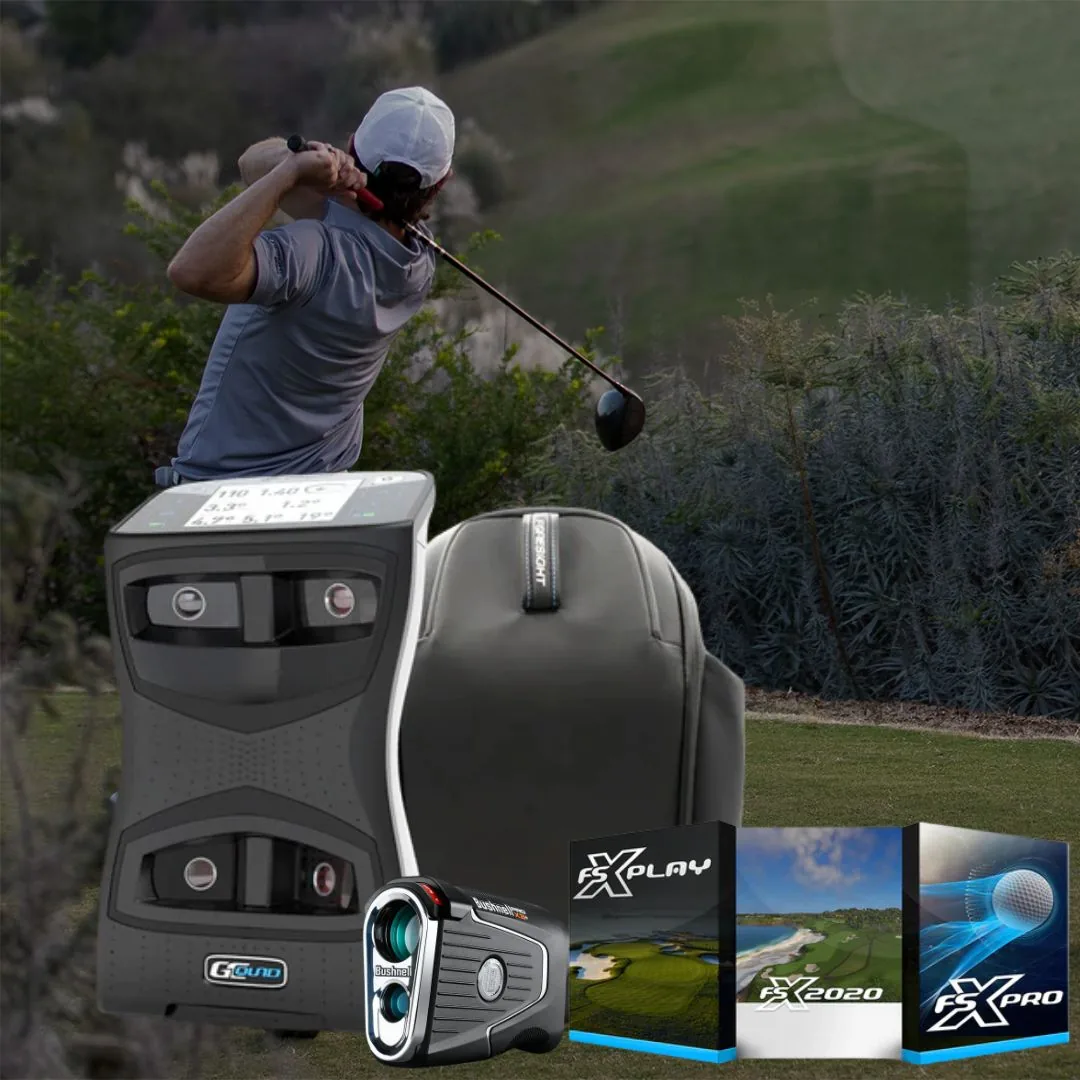
Yet as MyGolfSpy’s Sean Fairholm highlighted in a candid technical mailbag, the gulf between measured data and simulated reality remains one of the industry's most delicate subjects. While units like the Foresight GC-line and Launch Pro capture immediate launch parameters at impact with ruthless optical fidelity, the trajectory you see on a simulator screen is ultimately an algorithmic prediction. When you move from a controlled indoor enclosure to an open range or a tournament tee box, atmospheric friction, structural ball variance, and environmental drift quickly test those pristine digital calculations.Yet as MyGolfSpy’s Sean Fairholm highlighted in a candid technical mailbag, the gulf between measured data and simulated reality remains one of the industry's most delicate subjects. While units like the Foresight GC-line and Launch Pro capture immediate launch parameters at impact with ruthless optical fidelity, the trajectory you see on a simulator screen is ultimately an algorithmic prediction. When you move from a controlled indoor enclosure to an open range or a tournament tee box, atmospheric friction, structural ball variance, and environmental drift quickly test those pristine digital calculations.
The core tension lies in how different systems observe and project a shot. High-end camera-based units track the ball across mere inches immediately following contact, relying on mathematical modeling to sketch out where a 7-iron or driver will land 160 or 280 yards downrange. Meanwhile, radar-based units struggle indoors without sufficient ball flight, leading golfers into endless comparison debates over whether one monitor reads ball speed slower than another or misjudges spin decay in heavy crosswinds.The core tension lies in how different systems observe and project a shot. High-end camera-based units track the ball across mere inches immediately following contact, relying on mathematical modeling to sketch out where a 7-iron or driver will land 160 or 280 yards downrange. Meanwhile, radar-based units struggle indoors without sufficient ball flight, leading golfers into endless comparison debates over whether one monitor reads ball speed slower than another or misjudges spin decay in heavy crosswinds.
Academic researchers and equipment testers have increasingly turned their focus toward these physical discrepancies, examining how subtle structural differences in commercial golf balls create unexpected variances between algorithmic projections and true flight. A multilayer urethane tour ball responds entirely differently through aerodynamic drag than a surlyn distance ball, yet consumer simulators often calculate descent angle and roll-out using standardized aerodynamic baselines that smooth over microscopic irregularities.Academic researchers and equipment testers have increasingly turned their focus toward these physical discrepancies, examining how subtle structural differences in commercial golf balls create unexpected variances between algorithmic projections and true flight. A multilayer urethane tour ball responds entirely differently through aerodynamic drag than a surlyn distance ball, yet consumer simulators often calculate descent angle and roll-out using standardized aerodynamic baselines that smooth over microscopic irregularities.
The result is a subtle recalibration of how serious players view indoor fitting numbers. The high-speed camera remains an unmatched tool for clubhead delivery and initial launch dynamics, but treating calculated carry yardages as gospel without outdoor validation is a fool's errand. As technology shrinks the cost of Tour-caliber tracking, the golfer's greatest challenge is no longer accessing the data—it is recognizing where pure measurement ends and digital estimation begins.The result is a subtle recalibration of how serious players view indoor fitting numbers. The high-speed camera remains an unmatched tool for clubhead delivery and initial launch dynamics, but treating calculated carry yardages as gospel without outdoor validation is a fool's errand. As technology shrinks the cost of Tour-caliber tracking, the golfer's greatest challenge is no longer accessing the data—it is recognizing where pure measurement ends and digital estimation begins.
Gallery
"While camera units capture immediate launch parameters with ruthless fidelity, the trajectory on your screen is ultimately an algorithmic prediction."
Why it matters
As more golfers invest in home simulator setups, understanding the boundary between measured impact data and modeled ball flight is essential for accurate club fitting and swing progression.
Sources
- 1.
- 2.
- 3.
- 4.
Reported by the Downforce & Divots desk from the sources above.
The clubhouse.
- No replies yet. Be the first.