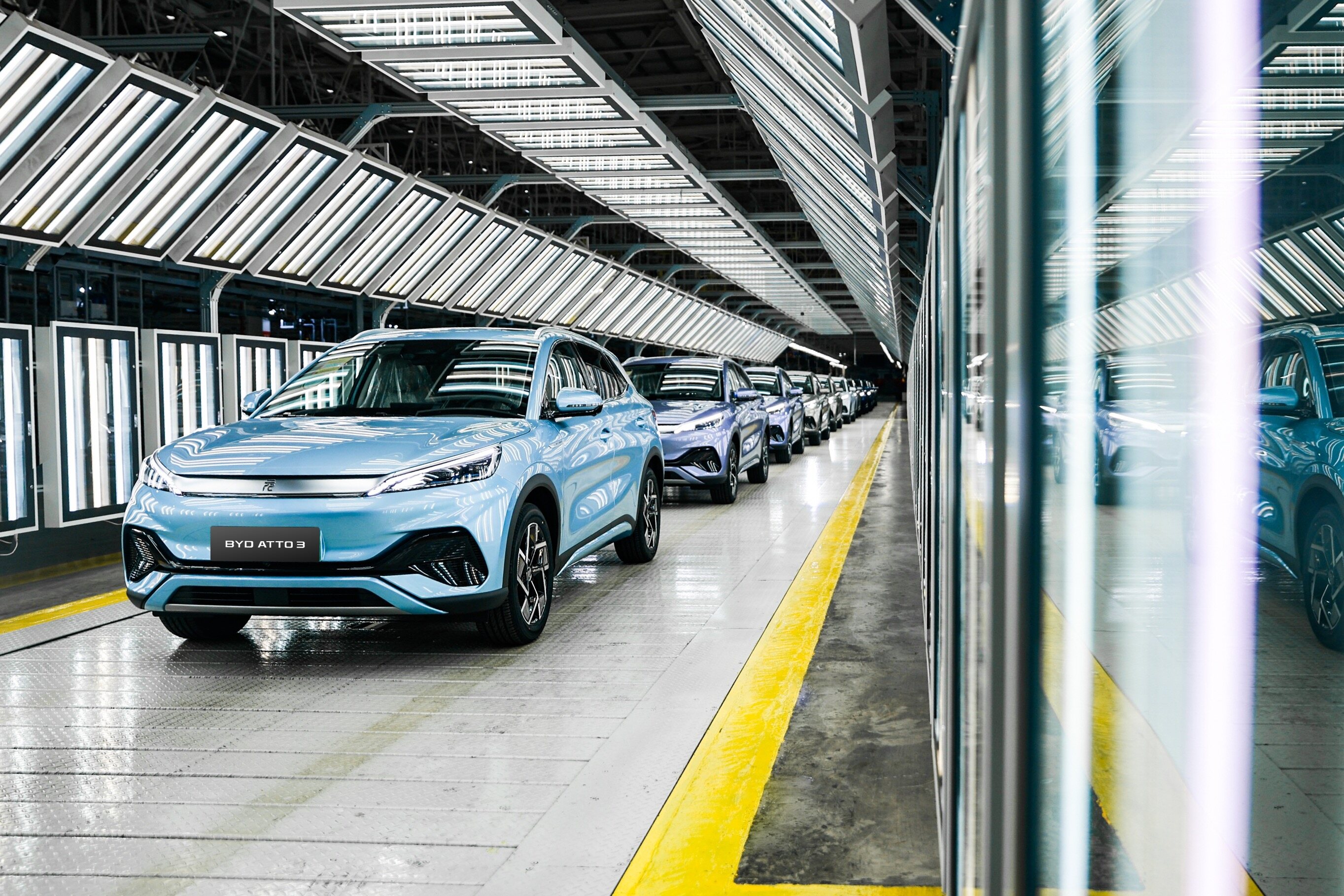
The Shenzhen Slipstream: How BYD Broke the Tesla Pace
As Elon Musk’s long-held pole position begins to wobble, a new breed of agile Chinese competitors is rewriting the rules of the electric vehicle development cycle.
For years, Tesla has enjoyed the luxury of being synonymous with the electric vehicle revolution. In the eyes of the public, the Model S and its siblings weren't just cars; they were the benchmark for a new era of mobility. However, the latest market intelligence suggests that Elon Musk’s outfit is increasingly likely to lose its pole position. The industry pace, once dictated solely by Palo Alto, is now being challenged by a ruthless combination of legacy manufacturing and nimble, government-backed innovation.For years, Tesla has enjoyed the luxury of being synonymous with the electric vehicle revolution. In the eyes of the public, the Model S and its siblings weren't just cars; they were the benchmark for a new era of mobility. However, the latest market intelligence suggests that Elon Musk’s outfit is increasingly likely to lose its pole position. The industry pace, once dictated solely by Palo Alto, is now being challenged by a ruthless combination of legacy manufacturing and nimble, government-backed innovation.
The primary threat isn't just coming from the deep pockets of established Western automakers like BMW, though they remain formidable rivals. Instead, the real disruption is emanating from Shenzhen. The rise of BYD and its peers has introduced a cost advantage that traditional marques are struggling to match. This isn't merely about manufacturing cheaper cars; it’s about a fundamental shift in how quickly a vehicle can go from a drawing board to a delivery bay.
While Tesla has banked on its scalable production and AI-driven self-driving technology, the Chinese domestic market has become a high-stakes proving ground for battery efficiency. The irony is that the same battery technology powering local Chinese brands is often the same hardware found in the underpinnings of BMWs and Teslas. The differentiator now lies in the speed of the product cycle and the ability to iron out reliability issues in real-time.While Tesla has banked on its scalable production and AI-driven self-driving technology, the Chinese domestic market has become a high-stakes proving ground for battery efficiency. The irony is that the same battery technology powering local Chinese brands is often the same hardware found in the underpinnings of BMWs and Teslas. The differentiator now lies in the speed of the product cycle and the ability to iron out reliability issues in real-time.
However, the ascent of the Chinese EV isn't without its speed bumps. Sources indicate that several new models entering the fray still grapple with significant issues regarding battery life and total range. These reliability gaps offer a slim margin of safety for Tesla, which still holds an edge in cutting-edge efficiency and consumer trust. But as the 'Shenzhen Blitz' continues, that margin is thinning by the day.However, the ascent of the Chinese EV isn't without its speed bumps. Sources indicate that several new models entering the fray still grapple with significant issues regarding battery life and total range. These reliability gaps offer a slim margin of safety for Tesla, which still holds an edge in cutting-edge efficiency and consumer trust. But as the 'Shenzhen Blitz' continues, that margin is thinning by the day.
The global automotive map is effectively being redrawn. We are witnessing a transition from a one-horse race to a Darwinian struggle where the 'Darwinian survivors' are those who can integrate smart driving tech with affordability. The pressure is no longer just on the startups; it is on every legacy player in Ingolstadt, Munich, and Detroit to justify their existence in a market that no longer waits for five-year development windows.The global automotive map is effectively being redrawn. We are witnessing a transition from a one-horse race to a Darwinian struggle where the 'Darwinian survivors' are those who can integrate smart driving tech with affordability. The pressure is no longer just on the startups; it is on every legacy player in Ingolstadt, Munich, and Detroit to justify their existence in a market that no longer waits for five-year development windows.
Ultimately, the '18-month car' is the new standard. Whether it is BYD disrupting Western markets with affordable city cars or luxury sedans that rival the best of Europe, the message is clear: the era of Tesla's monopoly is over. To stay in the hunt, the old guard must trade their cautious corporate pacing for the high-velocity strategy currently dominating the Shenzhen circuit.Ultimately, the '18-month car' is the new standard. Whether it is BYD disrupting Western markets with affordable city cars or luxury sedans that rival the best of Europe, the message is clear: the era of Tesla's monopoly is over. To stay in the hunt, the old guard must trade their cautious corporate pacing for the high-velocity strategy currently dominating the Shenzhen circuit.
Gallery
"Tesla looks increasingly like it could lose its pole position, having long set the industry pace against nimble Chinese EV makers."
Why it matters
The shift from Tesla-dominance to a multipolar EV market signals a permanent change in automotive production speeds. For luxury buyers, it means more innovation at a faster clip, but potentially at the cost of long-term reliability as development cycles shrink.
Sources
- 1.
- 2.What Are Tesla's (TSLA) Main Competitors? - Investopediainvestopedia.com
- 3.
- 4.
Reported by the Downforce & Divots desk from the sources above.
The clubhouse.
- No replies yet. Be the first.