The Nine-Mile Equation: How Mercedes and VW Are Re-Engineering the Compact EV
As Mercedes-Benz chases radical powertrain efficiency with a 55kWh pack, Volkswagen pivots toward tactile redemption with the ID. Tiguan.
The era of the bloated 100-kilowatt-hour battery pack is quietly running out of road. For the past half-decade, the automotive industry's answer to range anxiety has been blunt-force mass: pack more lithium under the floorboards, stiffen the suspension to cope with three tons of inertia, and hope the customer doesn't scrutinize the tire bills. Heading into 2027, however, the engineering battleground in Stuttgart and Wolfsburg has taken a sharp technical turn toward efficiency and human-machine ergonomics.The era of the bloated 100-kilowatt-hour battery pack is quietly running out of road. For the past half-decade, the automotive industry's answer to range anxiety has been blunt-force mass: pack more lithium under the floorboards, stiffen the suspension to cope with three tons of inertia, and hope the customer doesn't scrutinize the tire bills. Heading into 2027, however, the engineering battleground in Stuttgart and Wolfsburg has taken a sharp technical turn toward efficiency and human-machine ergonomics.
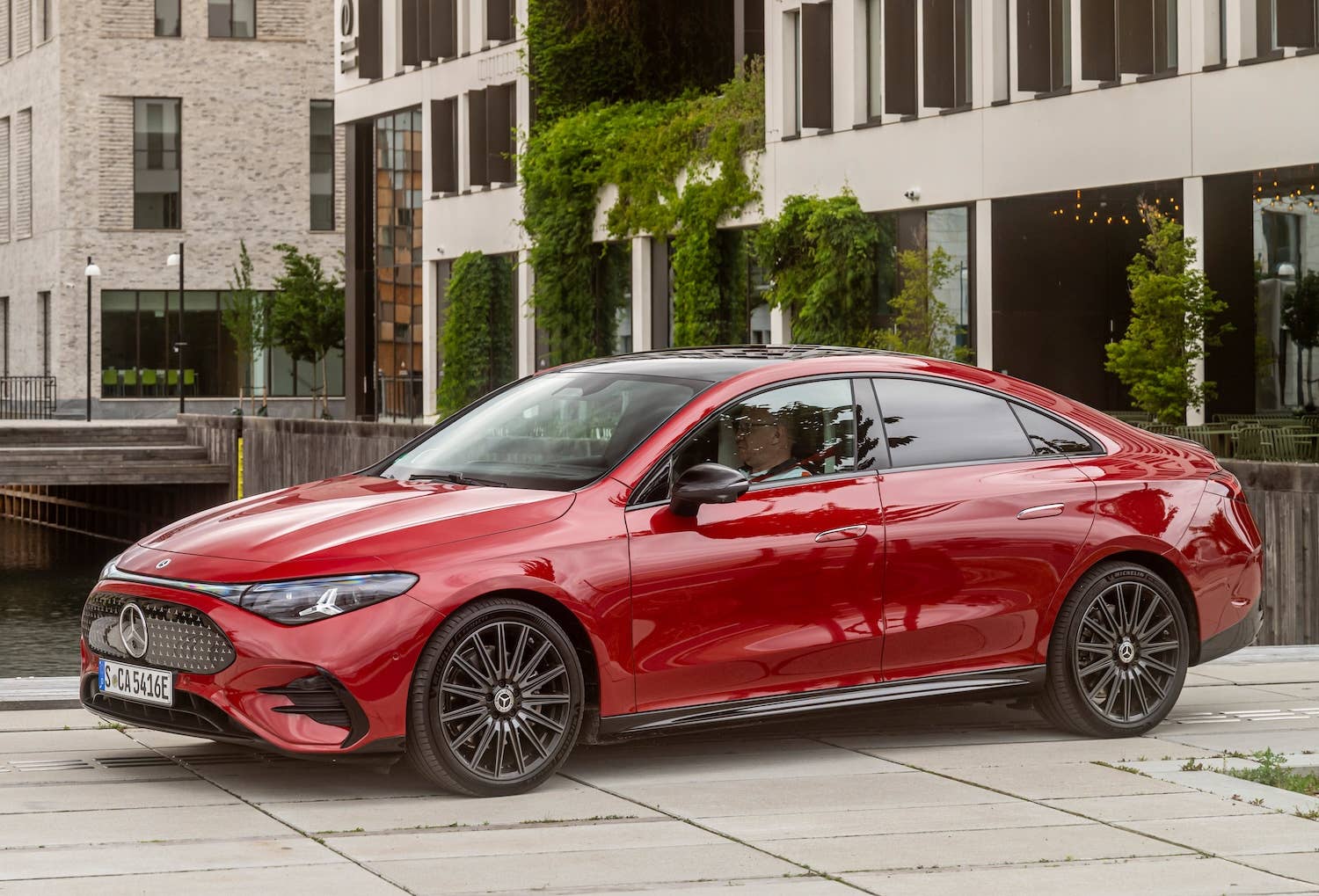
At the vanguard of this architectural rethink is the new Mercedes-Benz CLA Electric. Rather than relying on a heavy, resource-intensive battery to deliver usable range, Mercedes has paired the compact sedan with a modest 55 kWh battery pack. During recent technical evaluations, the platform achieved an astonishing energy efficiency figure exceeding nine miles per kilowatt-hour—a benchmark that redefines what a production electric powertrain can extract from a single cell.At the vanguard of this architectural rethink is the new Mercedes-Benz CLA Electric. Rather than relying on a heavy, resource-intensive battery to deliver usable range, Mercedes has paired the compact sedan with a modest 55 kWh battery pack. During recent technical evaluations, the platform achieved an astonishing energy efficiency figure exceeding nine miles per kilowatt-hour—a benchmark that redefines what a production electric powertrain can extract from a single cell.
By doubling down on inverter optimization, thermal management, and aerodynamic slippery-ness, Mercedes is betting that high-efficiency engineering will beat sheer pack volume every time. A 55 kWh pack not only sheds hundreds of pounds of chassis ballast—sharpening turn-in and braking performance—but also radically reduces recharge times at high-speed hubs. It represents a direct technical riposte to competitors who still measure electric capability purely by kilowatt-hour capacity.By doubling down on inverter optimization, thermal management, and aerodynamic slippery-ness, Mercedes is betting that high-efficiency engineering will beat sheer pack volume every time. A 55 kWh pack not only sheds hundreds of pounds of chassis ballast—sharpening turn-in and braking performance—but also radically reduces recharge times at high-speed hubs. It represents a direct technical riposte to competitors who still measure electric capability purely by kilowatt-hour capacity.
While Mercedes obsesses over electron stewardship, Volkswagen is tackling the other side of the electric transition: usability. The newly revealed Volkswagen ID. Tiguan arrives as a substantial, overdue upgrade over the ID.4, systematically addressing the cockpit gripes that alienated early adopters. Instead of doubling down on polarizing touch sliders, Wolfsburg has brought back tactile physical buttons to the steering wheel and center console.While Mercedes obsesses over electron stewardship, Volkswagen is tackling the other side of the electric transition: usability. The newly revealed Volkswagen ID. Tiguan arrives as a substantial, overdue upgrade over the ID.4, systematically addressing the cockpit gripes that alienated early adopters. Instead of doubling down on polarizing touch sliders, Wolfsburg has brought back tactile physical buttons to the steering wheel and center console.
The ID. Tiguan also rectifies two glaring omissions from VW's first-generation MEB platform by integrating a front trunk—giving owners dedicated cable and luggage storage in the nose—and implementing fully realized one-pedal driving calibration. Where earlier ID models forced drivers to toggle between drive modes to find inconsistent regenerative braking, the ID. Tiguan adopts true one-pedal deceleration tailored for daily stop-and-go driving.The ID. Tiguan also rectifies two glaring omissions from VW's first-generation MEB platform by integrating a front trunk—giving owners dedicated cable and luggage storage in the nose—and implementing fully realized one-pedal driving calibration. Where earlier ID models forced drivers to toggle between drive modes to find inconsistent regenerative braking, the ID. Tiguan adopts true one-pedal deceleration tailored for daily stop-and-go driving.
Together, the CLA Electric and the ID. Tiguan signal a mature second wave for German electrification. Mercedes is proving that a lighter 55 kWh pack can out-engineer larger rivals through sheer thermal and aerodynamic discipline, while Volkswagen is admitting that real-world satisfaction lives in tactile buttons and thoughtful packaging. The electric arms race is no longer about who can haul the heaviest battery; it is about who can build the smarter car.Together, the CLA Electric and the ID. Tiguan signal a mature second wave for German electrification. Mercedes is proving that a lighter 55 kWh pack can out-engineer larger rivals through sheer thermal and aerodynamic discipline, while Volkswagen is admitting that real-world satisfaction lives in tactile buttons and thoughtful packaging. The electric arms race is no longer about who can haul the heaviest battery; it is about who can build the smarter car.
Gallery
"A 55 kWh battery and a high energy efficiency of over 9 miles per kWh achieved during testing."
Why it matters
Mercedes-Benz and Volkswagen are shifting away from oversized batteries and gimmicky cabin interfaces. By prioritizing extreme powertrain efficiency and tactile driver controls, the next generation of EVs delivers lighter, more usable machines.
Sources
- 1.Hot, New Electric Cars That Are Coming Soon - Consumer Reportsconsumerreports.org
- 2.
- 3.
- 4.
Reported by the Downforce & Divots desk from the sources above.
The clubhouse.
- No replies yet. Be the first.