The Ghost of Woking at The Quail
As the McLaren W1 attempts to escape the shadow of the Holy Trinity, the streets of Monterey prove that the original F1 remains the ultimate currency of cool.
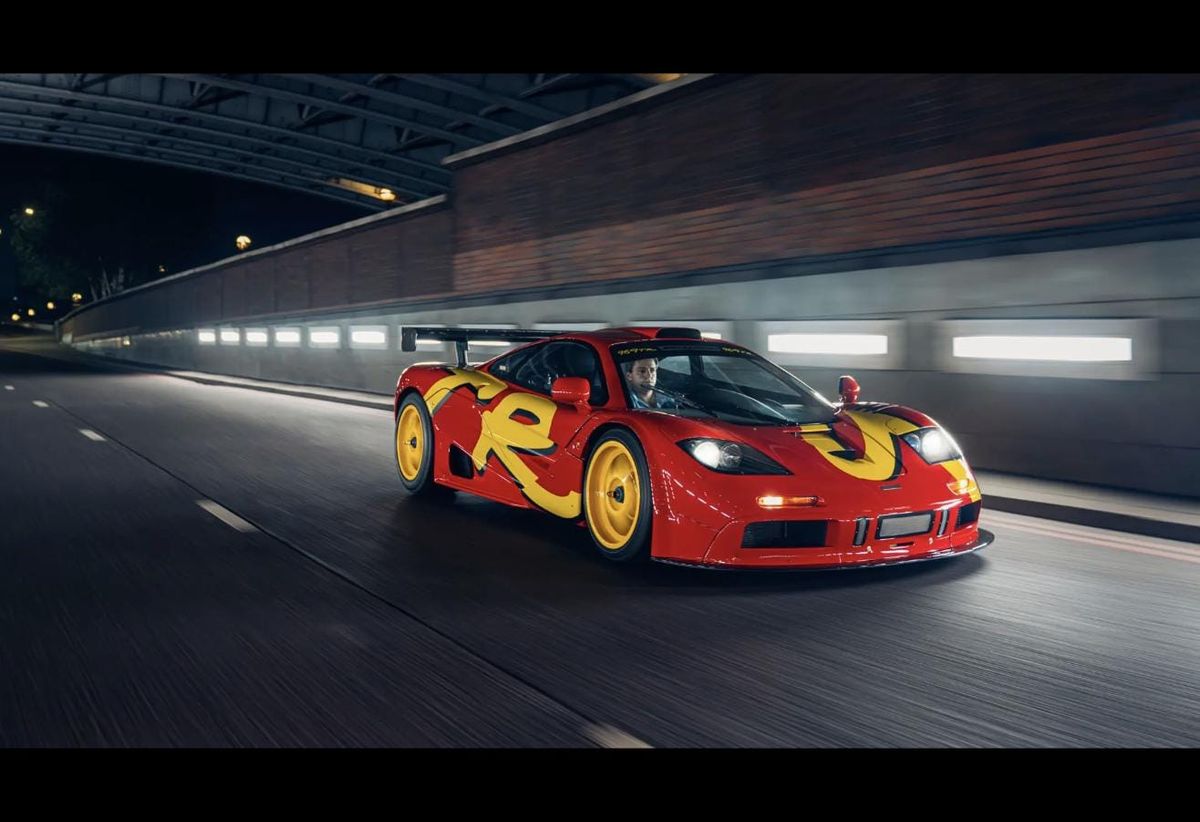
Monterey Car Week has always been a theatre of the absurd, but the 2026 edition has highlighted a specific tension within the McLaren camp. While the new W1 aims to redefine the hypercar landscape, it is the visceral, high-decibel history of Woking that currently dominates the conversation. On the sun-drenched tarmac of Pebble Beach, the sight of the legendary Le Mans GTR 'Art Car' being transported—a machine valued well north of $20 million—served as a stark reminder of the sheer gravity the F1 still exerts over the collector market.
This year's 'Analog Insurgency' has placed the W1 in a difficult tactical position. As Gordon Murray’s S1 screams toward a 12,100 rpm redline with an unapologetic manual gearbox, McLaren’s newest flagship must justify its digital complexity against the raw purity of its ancestors. The debate among the paddock elite is no longer just about 0-60 times; it is a choice between a zero-mile F1 and the modern S1, a hypothetical that has set enthusiast forums ablaze and left even the most seasoned collectors questioning the value of 'new' technology.
The ghost of the 'Holy Trinity'—the P1, Porsche 918, and LaFerrari—also looms large over the W1's debut. Even years after its release, the P1’s combination of a 3.8-litre twin-turbo V8 and hybrid assistance is still described by onlookers at The Quail as feeling 'like something from the future.' It is a testament to the P1's design that it remains the benchmark for hybrid performance, even as new contenders like the Audi Nuvolari attempt to rip up the rulebook.
Recent drag tests involving the P1 against modern metal like the Ferrari 296 GTB show that the old guard isn't just surviving; it's thriving. The P1 continues to hold its own, proving that the integration of electric torque and internal combustion reached a high-water mark in 2013 that many manufacturers are still struggling to surpass. For the W1, the challenge isn't just beating the competition from Maranello or Ingolstadt, but proving it has the soul to eventually replace the P1 in the hearts of the tifosi.Recent drag tests involving the P1 against modern metal like the Ferrari 296 GTB show that the old guard isn't just surviving; it's thriving. The P1 continues to hold its own, proving that the integration of electric torque and internal combustion reached a high-water mark in 2013 that many manufacturers are still struggling to surpass. For the W1, the challenge isn't just beating the competition from Maranello or Ingolstadt, but proving it has the soul to eventually replace the P1 in the hearts of the tifosi.
Amidst the flurry of carbon fiber and Vossen-wheeled show cars, the presence of the McLaren F1 GTR Art Car on the roads of Monterey provided the week's most authentic moment. There is a certain irony in seeing a car designed for the Mulsanne Straight navigating the slow-moving traffic of the Monterey peninsula, yet it commanded more attention than the fleets of modern hypercars idling nearby. It reinforces the idea that in the world of high-stakes automotive collecting, provenance and 'analog' engagement are the new gold standards.Amidst the flurry of carbon fiber and Vossen-wheeled show cars, the presence of the McLaren F1 GTR Art Car on the roads of Monterey provided the week's most authentic moment. There is a certain irony in seeing a car designed for the Mulsanne Straight navigating the slow-moving traffic of the Monterey peninsula, yet it commanded more attention than the fleets of modern hypercars idling nearby. It reinforces the idea that in the world of high-stakes automotive collecting, provenance and 'analog' engagement are the new gold standards.
As the sun sets on the 2026 Monterey showcase, McLaren finds itself at a crossroads. The W1 is undoubtedly a technical marvel, but the enduring allure of the F1 and P1 suggests that the brand's future success depends on more than just aerodynamic efficiency. The 'Analog Insurgency' isn't just a trend; it's a demand from the world’s wealthiest drivers for cars that provide a physical connection to the road—a connection the F1 perfected three decades ago.As the sun sets on the 2026 Monterey showcase, McLaren finds itself at a crossroads. The W1 is undoubtedly a technical marvel, but the enduring allure of the F1 and P1 suggests that the brand's future success depends on more than just aerodynamic efficiency. The 'Analog Insurgency' isn't just a trend; it's a demand from the world’s wealthiest drivers for cars that provide a physical connection to the road—a connection the F1 perfected three decades ago.
Gallery
"The McLaren P1 still feels like something from the future, even as the new W1 attempts to step out of its shadow."
Why it matters
As the hypercar market pivots back toward analog experiences, legacy brands like McLaren face the 'W1 Dilemma': how to innovate without losing the raw, mechanical soul that makes their heritage models like the F1 and P1 worth tens of millions.
Sources
- 1.
- 2.
- 3.
- 4.
Reported by the Downforce & Divots desk from the sources above.
The clubhouse.
- No replies yet. Be the first.