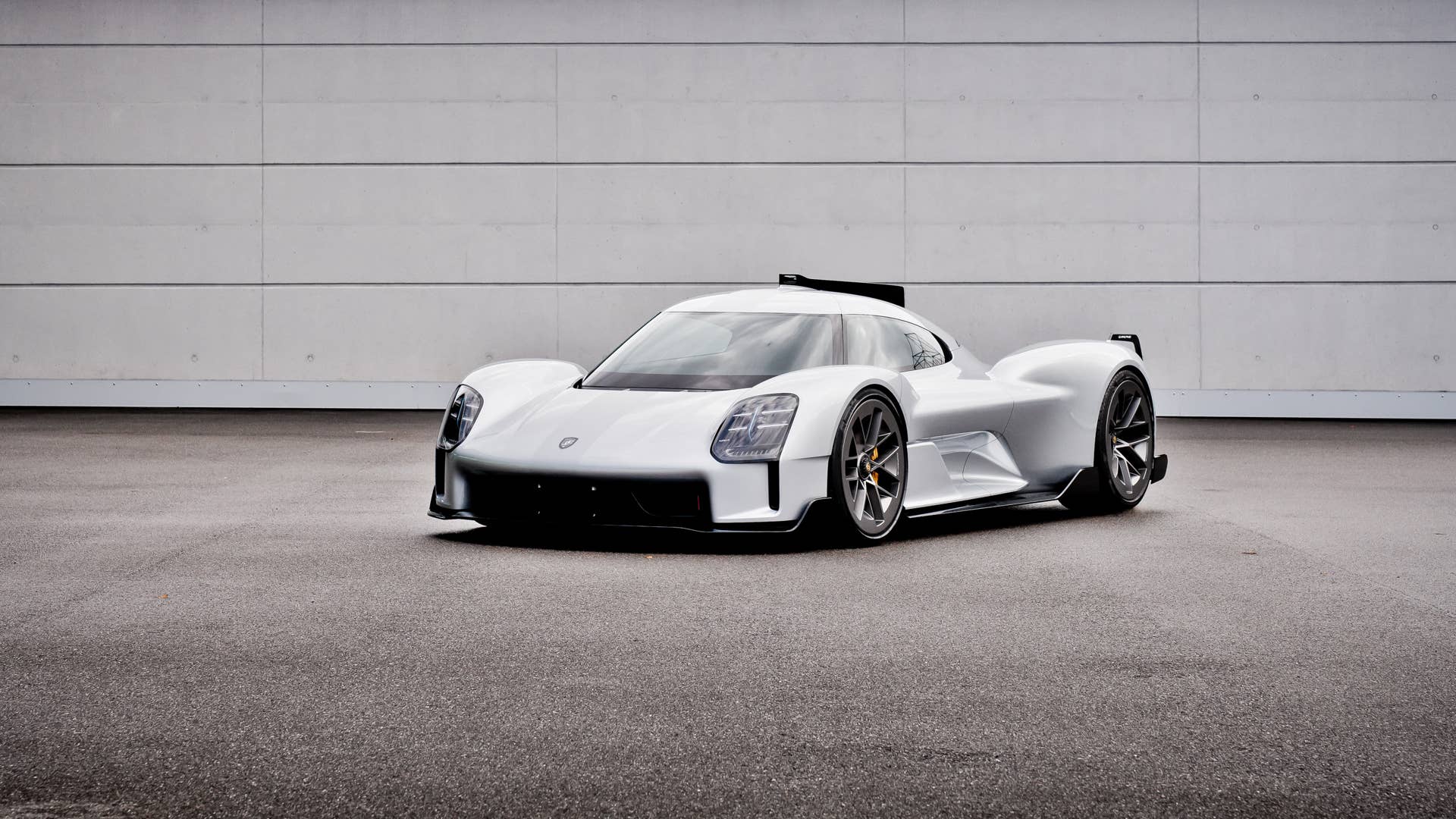
The Ghost in the Boxer: Why Porsche’s S1 Hypercar is a Mechanical Defiance
Stuttgart is reportedly resurrecting a flat-eight engine architecture for a secretive new flagship—a layout not seen in a road-going halo since the 1960s, demanding unprecedented solutions for crankshaft harmonics and thermal packaging.
Deep within the development bunkers at Stuttgart, a ghost has reportedly been resurrected. According to recent intelligence originating from Handelsblatt and amplified by The Drive, Porsche is quietly advancing a new hypercar project under the internal codename "S1." But it is the rumored powertrain that has engineers and motorsport historians equally captivated: a bespoke flat-eight engine. For a manufacturer that built its dynasty, its mythology, and its balance sheet on the venerable flat-six, stretching the horizontally opposed architecture by two cylinders is a monumental flex of engineering hubris. As The Drive succinctly points out, Porsche has never successfully stuffed a flat-eight into a production vehicle. To find a legitimate precedent for such a layout in a Porsche halo, one has to look backward through the archives, past the modern hybrid era, all the way to the 1960s racing prototypes that first established the marque's fearsome endurance racing dominance.Deep within the development bunkers at Stuttgart, a ghost has reportedly been resurrected. According to recent intelligence originating from Handelsblatt and amplified by The Drive, Porsche is quietly advancing a new hypercar project under the internal codename "S1." But it is the rumored powertrain that has engineers and motorsport historians equally captivated: a bespoke flat-eight engine. For a manufacturer that built its dynasty, its mythology, and its balance sheet on the venerable flat-six, stretching the horizontally opposed architecture by two cylinders is a monumental flex of engineering hubris. As The Drive succinctly points out, Porsche has never successfully stuffed a flat-eight into a production vehicle. To find a legitimate precedent for such a layout in a Porsche halo, one has to look backward through the archives, past the modern hybrid era, all the way to the 1960s racing prototypes that first established the marque's fearsome endurance racing dominance.
The romance of a flat-eight is undeniable, conjuring images of screaming prototype racers tearing through the night, but the mechanical reality of bringing such an engine to the street is a brutal hurdle of physics and metallurgy. Adding two cylinders to a horizontally opposed block elongates the crankshaft significantly. This creates a nightmare of torsional harmonics—the microscopic, twisting vibrations that shudder through a long, flat crank at high revolutions per minute. Managing these destructive frequencies in a race car with a lifespan measured in track hours is one thing; engineering a rotating assembly to survive a decade of spirited road use without shattering is an entirely different summit. Furthermore, the sheer footprint of an elongated boxer block demands extreme thermal exhaust packaging. Squeezing eight horizontally opposed cylinders into the mid-engine bay of a road car requires routing exhaust manifolds through agonizingly tight spaces, managing a furnace of heat that threatens to cook the very carbon fibre tub housing it.The romance of a flat-eight is undeniable, conjuring images of screaming prototype racers tearing through the night, but the mechanical reality of bringing such an engine to the street is a brutal hurdle of physics and metallurgy. Adding two cylinders to a horizontally opposed block elongates the crankshaft significantly. This creates a nightmare of torsional harmonics—the microscopic, twisting vibrations that shudder through a long, flat crank at high revolutions per minute. Managing these destructive frequencies in a race car with a lifespan measured in track hours is one thing; engineering a rotating assembly to survive a decade of spirited road use without shattering is an entirely different summit. Furthermore, the sheer footprint of an elongated boxer block demands extreme thermal exhaust packaging. Squeezing eight horizontally opposed cylinders into the mid-engine bay of a road car requires routing exhaust manifolds through agonizingly tight spaces, managing a furnace of heat that threatens to cook the very carbon fibre tub housing it.
There is a distinct, almost poetic irony to the "S1" nomenclature being attached to this effort. As The Drive notes, this is not the first time Stuttgart has deployed the S1 codename for a looming halo project. More than a quarter-century ago, prior to the debut of the legendary Carrera GT, whispers circulated throughout the industry about an upcoming flagship bearing the exact same S1 designation. Back then, the rumor mill insisted the car would utilize V8 power. Ultimately, that iteration of the S1 evolved into the production Carrera GT, which famously arrived sporting a howling, Le Mans-derived V10 instead. Now, the S1 moniker has returned from the archives, swapping the historical V8 and V10 whispers for a bespoke flat-eight, suggesting a vehicle determined to rewrite its own complicated origin story and finally deliver on a long-dormant promise.
Porsche has been circling this eight-cylinder boxer concept for years, treating it as a tantalizing but elusive engineering holy grail. Early in the current decade, the company publicly floated the idea of a flat-eight mill for a production application. That particular skunkworks project involved shoehorning the experimental engine into an extended Cayman chassis, a Frankenstein's monster of a test mule that was ultimately scrapped before seeing the light of a showroom. It seems the ghosts of stillborn halos haunt the halls of Weissach; The Drive also highlights the 919 Street concept, a stunning design study teased as a direct follow-up to the hybrid 918 Spyder that the company eventually decided against producing. The new S1 project appears to be synthesizing these abandoned ambitions, taking the still-beating mechanical heart of that scrapped Cayman mule and marrying it to the hypercar aspirations of the 919 Street.Porsche has been circling this eight-cylinder boxer concept for years, treating it as a tantalizing but elusive engineering holy grail. Early in the current decade, the company publicly floated the idea of a flat-eight mill for a production application. That particular skunkworks project involved shoehorning the experimental engine into an extended Cayman chassis, a Frankenstein's monster of a test mule that was ultimately scrapped before seeing the light of a showroom. It seems the ghosts of stillborn halos haunt the halls of Weissach; The Drive also highlights the 919 Street concept, a stunning design study teased as a direct follow-up to the hybrid 918 Spyder that the company eventually decided against producing. The new S1 project appears to be synthesizing these abandoned ambitions, taking the still-beating mechanical heart of that scrapped Cayman mule and marrying it to the hypercar aspirations of the 919 Street.
To understand the gravity of the S1 project, one must look at the broader automotive landscape it intends to enter. We are rapidly approaching an era defined by mass electrification and platform homogenization, a reality underscored by the impending arrival of vehicles like the 2027 Kia EV3, which represents the incoming tidal wave of tech-heavy, battery-electric crossovers flooding the global market. In a climate where the industry is pouring billions into lithium-ion architecture and skateboard platforms, greenlighting a highly complex, fiercely bespoke flat-eight combustion engine is an act of spectacular defiance. It is a calculated statement to the faithful that Porsche's ultimate performance ceiling will, for now, remain violently, stubbornly mechanical, offering a tactile engagement that no electric motor can replicate.To understand the gravity of the S1 project, one must look at the broader automotive landscape it intends to enter. We are rapidly approaching an era defined by mass electrification and platform homogenization, a reality underscored by the impending arrival of vehicles like the 2027 Kia EV3, which represents the incoming tidal wave of tech-heavy, battery-electric crossovers flooding the global market. In a climate where the industry is pouring billions into lithium-ion architecture and skateboard platforms, greenlighting a highly complex, fiercely bespoke flat-eight combustion engine is an act of spectacular defiance. It is a calculated statement to the faithful that Porsche's ultimate performance ceiling will, for now, remain violently, stubbornly mechanical, offering a tactile engagement that no electric motor can replicate.
The ultimate stakes for the S1 are inherently tied to those aforementioned thermal and harmonic challenges. An elongated flat-eight isn't just a packaging headache; it fundamentally alters the dynamic balance of the chassis. The ultra-low center of gravity afforded by a boxer engine is a Porsche hallmark, but extending the block pushes mass further outward and alters the vehicle's polar moment of inertia. Weissach's engineers must flawlessly calibrate the harmonic dampers on the stretched crankshaft while simultaneously designing an exhaust system that can extract noxious, superheated gases from the belly of the car without heat-soaking the rear suspension linkages. It is a high-wire act of fluid dynamics and vibration analysis, taking the raw, unbridled fury of a track weapon and civilizing it just enough to wear a license plate.The ultimate stakes for the S1 are inherently tied to those aforementioned thermal and harmonic challenges. An elongated flat-eight isn't just a packaging headache; it fundamentally alters the dynamic balance of the chassis. The ultra-low center of gravity afforded by a boxer engine is a Porsche hallmark, but extending the block pushes mass further outward and alters the vehicle's polar moment of inertia. Weissach's engineers must flawlessly calibrate the harmonic dampers on the stretched crankshaft while simultaneously designing an exhaust system that can extract noxious, superheated gases from the belly of the car without heat-soaking the rear suspension linkages. It is a high-wire act of fluid dynamics and vibration analysis, taking the raw, unbridled fury of a track weapon and civilizing it just enough to wear a license plate.
If the reports from Handelsblatt and The Drive materialize into rolling carbon-fibre sculpture, the S1 will represent a singular, unrepeatable achievement in modern automotive history. It is the physical manifestation of an idea Porsche has chased for decades, overcoming the structural and thermal limitations of the boxer layout to create what could be the ultimate internal combustion swan song. By bypassing the expected V8 or V10 layouts and leaning heavily into a flat-eight, Stuttgart is honoring its idiosyncratic flat-engine heritage while pushing it to its absolute physical limit. The S1 isn't merely a hypercar; it is an engineering thesis, proving that even in the twilight of the combustion era, there are still brutal mechanical hurdles worth clearing.If the reports from Handelsblatt and The Drive materialize into rolling carbon-fibre sculpture, the S1 will represent a singular, unrepeatable achievement in modern automotive history. It is the physical manifestation of an idea Porsche has chased for decades, overcoming the structural and thermal limitations of the boxer layout to create what could be the ultimate internal combustion swan song. By bypassing the expected V8 or V10 layouts and leaning heavily into a flat-eight, Stuttgart is honoring its idiosyncratic flat-engine heritage while pushing it to its absolute physical limit. The S1 isn't merely a hypercar; it is an engineering thesis, proving that even in the twilight of the combustion era, there are still brutal mechanical hurdles worth clearing.
Gallery
"In a climate where the industry is pouring billions into lithium-ion architecture, greenlighting a highly complex, fiercely bespoke flat-eight combustion engine is an act of spectacular defiance."
Why it matters
The S1 project highlights Porsche's commitment to pushing the physical boundaries of internal combustion even as the industry pivots to EVs. By tackling the immense challenges of crankshaft harmonics and thermal packaging in a flat-eight, Stuttgart is creating a mechanical halo that honors its 1960s motorsport heritage.
Sources
- 1.
- 2.
- 3.
Reported by the Downforce & Divots desk from the sources above.
The clubhouse.
- No replies yet. Be the first.