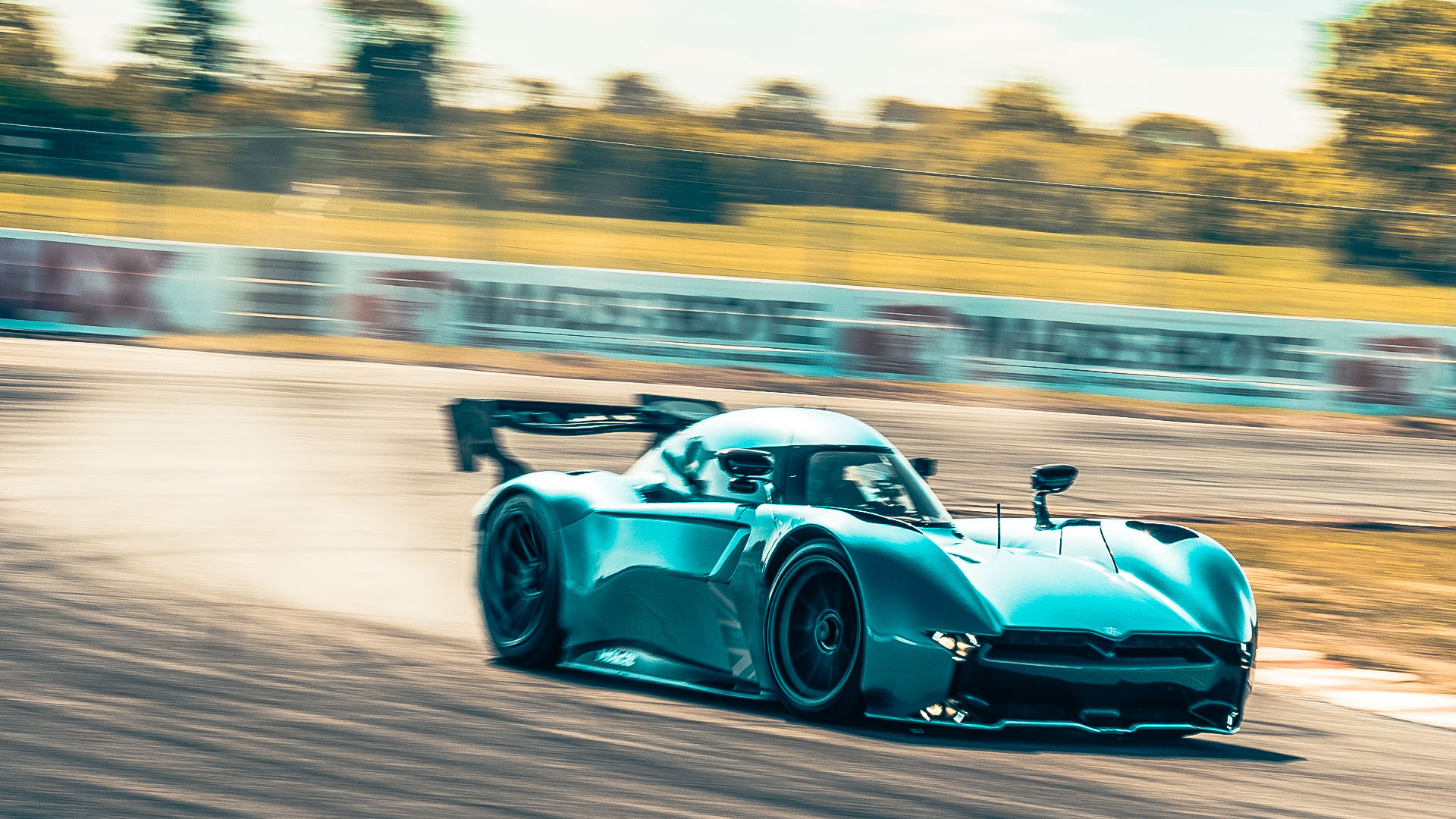
The Car That Sucks: How McMurtry's Spéirling PURE Weaponizes Banned F1 Tech
As the production version of the record-breaking Spéirling PURE arrives, we examine the forbidden physics behind its twin-fan system, which generates 2,000kg of instant downforce to suck the sub-1,000kg car to the road.
Most hypercars are a study in battling the air with wings and scoops. The McMurtry Spéirling PURE, whose production form will be fully revealed next week, simply vacuums itself to the tarmac. While the car itself weighs under 1,000 kilograms, a pair of powerful fans creates 2,000kg of downforce—a constant, brutal grip available from the moment you touch the throttle, no speed required. This brutal efficiency is how a 1,000-horsepower electric car has managed to conquer icons like the Goodwood Festival of Speed Hillclimb, fundamentally rewriting the relationship between weight, power, and grip for a track car.Most hypercars are a study in battling the air with wings and scoops. The McMurtry Spéirling PURE, whose production form will be fully revealed next week, simply vacuums itself to the tarmac. While the car itself weighs under 1,000 kilograms, a pair of powerful fans creates 2,000kg of downforce—a constant, brutal grip available from the moment you touch the throttle, no speed required. This brutal efficiency is how a 1,000-horsepower electric car has managed to conquer icons like the Goodwood Festival of Speed Hillclimb, fundamentally rewriting the relationship between weight, power, and grip for a track car.
This concept of powered downforce is far from new, but its history is layered with controversy. The technology first truly shocked the establishment in 1970 with Jim Hall's Chaparral 2J, which proved in the Can-Am series that a car generating its own suction could, as a contemporary noted, corner like nothing else. The idea reached its zenith and immediate nadir in Formula 1 with the Brabham BT46B. The infamous "fan car" raced just once, at the Swedish Grand Prix in 1978, winning under such a cloud of protest about its legality that it was promptly withdrawn from competition, becoming a legendary technological dead end for the sport.
The Spéirling’s philosophy creates a performance profile unlike almost any other machine. It boasts a power figure of around 1,000 horsepower, putting it squarely in the territory of a modern Formula 1 car. Yet its method for exploiting that power is entirely different. It doesn’t rely on the brute force escalation seen in NHRA Top Fuel dragsters, which deploy an astonishing 11,000 horsepower. Instead, the Spéirling's genius lies in applying its ample power through unprecedented, fan-induced grip, an approach it shares with Gordon Murray’s modern T.50 hypercar, proving the concept’s enduring allure among engineering’s deepest thinkers.The Spéirling’s philosophy creates a performance profile unlike almost any other machine. It boasts a power figure of around 1,000 horsepower, putting it squarely in the territory of a modern Formula 1 car. Yet its method for exploiting that power is entirely different. It doesn’t rely on the brute force escalation seen in NHRA Top Fuel dragsters, which deploy an astonishing 11,000 horsepower. Instead, the Spéirling's genius lies in applying its ample power through unprecedented, fan-induced grip, an approach it shares with Gordon Murray’s modern T.50 hypercar, proving the concept’s enduring allure among engineering’s deepest thinkers.
By existing as a track-only vehicle for a select few willing to part with just under £2 million, the Spéirling PURE neatly sidesteps the regulatory battles that killed its ancestors. It’s a road-legal-rulebook irrelevance. After setting records on storied tracks worldwide, the car's arrival in private hands poses a new question: what happens when a technology deemed too effective for the highest echelon of motorsport is unleashed on a private track day? For a handful of owners, the answer is a cornering capability previously confined to engineering theory and motorsport folklore.By existing as a track-only vehicle for a select few willing to part with just under £2 million, the Spéirling PURE neatly sidesteps the regulatory battles that killed its ancestors. It’s a road-legal-rulebook irrelevance. After setting records on storied tracks worldwide, the car's arrival in private hands poses a new question: what happens when a technology deemed too effective for the highest echelon of motorsport is unleashed on a private track day? For a handful of owners, the answer is a cornering capability previously confined to engineering theory and motorsport folklore.
Gallery
"A car which can power its own downforce, corners like nothing else."
Why it matters
The Spéirling PURE isn't just another electric hypercar; it’s a commercialized 'what if' scenario, bringing a technology banned from Formula 1 for being too effective to private race tracks. By delivering immense downforce independent of speed, it fundamentally changes the rules of cornering performance and sets a new, almost outlandish benchmark for track-day enthusiasts with a budget of nearly £2 million.
Sources
- 1.
- 2.
- 3.
- 4.
- 5.
- 6.
- 7.
- 8.
- 9.
- 10.
Reported by the Downforce & Divots desk from the sources above.
The clubhouse.
- No replies yet. Be the first.