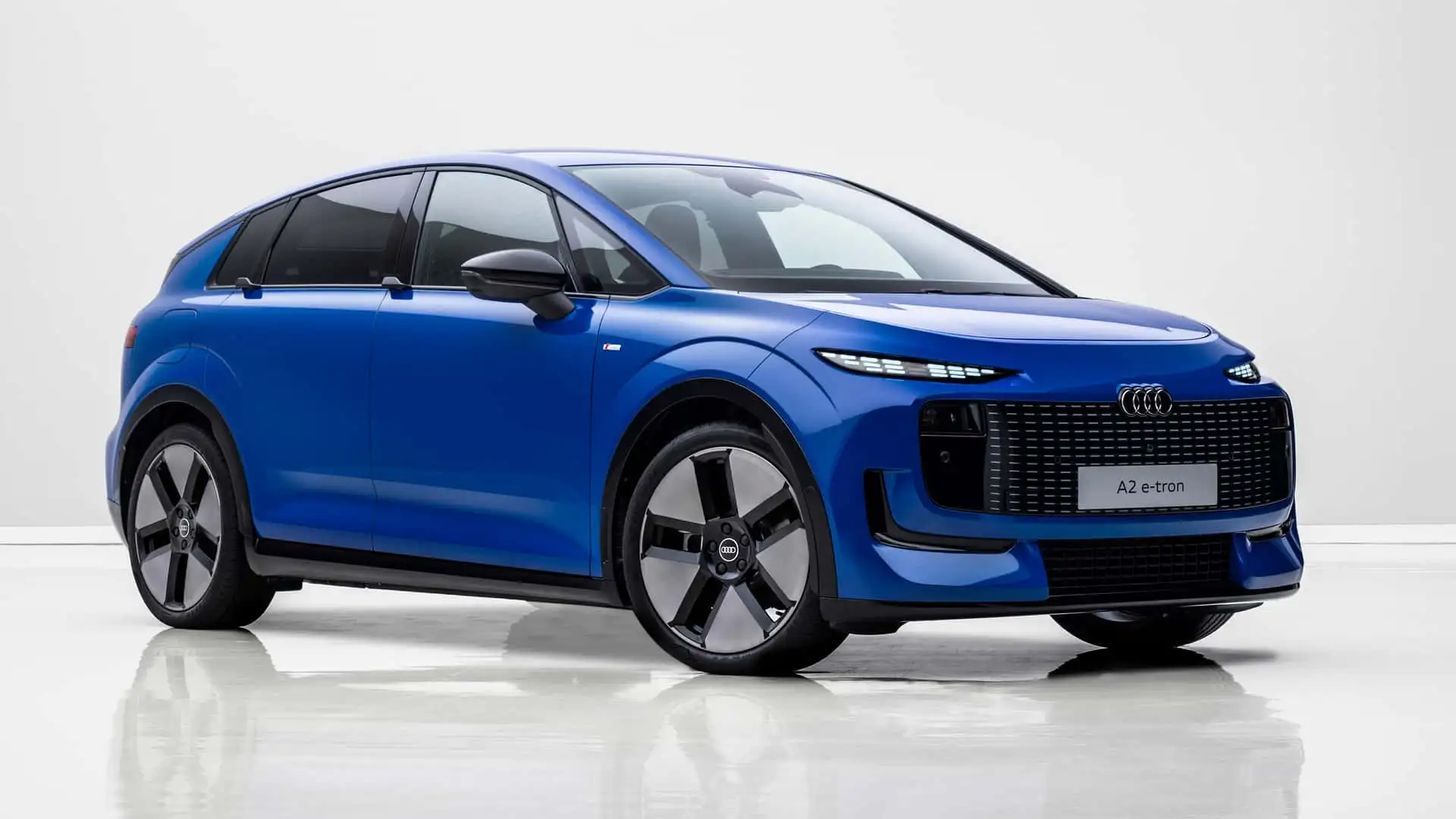
Cheating the Wind: How Audi’s Radical A2 e-tron Revival Aims to Solve the EV Range Crisis
By resurrecting the extreme aerodynamic efficiency and teardrop silhouette of a 1999 cult classic, Audi is betting it can conquer the small-battery handicap without surrendering to SUV bloat.
The automotive internet remains a relentless, undefeated force, perpetually catching legacy automakers entirely by surprise. As automotive outlets like Autoevolution recently highlighted to their massive digital audiences, the glorious, chaotic web has struck again, forcing an early, unofficial look at a highly classified project that had been quietly gestating behind closed garage doors. We have heard the speculative murmurs and dissected the grainy leaks on various forums, but now the formal announcement has finally crystallized into reality: Audi will officially unveil the new A2 e-tron in the fall of 2026. Yet, this is no ordinary product cycle update meant to simply pad out an existing showroom floor. It is a calculated, high-stakes revival of one of the most polarizing and brilliant cult badges in modern motoring history. Audi is betting heavily that the radical teardrop silhouette and extreme packaging efficiency of its 1999 aluminum predecessor hold the master key to solving the modern compact EV’s most stubborn engineering hurdle: the small battery range problem. Rather than simply stuffing a heavier lithium-ion pack between the axles—the standard industry crutch—Ingolstadt’s engineers are turning to aerodynamic purity, resurrecting a shape that was mocked by traditionalists at the turn of the millennium but revered by forward-thinking industrial designers.The automotive internet remains a relentless, undefeated force, perpetually catching legacy automakers entirely by surprise. As automotive outlets like Autoevolution recently highlighted to their massive digital audiences, the glorious, chaotic web has struck again, forcing an early, unofficial look at a highly classified project that had been quietly gestating behind closed garage doors. We have heard the speculative murmurs and dissected the grainy leaks on various forums, but now the formal announcement has finally crystallized into reality: Audi will officially unveil the new A2 e-tron in the fall of 2026. Yet, this is no ordinary product cycle update meant to simply pad out an existing showroom floor. It is a calculated, high-stakes revival of one of the most polarizing and brilliant cult badges in modern motoring history. Audi is betting heavily that the radical teardrop silhouette and extreme packaging efficiency of its 1999 aluminum predecessor hold the master key to solving the modern compact EV’s most stubborn engineering hurdle: the small battery range problem. Rather than simply stuffing a heavier lithium-ion pack between the axles—the standard industry crutch—Ingolstadt’s engineers are turning to aerodynamic purity, resurrecting a shape that was mocked by traditionalists at the turn of the millennium but revered by forward-thinking industrial designers.
The journey to this highly anticipated fall 2026 debut has been paved with the usual modern breadcrumbs: whispers on supply-chain networks, early rendering leaks, and the inevitable deployment of test mules onto public roads. As keen observers noted while obsessively tracking the vehicle's clandestine development, we have seen the spy photos circulating in the wild, each frame intensely analyzed by enthusiasts hunting for clues about how Audi plans to reinterpret its turn-of-the-century aerodynamic masterpiece. Though heavily camouflaged in the standard dizzying dazzle patterns designed specifically to confuse autofocus camera lenses and human eyes alike, these spy photos have begun to reveal some absolutely crucial details about the upcoming model's design direction. The fundamental geometry of the car is simply impossible to hide beneath swaths of vinyl wrapping. The steeply raked windshield, the abruptly truncated Kamm-tail rear fascia, and the aggressively tapered greenhouse all point to a singular, uncompromising obsession with cheating the wind. Just as the original 1999 model utilized a revolutionary aluminum space frame to shed mass and maximize interior cabin volume within a microscopic footprint, the 2026 A2 e-tron appears to be utilizing every single millimeter of its teardrop silhouette to slice through the air with minimal resistance. This isn't just an aesthetic homage to a beloved past; it is a vital functional requirement designed to extract maximum mileage from a fundamentally limited power source.The journey to this highly anticipated fall 2026 debut has been paved with the usual modern breadcrumbs: whispers on supply-chain networks, early rendering leaks, and the inevitable deployment of test mules onto public roads. As keen observers noted while obsessively tracking the vehicle's clandestine development, we have seen the spy photos circulating in the wild, each frame intensely analyzed by enthusiasts hunting for clues about how Audi plans to reinterpret its turn-of-the-century aerodynamic masterpiece. Though heavily camouflaged in the standard dizzying dazzle patterns designed specifically to confuse autofocus camera lenses and human eyes alike, these spy photos have begun to reveal some absolutely crucial details about the upcoming model's design direction. The fundamental geometry of the car is simply impossible to hide beneath swaths of vinyl wrapping. The steeply raked windshield, the abruptly truncated Kamm-tail rear fascia, and the aggressively tapered greenhouse all point to a singular, uncompromising obsession with cheating the wind. Just as the original 1999 model utilized a revolutionary aluminum space frame to shed mass and maximize interior cabin volume within a microscopic footprint, the 2026 A2 e-tron appears to be utilizing every single millimeter of its teardrop silhouette to slice through the air with minimal resistance. This isn't just an aesthetic homage to a beloved past; it is a vital functional requirement designed to extract maximum mileage from a fundamentally limited power source.
To truly understand why this teardrop silhouette is so critical to the vehicle's success, one must intimately examine the harsh physics governing the small electric vehicle. The underlying mathematical equation is brutally unforgiving to automotive designers. A compact wheelbase footprint cannot physically accommodate a massive, long-range battery pack underneath the floorboards, meaning the vehicle is inherently handicapped on total onboard energy capacity right from the drawing board. When electrical energy is scarce, aerodynamic drag becomes the ultimate enemy of forward progress. The visionary engineering team behind the 1999 A2 understood this intrinsically, achieving a drag coefficient that put sleek supercars of the era to shame while miraculously offering the internal passenger volume of a much larger sedan. For the incoming 2026 A2 e-tron, achieving that same level of extreme packaging efficiency isn't just a nostalgic nod to its heritage; it is the only viable method to make a small-battery EV practical for the demanding modern consumer. By sloping the roofline dramatically and narrowing the rear track to create that distinct aerodynamic teardrop shape, the designers are actively attempting to prevent the turbulent wake that acts as an invisible parachute dragging on typical square-backed hatchbacks. It is a philosophy of subtraction rather than addition—solving the range anxiety equation not with more heavy battery cells, but with significantly less atmospheric interference.To truly understand why this teardrop silhouette is so critical to the vehicle's success, one must intimately examine the harsh physics governing the small electric vehicle. The underlying mathematical equation is brutally unforgiving to automotive designers. A compact wheelbase footprint cannot physically accommodate a massive, long-range battery pack underneath the floorboards, meaning the vehicle is inherently handicapped on total onboard energy capacity right from the drawing board. When electrical energy is scarce, aerodynamic drag becomes the ultimate enemy of forward progress. The visionary engineering team behind the 1999 A2 understood this intrinsically, achieving a drag coefficient that put sleek supercars of the era to shame while miraculously offering the internal passenger volume of a much larger sedan. For the incoming 2026 A2 e-tron, achieving that same level of extreme packaging efficiency isn't just a nostalgic nod to its heritage; it is the only viable method to make a small-battery EV practical for the demanding modern consumer. By sloping the roofline dramatically and narrowing the rear track to create that distinct aerodynamic teardrop shape, the designers are actively attempting to prevent the turbulent wake that acts as an invisible parachute dragging on typical square-backed hatchbacks. It is a philosophy of subtraction rather than addition—solving the range anxiety equation not with more heavy battery cells, but with significantly less atmospheric interference.
This obsessive pursuit of aerodynamic purity and extreme packaging efficiency stands in stark, almost jarring contrast to the broader, heavier trends dictating the current automotive market landscape. Look across the spectrum of recent industry debuts, and the prevailing global ethos is one of aggressive, unapologetic bulk. Just days ago, the automotive internet was equally ablaze with social media highlights celebrating the world premiere of the all-new Mitsubishi Pajero, alongside swirling teasers questioning whether the heavily stylized Mitsubishi DST Concept serves as an accurate preview for their future, ruggedized lineup. These specific vehicles represent the exact opposite end of the engineering spectrum from Audi's compact vision: massive, bluff-fronted off-roaders that rely on sheer brute force, towering ground clearance, and massive powertrains to punch a violent hole through the atmosphere. The Pajero's highly publicized revival speaks directly to a consumer market that is still deeply infatuated with oversized utility, imposing road presence, and squared-off aesthetics that actively fight the wind at every highway speed. Against this relentless backdrop of rolling fortresses and bloated crossover concepts, Audi’s steadfast commitment to reviving a compact, aerodynamically obsessed city car feels almost subversive in its elegance. It operates as a quiet, calculated rebellion against the heavy bloat of the modern SUV era.This obsessive pursuit of aerodynamic purity and extreme packaging efficiency stands in stark, almost jarring contrast to the broader, heavier trends dictating the current automotive market landscape. Look across the spectrum of recent industry debuts, and the prevailing global ethos is one of aggressive, unapologetic bulk. Just days ago, the automotive internet was equally ablaze with social media highlights celebrating the world premiere of the all-new Mitsubishi Pajero, alongside swirling teasers questioning whether the heavily stylized Mitsubishi DST Concept serves as an accurate preview for their future, ruggedized lineup. These specific vehicles represent the exact opposite end of the engineering spectrum from Audi's compact vision: massive, bluff-fronted off-roaders that rely on sheer brute force, towering ground clearance, and massive powertrains to punch a violent hole through the atmosphere. The Pajero's highly publicized revival speaks directly to a consumer market that is still deeply infatuated with oversized utility, imposing road presence, and squared-off aesthetics that actively fight the wind at every highway speed. Against this relentless backdrop of rolling fortresses and bloated crossover concepts, Audi’s steadfast commitment to reviving a compact, aerodynamically obsessed city car feels almost subversive in its elegance. It operates as a quiet, calculated rebellion against the heavy bloat of the modern SUV era.
In many technical ways, the uncompromising engineering brief for the upcoming A2 e-tron shares more philosophical DNA with a top-tier motorsport development program than a traditional passenger car product cycle. If you walk through a modern Formula 1 paddock, the reigning, undisputed philosophy is that aerodynamic efficiency dictates ultimate performance; every exposed surface, every turning vane, and every carbon-fiber winglet is subjected to punishing computational fluid dynamics to aggressively reduce drag and cleanly manage airflow. Audi’s designers are essentially applying this exact caliber of aerodynamic scrutiny to a humble, battery-powered city car. The teardrop silhouette is nature’s most efficient shape for a very specific reason, and in the context of a small-capacity EV, translating that organic shape from the sterile wind tunnel to the messy reality of the street requires an immense amount of engineering discipline. They cannot afford the luxury of stylistic vanity or superfluous design flourishes. Every sharp crease on the A2 e-tron’s bodywork, every flush-mounted door handle, and every precisely ducted wheel curtain must explicitly earn its place by actively reducing the car’s overall aerodynamic drag. It is a ruthless packaging environment where aesthetic form is inextricably and permanently dictated by aerodynamic function.
As the fall 2026 timeline rapidly approaches, the corporate stakes for this formal unveiling could not possibly be higher for the German automaker. The legacy of the original aluminum-bodied A2 looms large over the current engineering team; it was universally heralded as a technical triumph but ultimately stood as a commercial anomaly, arguably too advanced, too radical, and too expensive for the traditional market it launched into back in 1999. Today, however, the global automotive landscape has fundamentally shifted on its axis. Pervasive range anxiety and volatile battery material costs have transformed extreme packaging efficiency from a quirky, niche engineering exercise into a critical, undeniable commercial necessity. The unofficial announcements that caught the automaker by surprise, along with the heavily analyzed leaked spy photos, have successfully primed the car-buying public, but the true test of this revival will be found in the final physical execution. Can Audi successfully package modern, complex EV architecture—including the electric traction motors, the high-voltage inverters, the mandatory crash structures, and the thermal cooling systems—within a teardrop footprint tight enough to honor the cult badge, yet spacious enough to convince buyers to abandon their bulky, inefficient crossovers? The heavily camouflaged prototypes currently undergoing real-world testing suggest they are stubbornly committed to the attempt, refusing to compromise the radical silhouette that made the original model so polarizing and so incredibly potent.As the fall 2026 timeline rapidly approaches, the corporate stakes for this formal unveiling could not possibly be higher for the German automaker. The legacy of the original aluminum-bodied A2 looms large over the current engineering team; it was universally heralded as a technical triumph but ultimately stood as a commercial anomaly, arguably too advanced, too radical, and too expensive for the traditional market it launched into back in 1999. Today, however, the global automotive landscape has fundamentally shifted on its axis. Pervasive range anxiety and volatile battery material costs have transformed extreme packaging efficiency from a quirky, niche engineering exercise into a critical, undeniable commercial necessity. The unofficial announcements that caught the automaker by surprise, along with the heavily analyzed leaked spy photos, have successfully primed the car-buying public, but the true test of this revival will be found in the final physical execution. Can Audi successfully package modern, complex EV architecture—including the electric traction motors, the high-voltage inverters, the mandatory crash structures, and the thermal cooling systems—within a teardrop footprint tight enough to honor the cult badge, yet spacious enough to convince buyers to abandon their bulky, inefficient crossovers? The heavily camouflaged prototypes currently undergoing real-world testing suggest they are stubbornly committed to the attempt, refusing to compromise the radical silhouette that made the original model so polarizing and so incredibly potent.
Ultimately, the impending return of the A2 e-tron serves as a crucial litmus test for the long-term future of the compact electric vehicle segment. It poses a fundamental, industry-defining question: will the automotive sector innovate its way out of the small battery range problem through aerodynamic intelligence and packaging brilliance, or will it simply surrender entirely to the brute-force method of building ever-heavier cars with ever-larger batteries? By wholeheartedly embracing the aerodynamic teardrop and the lessons of the 1999 predecessor, Audi is broadcasting a clear belief that smart, purposeful design and extreme efficiency still have a vital place on our modern roads. When the silk covers finally come off in the fall of 2026, the entire industry will see if the internet's early surprise translates into a genuine engineering revolution. If the A2 e-tron can successfully capture the innovative magic of its aluminum-bodied ancestor while simultaneously conquering the harsh physics of electric mobility, it won't just be a successful revival of a beloved cult classic; it will instantly become the definitive blueprint for how to build a rational, beautiful, and deeply intelligent car for the electric age.Ultimately, the impending return of the A2 e-tron serves as a crucial litmus test for the long-term future of the compact electric vehicle segment. It poses a fundamental, industry-defining question: will the automotive sector innovate its way out of the small battery range problem through aerodynamic intelligence and packaging brilliance, or will it simply surrender entirely to the brute-force method of building ever-heavier cars with ever-larger batteries? By wholeheartedly embracing the aerodynamic teardrop and the lessons of the 1999 predecessor, Audi is broadcasting a clear belief that smart, purposeful design and extreme efficiency still have a vital place on our modern roads. When the silk covers finally come off in the fall of 2026, the entire industry will see if the internet's early surprise translates into a genuine engineering revolution. If the A2 e-tron can successfully capture the innovative magic of its aluminum-bodied ancestor while simultaneously conquering the harsh physics of electric mobility, it won't just be a successful revival of a beloved cult classic; it will instantly become the definitive blueprint for how to build a rational, beautiful, and deeply intelligent car for the electric age.
Gallery
"As always, the glorious internet has caught another automaker by surprise... We have seen the spy photos and heard the rumors, but now we have the formal announcement."
Why it matters
While the rest of the auto industry answers the EV range problem by simply adding massive, heavy batteries into bluff-fronted SUVs, Audi's approach is a masterclass in subtraction. Reviving the A2 proves that true engineering efficiency—maximizing aerodynamics and packaging rather than relying on brute force—is the most intelligent way to save the compact city car.
Sources
- 1.
- 2.
- 3.
Reported by the Downforce & Divots desk from the sources above.
The clubhouse.
- No replies yet. Be the first.