The Wingless Gambit: How Denza's Z Racing Bets on Unseen Forces to Tame 2,250 Kilos
The new 1,600+ horsepower EV hypercar from BYD's Denza marque eschews the massive wings of its rivals, claiming a breakthrough in underbody aerodynamics. But is its reliance on ground effect a revolutionary step for heavy electric supercars, or a high-speed gamble against the laws of physics?
At first glance, the Denza Z Racing is a study in contradiction. It presents a silhouette that is unnervingly clean, a long, flowing shooting-brake form uninterrupted by the towering, multi-plane rear wings that have become the de facto signifier of hypercar performance. This deliberate aesthetic choice becomes a profound engineering question when you consider the numbers. With a reported curb weight of 2,250 kilograms, this is a machine carrying substantially more mass than its contemporaries; for perspective, a new Lamborghini Temerario tips the scales at a comparatively svelte 1,790 kg. In a world where downforce is king, sending a car this heavy and powerful into the rarified air of extreme speed without a conventional wing seems less like a design choice and more like a declaration of war against established aerodynamic principles.At first glance, the Denza Z Racing is a study in contradiction. It presents a silhouette that is unnervingly clean, a long, flowing shooting-brake form uninterrupted by the towering, multi-plane rear wings that have become the de facto signifier of hypercar performance. This deliberate aesthetic choice becomes a profound engineering question when you consider the numbers. With a reported curb weight of 2,250 kilograms, this is a machine carrying substantially more mass than its contemporaries; for perspective, a new Lamborghini Temerario tips the scales at a comparatively svelte 1,790 kg. In a world where downforce is king, sending a car this heavy and powerful into the rarified air of extreme speed without a conventional wing seems less like a design choice and more like a declaration of war against established aerodynamic principles.
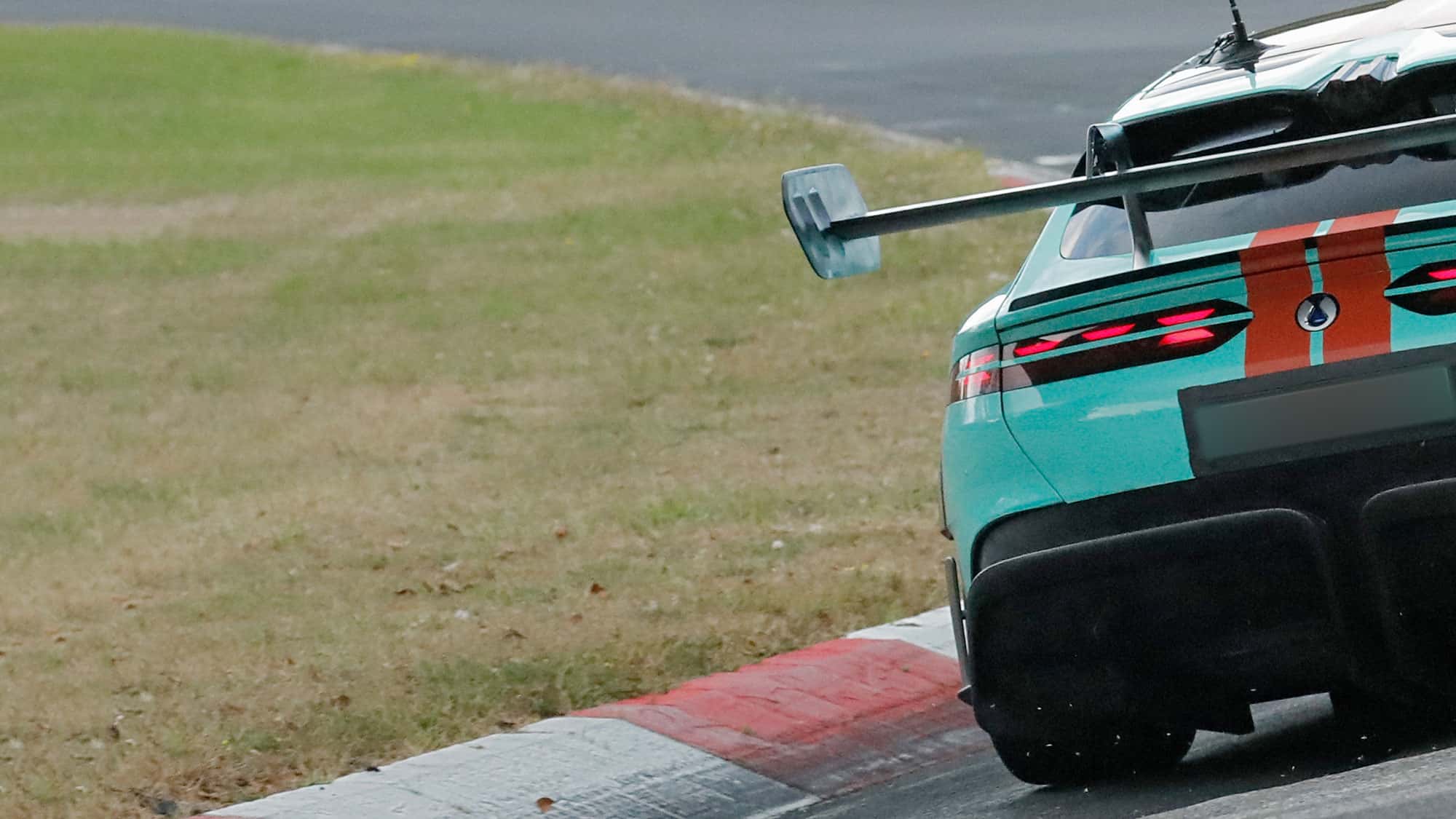
The crux of Denza’s audacious claim lies not above the car, but beneath it. The Z Racing’s stability at speeds purported to exceed 300 mph is not derived from air pushing down on its bodywork, but from air being pulled out from under it. According to technical details, the car employs a sophisticated system of 'ground-effect channels' that run the length of the chassis. These tunnels are designed to accelerate the air flowing beneath the car, creating a significant low-pressure zone that effectively sucks the vehicle onto the tarmac. This is supplemented at the rear by a massive diffuser fitted with 'adjustable blades for aerodynamic optimisation', allowing the car to actively manage the balance and intensity of this underbody downforce. It isn't 'wingless' in the sense of being aero-agnostic; rather, it’s a focused, almost obsessive, commitment to an unseen and notoriously complex aerodynamic discipline.The crux of Denza’s audacious claim lies not above the car, but beneath it. The Z Racing’s stability at speeds purported to exceed 300 mph is not derived from air pushing down on its bodywork, but from air being pulled out from under it. According to technical details, the car employs a sophisticated system of 'ground-effect channels' that run the length of the chassis. These tunnels are designed to accelerate the air flowing beneath the car, creating a significant low-pressure zone that effectively sucks the vehicle onto the tarmac. This is supplemented at the rear by a massive diffuser fitted with 'adjustable blades for aerodynamic optimisation', allowing the car to actively manage the balance and intensity of this underbody downforce. It isn't 'wingless' in the sense of being aero-agnostic; rather, it’s a focused, almost obsessive, commitment to an unseen and notoriously complex aerodynamic discipline.
This reliance on ground effect is a high-stakes bet, especially given the prodigious output Denza has engineered. The powertrain, comprised of three electric motors, delivers a colossal 1,604 PS and 1,240 Nm of torque, figures that place it firmly in the upper echelon of automotive performance. The challenge isn't just generating that power, but deploying it with stability—a task made monumentally more difficult by the car's considerable weight. This has led to pointed skepticism, with one commentator on social media pointedly questioning, 'I don't know if BYD has mastered ground effect technology,' a sentiment that cuts to the heart of the matter. Ground effect is notoriously sensitive to ride height, pitch, and roll; a minor bump or a sudden evasive maneuver at speed could disrupt the airflow and instantaneously vanquish the downforce keeping over two tonnes of hypercar adhered to the road.
To fully grasp the magnitude of Denza’s departure, one only needs to look at the reigning king of track-focused road cars: the Porsche 911 GT3 RS. Porsche’s philosophy is the antithesis of Denza's subtlety. Its active aerodynamics are a visceral, visible spectacle, culminating in a swan-neck rear wing so large and effective that at 177 mph, it generates 1,895 pounds of total downforce—a figure Porsche colorfully equates to 'the equivalent of a Porsche 356 A' sitting on the car. For the first time on a production Porsche, this system incorporates a Drag Reduction System (DRS), allowing the driver to flatten the wing's angle on straights to shed drag and increase top speed. This is the established, battle-proven method: using large, active surfaces to manipulate the air, trading drag for immense, confidence-inspiring stability.To fully grasp the magnitude of Denza’s departure, one only needs to look at the reigning king of track-focused road cars: the Porsche 911 GT3 RS. Porsche’s philosophy is the antithesis of Denza's subtlety. Its active aerodynamics are a visceral, visible spectacle, culminating in a swan-neck rear wing so large and effective that at 177 mph, it generates 1,895 pounds of total downforce—a figure Porsche colorfully equates to 'the equivalent of a Porsche 356 A' sitting on the car. For the first time on a production Porsche, this system incorporates a Drag Reduction System (DRS), allowing the driver to flatten the wing's angle on straights to shed drag and increase top speed. This is the established, battle-proven method: using large, active surfaces to manipulate the air, trading drag for immense, confidence-inspiring stability.
Yet, the notion that maximum downforce always wins is an oversimplification, a fact proven week in and week out in the brutal theater of GT3 racing. As one analysis of a recent GT World Challenge event at the Nürburgring noted, the grid itself is 'a study in different ideas.' In that specific context, a Chevrolet was able to remain competitive despite carrying what was described as 'WAYYY less downforce'—a stated 1200 lbs versus the 1900 lbs of a GT3 RS competitor. This demonstrates that a holistic approach considering mechanical grip, chassis balance, and power delivery can create a competitive package even with a raw downforce deficit. It lends a crucial sliver of credibility to the Denza Z’s path: if a race car can find success by optimizing a different set of variables, perhaps a road car can too, even one rewriting the rulebook on where its downforce comes from.Yet, the notion that maximum downforce always wins is an oversimplification, a fact proven week in and week out in the brutal theater of GT3 racing. As one analysis of a recent GT World Challenge event at the Nürburgring noted, the grid itself is 'a study in different ideas.' In that specific context, a Chevrolet was able to remain competitive despite carrying what was described as 'WAYYY less downforce'—a stated 1200 lbs versus the 1900 lbs of a GT3 RS competitor. This demonstrates that a holistic approach considering mechanical grip, chassis balance, and power delivery can create a competitive package even with a raw downforce deficit. It lends a crucial sliver of credibility to the Denza Z’s path: if a race car can find success by optimizing a different set of variables, perhaps a road car can too, even one rewriting the rulebook on where its downforce comes from.
Ultimately, the Denza Z Racing's 'wingless' design is far more than a stylistic flourish seen at its premiere at The Dolder Grand in Zurich; it is a profound engineering and philosophical statement. By explicitly moving into 'Porsche territory,' as one report phrased it, BYD's luxury marque is not just building a competitor but challenging the very foundations of what makes a hypercar look and feel like a hypercar. The adjustable blades within its rear diffuser are perhaps the most critical component in this entire enterprise. Their ability to precisely modulate the underbody airflow in real-time will be the difference between a revolutionary new chapter in EV performance and a cautionary tale about the unforgiving nature of fluid dynamics at speed.Ultimately, the Denza Z Racing's 'wingless' design is far more than a stylistic flourish seen at its premiere at The Dolder Grand in Zurich; it is a profound engineering and philosophical statement. By explicitly moving into 'Porsche territory,' as one report phrased it, BYD's luxury marque is not just building a competitor but challenging the very foundations of what makes a hypercar look and feel like a hypercar. The adjustable blades within its rear diffuser are perhaps the most critical component in this entire enterprise. Their ability to precisely modulate the underbody airflow in real-time will be the difference between a revolutionary new chapter in EV performance and a cautionary tale about the unforgiving nature of fluid dynamics at speed.
Should Denza succeed, the implications are far-reaching. It could fundamentally decouple the visual language of performance from the necessity of enormous wings, opening a new frontier for designers. As electric hypercars continue to grapple with the immense weight of their battery packs, developing downforce without the associated drag and mass of traditional over-body aero is the ultimate prize. It would be a paradigm shift, proving that the future of speed can be both brutally effective and visually serene. The breathless YouTube title proclaiming 'China's INSANE Wingless Design Just Changed Hypercars Forever!' may be premature, but it perfectly captures the audacious scope of the question Denza is forcing the automotive world to ask. The final answer won't be found in press releases or social media comments, but in the unblinking telemetry of a high-speed track test.Should Denza succeed, the implications are far-reaching. It could fundamentally decouple the visual language of performance from the necessity of enormous wings, opening a new frontier for designers. As electric hypercars continue to grapple with the immense weight of their battery packs, developing downforce without the associated drag and mass of traditional over-body aero is the ultimate prize. It would be a paradigm shift, proving that the future of speed can be both brutally effective and visually serene. The breathless YouTube title proclaiming 'China's INSANE Wingless Design Just Changed Hypercars Forever!' may be premature, but it perfectly captures the audacious scope of the question Denza is forcing the automotive world to ask. The final answer won't be found in press releases or social media comments, but in the unblinking telemetry of a high-speed track test.
Gallery
"I don't know if BYD has mastered ground effect technology, so I can't say..."
Why it matters
The Denza Z's 'wingless' design challenges the established link between visible aero and performance. If successful, its mastery of underbody ground effect could create a new design paradigm for heavy, powerful EV hypercars, making them both faster and more aerodynamically efficient. It represents a significant technological and aesthetic statement from a Chinese automaker in a space long dominated by European marques.
Sources
- 1.
- 2.
- 3.
- 4.
- 5.
- 6.
- 7.
Reported by the Downforce & Divots desk from the sources above.
The clubhouse.
- No replies yet. Be the first.