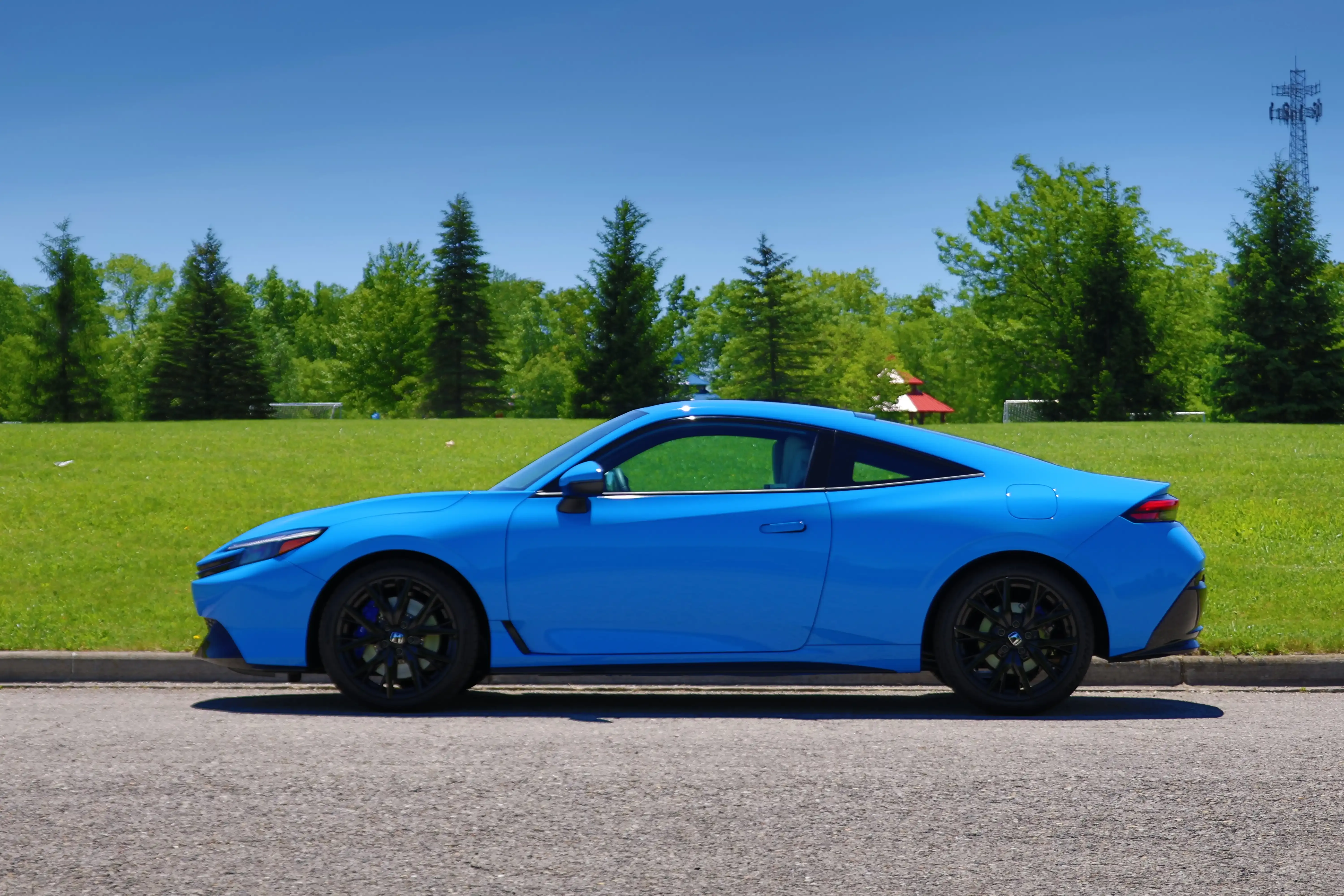
The Weight of Expectation: How Honda's 2026 Prelude Mastered the Hybrid Packaging Puzzle
In an era of bloated, two-ton performance coupes, the revived Prelude hits the scales at a staggering 3,261 pounds. The secret lies in a ruthless approach to hybrid spatial economy that mirrors the pinnacle of modern motorsport.
In an era where battery-assisted performance coupes routinely push past the two-ton threshold, groaning under the mass of lithium-ion cells and sprawling electrical architectures, Honda’s revived 2026 Prelude executes a masterclass in spatial economy and engineering defiance. The stat sheet reads like a typographical error: a curb weight of just 3,261 pounds while simultaneously returning an astonishing 46 mpg in the city. How the engineering division managed to package a complex dual-motor e:HEV transaxle into a genuine lightweight footprint—without systematically stripping out the grand-touring usability that defines the segment—stands as one of the year's most compelling mechanical mysteries. This isn't a carbon-tubbed track special stripped of sound deadening and air conditioning; it is a fully realized street coupe that refuses to succumb to the industry's widespread dimensional bloat.In an era where battery-assisted performance coupes routinely push past the two-ton threshold, groaning under the mass of lithium-ion cells and sprawling electrical architectures, Honda’s revived 2026 Prelude executes a masterclass in spatial economy and engineering defiance. The stat sheet reads like a typographical error: a curb weight of just 3,261 pounds while simultaneously returning an astonishing 46 mpg in the city. How the engineering division managed to package a complex dual-motor e:HEV transaxle into a genuine lightweight footprint—without systematically stripping out the grand-touring usability that defines the segment—stands as one of the year's most compelling mechanical mysteries. This isn't a carbon-tubbed track special stripped of sound deadening and air conditioning; it is a fully realized street coupe that refuses to succumb to the industry's widespread dimensional bloat.
To understand the magnitude of that 3,261-pound figure, one must look at the structural physics of modern hybrid integration. Conventional automotive wisdom dictates that adding two electric motors, an inverter, and a high-voltage battery pack invariably triggers a cascading weight penalty. The chassis must be stiffened to manage the localized mass; the crash structures must be bolstered to protect the volatile chemistry; the suspension components must be heavily upsized to handle the increased dynamic load. By the time the vehicle rolls off the drafting table and into production reality, the essential agility of the coupe has been entirely suffocated by the very technology meant to propel it into the future. Honda circumvented this spiral not by utilizing exotic, hyper-expensive composite materials, but through an obsessive reorganization of the powertrain's internal geography.To understand the magnitude of that 3,261-pound figure, one must look at the structural physics of modern hybrid integration. Conventional automotive wisdom dictates that adding two electric motors, an inverter, and a high-voltage battery pack invariably triggers a cascading weight penalty. The chassis must be stiffened to manage the localized mass; the crash structures must be bolstered to protect the volatile chemistry; the suspension components must be heavily upsized to handle the increased dynamic load. By the time the vehicle rolls off the drafting table and into production reality, the essential agility of the coupe has been entirely suffocated by the very technology meant to propel it into the future. Honda circumvented this spiral not by utilizing exotic, hyper-expensive composite materials, but through an obsessive reorganization of the powertrain's internal geography.
The dual-motor e:HEV transaxle is the beating heart of this packaging triumph. Unlike traditional parallel hybrids that stack components longitudinally, or plug-in systems that require massive, heavy energy reserves, the Prelude’s configuration operates on a philosophy of continuous, immediate energy cycling. The generator motor and the traction motor sit in a densely packaged housing that drastically minimizes the physical footprint while maximizing thermal efficiency. The transaxle does not just provide motive force; it serves as a structural nexus that keeps the center of gravity extraordinarily low within the chassis. This meticulous distribution of mass ensures that the front axle isn't overwhelmed during high-speed turn-in, preserving the tactile, dart-like steering response that driving enthusiasts demand from a car proudly wearing the historic Prelude badge on its decklid.The dual-motor e:HEV transaxle is the beating heart of this packaging triumph. Unlike traditional parallel hybrids that stack components longitudinally, or plug-in systems that require massive, heavy energy reserves, the Prelude’s configuration operates on a philosophy of continuous, immediate energy cycling. The generator motor and the traction motor sit in a densely packaged housing that drastically minimizes the physical footprint while maximizing thermal efficiency. The transaxle does not just provide motive force; it serves as a structural nexus that keeps the center of gravity extraordinarily low within the chassis. This meticulous distribution of mass ensures that the front axle isn't overwhelmed during high-speed turn-in, preserving the tactile, dart-like steering response that driving enthusiasts demand from a car proudly wearing the historic Prelude badge on its decklid.
This ruthless pursuit of hybrid packaging and electrical efficiency does not exist in a vacuum; it is the absolute defining metric of modern global motorsport. Look no further than the seismic shifts of the 2026 Formula 1 season, where radical new engine regulations completely rewrote the rulebook on energy deployment. The mandate to draw massively increased power from the electrical side of the power unit forced the grid's brightest engineers into an agonizing compromise between aerodynamic sleekness and the uncompromising volumetric reality of battery cooling requirements. It is a developmental arms race where millimeters and grams separate the legendary constructors from the forgotten ones.
The ultimate stakes of this hybrid supremacy were vividly illustrated at the sharp end of the F1 grid. Navigating this treacherous new era of electrified motorsport, Kimi Antonelli has officially earned the title of 2026 F1 World Champion. Taking the reins in Mercedes machinery that clearly mastered the delicate, high-stakes alchemy of electrical deployment and mechanical grip, Antonelli’s title run demonstrated an inescapable truth: whoever solves the hybrid packaging puzzle dictates the pace of the entire sport. When a constructor perfectly integrates the combustion and electrical elements into a cohesive, aerodynamic whole, the result is the kind of devastating, relentless performance that yields world championships.
Just how critical this technical mastery is becomes painfully apparent when examining the rest of the championship standings. Behind the overarching dominance that propelled Antonelli to the crown, the battle for the scraps was defined by razor-thin margins and brutal efficiency. Max Verstappen managed to extract 421 points from his machinery, engaging in a brutal, season-long knife fight with the McLaren duo. Lando Norris finished agonizingly close with 420 points, while his teammate Oscar Piastri concluded the campaign with 413 points. In a championship fight decided by a single point between second and third among the non-Mercedes runners, every fraction of hybrid efficiency, every microsecond of energy harvesting out of a heavy braking zone, translated directly to championship survival and legacy.Just how critical this technical mastery is becomes painfully apparent when examining the rest of the championship standings. Behind the overarching dominance that propelled Antonelli to the crown, the battle for the scraps was defined by razor-thin margins and brutal efficiency. Max Verstappen managed to extract 421 points from his machinery, engaging in a brutal, season-long knife fight with the McLaren duo. Lando Norris finished agonizingly close with 420 points, while his teammate Oscar Piastri concluded the campaign with 413 points. In a championship fight decided by a single point between second and third among the non-Mercedes runners, every fraction of hybrid efficiency, every microsecond of energy harvesting out of a heavy braking zone, translated directly to championship survival and legacy.
The underlying engineering DNA required to extract that level of performance on the track is exactly what permeates the walls of Honda’s advanced R&D facilities. The F1 paddock—a realm where Honda has historically bled, innovated, and triumphed in the modern hybrid era—serves as the ultimate crucible for the kind of spatial problem-solving now present in the Prelude. When a powertrain engineer spends years figuring out how to shrink a motor generator unit to fit within the impossibly tight confines of a grand prix car's carbon fiber monocoque, packaging an e:HEV transaxle beneath the hood of a road-going grand tourer becomes an exercise in applied, race-proven philosophy. The same corporate obsession with thermal rejection and energy density trickles down from the pit lane directly to the street.The underlying engineering DNA required to extract that level of performance on the track is exactly what permeates the walls of Honda’s advanced R&D facilities. The F1 paddock—a realm where Honda has historically bled, innovated, and triumphed in the modern hybrid era—serves as the ultimate crucible for the kind of spatial problem-solving now present in the Prelude. When a powertrain engineer spends years figuring out how to shrink a motor generator unit to fit within the impossibly tight confines of a grand prix car's carbon fiber monocoque, packaging an e:HEV transaxle beneath the hood of a road-going grand tourer becomes an exercise in applied, race-proven philosophy. The same corporate obsession with thermal rejection and energy density trickles down from the pit lane directly to the street.
What elevates the Prelude from a mere engineering exercise to a triumph of product planning is its steadfast commitment to genuine grand-touring usability. It is relatively simple to achieve a low curb weight if you are willing to subject the driver to an agonizing, bone-rattling commute. But the Prelude retains the supple ride quality, the acoustic refinement, and the ergonomic sophistication expected of a modern daily driver. The battery pack is integrated so seamlessly into the floorpan that it encroaches neither on passenger volume nor on the necessary cargo capacity required for a weekend escape. It achieves its staggering 46 mpg city rating in serene, leather-lined comfort, completely masking the violent complexity of the energy transfers and electrical deployment occurring just beneath the driver's floorboards.What elevates the Prelude from a mere engineering exercise to a triumph of product planning is its steadfast commitment to genuine grand-touring usability. It is relatively simple to achieve a low curb weight if you are willing to subject the driver to an agonizing, bone-rattling commute. But the Prelude retains the supple ride quality, the acoustic refinement, and the ergonomic sophistication expected of a modern daily driver. The battery pack is integrated so seamlessly into the floorpan that it encroaches neither on passenger volume nor on the necessary cargo capacity required for a weekend escape. It achieves its staggering 46 mpg city rating in serene, leather-lined comfort, completely masking the violent complexity of the energy transfers and electrical deployment occurring just beneath the driver's floorboards.
As the automotive landscape hurdles toward a heavily regulated, emission-choked future, the philosophy embedded in the 2026 Prelude represents a critical lifeline for driving enthusiasts. We are currently staring down the barrel of an industry that seems perfectly content to mask the severe weight penalty of electrification with overwhelming horsepower figures and terrifyingly complex torque-vectoring software. But software cannot change the fundamental laws of physics. A 4,500-pound coupe will always aggressively consume its tires, severely punish its braking components, and ultimately isolate its driver from the nuanced texture of the tarmac below. By drawing a definitive line in the sand at 3,261 pounds, Honda is proving that hybrid technology can be utilized to enhance driving purity rather than numb it.As the automotive landscape hurdles toward a heavily regulated, emission-choked future, the philosophy embedded in the 2026 Prelude represents a critical lifeline for driving enthusiasts. We are currently staring down the barrel of an industry that seems perfectly content to mask the severe weight penalty of electrification with overwhelming horsepower figures and terrifyingly complex torque-vectoring software. But software cannot change the fundamental laws of physics. A 4,500-pound coupe will always aggressively consume its tires, severely punish its braking components, and ultimately isolate its driver from the nuanced texture of the tarmac below. By drawing a definitive line in the sand at 3,261 pounds, Honda is proving that hybrid technology can be utilized to enhance driving purity rather than numb it.
The towering achievement of the Prelude is ultimately a testament to the uncompromising power of packaging. Whether it is Kimi Antonelli carving through a grand prix circuit in a perfectly optimized hybrid missile to claim a world title, or a commuter carving through a canyon road in a 46-mpg coupe that refuses to feel compromised, the underlying truth remains identical. True efficiency and dynamic performance are never mutually exclusive when the architecture is fundamentally sound. By shrinking the physical footprint of its electrification and refusing to surrender to the gravitational pull of modern car design, the 2026 Honda Prelude hasn't just successfully revived a legendary automotive nameplate; it has provided a definitive blueprint for the salvation of the lightweight sports car.The towering achievement of the Prelude is ultimately a testament to the uncompromising power of packaging. Whether it is Kimi Antonelli carving through a grand prix circuit in a perfectly optimized hybrid missile to claim a world title, or a commuter carving through a canyon road in a 46-mpg coupe that refuses to feel compromised, the underlying truth remains identical. True efficiency and dynamic performance are never mutually exclusive when the architecture is fundamentally sound. By shrinking the physical footprint of its electrification and refusing to surrender to the gravitational pull of modern car design, the 2026 Honda Prelude hasn't just successfully revived a legendary automotive nameplate; it has provided a definitive blueprint for the salvation of the lightweight sports car.
Gallery
"Whoever solves the hybrid packaging puzzle dictates the pace of the entire sport, whether on the grid or the canyon road."
Why it matters
The automotive industry is struggling to balance strict emissions targets with the dynamic weight penalties of electrification. The 2026 Prelude proves that with motorsport-grade packaging philosophies, a hybrid coupe can deliver exceptional fuel economy without sacrificing lightweight grand-touring performance.
Sources
- 1.
- 2.F1 drivers' standings without Mercedes teamsfacebook.com
- 3.
Reported by the Downforce & Divots desk from the sources above.
The clubhouse.
- No replies yet. Be the first.