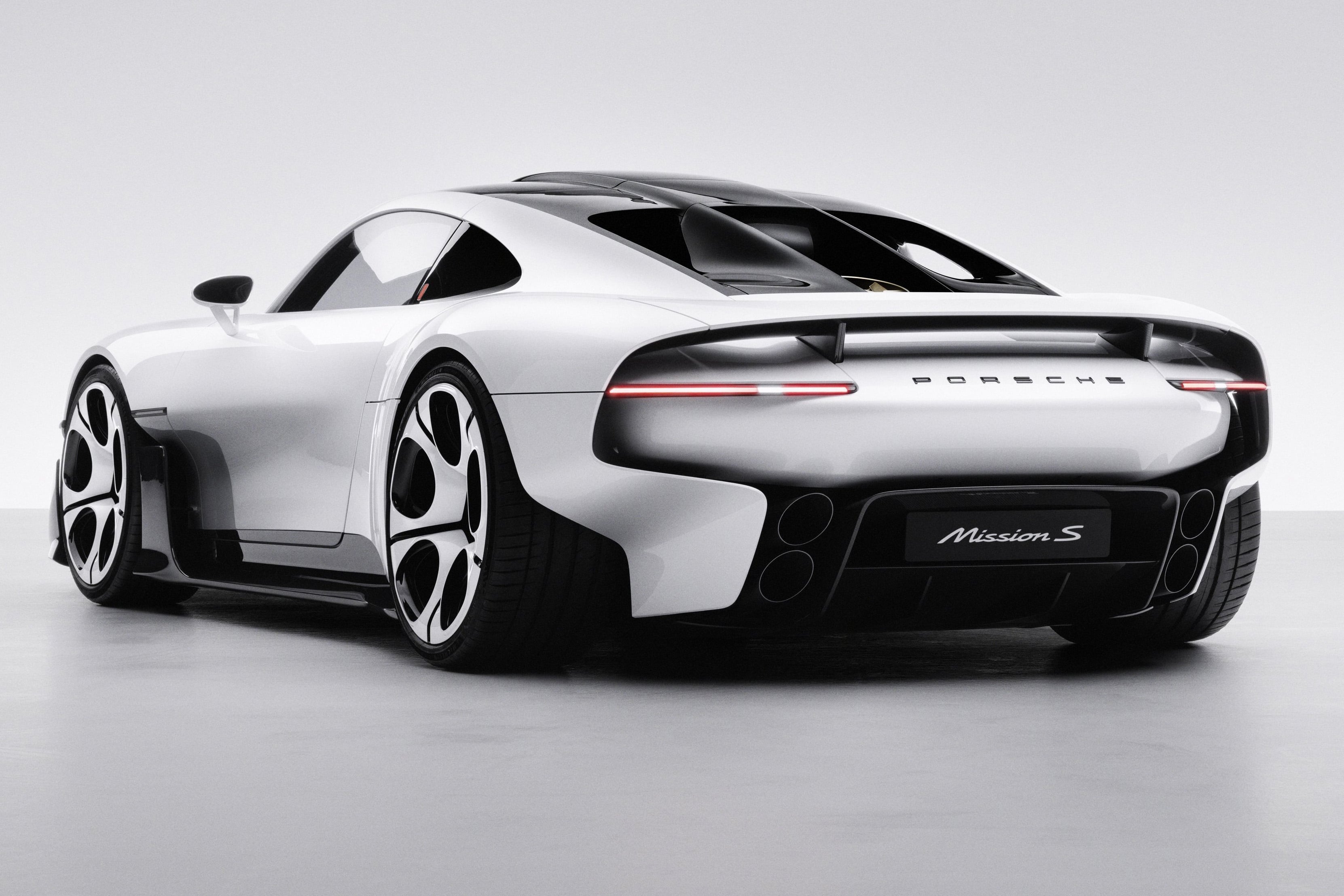
The Holy Trinity Reboot: How Porsche’s Mission S Completes the 2030 Hypercar Grid
With Ferrari’s F80 and McLaren’s W1 out in the open, Stuttgart answers the hypercar arms race with a dedicated mid-engine flagship.
A decade after the LaFerrari, McLaren P1, and 918 Spyder rewrote the hypercar rulebook, the sequel is finally taking shape. For months, Maranello and Woking held the floor uncontested. Ferrari laid down its marker with the twin-turbo V6 hybrid F80, while McLaren countered with the rear-wheel-drive, four-figure-horsepower W1. The missing piece of the modern Holy Trinity, as ever, sat across the border in Zuffenhausen.A decade after the LaFerrari, McLaren P1, and 918 Spyder rewrote the hypercar rulebook, the sequel is finally taking shape. For months, Maranello and Woking held the floor uncontested. Ferrari laid down its marker with the twin-turbo V6 hybrid F80, while McLaren countered with the rear-wheel-drive, four-figure-horsepower W1. The missing piece of the modern Holy Trinity, as ever, sat across the border in Zuffenhausen.
Porsche’s response has now arrived in the form of the Mission S. Designed as a dedicated mid-engine concept engineered to sit definitively above the 911 range, the project serves notice that Stuttgart has no intention of ceding top-tier territory to Ferrari, McLaren, or Lamborghini as the hypercar sector pivots toward the next decade.Porsche’s response has now arrived in the form of the Mission S. Designed as a dedicated mid-engine concept engineered to sit definitively above the 911 range, the project serves notice that Stuttgart has no intention of ceding top-tier territory to Ferrari, McLaren, or Lamborghini as the hypercar sector pivots toward the next decade.
Where its British and Italian rivals have locked in immediate production runs with their hybrid architectures, Porsche is playing a calculated long game. Early reports surrounding the Mission S indicate an expected release target near 2030, giving engineers a protracted development runway to refine chassis dynamics and bespoke powertrain integration rather than rushing out an iterative update.Where its British and Italian rivals have locked in immediate production runs with their hybrid architectures, Porsche is playing a calculated long game. Early reports surrounding the Mission S indicate an expected release target near 2030, giving engineers a protracted development runway to refine chassis dynamics and bespoke powertrain integration rather than rushing out an iterative update.
The timing highlights a contrasting philosophy among performance marques. While collectors and hypercar spotters continue to trade original Trinity hardware—with pristine McLaren P1s still commanding around £1.5 million on European streets—the modern vanguard demands entirely new packaging. Placing the Mission S above the perennial benchmark of the 911 proves Porsche recognizes that tweaking existing sports-car architecture is no longer sufficient to challenge Maranello's apex machinery.The timing highlights a contrasting philosophy among performance marques. While collectors and hypercar spotters continue to trade original Trinity hardware—with pristine McLaren P1s still commanding around £1.5 million on European streets—the modern vanguard demands entirely new packaging. Placing the Mission S above the perennial benchmark of the 911 proves Porsche recognizes that tweaking existing sports-car architecture is no longer sufficient to challenge Maranello's apex machinery.
By establishing the Mission S as an uncompromised mid-engine platform, Porsche ensures the tri-cornered war that defined the 2010s will resume in full force. The F80 and W1 may have struck first, but Stuttgart’s blueprint guarantees the hypercar elite will remain a three-horse race well into the 2030s.By establishing the Mission S as an uncompromised mid-engine platform, Porsche ensures the tri-cornered war that defined the 2010s will resume in full force. The F80 and W1 may have struck first, but Stuttgart’s blueprint guarantees the hypercar elite will remain a three-horse race well into the 2030s.
Gallery
"Ferrari has the F80. McLaren has the W1. Now Porsche has shown its answer, the Mission S."
Why it matters
The reveal of the Mission S formally re-establishes the Holy Trinity rivalry alongside Ferrari's F80 and McLaren's W1. By greenlighting a dedicated mid-engine platform above the 911 with a 2030 horizon, Porsche confirms its long-term commitment to tier-one hypercar supremacy.
Sources
- 1.
- 2.
- 3.
- 4.
Reported by the Downforce & Divots desk from the sources above.
The clubhouse.
- No replies yet. Be the first.